Çılbır (Turkish Poached Eggs in Garlic Yogurt with Paprika Butter)
Ottoman-era poached eggs nestled in garlicky yogurt with sizzling paprika butter — a near-zero-carb, high-protein breakfast that keeps blood sugar steady.
Çılbır is one of the oldest recorded egg dishes in Turkish cuisine, served in the Ottoman court as far back as the 15th century. Two perfectly poached eggs rest on a bed of cool, garlic-spiked Greek yogurt, then get crowned with a drizzle of butter bloomed with sweet paprika and pul biber. The interplay of temperatures and textures — warm runny yolk, tangy cold yogurt, fragrant spiced fat — makes this far more exciting than the short ingredient list suggests.
From a glycemic perspective, çılbır is virtually ideal. The dish contains almost no carbohydrates: full-fat Greek yogurt contributes only about 6g of naturally occurring lactose sugars, while the eggs, butter, and spices add none. The roughly 22g of protein from the eggs and yogurt combined with the healthy fats from butter work together to promote satiety without triggering an insulin spike. The fat in the yogurt and butter also slows gastric emptying, meaning any minimal glucose from the lactose enters the bloodstream gradually.
For the best blood sugar outcome, enjoy çılbır as your first meal of the day or pair it with a slice of genuine sourdough rye bread (GI ~48) rather than white toast. Eating the yogurt base first, before breaking into the eggs, follows the "vegetables and protein before carbs" principle that research shows can reduce post-meal glucose by up to 30%. Fresh mint isn't just a garnish here — it aids digestion and adds a bright contrast to the rich, smoky butter.
Blood Sugar Impact
Very minimal blood sugar impact. With a glycemic load of just 2.3 and a GI of 24, this high-protein, high-fat meal will produce a very gentle, slow rise in blood glucose, providing stable energy for 3-4 hours.
Blood Sugar Tips
- ✓ Serve with a side of non-starchy vegetables or a small mixed greens salad to add fiber and further blunt any minor glucose response.
- ✓ If pairing with bread (as is traditional), choose a dense sourdough or seed-based bread and limit the portion to one small slice to keep the overall glycemic load low.
- ✓ Take a gentle 10-15 minute walk after eating to enhance glucose uptake by your muscles and keep blood sugar steady.
🥗 Ingredients
- 200 g Greek yogurt
- 1 pcs Garlic
- 2 pcs Egg
- 1 tbsp White vinegar
- 20 g Butter
- 0.5 tsp Sweet paprika
- 0.25 tsp Red pepper flakes
- 1 pcs Salt
- 3 pcs Mint
- 7.1 oz Greek yogurt
- 1 pcs Garlic
- 2 pcs Egg
- 1 tbsp White vinegar
- 0.7 oz Butter
- 0.5 tsp Sweet paprika
- 0.25 tsp Red pepper flakes
- 1 pcs Salt
- 3 pcs Mint
👨🍳 Instructions
- 1
Spoon the Greek yogurt into a mixing bowl. Grate or press the garlic clove directly into the yogurt, add a pinch of salt, and stir until evenly combined. The yogurt should be at room temperature — cold yogurt will cool the eggs too quickly.
- 2
Spread the garlic yogurt across the bottom of a wide, shallow serving bowl, creating a slight well in the centre where the eggs will sit. Set aside while you prepare the remaining components.
- 3
Fill a small saucepan with about 8 cm (3 inches) of water and bring it to a gentle simmer over medium heat — you want small bubbles rising from the bottom, not a rolling boil. Stir in the white vinegar.
- 4
Crack each egg into its own small cup or ramekin. Using a spoon, create a gentle swirl in the simmering water, then carefully slide the first egg into the centre of the vortex. Wait a few seconds for the white to begin setting, then add the second egg nearby. Poach undisturbed for 3 minutes for a fully runny yolk or 4 minutes for a jammy centre.
- 5
While the eggs poach, place the butter in a small pan or skillet over medium heat. Let it melt completely, then add the sweet paprika and red pepper flakes. Swirl the pan gently and cook for about 30 seconds until the butter turns a deep orange-red and smells fragrant. Remove from heat immediately to prevent the spices from burning.
- 6
Lift the poached eggs out of the water one at a time with a slotted spoon. Let excess water drain off, then briefly rest each egg on a folded piece of kitchen paper to blot away remaining moisture.
- 7
Place both poached eggs side by side on top of the yogurt bed. Spoon the warm paprika butter generously over the eggs, letting it pool into the yogurt in streaks of orange.
- 8
Tear a few fresh mint leaves over the top if using. Serve immediately while the contrast between the warm eggs, cool yogurt, and sizzling butter is at its peak. For optimal blood sugar management, eat a few spoonfuls of the yogurt base before breaking into the egg yolks.
📊 Nutrition Per Serving
| Per Serving | Whole Dish | |
|---|---|---|
| Calories | 567 | 567 |
| Carbs | 10g | 10g |
| Sugars | 8g | 8g |
| Natural Sugars | 8g | 8g |
| Protein | 33g | 33g |
| Fat | 48g | 48g |
| Saturated Fat | 27g | 27g |
| Unsaturated Fat | 21g | 21g |
| Fiber | 1g | 1g |
| Soluble Fiber | 0g | 0g |
| Insoluble Fiber | 0g | 0g |
| Sodium | 642mg | 642mg |
Predicted Glucose Response
What if you...
Estimated model — individual responses vary. Not medical advice.
🔄 Lower GI Swaps
Apple cider vinegar and lemon juice have been shown to help slow gastric emptying and improve post-meal blood sugar response more effectively than plain white vinegar, potentially lowering the glycemic impact of the overall meal.
Extra virgin olive oil and avocado oil are rich in monounsaturated fats and polyphenols that can improve insulin sensitivity and slow glucose absorption compared to butter. Ghee contains conjugated linoleic acid which may support better glycemic control.
Smoked paprika retains flavor with slightly more bioactive compounds. Turmeric contains curcumin and cinnamon contains cinnamaldehyde, both of which have been studied for their ability to improve insulin sensitivity and help moderate post-meal blood sugar spikes.
🔬 The Science Behind This Recipe
Here's the science explainer section:
---
Why This Recipe Works for Blood Sugar
Çılbır is a naturally blood sugar-friendly dish, and the reason comes down to its beautifully simple ingredient list. With a glycemic load of just 2.3 per serving and an estimated GI of 24, this Turkish classic lands firmly in the "low" category on both scales. But what do those numbers really mean? Glycemic load takes into account not just *how quickly* a food raises blood sugar (that's the GI), but also *how much* carbohydrate you're actually eating. Since Çılbır is built almost entirely on protein and healthy fats — with virtually no starchy carbs — there's very little glucose entering your bloodstream in the first place. You simply can't spike what isn't there.
The real magic lies in how these ingredients team up. Eggs are one of nature's most complete protein sources, and protein significantly slows the rate at which your stomach empties its contents into your small intestine — meaning any glucose from your meal trickles in gradually rather than flooding in all at once. Full-fat Greek yogurt doubles down on this effect by adding both protein and fat, while its natural probiotics may also support the gut health that plays a role in how we metabolize sugar. The generous amount of butter contributes additional fat, which further extends digestion time and keeps you feeling satisfied longer.
To make the most of this meal's blood sugar benefits, consider pairing it with a small side salad eaten first — vegetables and fiber before everything else helps prime your digestive system. If you add bread for dipping (a common accompaniment), keep the portion modest and enjoy it *after* the yogurt and eggs, not before. A gentle 10-minute walk after eating can also help your muscles absorb circulating glucose more efficiently. Small habits, big impact.
Related recipes

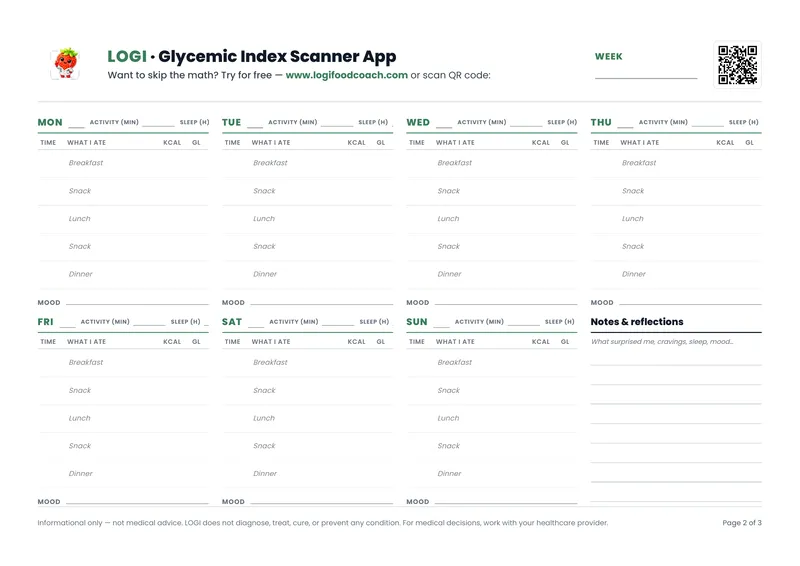
Free PDF — 3 pages
Your Weekly Food Journal
Track meals, glycemic load & mood. Spot patterns in 3 weeks.
No spam. Unsubscribe anytime.