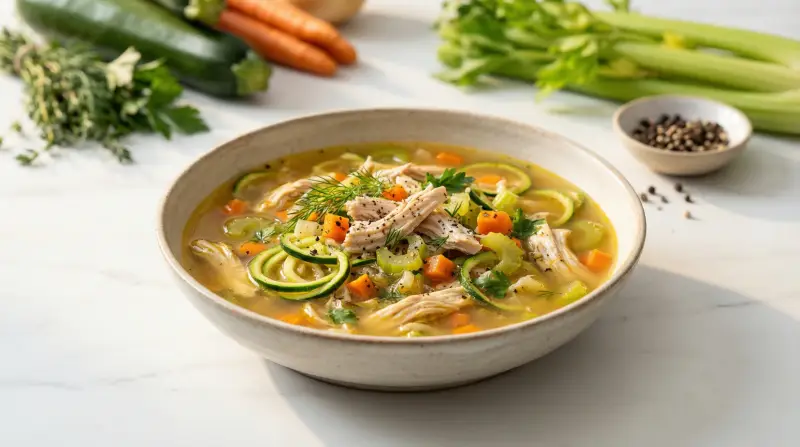
Low-Glycemic Chicken Zoodle Soup
A nourishing bone broth soup with tender chicken and spiralized zucchini noodles—perfect for blood sugar balance and gut health without the carb spike.
This deeply satisfying soup transforms traditional chicken noodle soup into a blood sugar-friendly powerhouse by replacing high-glycemic wheat noodles with fresh zucchini spirals. The extended simmering time creates a mineral-rich bone broth that supports stable glucose levels while providing collagen and amino acids for gut health.
Zucchini noodles are an ideal low-glycemic substitute with a GI of just 15, compared to regular pasta's GI of 11-60. The combination of protein-rich chicken, fiber from vegetables, and the gelatin from slow-cooked bones creates a meal that promotes steady energy without blood sugar spikes. The aromatic blend of star anise, bay leaves, and peppercorns adds depth while the long simmer extracts maximum nutrients from the bones.
For optimal glycemic control, enjoy this soup as a complete meal. The high protein content (approximately 25-30g per serving) and healthy fats from the chicken help slow glucose absorption. Consider eating the zucchini noodles and vegetables first, followed by the broth and chicken, to further moderate blood sugar response. This soup freezes beautifully—just add fresh zoodles when reheating to maintain their texture and nutritional value.
Blood Sugar Impact
Minimal blood sugar impact expected due to the extremely low glycemic load of 1.4 and GI of 11. This meal should provide stable, sustained energy for 3-4 hours without causing significant glucose spikes.
Blood Sugar Tips
- ✓ Eat the zucchini noodles and vegetables first before consuming the broth to maximize fiber intake and slow any glucose absorption
- ✓ Consider adding a tablespoon of olive oil or avocado to increase healthy fats, which will further stabilize blood sugar
- ✓ Pair this meal with a 10-15 minute gentle walk afterward to enhance glucose uptake by muscles and maintain steady blood sugar levels
🥗 Ingredients
- 1 pcs 1 pasture-raised stewing hen or roaster chicken
- 3 pcs 3 medium carrots
- 4 pcs 4 celery stalks
- 1 pcs 1 large onion
- 2 pcs 2 bundles fresh parsley, tied with kitchen twine
- 6 pcs 6 bay leaves
- 2 tbsp whole black peppercorns
- 2 pcs 2 whole star anise
- 64 fl_oz 2 boxes chicken broth, regular sodium
- 22 pcs zucchini, spiralized into noodles (1 per person)
- 2 tsp sea salt to taste
- 1 pcs 1 pasture-raised stewing hen or roaster chicken
- 3 pcs 3 medium carrots
- 4 pcs 4 celery stalks
- 1 pcs 1 large onion
- 2 pcs 2 bundles fresh parsley, tied with kitchen twine
- 6 pcs 6 bay leaves
- 2 tbsp whole black peppercorns
- 2 pcs 2 whole star anise
- 64 fl_oz 2 boxes chicken broth, regular sodium
- 22 pcs zucchini, spiralized into noodles (1 per person)
- 2 tsp sea salt to taste
👨🍳 Instructions
- 1
Place the whole chicken in a large stockpot. Chop the carrots and celery into large 3-inch chunks and arrange them around the chicken. Cut the onion into quarters and add to the pot.
- 2
Bundle the parsley sprigs together and tie securely with kitchen twine, then nestle into the pot along with the bay leaves. Fill two tea infusers or spice balls with black peppercorns and star anise, then submerge in the pot. If you don't have infusers, add the spices directly—you'll strain them out later.
- 3
Pour both boxes of chicken broth over the ingredients, then add enough filtered water to just cover everything in the pot. Bring to a rolling boil over high heat, then immediately reduce to a gentle simmer. Cover and maintain a low simmer for 8 hours, checking occasionally to ensure the liquid level stays consistent.
- 4
After the long simmer, carefully remove the chicken to a large plate using tongs and a slotted spoon. Skim any foam or fat from the surface of the broth with a ladle. For clearer broth, strain the liquid through a fine-mesh sieve into a clean pot, discarding the vegetables and aromatics.
- 5
Once the chicken is cool enough to handle, shred the meat from the bones using two forks, discarding the skin, bones, and cartilage. Taste the broth and adjust seasoning with sea salt as needed—it should be rich and flavorful.
- 6
When ready to serve, gently pat the spiralized zucchini noodles with paper towels to remove excess moisture. Divide the raw zoodles among serving bowls, top with shredded chicken, then ladle the hot broth over everything. The heat from the broth will perfectly cook the zucchini noodles while preserving their texture and nutrients.
- 7
Serve immediately while hot. Store leftover broth and chicken separately from uncooked zoodles in airtight containers in the refrigerator for up to 5 days, or freeze for up to 3 months. Always add fresh zucchini noodles just before serving to maintain optimal texture and glycemic benefits.
📊 Nutrition Per Serving
| Per Serving | Whole Dish | |
|---|---|---|
| Calories | 230 | 5062 |
| Carbs | 9g | 202g |
| Sugars | 6g | 130g |
| Natural Sugars | 6g | 130g |
| Protein | 19g | 414g |
| Fat | 13g | 293g |
| Saturated Fat | 4g | 84g |
| Unsaturated Fat | 7g | 163g |
| Fiber | 3g | 62g |
| Soluble Fiber | 1g | 18g |
| Insoluble Fiber | 2g | 44g |
| Sodium | 604mg | 13279mg |
Predicted Glucose Response
What if you...
Estimated model — individual responses vary. Not medical advice.
🔄 Lower GI Swaps
Carrots have a moderate glycemic index of 35-92 depending on cooking method. Celery root, turnip, and daikon radish have lower glycemic indices (under 35) and contain more fiber, resulting in a gentler blood sugar response while maintaining the soup's hearty texture.
While onions are relatively low-GI, using leek greens, scallion tops, or fennel provides similar aromatic flavor with even lower carbohydrate content per serving, further minimizing any glycemic impact while adding depth to the broth.
Bone broth contains gelatin and collagen which may help slow gastric emptying and improve satiety, potentially leading to better blood sugar control. The higher protein and fat content compared to standard broth creates a more stable glycemic response.
While zucchini is already excellent (GI of 15), shirataki noodles are virtually zero-carb and zero-calorie, making them the ultimate low-glycemic noodle substitute. Cabbage and bok choy offer similar benefits with added fiber and even lower glycemic load than zucchini.
🔬 The Science Behind This Recipe
# Why This Soup Keeps Your Blood Sugar Steady
This chicken zoodle soup is a blood sugar champion with a glycemic load of just 1.4 per serving—meaning it has virtually no impact on your glucose levels. The secret lies in what's NOT in the recipe: refined carbohydrates. Traditional chicken noodle soup can spike blood sugar due to wheat pasta, but by swapping in zucchini noodles (zoodles), you're getting fiber-rich vegetables instead of fast-digesting starches. Zucchini contains soluble fiber that slows digestion and creates a gentle, sustained release of energy rather than a glucose spike. The estimated GI of 11 is exceptionally low, placing this soup firmly in the "blood sugar friendly" category.
The protein from whole chicken plays a crucial role in stabilizing your glucose response. When you eat protein alongside any carbohydrates (even the minimal amounts from vegetables), it triggers a slower digestive process and promotes the release of hormones that help regulate blood sugar. The chicken also provides satiety, keeping you fuller longer and preventing the blood sugar rollercoaster that comes from grazing on higher-glycemic snacks. Meanwhile, the aromatic vegetables—carrots, celery, and onions—add nutrients and flavor while contributing negligible carbohydrates.
For optimal blood sugar management, enjoy this soup as a starter before meals containing more carbohydrates, or make it your main course paired with a side salad. The high water content also helps with portion satisfaction, and the warmth of the soup naturally slows your eating pace, giving your body time to register fullness before you overeat. This is comfort food that truly comforts your metabolism.
Related recipes
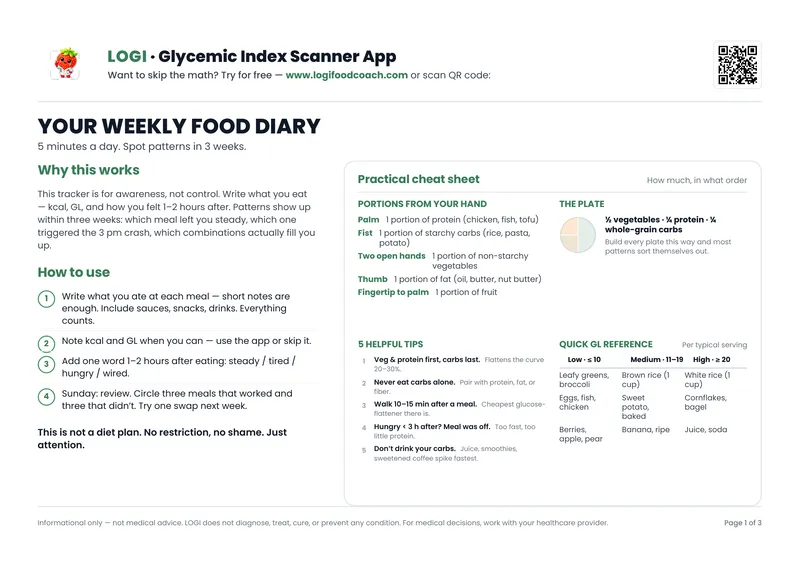
Free PDF — 3 pages
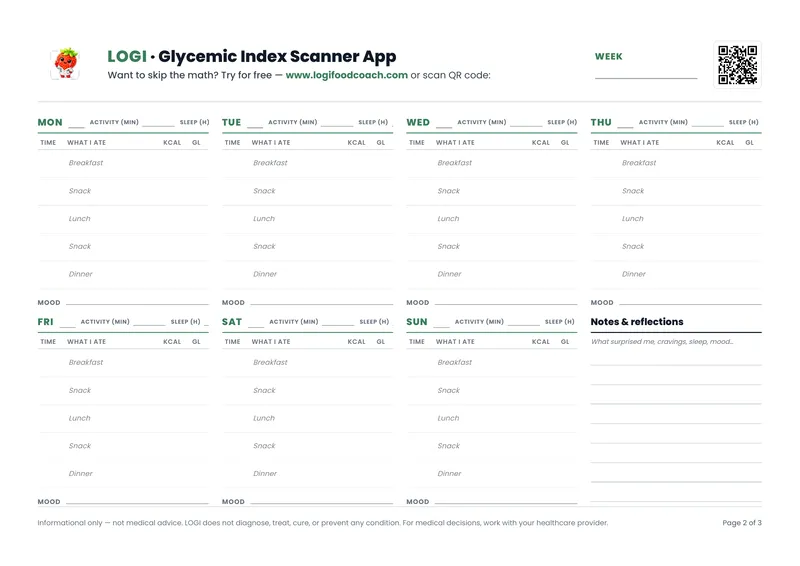
Your Weekly Food Journal
Track meals, glycemic load & mood. Spot patterns in 3 weeks.
No spam. Unsubscribe anytime.