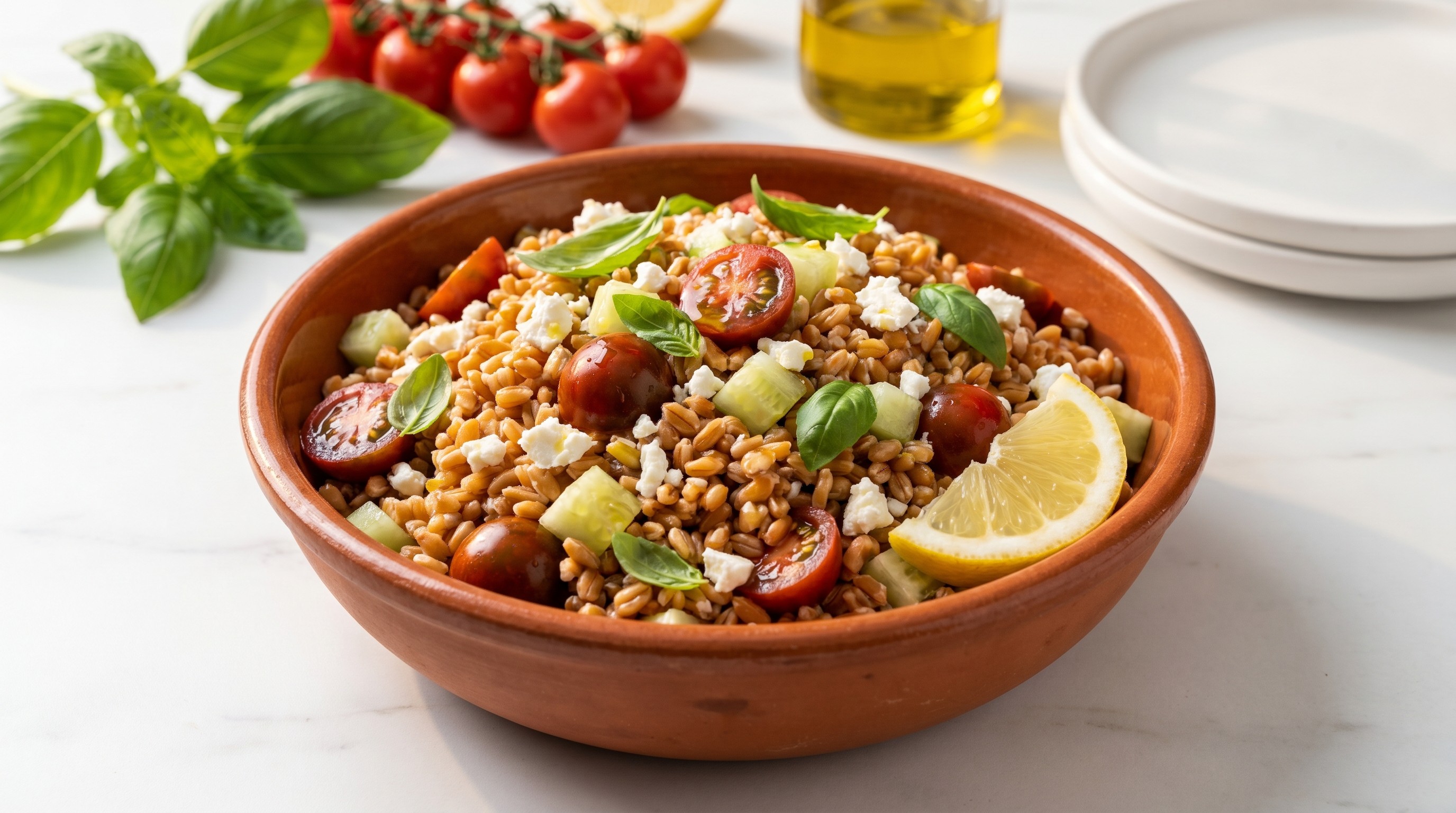
Italian Farro Salad with Cherry Tomatoes, Basil, and Feta
Ancient grain farro (GI ~40) meets ripe tomatoes, cool cucumber, and creamy feta in a fibre-rich Italian salad that keeps blood sugar remarkably steady.
Farro is one of the oldest cultivated grains in the Mediterranean — Roman legions marched on it — and it happens to be one of the most blood-sugar-friendly whole grains available, with a glycemic index of roughly 40–45. Its dense, chewy texture comes from a high proportion of resistant starch and soluble fibre, both of which slow gastric emptying and flatten the post-meal glucose curve. Combined with protein-rich feta and heart-healthy olive oil, this salad delivers a balanced macronutrient profile that minimises insulin spikes.
The beauty of this cucina povera classic lies in its simplicity: nutty, al-dente farro is tossed while still warm with a bright lemon-garlic dressing so the grains drink up the flavour. Sweet cherry tomatoes, crisp cucumber, and fragrant torn basil add colour, crunch, and antioxidants without meaningful carbohydrate load. A generous crumble of feta on top provides satiating fat and protein that further blunts glycemic response.
For optimal blood sugar management, eat the vegetables and feta first, then follow with the farro — research shows that consuming fibre and protein before starch can reduce the glucose spike by up to 30%. This salad keeps beautifully in the fridge for two days, making it an ideal meal-prep lunch. Pair it with a handful of walnuts or a side of grilled chicken for an even more sustained energy release throughout the afternoon.
Blood Sugar Impact
Low impact expected. Farro is a whole grain with a low GI of 35 and moderate glycemic load of 11.4, combined with fiber-rich vegetables and healthy fats from olive oil and feta, resulting in a gradual, steady blood sugar rise and stable energy for 3-4 hours.
Blood Sugar Tips
- ✓ Eat the vegetables (cucumber, tomatoes) and feta first before the farro to slow gastric emptying and blunt the glucose response.
- ✓ Include a generous portion of olive oil in the dressing — the fat further slows carbohydrate absorption.
- ✓ Take a 10-15 minute walk after eating to enhance glucose uptake by muscles and keep blood sugar flat.
🥗 Ingredients
- 70 g Semi-pearled farro
- 180 g Cherry tomato
- 100 g Cucumber
- 60 g Feta cheese
- 15 g Basil
- 1.5 tbsp Extra-virgin olive oil
- 1 tbsp Lemon juice
- 1 pcs Garlic
- 1 pcs Salt and black pepper
- 2.5 oz Semi-pearled farro
- 6.3 oz Cherry tomato
- 3.5 oz Cucumber
- 2.1 oz Feta cheese
- 0.5 oz Basil
- 1.5 tbsp Extra-virgin olive oil
- 1 tbsp Lemon juice
- 1 pcs Garlic
- 1 pcs Salt and black pepper
👨🍳 Instructions
- 1
Rinse 70 g of semi-pearled farro under cold running water for about 30 seconds to remove surface starch. This small step helps keep each grain distinct after cooking.
- 2
Transfer the farro to a medium saucepan, add 400 ml of water and a small pinch of salt, and bring to a boil over high heat. Once boiling, lower the heat to a gentle simmer, cover partially, and cook for 20–25 minutes until the grains are tender but retain a pleasant chew at the centre.
- 3
While the farro simmers, prepare the vegetables: halve the cherry tomatoes, dice the cucumber into roughly 1 cm cubes, and crumble the feta cheese into bite-sized pieces. Set each aside separately.
- 4
Make the dressing by whisking together the extra-virgin olive oil, fresh lemon juice, minced garlic (if using), and a generous pinch each of salt and black pepper in a large mixing bowl.
- 5
When the farro is cooked, drain off any remaining water and add the warm grains straight into the bowl with the dressing. Toss thoroughly — the residual heat helps the farro absorb the bright, garlicky flavours more deeply.
- 6
Allow the dressed farro to cool for about 3–4 minutes, then add the halved cherry tomatoes, diced cucumber, and torn basil leaves. Fold everything together gently so the tomatoes stay intact.
- 7
Scatter the crumbled feta over the top. For the best blood-sugar response, start eating the vegetables and feta before digging into the grain — consuming protein and fibre before starch can reduce glucose spikes significantly.
- 8
Taste and adjust seasoning with more salt, pepper, or a squeeze of lemon as needed. Serve warm or at room temperature. The salad keeps well covered in the fridge for up to two days — the flavours deepen as it sits.
📊 Nutrition Per Serving
| Per Serving | Whole Dish | |
|---|---|---|
| Calories | 316 | 632 |
| Carbs | 32g | 65g |
| Sugars | 5g | 10g |
| Natural Sugars | 5g | 10g |
| Protein | 11g | 21g |
| Fat | 18g | 35g |
| Saturated Fat | 6g | 12g |
| Unsaturated Fat | 12g | 23g |
| Fiber | 4g | 8g |
| Soluble Fiber | 1g | 2g |
| Insoluble Fiber | 2g | 4g |
| Sodium | 671mg | 1342mg |
Predicted Glucose Response
What if you...
Estimated model — individual responses vary. Not medical advice.
🔄 Lower GI Swaps
Farro has a moderate-to-high GI (~45-50). Pearl barley (GI ~28) is one of the lowest-GI grains available, quinoa (GI ~53) offers more protein and fiber to slow glucose absorption, and cauliflower rice (GI ~15) dramatically cuts the glycemic load of the dish.
While cherry tomatoes have a low GI, replacing some with avocado adds healthy fats and fiber that slow gastric emptying and blunt blood sugar spikes, further reducing the overall glycemic load of the meal.
Vinegar (acetic acid) has been shown in studies to reduce post-meal blood glucose response by 20-30% by slowing starch digestion and improving insulin sensitivity, making it a more effective blood-sugar-lowering dressing base than lemon juice alone.
🔬 The Science Behind This Recipe
Why This Recipe Works for Blood Sugar
Farro is the star of this dish when it comes to steady energy. Unlike refined grains such as white rice or pasta, farro is an ancient whole grain that keeps its bran and fiber intact. That fiber acts like a slow-release mechanism — it forms a gel-like barrier in your digestive system that slows the breakdown of starches into sugar. This means glucose trickles into your bloodstream gradually rather than flooding it all at once. With an estimated GI of just 35, this recipe sits comfortably in the low-glycemic category, and the glycemic load of 11.4 per serving confirms that even the *amount* of carbohydrate is modest. Remember, glycemic load accounts for portion size — a food might have a moderate GI, but if you're eating a reasonable serving, the actual impact on your blood sugar can be quite gentle.
The supporting cast matters just as much. Feta cheese contributes both protein and fat, two nutrients that significantly slow gastric emptying — the rate at which food leaves your stomach. When carbohydrates are paired with protein and fat, they're absorbed more gradually, flattening the post-meal glucose curve. Meanwhile, cherry tomatoes and cucumber add extra fiber, water content, and volume without meaningfully increasing the carbohydrate load, making every bite more filling for fewer blood sugar consequences.
Want to maximize the benefits? Try eating the vegetables and feta first, saving the farro-heavy bites for later in the meal. Research suggests this simple food-ordering strategy can reduce post-meal glucose spikes by up to 30–40%. A short 10–15 minute walk after eating works wonders too — your muscles soak up circulating glucose for energy, helping bring levels back to baseline faster. Small habits, big difference.
Related recipes
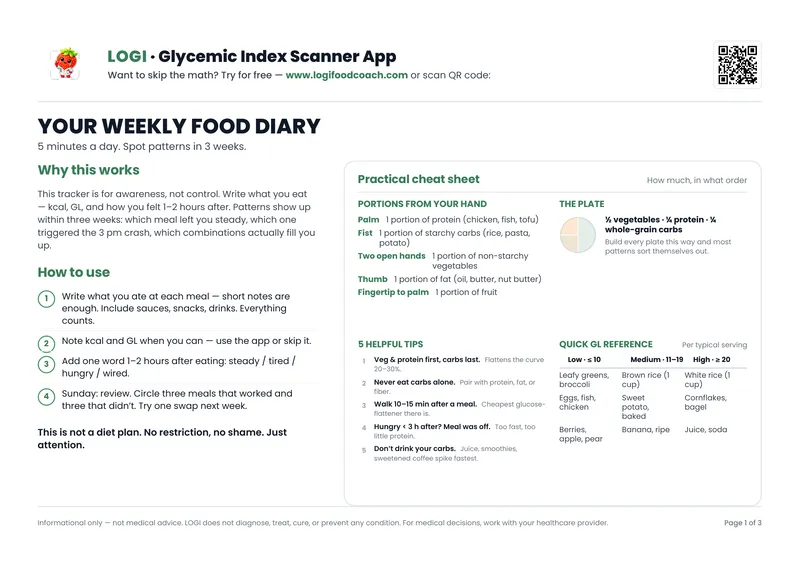
Free PDF — 3 pages
Your Weekly Food Journal
Track meals, glycemic load & mood. Spot patterns in 3 weeks.
No spam. Unsubscribe anytime.