Involtini di Melanzane
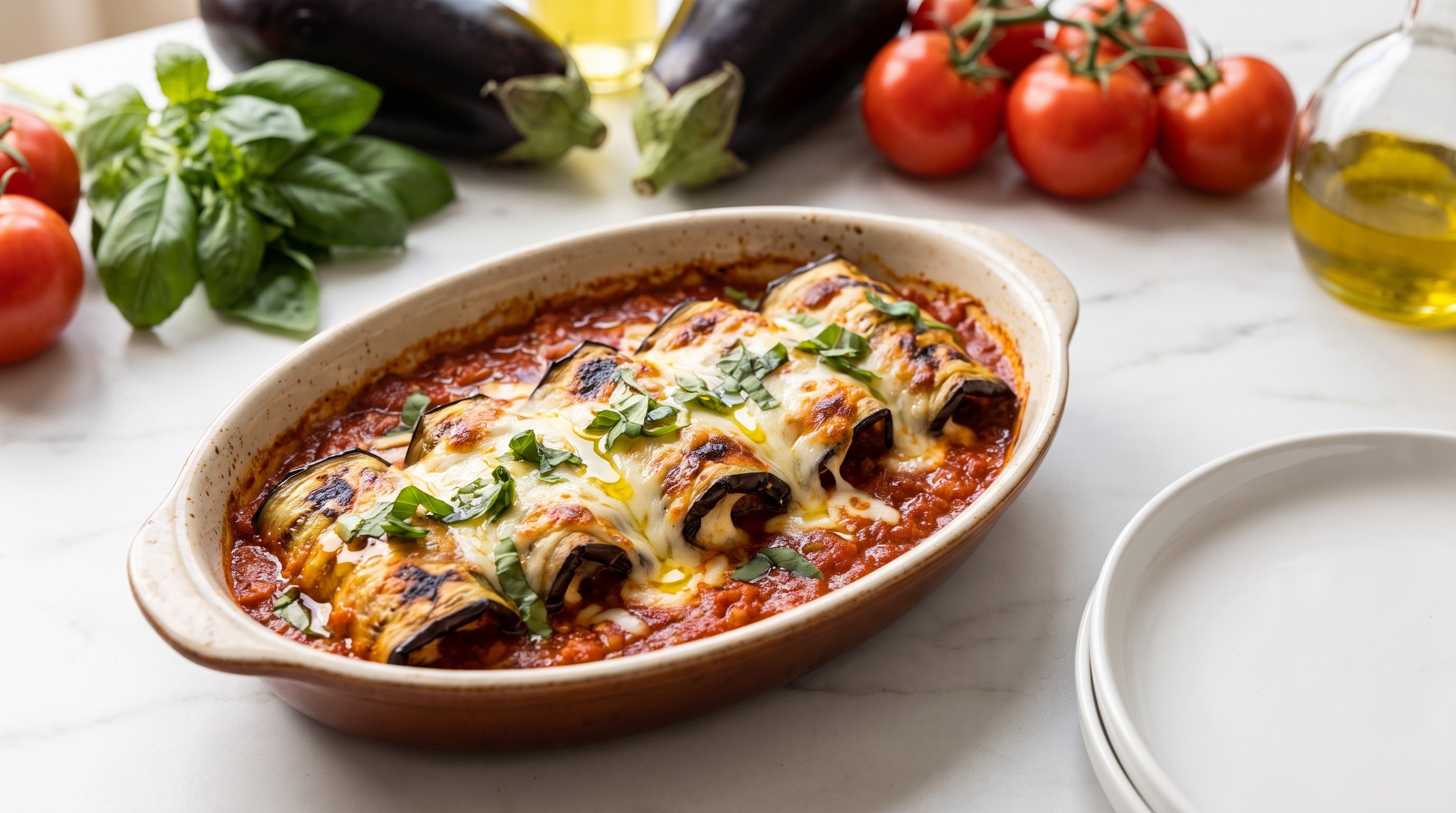
Grilled eggplant rolls stuffed with creamy ricotta and parmesan, baked in garlic-tomato sauce — naturally low-glycemic with virtually no starchy carbs.
These Italian eggplant involtini are a showcase for how satisfying low-glycemic eating can be. Thin strips of eggplant are charred on a smoking griddle until just pliable, then wrapped around a pillowy ricotta filling enriched with egg and parmesan. Nestled seam-side down in a quick garlic-tomato sauce and topped with torn mozzarella, the rolls bake until golden and bubbling — comfort food with a remarkably gentle effect on blood sugar.
The dish is naturally free of starchy carbohydrate. Eggplant is one of the lowest-GI vegetables available, contributing soluble fibre that slows gastric emptying and blunts any glucose response from the tomato sauce. The ricotta and egg filling delivers a solid hit of protein and fat, both of which further flatten the post-meal glucose curve. Even the olive oil plays a metabolic role: its monounsaturated fats have been shown to improve insulin sensitivity when consumed as part of a Mediterranean-style meal.
For the steadiest blood sugar response, serve the involtini alongside a simple leafy salad dressed with lemon and olive oil, and eat the greens first. The additional fibre primes the digestive tract to handle any residual carbohydrate even more gradually. This is a dish that proves low-glycemic cooking is not about restriction — it is about choosing ingredients that work with your metabolism rather than against it.
Blood Sugar Impact
Very low blood sugar impact expected. The combination of protein-rich ricotta, egg, and cheeses with low-carb eggplant and healthy fats from olive oil will produce a gentle, sustained glucose curve with minimal spiking.
Blood Sugar Tips
- ✓ Eat the eggplant and vegetable components first before the cheese-heavy filling to front-load fiber and slow gastric emptying.
- ✓ Pair with a simple side salad dressed in olive oil and vinegar — the acetic acid from vinegar can further blunt any modest glucose rise.
- ✓ Take a 10-15 minute walk after eating to enhance glucose uptake by muscles and keep blood sugar stable.
🥗 Ingredients
- 400 g Eggplant
- 200 g Ricotta
- 1 pcs Egg
- 25 g Parmesan
- 60 g Mozzarella
- 300 g Crushed tomatoes
- 2 pcs Garlic
- 20 g Extra-virgin olive oil
- 5 g Basil
- 0.5 tsp Salt
- 0.25 tsp Black pepper
- 14.1 oz Eggplant
- 7.1 oz Ricotta
- 1 pcs Egg
- 0.9 oz Parmesan
- 2.1 oz Mozzarella
- 10.6 oz Crushed tomatoes
- 2 pcs Garlic
- 0.7 oz Extra-virgin olive oil
- 0.2 oz Basil
- 0.5 tsp Salt
- 0.25 tsp Black pepper
👨🍳 Instructions
- 1
Set the oven to 200 °C (390 °F). Trim the ends off the eggplant and slice it lengthwise into strips roughly 5 mm thick. Select the six widest centre-cut slices — they need to be broad enough to wrap around a spoonful of filling. Set the narrow outer rounds aside for another use.
- 2
Brush both sides of each eggplant strip lightly with about half the olive oil and season with a small pinch of salt. Get a griddle pan smoking hot over high heat, then lay the strips in a single layer — work in two or three batches so the pan stays fiercely hot. Grill for about 2 minutes per side until the flesh is softened, pliable, and marked with dark char lines. Transfer to a plate.
- 3
While the eggplant cools slightly, make the filling. Combine the ricotta, egg, half the grated parmesan, a pinch of salt, and a generous grinding of black pepper in a mixing bowl. Stir with a fork until the mixture is evenly blended and smooth.
- 4
Warm the remaining olive oil in a small saucepan over medium heat. Drop in the sliced garlic and stir for about 30 seconds until fragrant but not coloured. Pour in the crushed tomatoes, add a pinch of salt, and let the sauce simmer gently for 5 minutes so the garlic flavour melds through.
- 5
Spread the tomato sauce evenly across the bottom of a small oven-proof baking dish, roughly 20 × 15 cm.
- 6
Spoon about 2 tablespoons of the ricotta filling onto one end of a grilled eggplant strip. Roll the strip up snugly around the filling and place it seam-side down in the sauce. Repeat with the remaining strips until all the filling is used.
- 7
Scatter the torn mozzarella and the remaining grated parmesan over the top of the rolls.
- 8
Bake for 15 minutes until the cheese is blistered and golden and the sauce is bubbling at the edges. Remove from the oven and let the dish rest for 3 minutes — this allows the filling to set so the rolls hold their shape when served. Tear the fresh basil over the top and serve straight from the dish.
📊 Nutrition Per Serving
| Per Serving | Whole Dish | |
|---|---|---|
| Calories | 535 | 1070 |
| Carbs | 28g | 56g |
| Sugars | 15g | 29g |
| Natural Sugars | 15g | 29g |
| Protein | 29g | 58g |
| Fat | 36g | 71g |
| Saturated Fat | 17g | 33g |
| Unsaturated Fat | 19g | 38g |
| Fiber | 9g | 18g |
| Soluble Fiber | 3g | 6g |
| Insoluble Fiber | 6g | 12g |
| Sodium | 1107mg | 2214mg |
Predicted Glucose Response
What if you...
Estimated model — individual responses vary. Not medical advice.
🔄 Lower GI Swaps
Many commercial crushed-tomato brands contain added sugar, which raises the glycemic load unnecessarily. San Marzano whole tomatoes are naturally sweet without added sugars, and hand-crushing them gives you full control over the texture and sugar content. Alternatively, use fresh ripe tomatoes in season for the lowest possible sugar content.
🔬 The Science Behind This Recipe
Why This Recipe Works for Blood Sugar
Eggplant is one of the lowest-glycemic vegetables you can cook with. At roughly 3 g of net carbohydrate per 100 g, it contributes almost nothing to glycemic load while providing soluble fibre — the kind that forms a gel in the stomach, slowing gastric emptying and smoothing the rate at which glucose from the tomato sauce reaches the bloodstream.
The ricotta-and-egg filling is the metabolic anchor of the dish. Protein triggers a glucagon response that partially offsets the insulin spike from carbohydrate, while fat slows digestion further. Together they extend the nutrient absorption window, producing a flatter, more sustained glucose curve rather than a sharp peak and crash.
Olive oil adds another layer of protection. Its predominant fatty acid, oleic acid, has been shown in clinical studies to improve peripheral insulin sensitivity when consumed regularly as part of a Mediterranean-pattern diet. In practical terms, that means the cells that need to take up glucose do so more efficiently, keeping circulating blood sugar lower.
The tomato sauce is the only meaningful source of carbohydrate in the dish, and even here the load is modest — roughly 4–5 g of sugar per serving from the natural sugars in the tomatoes. Cooking concentrates the lycopene but does not significantly raise the glycemic index of the sauce. Choosing crushed tomatoes with no added sugar keeps the glycemic load of the entire meal in single digits.
Estimated GI: 28 · Glycemic Load per serving: 8 — very low blood sugar impact.
Related recipes
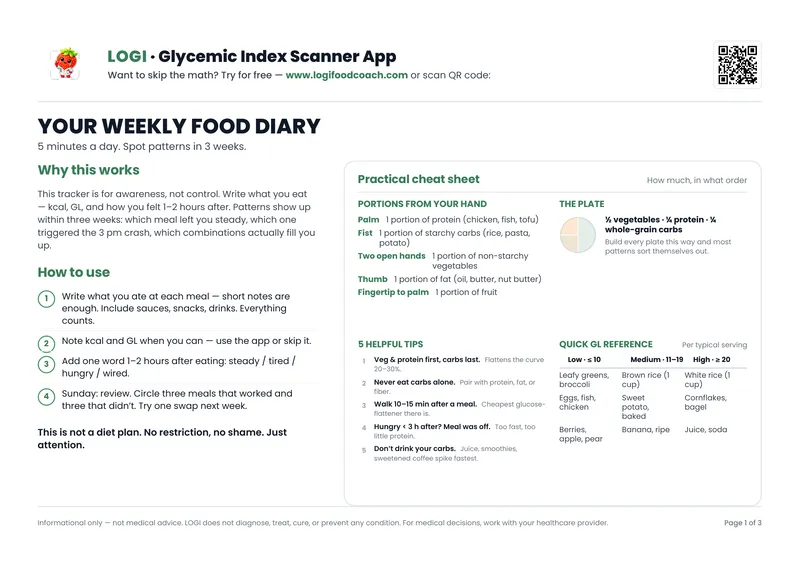
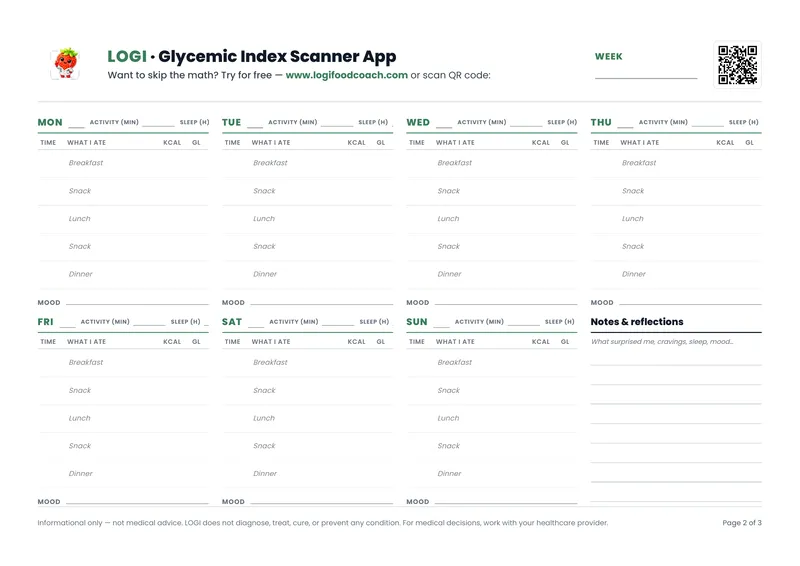
Free PDF — 3 pages
Your Weekly Food Journal
Track meals, glycemic load & mood. Spot patterns in 3 weeks.
No spam. Unsubscribe anytime.