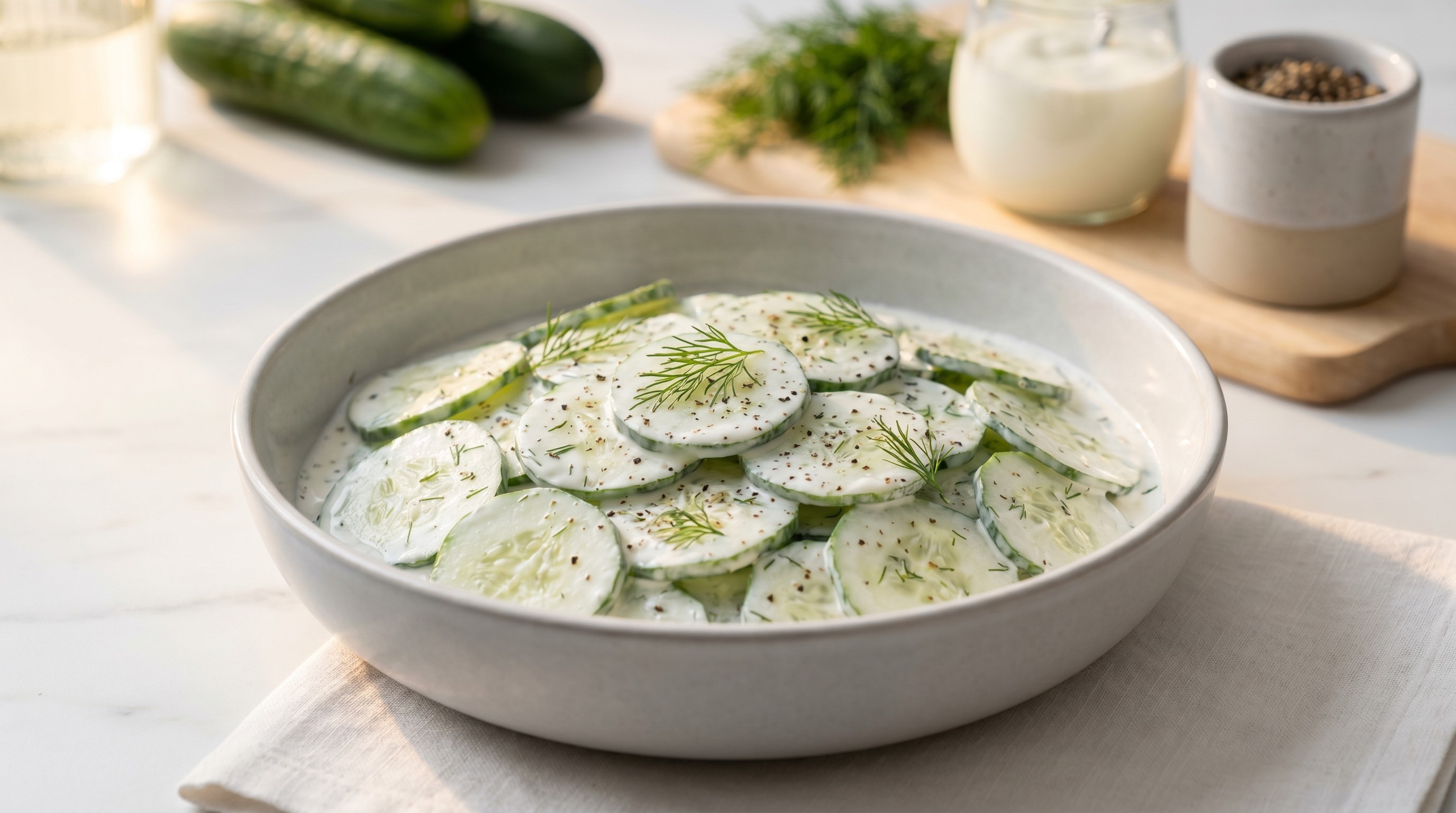
German Cucumber Yogurt Salad (Gurkensalat)
A crisp, cooling German cucumber salad in creamy Greek yogurt dressing with fresh dill and garlic — naturally low-glycemic and ready in ten minutes.
This classic German Gurkensalat is one of the most blood-sugar-friendly side dishes you can make. Cucumber has a glycemic index of just 15 and is over 95% water, meaning it contributes virtually no glucose load to your meal. Paired with full-fat Greek yogurt — rich in protein and healthy fats that slow gastric emptying — this salad creates a gentle, steady metabolic response rather than a spike.
The traditional recipe calls for half a teaspoon of sugar to balance the vinegar's acidity. We replace it with erythritol, a zero-glycemic sweetener that provides the same rounding effect without any impact on blood glucose or insulin. White wine vinegar itself is a metabolic ally: studies show that acetic acid consumed with a meal can reduce the postprandial glucose response by up to 30%, making this dressing actively beneficial for blood sugar management.
Serve this salad as a starter before a main course — eating vegetables and protein before carbohydrates is one of the simplest evidence-based strategies for flattening your glucose curve. It pairs beautifully with grilled fish or chicken, and if you want to add a starch, choose a slice of dense sourdough rye bread (GI ~48) rather than white bread. The salad is best eaten fresh but holds well in the refrigerator for up to thirty minutes before the cucumbers release too much liquid into the dressing.
Blood Sugar Impact
Minimal blood sugar impact expected. The very low glycemic load (2.5) and GI (21) combined with high-fiber cucumber, protein-rich Greek yogurt, and vinegar create a meal that should keep blood sugar remarkably stable.
Blood Sugar Tips
- ✓ The white wine vinegar already helps blunt glucose response — consider adding a splash of extra vinegar or a squeeze of lemon to amplify this effect.
- ✓ Pair this salad as a starter before any higher-carb course to pre-load with fiber and protein, which slows gastric emptying and reduces the spike from subsequent foods.
- ✓ Add a handful of walnuts or pumpkin seeds for healthy fats and extra protein, further flattening any minimal glucose curve.
🥗 Ingredients
- 1 pcs Cucumber
- 0.75 tsp Sea salt
- 150 g Greek yogurt
- 1 tbsp White wine vinegar
- 1 pcs Garlic
- 2 tbsp Dill
- 0.5 tsp Erythritol
- 0.25 tsp Black pepper
- 1 pcs Cucumber
- 0.75 tsp Sea salt
- 5.3 oz Greek yogurt
- 1 tbsp White wine vinegar
- 1 pcs Garlic
- 2 tbsp Dill
- 0.5 tsp Erythritol
- 0.25 tsp Black pepper
👨🍳 Instructions
- 1
Wash the cucumber and trim off the ends but leave the skin on — the peel contains fibre that further slows sugar absorption. Slice into very thin rounds, about 2–3 mm thick. A mandoline gives the most consistent results, but a sharp knife works well.
- 2
Transfer the cucumber slices to a colander set over a bowl. Sprinkle with the fine sea salt, toss gently to distribute, and leave to stand for 8–10 minutes. The salt draws out excess moisture, which prevents the dressing from becoming watery.
- 3
After resting, squeeze the cucumber slices gently with your hands or press them firmly in a clean kitchen cloth to extract as much liquid as possible. Discard the collected liquid. This step is essential for a creamy, well-coated salad.
- 4
In a medium mixing bowl, combine the Greek yogurt, white wine vinegar, grated garlic, chopped dill, and erythritol. Whisk until the dressing is completely smooth and uniform.
- 5
Season the dressing generously with freshly ground black pepper. Stir once more to incorporate.
- 6
Add the drained cucumber slices to the bowl with the dressing. Fold gently with a spatula or large spoon until every slice is evenly coated.
- 7
Taste and adjust the balance: add a small splash more vinegar if you prefer extra sharpness, or a pinch of salt if needed. The flavour should be bright, creamy, and herbaceous.
- 8
Serve immediately for the crispest texture, or refrigerate for up to 30 minutes to let the flavours meld. Garnish with an extra sprig of dill. For the best blood sugar response, eat this salad as a starter before any carbohydrate-containing main course.
📊 Nutrition Per Serving
| Per Serving | Whole Dish | |
|---|---|---|
| Calories | 80 | 161 |
| Carbs | 12g | 24g |
| Sugars | 6g | 12g |
| Natural Sugars | 6g | 12g |
| Protein | 9g | 18g |
| Fat | 1g | 1g |
| Saturated Fat | 0g | 0g |
| Unsaturated Fat | 0g | 1g |
| Fiber | 1g | 2g |
| Soluble Fiber | 0g | 1g |
| Insoluble Fiber | 1g | 1g |
| Sodium | 794mg | 1588mg |
Predicted Glucose Response
What if you...
Estimated model — individual responses vary. Not medical advice.
🔄 Lower GI Swaps
Full-fat dairy has a lower glycemic response than low-fat versions, as the additional fat slows gastric emptying and glucose absorption, further reducing the already low GL of this dish.
Apple cider vinegar has been shown in studies to improve post-meal insulin sensitivity and lower blood sugar spikes by up to 34% when consumed with a meal. Red wine vinegar offers similar acetic acid benefits with added polyphenols.
While erythritol has a GI of 0, monk fruit and stevia also have a GI of 0 and may offer additional benefits: monk fruit contains mogrosides with potential insulin-sensitizing properties. Yacon syrup (GI ~1) contains inulin fiber that supports steady blood sugar.
🔬 The Science Behind This Recipe
Why This Salad Is a Blood Sugar Win
This German Cucumber Yogurt Salad is a standout choice for steady blood sugar, and the numbers tell the story: with a glycemic index of just 21 and a glycemic load of only 2.5 per serving, it barely registers on your body's glucose radar. But what do those numbers actually mean? The glycemic index measures how quickly a food raises blood sugar, while the glycemic load factors in how much carbohydrate you're actually eating. Since cucumbers are mostly water and fiber with very few carbs, even though they digest slowly, there's simply not much sugar to release in the first place. That's the magic of glycemic load — it's not just about the type of carb, it's about the amount.
Greek yogurt is the real metabolic hero here. It brings a powerful combination of protein and fat to the table, both of which slow down digestion and create a gentler, more gradual release of energy. When you pair protein with any carbohydrate — even a small amount — your body processes the glucose more slowly, avoiding those sharp spikes and crashes that leave you feeling drained. The natural fat in Greek yogurt further extends this effect, acting like a speed bump for your digestive system. White wine vinegar adds another layer of benefit: studies suggest that vinegar consumed with meals can improve your body's insulin response, helping cells absorb glucose more efficiently.
For an extra edge, try eating this salad at the beginning of your meal before any starchier dishes. Research shows that eating vegetables and protein first creates a buffer that slows the absorption of carbohydrates eaten afterward. And if you can, a short 10-to-15-minute walk after eating works wonders — gentle movement helps your muscles use glucose directly, keeping blood sugar levels beautifully stable. This simple salad isn't just refreshing; it's a smart, delicious strategy for metabolic health.
Related recipes
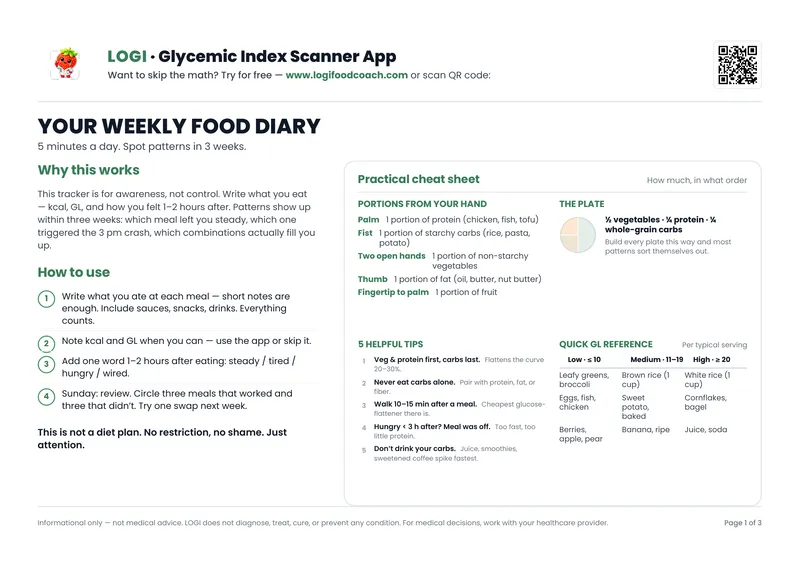
Free PDF — 3 pages
Your Weekly Food Journal
Track meals, glycemic load & mood. Spot patterns in 3 weeks.
No spam. Unsubscribe anytime.