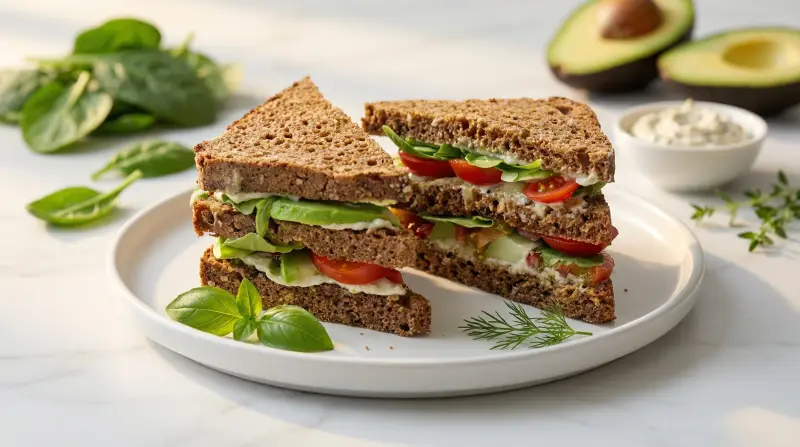
Low-Glycemic Green Club Sandwich
A nutrient-dense triple-decker sandwich featuring fiber-rich whole grains, creamy avocado, and fresh vegetables that won't spike your blood sugar levels.
This blood sugar-friendly club sandwich transforms a classic lunch favorite into a glycemic powerhouse. Built on a foundation of whole grain or rye bread—both excellent low-GI choices with scores around 50-55—this sandwich delivers sustained energy without the glucose rollercoaster of white bread alternatives. The combination of protein-rich hummus, healthy fats from avocado, and fiber from fresh vegetables creates an ideal macronutrient balance that slows carbohydrate absorption. Avocados are particularly beneficial for blood sugar management, providing monounsaturated fats that improve insulin sensitivity while adding satisfying creaminess. The peppery rocket (arugula) and juicy cherry tomatoes contribute additional fiber, antioxidants, and virtually no impact on blood glucose. Each slice of whole grain bread should weigh approximately 30-35 grams for optimal portion control and glycemic management. For optimal glycemic control, eat the vegetable layers first before finishing the bread portions. This food sequencing technique can reduce post-meal blood sugar spikes by up to 40%. Pair this sandwich with unsweetened tea or water rather than juice to maintain glycemic benefits. Perfect for a satisfying lunch that keeps you energized and focused throughout the afternoon without the typical post-sandwich slump. This vegetarian version provides approximately 15 grams of protein from hummus and whole grains combined, making it suitable for blood sugar stability when eaten mindfully.
Blood Sugar Impact
This sandwich will have a low to moderate blood sugar impact with a gradual, sustained rise rather than a sharp spike. The combination of fiber-rich whole grains, healthy fats from avocado and hummus, and low-GI vegetables should provide stable energy for 3-4 hours.
Blood Sugar Tips
- ✓ Eat the arugula and tomatoes first before the bread portion to slow carbohydrate absorption and blunt the glucose response
- ✓ Pair this meal with a 10-15 minute walk after eating to help muscles absorb glucose and reduce post-meal blood sugar elevation
- ✓ Consider adding a protein source like grilled chicken or turkey to further lower the overall glycemic impact and extend satiety
🥗 Ingredients
- 3 pcs wholegrain or rye bread slices
- 3 tbsp ready-made hummus
- 100 g small avocado, stoned and sliced
- 1 cup rocket leaves (arugula)
- 10 pcs cherry tomatoes, sliced
- 3 pcs wholegrain or rye bread slices
- 3 tbsp ready-made hummus
- 3.5 oz small avocado, stoned and sliced
- 1 cup rocket leaves (arugula)
- 10 pcs cherry tomatoes, sliced
👨🍳 Instructions
- 1
Place three slices of wholegrain or rye bread in your toaster and toast until golden brown and crispy. The toasting process slightly increases resistant starch, which is beneficial for blood sugar control.
- 2
While the bread is toasting, prepare your vegetables. Slice the avocado in half, remove the stone, and scoop out the flesh. Cut into thin, even slices. Wash and dry the rocket leaves, and slice the cherry tomatoes into rounds.
- 3
Once the bread is toasted, lay all three slices on a clean cutting board. Spread one tablespoon of hummus evenly across one side of each slice, reaching all the way to the edges for maximum flavor and protein distribution.
- 4
On the first slice of hummus-covered toast, arrange half of the avocado slices in an even layer. Top with half of the rocket leaves, distributing them evenly, then add half of the sliced cherry tomatoes. Season lightly with freshly ground black pepper.
- 5
Place the second slice of toast on top, hummus-side down, to create the first layer of your club sandwich. Press down gently to help the layers adhere together.
- 6
On top of the second slice, arrange the remaining avocado slices, followed by the rest of the rocket leaves and cherry tomatoes. Season again with black pepper to taste.
- 7
Top with the final slice of toast, hummus-side down, and press the entire sandwich together gently but firmly. For easier eating, secure with cocktail sticks at four points, then slice diagonally into quarters.
- 8
Serve immediately while the toast is still slightly warm. For optimal blood sugar management, eat the sandwich slowly and consider eating some of the vegetable filling first before consuming all the bread layers. Pair with unsweetened tea or water rather than juice to maintain stable blood sugar levels.
📊 Nutrition Per Serving
| Per Serving | Whole Dish | |
|---|---|---|
| Calories | 529 | 529 |
| Carbs | 65g | 65g |
| Sugars | 11g | 11g |
| Natural Sugars | 11g | 11g |
| Protein | 20g | 20g |
| Fat | 23g | 23g |
| Saturated Fat | 3g | 3g |
| Unsaturated Fat | 19g | 19g |
| Fiber | 19g | 19g |
| Soluble Fiber | 5g | 5g |
| Insoluble Fiber | 12g | 12g |
| Sodium | 559mg | 559mg |
Predicted Glucose Response
What if you...
Estimated model — individual responses vary. Not medical advice.
🔄 Lower GI Swaps
These alternatives offer even lower glycemic responses than standard whole grain bread while maintaining similar texture and satisfaction. Sprouted grain bread has enhanced nutrient bioavailability and lower starch content. Pumpernickel's coarse grind and acidic profile slow digestion significantly. Sourdough fermentation produces organic acids that reduce the glycemic impact of the grain.
Homemade versions allow you to increase the tahini and olive oil content, improving the fat-to-carbohydrate ratio for better blood sugar control. White beans provide similar protein with marginally lower glycemic load. Whole mashed chickpeas retain maximum fiber content compared to processed hummus, further slowing glucose absorption.
While cherry tomatoes are already low-GI, these alternatives provide even more negligible carbohydrate content for those seeking maximum glycemic control. Cucumbers are 95% water with minimal impact on blood sugar. Bell peppers add satisfying crunch with antioxidants. Spinach contributes minerals that support insulin function with essentially zero glycemic load.
🔬 The Science Behind This Recipe
This sandwich leverages multiple glycemic control mechanisms to maintain stable blood sugar levels. The whole grain or rye bread base provides a low glycemic index of 33-55 compared to white bread's 75, thanks to intact bran and germ that slow starch digestion. Toasting the bread creates additional resistant starch through retrogradation, further reducing glycemic impact. The hummus contributes both protein (approximately 6 grams total) and soluble fiber from chickpeas, which form a viscous gel in the digestive tract that delays glucose absorption. Avocado's monounsaturated fats trigger the release of peptide YY and GLP-1, hormones that slow gastric emptying and improve insulin sensitivity. The fiber content from vegetables, whole grains, and legumes totals approximately 12-15 grams per serving, which research shows can reduce post-meal blood glucose by 20-30%. The combination of fat, fiber, and protein creates a synergistic effect that flattens the glucose curve, providing sustained energy for 3-4 hours without the rapid spike and crash associated with refined carbohydrate meals. Food sequencing—eating vegetables before carbohydrates—can further reduce glycemic response by up to 40% by creating a physical barrier that slows carbohydrate absorption.
Related recipes
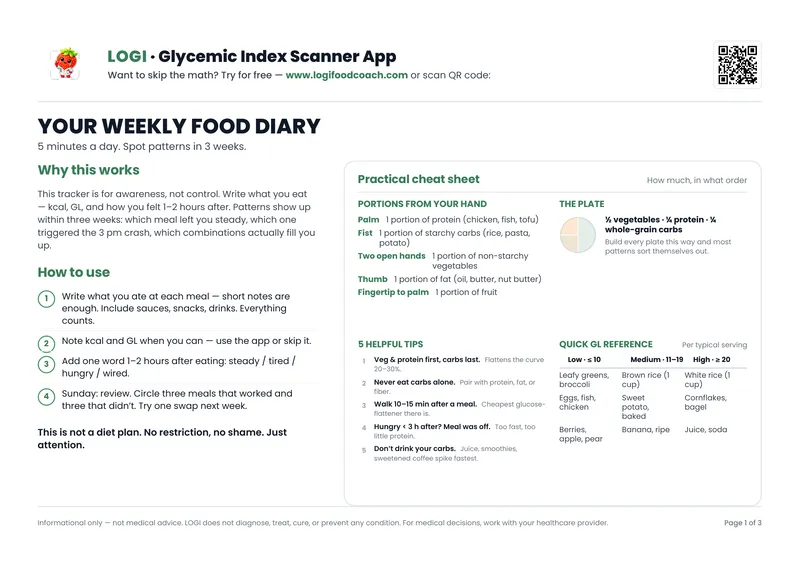
Free PDF — 3 pages
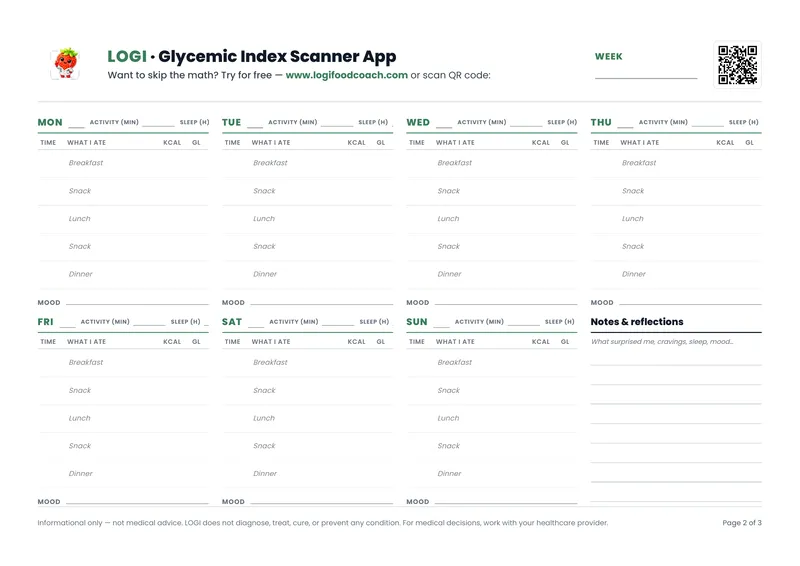
Your Weekly Food Journal
Track meals, glycemic load & mood. Spot patterns in 3 weeks.
No spam. Unsubscribe anytime.