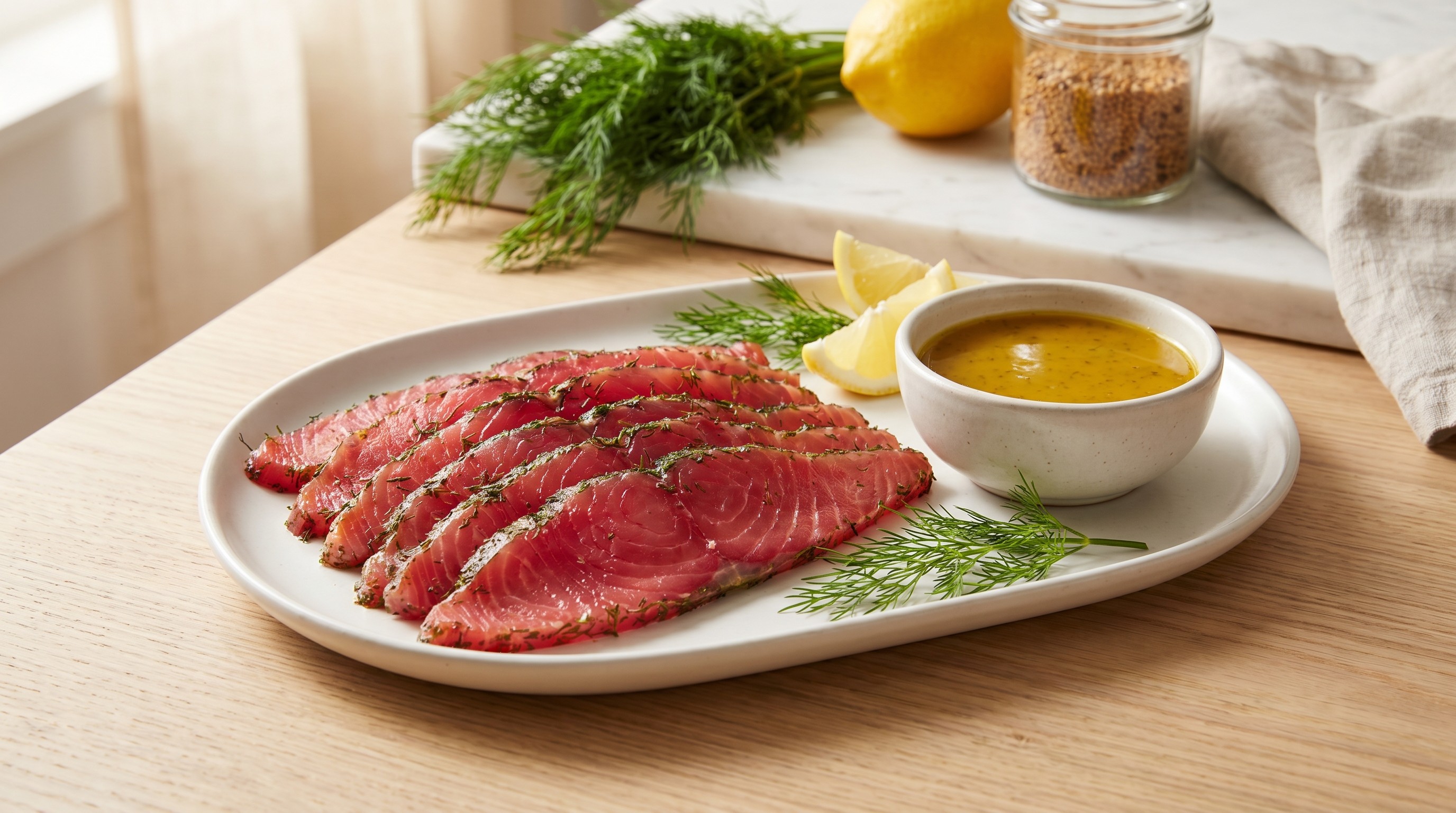
Gravlax with Mustard Dill Sauce
Silky salt-cured salmon with a tangy mustard-dill sauce — nearly zero-carb, rich in omega-3s, and naturally ideal for stable blood sugar.
Gravlax is one of Scandinavia's greatest gifts to blood-sugar-friendly eating. A pristine salmon fillet is buried in a fragrant cure of sea salt, a touch of sugar, cracked pepper, and a generous blanket of fresh dill. Over 24 to 48 hours in the refrigerator the cure draws moisture from the flesh, firming it into silky, translucent slices that melt on the tongue. Because no heat is applied, the omega-3 fatty acids in the salmon remain fully intact — fats that have been shown to improve insulin sensitivity and reduce systemic inflammation.
The accompanying mustard-dill sauce provides a bright counterpoint. Dijon and wholegrain mustard deliver pungent depth, white wine vinegar adds acidity that may further slow glucose absorption, and a drizzle of olive oil contributes heart-healthy monounsaturated fat. The total carbohydrate content per serving is negligible — roughly 3 grams, almost entirely from the mustards and the small amount of sugar in the cure — making this dish effectively zero on the glycemic scale.
For optimal blood-sugar management, serve gravlax at the start of a meal: consuming protein and fat before any carbohydrate course blunts the post-prandial glucose spike that follows. Pair it with a small side of dark rye crispbread or a cucumber-radish salad for added fibre. Because the curing process is entirely hands-off, gravlax is a superb meal-prep protein — slice portions on Sunday and enjoy them through midweek lunches with virtually no impact on your glucose monitor.
Blood Sugar Impact
Very low blood sugar impact. The meal is predominantly protein and healthy fats from salmon, with only trace amounts of sugar in the cure and sauce, resulting in a negligible glycemic load of 2.4 and stable blood sugar levels.
Blood Sugar Tips
- ✓ Serve alongside a generous portion of non-starchy vegetables or a leafy green salad to add fiber and further blunt any minimal sugar from the cure.
- ✓ If pairing with bread or crackers, choose a dense whole-grain rye crispbread rather than white bread to keep the overall glycemic load low.
- ✓ Include a source of additional healthy fat like avocado or olive oil in the side dish to further slow digestion and sustain satiety.
🥗 Ingredients
- 600 g Salmon fillet
- 30 g Coarse sea salt
- 15 g Granulated sugar
- 1 tsp Black pepper
- 60 g Dill
- 1 tsp Lemon zest
- 2 tbsp Dijon mustard
- 1 tbsp Wholegrain mustard
- 1 tbsp White wine vinegar
- 1 tsp Granulated sugar
- 4 tbsp Olive oil
- 2 tbsp Dill
- 1 pcs Salt and white pepper
- 1.3 lb Salmon fillet
- 1.1 oz Coarse sea salt
- 0.5 oz Granulated sugar
- 1 tsp Black pepper
- 2.1 oz Dill
- 1 tsp Lemon zest
- 2 tbsp Dijon mustard
- 1 tbsp Wholegrain mustard
- 1 tbsp White wine vinegar
- 1 tsp Granulated sugar
- 4 tbsp Olive oil
- 2 tbsp Dill
- 1 pcs Salt and white pepper
👨🍳 Instructions
- 1
Combine the coarse sea salt, 15 g of sugar (or erythritol substitute), and coarsely ground black pepper in a small bowl. Stir until evenly blended — this is the curing mixture that will draw moisture from the salmon and concentrate its flavour.
- 2
Tear off a large sheet of cling film and lay it flat on your work surface. Spread half the roughly chopped dill across the centre in a layer slightly larger than the salmon fillet.
- 3
Place the salmon fillet skin-side down on the bed of dill. Rub the salt-sugar cure evenly across the exposed flesh, pressing gently so it adheres. Scatter the lemon zest (if using) over the top, then cover with the remaining dill.
- 4
Wrap the salmon tightly in the cling film, ensuring there are no gaps. Transfer the parcel to a shallow dish to catch any liquid that escapes. Place a flat weight on top — a chopping board topped with a couple of tins works perfectly — and refrigerate for 24 to 48 hours. Flip the parcel once at the halfway point. A longer cure produces a firmer, more intensely flavoured gravlax.
- 5
While the salmon cures, prepare the mustard-dill sauce. In a medium bowl, whisk together the Dijon mustard, wholegrain mustard, white wine vinegar, and 1 teaspoon of sugar until smooth.
- 6
While whisking continuously, add the olive oil in a slow, thin stream. The sauce should emulsify into a creamy, pourable consistency similar to a vinaigrette. Fold in the finely chopped dill and season with a pinch of salt and white pepper. Refrigerate until needed — the sauce keeps well for up to three days.
- 7
When the cure is complete, unwrap the salmon and gently scrape off the dill and any remaining salt mixture with the back of a knife. Pat the surface thoroughly dry with kitchen paper — this helps you achieve clean, thin slices.
- 8
Using a long, sharp knife held at a shallow angle, slice the gravlax into thin, broad pieces, cutting away from the skin as you go. Arrange the slices on a serving platter, drizzle with the mustard-dill sauce, and serve immediately. For optimal blood sugar management, enjoy the protein-rich gravlax before any carbohydrate side dishes.
📊 Nutrition Per Serving
| Per Serving | Whole Dish | |
|---|---|---|
| Calories | 311 | 1867 |
| Carbs | 5g | 29g |
| Sugars | 3g | 20g |
| Added Sugars | 3g | 19g |
| Natural Sugars | 0g | 1g |
| Protein | 23g | 137g |
| Fat | 23g | 135g |
| Saturated Fat | 4g | 26g |
| Unsaturated Fat | 18g | 109g |
| Fiber | 1g | 4g |
| Soluble Fiber | 0g | 0g |
| Insoluble Fiber | 0g | 1g |
| Sodium | 2118mg | 12710mg |
Predicted Glucose Response
What if you...
Estimated model — individual responses vary. Not medical advice.
🔄 Lower GI Swaps
Granulated sugar has a high GI of ~65. Erythritol and xylitol have a GI of 0-7, while coconut sugar has a GI of ~35, all producing a significantly lower glycemic response.
While white wine vinegar already has negligible GI impact, apple cider vinegar has been shown in studies to further help blunt post-meal blood sugar spikes by slowing gastric emptying and improving insulin sensitivity.
Some commercial Dijon mustards contain added sugar or white wine that slightly raises glycemic load. Whole seed or stone-ground varieties typically have no added sugars, keeping the GL contribution at zero.
🔬 The Science Behind This Recipe
Here's the science explainer section:
---
Why This Recipe Works for Blood Sugar
Gravlax is a naturally blood-sugar-friendly dish, and it starts with the star ingredient: salmon. As a rich source of protein and healthy omega-3 fats, salmon has virtually no impact on your blood sugar. When you eat protein and fat, your body digests them slowly, which means there's no rush of glucose flooding your bloodstream. In fact, the generous protein content in each serving helps keep you feeling satisfied longer, reducing the urge to snack on higher-carb foods later. Think of salmon as a metabolic anchor — it steadies the ship.
You might notice this recipe calls for a small amount of sugar in the curing mix, but here's where the concept of glycemic load comes in. Glycemic load accounts for *how much* of a carbohydrate you're actually eating, not just how fast it raises blood sugar. While sugar itself has a moderate glycemic index, the tiny quantity used across multiple servings of gravlax results in a remarkably low glycemic load of just 2.4 per serving — well within the range considered negligible. Most of that sugar draws moisture out of the fish during curing rather than ending up concentrated on your plate.
To get the most blood-sugar-friendly experience from this meal, pair your gravlax with a bed of leafy greens or sliced cucumber before adding any bread or crackers on the side. Eating vegetables and protein first gives your body a head start on digestion, creating a natural buffer that slows glucose absorption from any carbs that follow. A short 10-15 minute walk after eating can further help your muscles soak up circulating glucose. With its protein-rich, low-carb profile, gravlax is one of those rare dishes that's as kind to your metabolism as it is elegant on the plate.
Related recipes
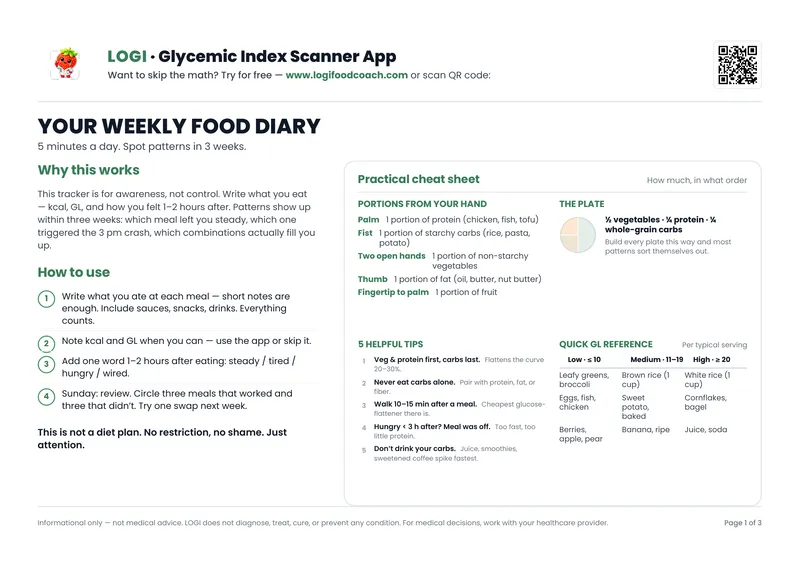
Free PDF — 3 pages
Your Weekly Food Journal
Track meals, glycemic load & mood. Spot patterns in 3 weeks.
No spam. Unsubscribe anytime.