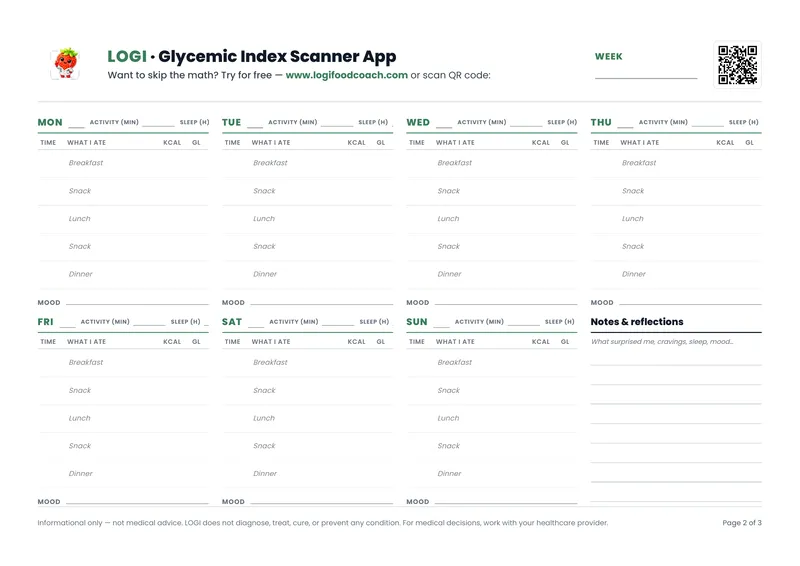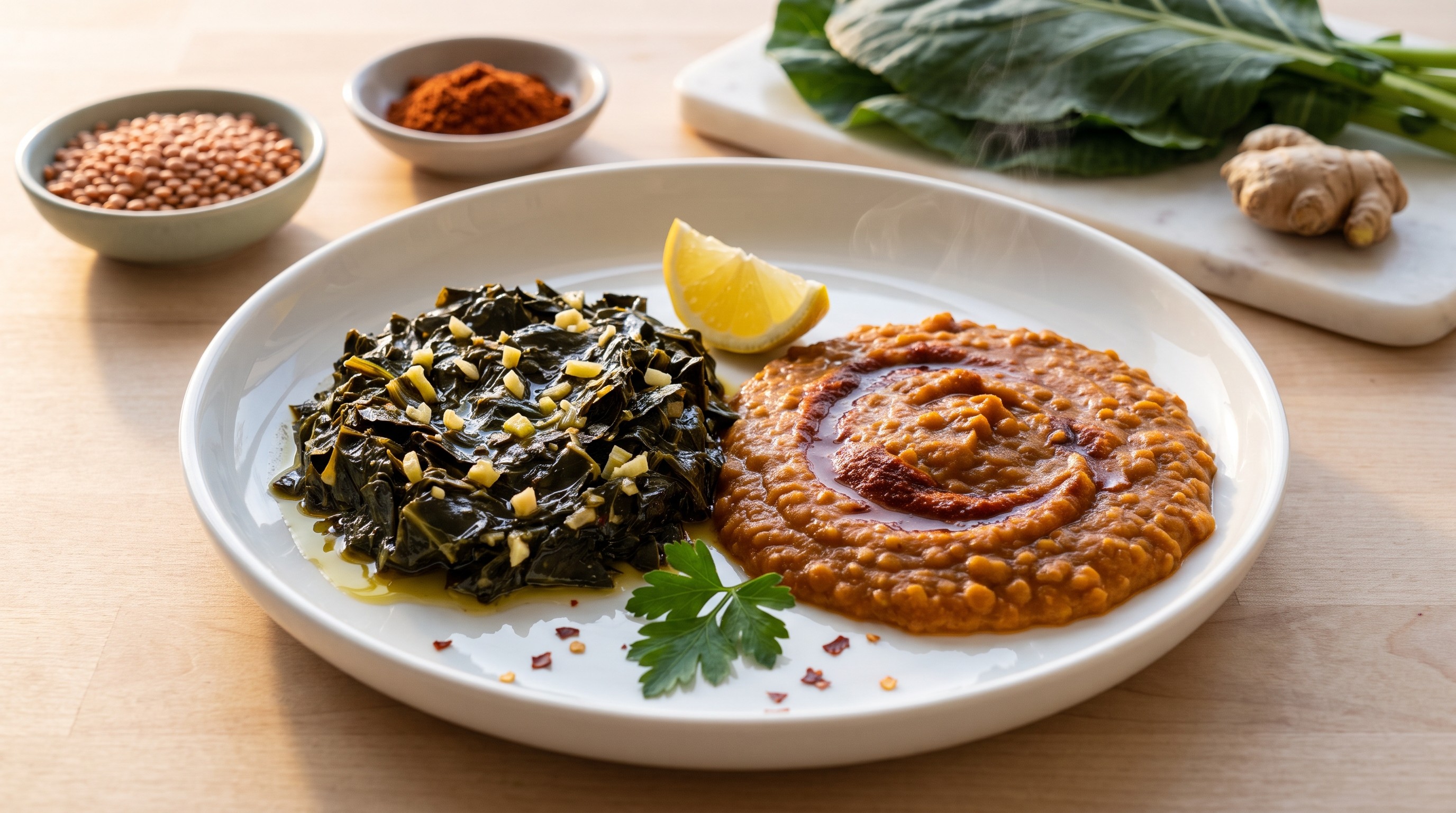
Gomen Wat with Misir Wot
Silky Ethiopian collard greens meet a thick berbere-spiced red lentil stew in this naturally low-GI, fiber-rich vegan plate that steadies blood sugar gently.
This Ethiopian ye-tsom (fasting-day) plate pairs two naturally blood-sugar-friendly components: gomen wat — collard greens braised with ginger, garlic, and turmeric until meltingly tender — and misir wot, a thick red lentil stew perfumed with berbere spice. Together they deliver a deeply satisfying meal with a remarkably gentle glucose curve.
Red lentils sit at a GI of roughly 26, making them one of the most blood-sugar-friendly legumes available. Their soluble fiber forms a gel during digestion that slows carbohydrate absorption, while their plant protein further blunts any post-meal glucose rise. Collard greens contribute almost zero digestible carbohydrate — they are nearly pure insoluble fiber, vitamins, and minerals — so they add bulk and nutrition without any glycemic cost at all. The generous amount of berbere spice is more than just flavor: its fenugreek and chili components have been studied for their potential to improve insulin sensitivity.
For optimal blood sugar management, eat the collard greens first before moving to the lentil stew. Starting with the fiber-rich vegetable course creates a physical barrier in the digestive tract that slows the absorption of carbohydrates from the lentils that follow. Pair this plate with a small side of injera made from 100% teff flour (GI ~50) rather than wheat-blend versions, or simply enjoy the stew on its own for the lowest possible glycemic impact. This meal is ideal for lunch or an early dinner, giving your body ample time to process the slow-release energy from the lentils before sleep.
Blood Sugar Impact
Low glycemic impact expected. The combination of red lentils (rich in protein and fiber), collard greens, and healthy fats from vegetable oil will promote a slow, gradual rise in blood sugar with stable energy for 3-4 hours.
Blood Sugar Tips
- ✓ Eat the collard greens (gomen) first before the lentil stew to create a fiber buffer that slows glucose absorption.
- ✓ Avoid pairing with white rice or injera made from pure teff flour — opt for a small portion of whole-grain injera or serve over cauliflower rice to keep the glycemic load low.
- ✓ Take a 10-15 minute walk after the meal to further blunt any post-meal blood sugar rise from the lentils.
🥗 Ingredients
- 2 tbsp Vegetable oil
- 1 pcs Onion
- 1.5 tbsp Berbere spice blend
- 4 pcs Garlic
- 15 g Ginger
- 150 g Red lentils
- 1 tsp Salt
- 400 g Collard greens
- 0.5 tsp Turmeric
- 0.5 pcs Lemon
- 2 tbsp Vegetable oil
- 1 pcs Onion
- 1.5 tbsp Berbere spice blend
- 4 pcs Garlic
- 0.5 oz Ginger
- 5.3 oz Red lentils
- 1 tsp Salt
- 14.1 oz Collard greens
- 0.5 tsp Turmeric
- 0.5 pcs Lemon
👨🍳 Instructions
- 1
Place the red lentils in a fine-mesh sieve and rinse under cold running water, swirling them with your hand, until the water drains clear. Set aside to drain. Strip the collard leaves from their tough central stems and chop the leaves into rough, bite-sized pieces. Dice the onion finely. Mince the garlic and ginger, then split each into two equal piles — one set for the lentil stew and one for the greens.
- 2
Warm one tablespoon of vegetable oil in a heavy-bottomed pot over medium heat. Add the diced onion and cook, stirring now and then, for about 8 minutes. Let the onion soften and turn a deep amber gold — this slow caramelisation builds a naturally sweet base without any added sugar.
- 3
Add the berbere spice blend along with half of the minced garlic and half of the ginger to the caramelised onion. Stir constantly for about 2 minutes until the spices bloom and darken slightly, releasing a rich, smoky fragrance. This toasting step activates the aromatic oils in the berbere and deepens the flavour of the stew.
- 4
Tip the drained lentils into the pot and pour in 400 ml of water. Raise the heat to bring everything to a boil, then immediately lower to a gentle simmer. Cover and cook for about 15 minutes, giving the pot a good stir halfway through, until the lentils have broken down into a thick, porridge-like consistency. Season with half the salt and stir through.
- 5
While the lentils simmer, heat the remaining tablespoon of oil in a wide pan or skillet over medium heat. Add the reserved garlic and ginger and stir for about 30 seconds until fragrant.
- 6
Add the chopped collard greens and ground turmeric to the pan. Season with the remaining salt and toss everything together so the leaves are evenly coated. Cover the pan and let the greens cook for 10 minutes, removing the lid to stir twice during that time. The greens are ready when they are silky, tender, and have turned a vivid deep green.
- 7
Taste both the misir wot and the gomen wat and adjust the seasoning as needed. The lentil stew should be thick enough to hold its shape on the plate — if it looks too loose, simmer uncovered for another minute or two to reduce.
- 8
Mound the collard greens on one side of each serving plate and spoon the lentil stew alongside. Squeeze fresh lemon juice generously over both components just before eating. For the best blood sugar response, start with a few bites of the greens before the lentil stew — the fibre creates a buffer that slows glucose absorption from the lentils.
📊 Nutrition Per Serving
| Per Serving | Whole Dish | |
|---|---|---|
| Calories | 515 | 1031 |
| Carbs | 69g | 137g |
| Sugars | 7g | 15g |
| Natural Sugars | 7g | 15g |
| Protein | 26g | 52g |
| Fat | 16g | 32g |
| Saturated Fat | 2g | 5g |
| Unsaturated Fat | 14g | 27g |
| Fiber | 19g | 37g |
| Soluble Fiber | 6g | 11g |
| Insoluble Fiber | 13g | 26g |
| Sodium | 1249mg | 2498mg |
Predicted Glucose Response
What if you...
Estimated model — individual responses vary. Not medical advice.
🔄 Lower GI Swaps
Red lentils break down completely during cooking, losing their cell structure and creating a porridge-like consistency that is digested more rapidly, raising blood sugar faster. Green, black beluga, and Puy lentils hold their shape, preserving intact cell walls that slow starch digestion and result in a lower glycemic response (GI ~20–22 vs ~26–30 for red lentils), meaningfully reducing the dish's overall glycemic load.
Generic vegetable oil (typically refined soybean or canola) lacks the polyphenols and high monounsaturated fat content found in extra virgin olive oil and avocado oil. These healthier fats slow gastric emptying and improve postprandial glucose response, helping to flatten the blood sugar curve after the meal.
Onions contain moderate amounts of natural sugars that caramelize during the long sautéing typical of Ethiopian wots, concentrating their sweetness and increasing glycemic impact. Using the dark green tops of leeks or a smaller quantity of shallot delivers the aromatic base with less total sugar per serving, slightly reducing the dish's glycemic load.
🔬 The Science Behind This Recipe
Why This Recipe Works for Blood Sugar
This Ethiopian classic is a masterclass in blood sugar-friendly eating. With a Glycemic Index (GI) of just 24 and a Glycemic Load (GL) of 16.4 per serving, it lands firmly in the low-to-moderate range — meaning it releases energy slowly and steadily rather than causing a sharp spike. The secret lies in how the ingredients work together. Lentils, the backbone of misir wot, are packed with both plant protein and soluble fiber. That fiber forms a gel-like barrier in your digestive tract, which physically slows the rate at which sugars enter your bloodstream. Meanwhile, the protein in lentils triggers a gentler insulin response compared to refined carbohydrates, keeping your energy levels more stable for hours after eating.
The gomen (collard greens or kale) adds another powerful layer of protection. Leafy greens are extremely low in carbohydrates but rich in fiber and micronutrients like magnesium, which plays a supportive role in how your body processes glucose. When you eat the greens alongside the lentils, you're essentially creating a natural buffer — the combination of fiber, protein, and healthy fats from the vegetable oil all work to slow digestion. Even the aromatic base of onions, garlic, and ginger contributes: research suggests that compounds in garlic and ginger may support healthy metabolic function over time.
Here's a practical tip to make this meal work even harder for you: eat the gomen wat first, then move to the misir wot. Eating vegetables before your carbohydrate-containing foods has been shown to reduce post-meal glucose spikes significantly. A short 10-to-15-minute walk after your meal can further help your muscles absorb circulating glucose. And remember, Glycemic Load matters more than GI alone — it accounts for how much you actually eat, not just how fast a food raises blood sugar. A moderate portion of this dish keeps the GL comfortably in check, making it a satisfying, nourishing choice you can feel great about.
Related recipes
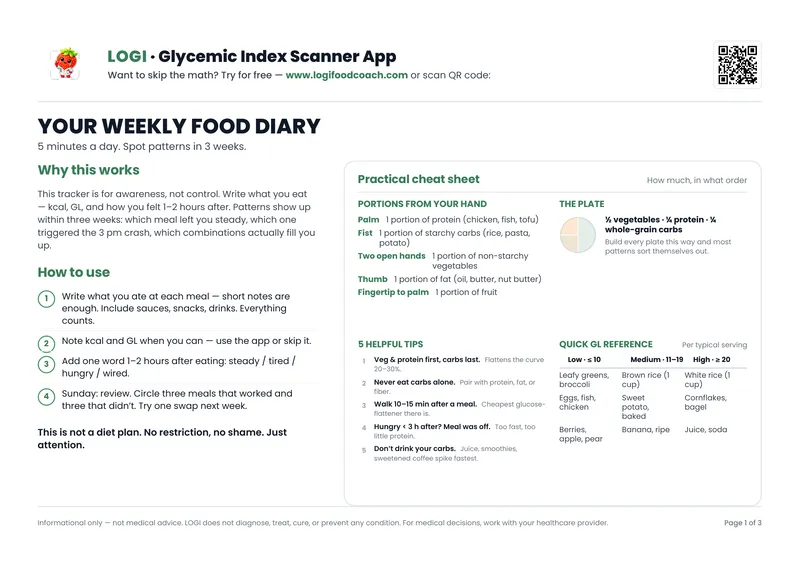
Free PDF — 3 pages
Your Weekly Food Journal
Track meals, glycemic load & mood. Spot patterns in 3 weeks.
No spam. Unsubscribe anytime.