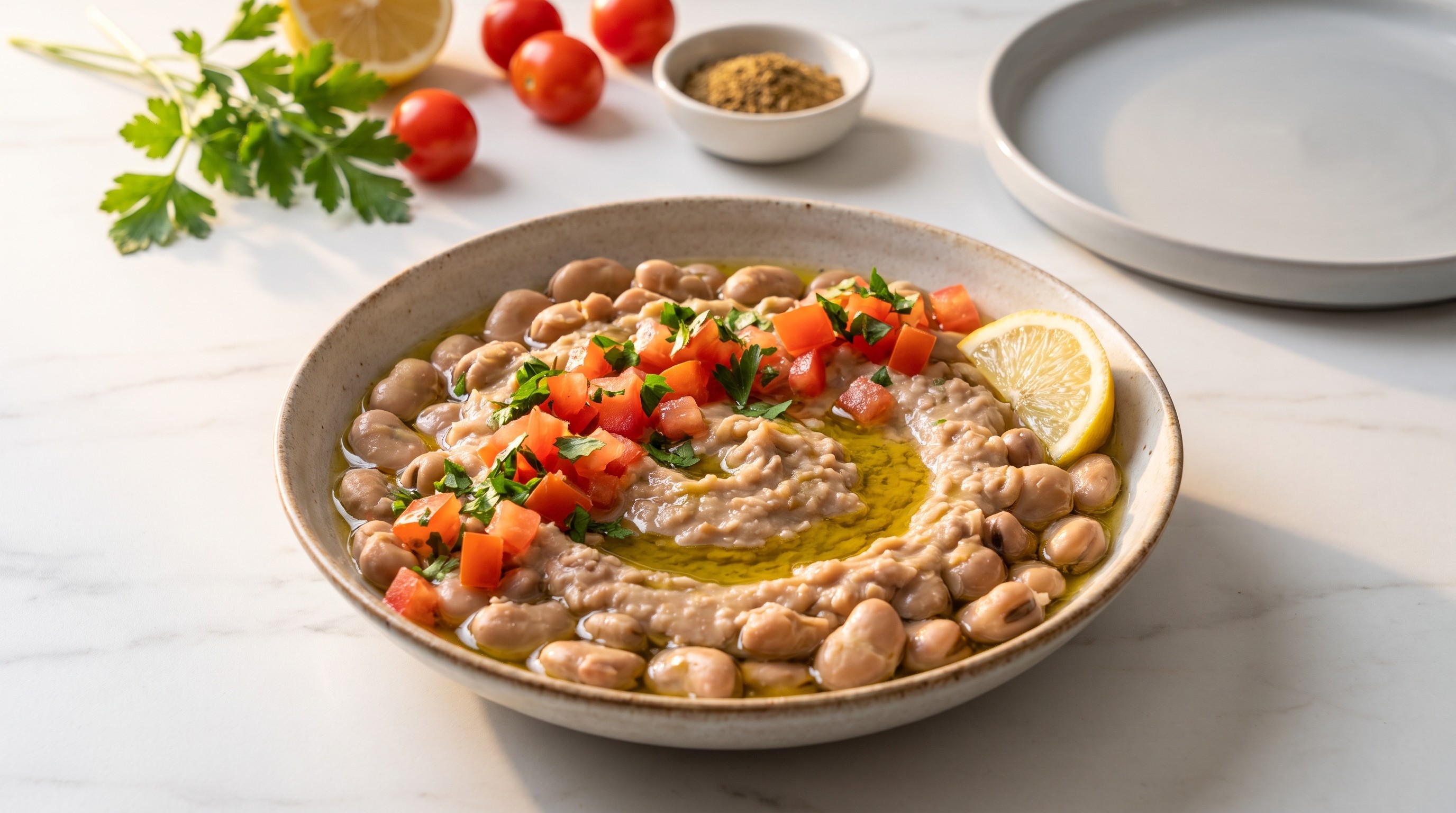
Ful Medames (Egyptian Stewed Fava Beans)
Egypt's ancient breakfast of creamy fava beans with cumin, lemon and olive oil — naturally low-glycemic, high in plant protein and soluble fiber.
Ful medames is proof that the most blood-sugar-friendly meals are often the oldest ones. This Egyptian staple, eaten every morning from Cairo to Luxor for millennia, centres on fava beans — one of the lowest-GI legumes available, with a glycemic index around 40. Their dense soluble fiber forms a gel-like matrix during digestion that slows glucose absorption dramatically, while their high plant-protein content (roughly 13 g per cup) triggers satiety hormones that keep you full well past noon.
The preparation couldn't be simpler: canned fava beans are warmed with garlic and cumin, then partially mashed to create a thick, porridge-like base that still has pockets of whole beans for texture. A generous squeeze of lemon adds brightness and vitamin C, which some studies suggest may further moderate post-meal blood sugar. The finishing drizzle of extra-virgin olive oil delivers heart-healthy monounsaturated fats that slow gastric emptying, further flattening the glucose curve.
For optimal blood sugar management, eat the raw tomato and parsley topping first — the fiber and water content prime your digestive system — then work through the beans. Pair with a slice of sourdough or seed bread rather than white pita, or simply enjoy it on its own with a side of sliced cucumber. This is a meal that keeps blood sugar steady for hours, exactly as it has done for generations along the Nile.
Blood Sugar Impact
Low blood sugar impact expected. Fava beans are a low-GI legume (GI ~30) rich in protein and fiber, which slow glucose absorption. With a moderate glycemic load of 13.3, this meal should produce a gentle, gradual rise in blood sugar and provide stable energy for 3-4 hours.
Blood Sugar Tips
- ✓ Add a generous drizzle of olive oil and eat it with the parsley and tomato first — the fat and fiber will further slow gastric emptying and blunt any glucose response.
- ✓ Pair with a whole-grain pita or sourdough bread rather than white bread to keep the overall meal GI low, and limit bread to one small piece.
- ✓ Take a 10-15 minute walk after eating to enhance glucose uptake by your muscles and flatten the post-meal curve.
🥗 Ingredients
- 480 g Fava beans
- 3 tbsp Extra-virgin olive oil
- 2 pcs Garlic
- 1 tsp Ground cumin
- 30 ml Lemon juice
- 1 pcs Tomato
- 10 g Flat-leaf parsley
- 0.5 tsp Salt
- 1.1 lb Fava beans
- 3 tbsp Extra-virgin olive oil
- 2 pcs Garlic
- 1 tsp Ground cumin
- 2 tbsp Lemon juice
- 1 pcs Tomato
- 0.4 oz Flat-leaf parsley
- 0.5 tsp Salt
👨🍳 Instructions
- 1
Open both cans of fava beans, tip them into a colander, and rinse well under cold running water. Let them drain while you prepare the aromatics. Rinsing removes excess sodium and the starchy canning liquid.
- 2
Finely dice the tomato and roughly chop the parsley. Set both aside in separate small bowls — these go on as a fresh, raw topping at the end.
- 3
Place a medium saucepan over medium heat and add 2 tablespoons of the olive oil. Once the oil shimmers, add the minced garlic and ground cumin. Stir constantly for about 1 minute until the mixture is fragrant and the cumin has darkened slightly. Keep the heat moderate so the garlic softens without browning.
- 4
Tip the drained fava beans into the pan and pour in 80 ml (about ⅓ cup) of water. Stir gently to coat the beans in the spiced oil, then bring the liquid to a gentle simmer.
- 5
Cook at a low simmer for 10–12 minutes, using the back of a wooden spoon to press roughly half the beans against the side of the pan. This releases their starch and creates a thick, creamy base while leaving the remaining beans whole for texture. Stir occasionally to prevent sticking.
- 6
Remove the pan from the heat. Squeeze in the lemon juice and add the salt, then stir to combine. Taste and adjust — a little more lemon brightens the dish, a pinch more salt deepens the bean flavour.
- 7
Divide the stewed beans between two shallow bowls, spreading them out so the toppings have a wide surface to land on.
- 8
Scatter the diced tomato and chopped parsley over each bowl, then drizzle the remaining tablespoon of olive oil in a thin stream over the surface. Serve immediately — for the best blood sugar response, eat the fresh vegetables first before working through the beans.
📊 Nutrition Per Serving
| Per Serving | Whole Dish | |
|---|---|---|
| Calories | 436 | 872 |
| Carbs | 44g | 87g |
| Sugars | 5g | 11g |
| Natural Sugars | 5g | 11g |
| Protein | 17g | 34g |
| Fat | 22g | 44g |
| Saturated Fat | 3g | 6g |
| Unsaturated Fat | 19g | 38g |
| Fiber | 15g | 30g |
| Soluble Fiber | 5g | 10g |
| Insoluble Fiber | 10g | 20g |
| Sodium | 1357mg | 2714mg |
Predicted Glucose Response
What if you...
Estimated model — individual responses vary. Not medical advice.
🔄 Lower GI Swaps
Canned fava beans have a significantly higher GI (~80) compared to home-cooked dried fava beans (~40) due to the high-heat canning process which breaks down starch structure. Brown lentils (GI ~29) and black beans (GI ~30) are even lower-GI legume alternatives that maintain the dish's protein and fiber profile while substantially reducing glycemic load.
While cumin itself is glycemically neutral, partially blending it with cinnamon adds a warm, complementary flavor and cinnamon has been shown to improve insulin sensitivity and reduce post-meal blood sugar spikes. Even 1–2 g of cinnamon per serving can meaningfully lower the glycemic response of the overall meal.
While lemon juice already provides beneficial acidity, apple cider vinegar contains higher concentrations of acetic acid, which has been shown to slow gastric emptying and reduce post-meal blood sugar spikes by up to 20–30%. Using it alongside or in place of lemon juice amplifies the meal's glycemic-lowering acid effect.
🔬 The Science Behind This Recipe
Why This Recipe Works for Your Blood Sugar
Ful Medames is a brilliant example of how traditional cuisines often get blood sugar management right without even trying. The star here is fava beans — a legume packed with both soluble fiber and plant-based protein. This powerful combination slows down the rate at which your body breaks down carbohydrates into glucose, creating a gentle, steady rise in blood sugar rather than a sharp spike and crash. With an estimated Glycemic Index (GI) of just 30, fava beans sit firmly in the "low GI" category, meaning they release their energy slowly over hours, keeping you fueled and satisfied.
What makes this dish even smarter is how the other ingredients team up to further blunt the glucose response. Olive oil adds healthy fats that slow gastric emptying — essentially keeping food in your stomach longer so sugars enter your bloodstream at a measured pace. Meanwhile, lemon juice has been shown in research to lower the glycemic response of a meal, partly by increasing acidity in the gut, which slows starch digestion. Even the garlic and cumin contribute: both have been associated with improved insulin sensitivity over time.
It's worth understanding the Glycemic Load (GL) here too, which sits at a moderate 13.3 per serving. While GI tells you how fast a food raises blood sugar, GL accounts for how much carbohydrate you're actually eating — and that's what really matters on your plate. To get even more from this meal, try eating it with a side of fresh vegetables first, and consider a short 10-15 minute walk afterward. Both strategies are simple, evidence-backed ways to further smooth out your glucose curve and keep your energy steady all day.
Related recipes
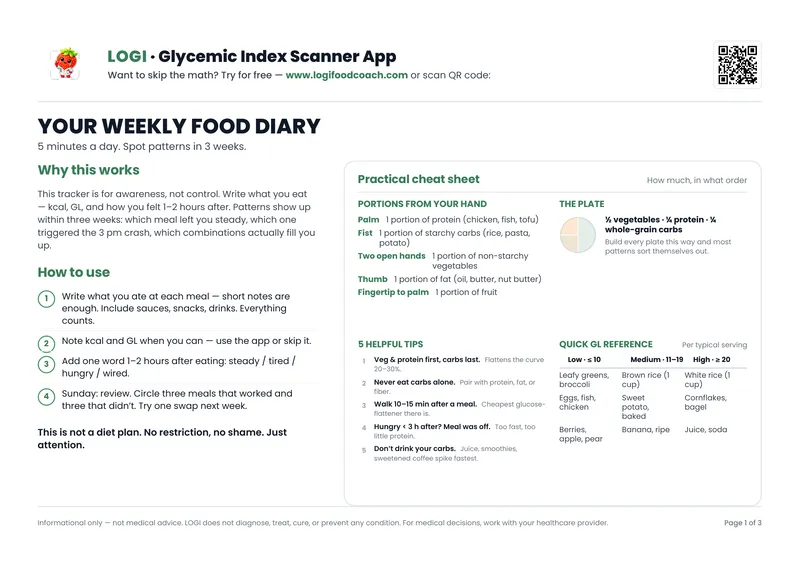
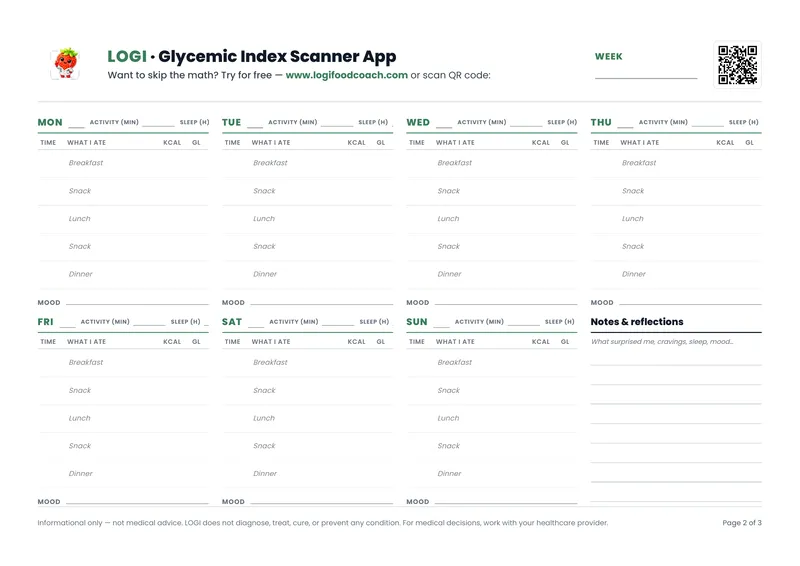
Free PDF — 3 pages
Your Weekly Food Journal
Track meals, glycemic load & mood. Spot patterns in 3 weeks.
No spam. Unsubscribe anytime.