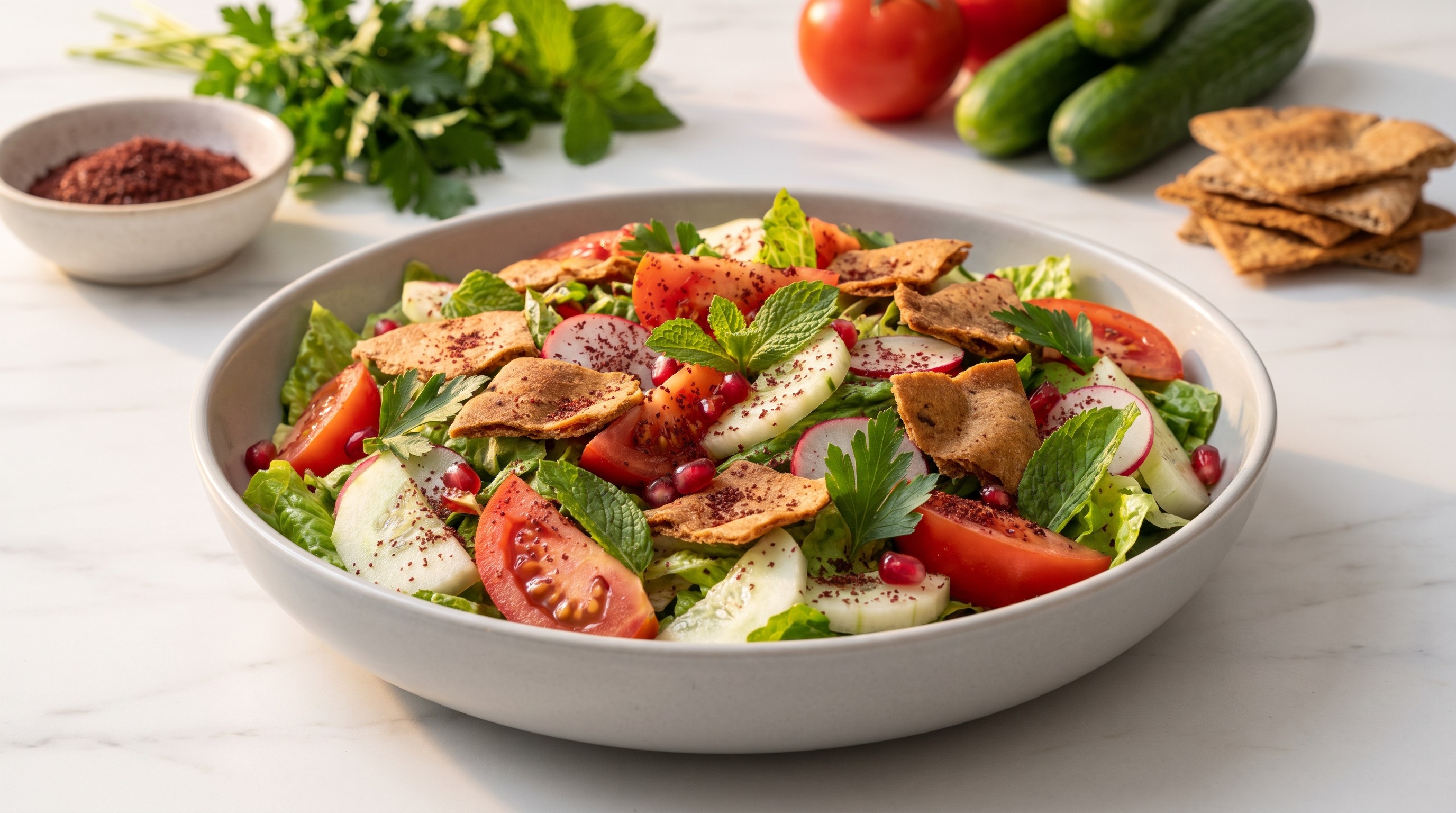
Fattoush with Wholegrain Pita Chips
A vibrant Lebanese bread salad loaded with crisp vegetables, fresh herbs, and a tangy sumac-lemon dressing — naturally low-glycemic with wholegrain pita chips.
Fattoush is one of the Levant's great salads, and this version keeps all of its signature boldness while staying remarkably gentle on blood sugar. The secret lies in the proportions: crisp vegetables and generous handfuls of parsley and mint form the heart of the bowl, while a small portion of wholegrain pita — baked until shattering-crisp — delivers the textural crunch that makes fattoush fattoush. Wholegrain pita has a notably lower glycemic index than white flatbread, and using it as an accent rather than a base keeps the overall carbohydrate load modest.
The dressing is where the real metabolic magic happens. Extra virgin olive oil provides monounsaturated fats that slow gastric emptying and blunt glucose spikes, while lemon juice contributes acidity — shown in studies to reduce the glycemic response of a meal by up to 30 percent. Sumac, the defining spice of fattoush, adds its own tart complexity and is rich in polyphenols that may support healthy blood sugar regulation. Together, these ingredients create a dressing that is as functional as it is delicious.
For optimal blood sugar management, eat the vegetables and herbs first before reaching for the pita chips. Pairing this salad with a protein such as grilled chicken, halloumi, or chickpeas will further flatten the glucose curve and keep you satisfied for hours. A scattering of jewel-like pomegranate seeds adds a final burst of sweetness, antioxidants, and fibre to round out this beautifully balanced bowl.
Blood Sugar Impact
Moderate blood sugar impact due to a medium glycemic load (15.8) paired with a low GI (45). The whole wheat pita provides the main glucose source, but the generous fiber from vegetables and healthy fats from olive oil will slow digestion, producing a gradual, manageable rise over 1-2 hours.
Blood Sugar Tips
- ✓ Eat the salad vegetables first before the pita chips — the fiber and water content will slow gastric emptying and blunt the carbohydrate response from the bread.
- ✓ Drizzle extra olive oil or add a small portion of protein (such as grilled halloumi or chickpeas) to further flatten the glucose curve.
- ✓ Take a 10-15 minute walk after eating to help your muscles absorb circulating blood sugar more efficiently.
🥗 Ingredients
- 60 g Wholegrain pita bread
- 3 tbsp Extra virgin olive oil
- 1 pcs Romaine lettuce
- 1 pcs Cucumber
- 2 pcs Tomato
- 4 pcs Radish
- 2 pcs Spring onion
- 30 ml Lemon juice
- 1.5 tsp Ground sumac
- 0.5 tsp Sea salt
- 15 g Flat-leaf parsley
- 10 g Mint
- 1 tbsp Pomegranate seeds
- 2.1 oz Wholegrain pita bread
- 3 tbsp Extra virgin olive oil
- 1 pcs Romaine lettuce
- 1 pcs Cucumber
- 2 pcs Tomato
- 4 pcs Radish
- 2 pcs Spring onion
- 2 tbsp Lemon juice
- 1.5 tsp Ground sumac
- 0.5 tsp Sea salt
- 0.5 oz Flat-leaf parsley
- 0.4 oz Mint
- 1 tbsp Pomegranate seeds
👨🍳 Instructions
- 1
Preheat your oven to 200 °C (400 °F). Tear the wholegrain pita bread into rough 3 cm pieces and spread them in a single layer on a lined baking tray.
- 2
Drizzle 1 tablespoon of olive oil over the pita pieces and toss until evenly coated. Bake for 6 to 7 minutes until the chips are deeply golden and crisp throughout. Remove from the oven and let them cool completely on the tray — they will continue to crisp as they cool.
- 3
While the pita chips bake, prepare the vegetables. Chop the romaine lettuce heart into bite-sized pieces. Halve the cucumber lengthwise and slice it into half-moons. Cut the tomatoes into thin wedges.
- 4
Thinly slice the radishes into rounds and cut the spring onions on the diagonal into fine rings. Pick the parsley and mint leaves from their stems and set aside.
- 5
Prepare the dressing by whisking together the remaining 2 tablespoons of olive oil, lemon juice, ground sumac, and sea salt in a small bowl. Whisk vigorously until the mixture is fully emulsified and slightly thickened.
- 6
Place the romaine, cucumber, tomatoes, radishes, and spring onions in a large wide bowl. Add the parsley and mint leaves and pour the sumac dressing over everything. Toss thoroughly with your hands or tongs, making sure every leaf and slice is well coated.
- 7
Divide the dressed salad between two wide serving bowls. Scatter the crisp pita chips and pomegranate seeds over the top just before serving — adding them last keeps the chips crunchy.
- 8
Serve immediately. For the best blood sugar response, eat the vegetables and herbs first before the pita chips, and consider pairing with a protein such as grilled chicken, pan-fried halloumi, or seasoned chickpeas.
📊 Nutrition Per Serving
| Per Serving | Whole Dish | |
|---|---|---|
| Calories | 328 | 655 |
| Carbs | 35g | 71g |
| Sugars | 8g | 16g |
| Added Sugars | 0g | 1g |
| Natural Sugars | 7g | 15g |
| Protein | 6g | 12g |
| Fat | 19g | 38g |
| Saturated Fat | 3g | 5g |
| Unsaturated Fat | 16g | 33g |
| Fiber | 7g | 14g |
| Soluble Fiber | 2g | 4g |
| Insoluble Fiber | 5g | 10g |
| Sodium | 1098mg | 2197mg |
Predicted Glucose Response
What if you...
Estimated model — individual responses vary. Not medical advice.
🔄 Lower GI Swaps
Wholegrain pita has a GI of around 55–60. Swapping to almond flour or flaxseed-based alternatives significantly reduces the glycemic impact while still providing satisfying crunch.
Pomegranate seeds contain moderate natural sugars. Replacing with pumpkin or sunflower seeds eliminates the sugar contribution while adding protein and healthy fats that help stabilise blood sugar.
Tomatoes have a low GI but still contribute some sugars. For those seeking the lowest possible glycemic impact, swapping for cucumber or raw courgette reduces sugar while maintaining a fresh, crunchy texture.
🔬 The Science Behind This Recipe
Why This Fattoush Loves Your Blood Sugar
Traditional fattoush relies on deep-fried white pita, which breaks down rapidly into glucose. This version swaps in a small amount of wholegrain pita, baked rather than fried, lowering both the glycemic index and the total carbohydrate load per serving.
Three elements in the dressing work together to slow glucose absorption. First, extra virgin olive oil is rich in monounsaturated fatty acids that delay gastric emptying, giving your body more time to process incoming carbohydrates. Second, lemon juice introduces organic acids — research has shown that adding acid to a meal can reduce the glycemic response by up to 30 percent by slowing starch digestion. Third, sumac is packed with polyphenols, plant compounds that may help support healthy post-meal blood sugar levels.
The salad itself is built on a generous base of non-starchy vegetables — romaine, cucumber, tomatoes, and radishes — which contribute fibre and water volume with very little impact on blood sugar. Fresh parsley and mint add more than flavour: both herbs contain antioxidants and trace minerals that support overall metabolic health.
Finally, the proportions matter. By keeping the pita to a modest 30 grams per serving and filling the bowl with vegetables and healthy fats, the estimated glycemic load stays at a moderate 16. Pairing this salad with a protein source such as grilled chicken, halloumi, or chickpeas will further blunt any glucose rise, making it a satisfying and blood-sugar-friendly meal.
Related recipes
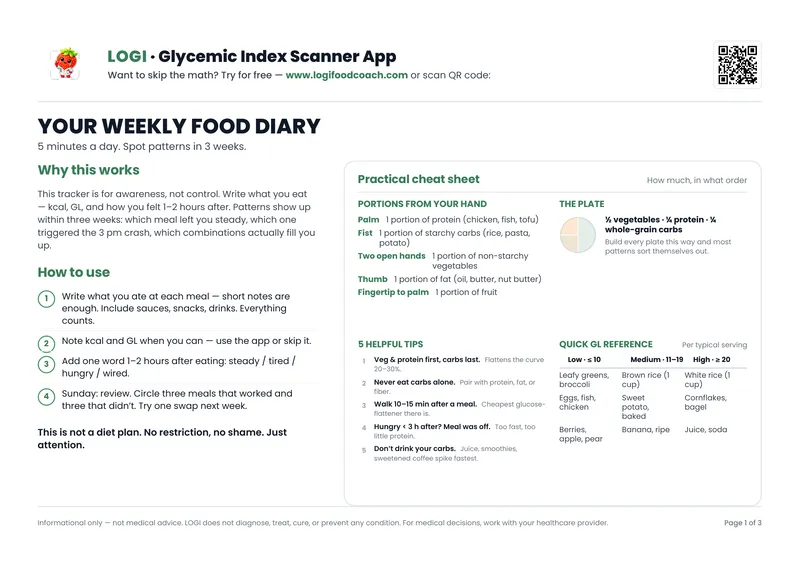
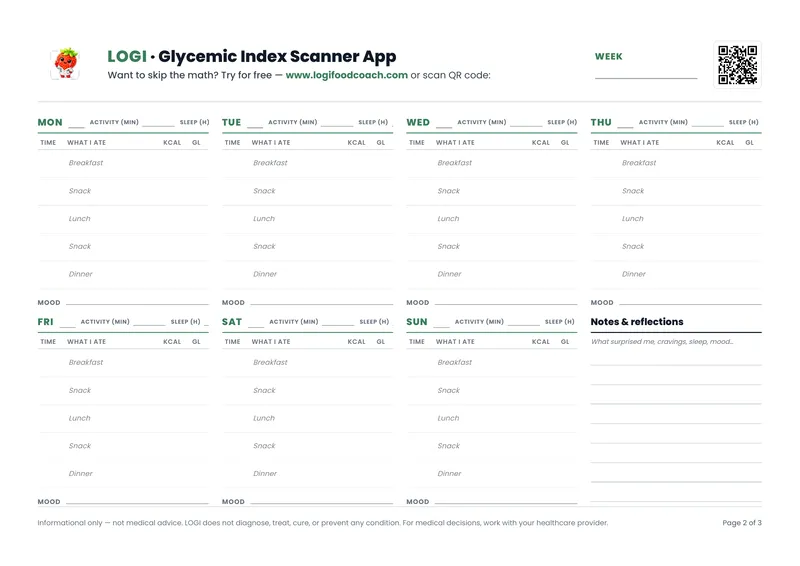
Free PDF — 3 pages
Your Weekly Food Journal
Track meals, glycemic load & mood. Spot patterns in 3 weeks.
No spam. Unsubscribe anytime.