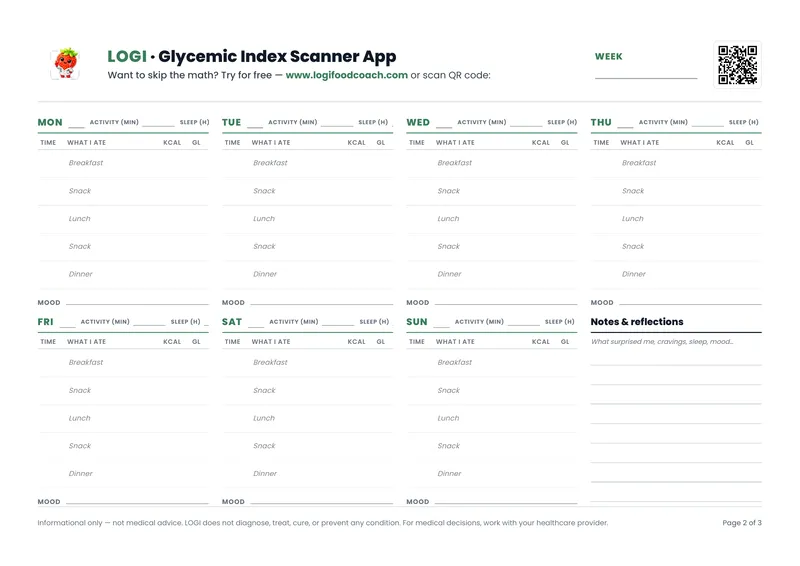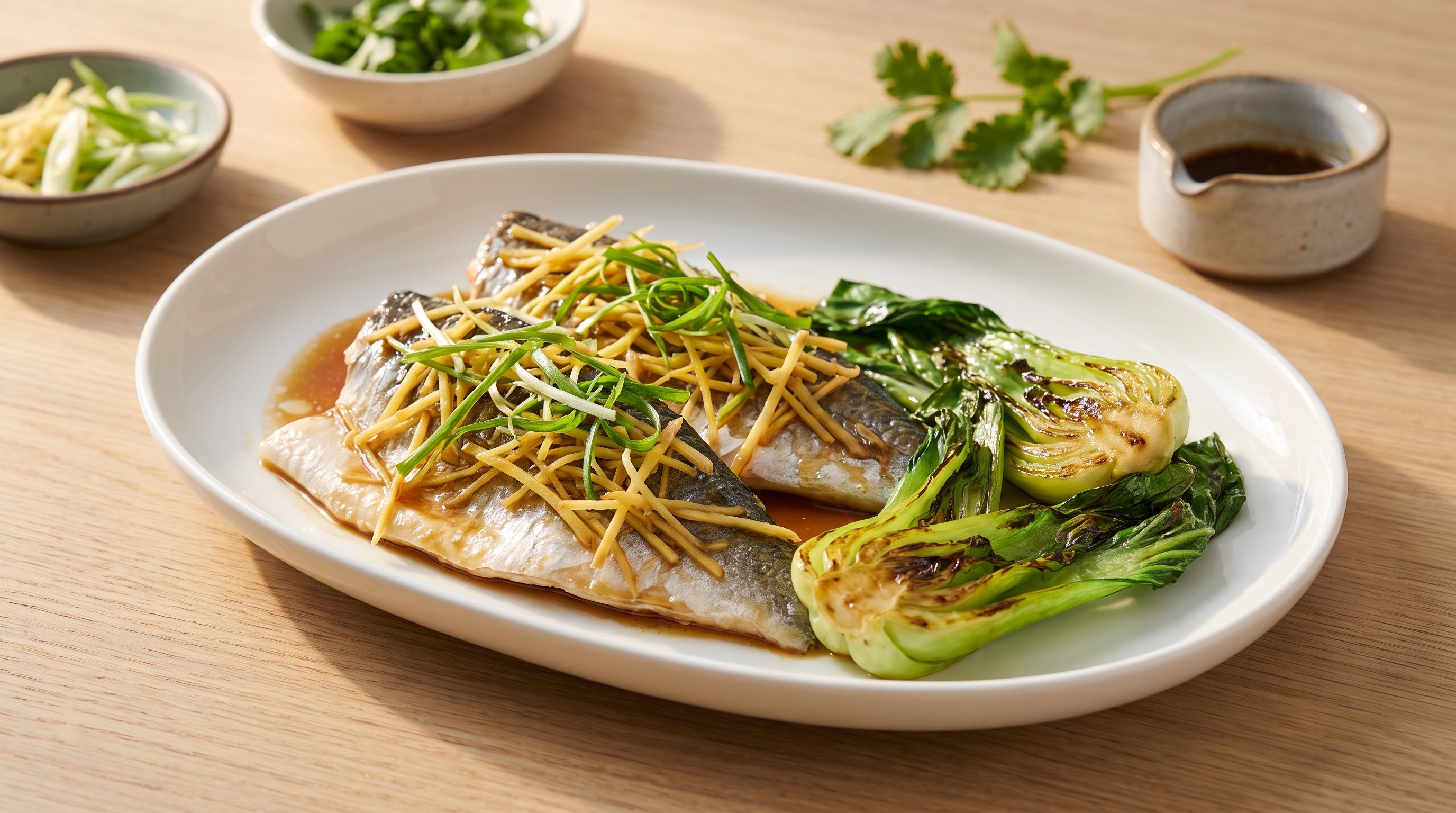
Cantonese Steamed Sea Bass with Ginger and Scallion
Silky steamed sea bass showered in sizzling ginger-scallion oil, served over crisp bok choy — a naturally low-glycemic Cantonese classic that keeps blood sugar steady.
Few dishes prove that blood-sugar-friendly eating can be effortlessly elegant quite like Cantonese steamed fish. A pair of sea bass fillets steam gently over ginger and scallion whites, emerging silky and just flaking, then receive a dramatic shower of smoking-hot peanut oil that crisps the aromatics and fills the kitchen with an intoxicating sizzle. The entire plate is pure protein, healthy fats, and non-starchy vegetables — a combination that produces a minimal glycemic response.
Sea bass is an ideal centrepiece for anyone managing blood sugar: rich in protein and omega-3 fatty acids, it triggers virtually no insulin spike and promotes satiety long after the meal. Ginger adds more than fragrance — studies suggest its bioactive compounds, particularly gingerols, may support healthy fasting glucose levels. The bok choy bed replaces the traditional bowl of steamed white rice (GI ~73), swapping a rapid blood-sugar spike for a generous serving of fibre, vitamin C, and calcium with negligible glycemic impact.
For optimal blood sugar management, start by eating a few bites of the bok choy before the fish — consuming vegetables first slows gastric emptying and blunts the glucose curve of whatever follows. The small amount of Shaoxing wine cooks off during steaming and contributes minimal residual sugar. Pair this dish with a side of cauliflower rice or a handful of roasted almonds if you want more volume, and consider timing it as a lunch or early dinner when insulin sensitivity tends to be highest.
Blood Sugar Impact
Very low blood sugar impact expected. With a glycemic load of only 2.1 and an estimated GI of 29, this protein-and-vegetable-centered dish will produce minimal glucose elevation and provide stable energy for 3-4 hours.
Blood Sugar Tips
- ✓ Eat the bok choy first before the fish to front-load fiber and further blunt any minor glucose response.
- ✓ If serving with rice, choose a small portion of cooled or day-old rice (higher resistant starch) and eat it last, after the protein and vegetables.
- ✓ Add a splash of rice vinegar or serve with a vinegar-based dipping sauce — acetic acid has been shown to reduce postprandial glucose spikes by up to 30%.
🥗 Ingredients
- 2 pcs Sea bass fillet
- 15 g Ginger
- 4 pcs Scallion
- 1 tbsp Shaoxing rice wine
- 300 g Baby bok choy
- 1.5 tbsp Peanut oil
- 1.5 tbsp Light soy sauce
- 1 tsp Toasted sesame oil
- 2 pcs Sea bass fillet
- 0.5 oz Ginger
- 4 pcs Scallion
- 1 tbsp Shaoxing rice wine
- 10.6 oz Baby bok choy
- 1.5 tbsp Peanut oil
- 1.5 tbsp Light soy sauce
- 1 tsp Toasted sesame oil
👨🍳 Instructions
- 1
Peel the ginger and slice it into very thin matchstick strips. Trim the scallions and cut them into roughly 6 cm lengths, then slice each piece lengthways into fine shreds. Separate the white and green portions into two piles.
- 2
Place the sea bass fillets skin-side down on a heatproof plate that will fit inside your steamer. Scatter the ginger matchsticks and the white scallion shreds over and around the fish. Splash the Shaoxing wine evenly across the fillets.
- 3
Bring water to a vigorous boil in the base of your steamer. Set the plate of fish over the steam, seal with a tight-fitting lid, and steam for 8 to 9 minutes. The fish is done when the thickest part turns opaque and yields easily to a fork.
- 4
While the fish steams, place a wok over high heat and add about 1 teaspoon of the peanut oil. Once it shimmers, lay the bok choy halves cut-side down and stir-fry for about 2 minutes until the leaves wilt but remain bright green and the stems are crisp-tender. Divide between two serving plates to form a bed for the fish.
- 5
When the fish is ready, carefully remove the plate from the steamer. Tilt the plate and pour off any liquid that has pooled around the fillets — this prevents the sauce from becoming diluted.
- 6
Transfer each fillet onto the bok choy bed. Drizzle the light soy sauce and toasted sesame oil evenly over the fish, then heap the green scallion shreds on top of each fillet.
- 7
Heat the remaining peanut oil in a small saucepan over high heat until it begins to shimmer and the first wisp of smoke appears. Immediately pour the hot oil directly over the scallion greens on each fillet — it should sizzle dramatically on contact, crisping the aromatics and releasing their fragrance.
- 8
Serve immediately while the oil is still crackling. For the best blood-sugar response, take a few bites of the bok choy before the fish — eating fibre-rich vegetables first helps slow glucose absorption from the meal.
📊 Nutrition Per Serving
| Per Serving | Whole Dish | |
|---|---|---|
| Calories | 297 | 594 |
| Carbs | 7g | 15g |
| Sugars | 3g | 5g |
| Natural Sugars | 3g | 5g |
| Protein | 32g | 65g |
| Fat | 16g | 32g |
| Saturated Fat | 3g | 6g |
| Unsaturated Fat | 13g | 26g |
| Fiber | 3g | 5g |
| Soluble Fiber | 1g | 1g |
| Insoluble Fiber | 2g | 4g |
| Sodium | 853mg | 1706mg |
Predicted Glucose Response
What if you...
Estimated model — individual responses vary. Not medical advice.
🔄 Lower GI Swaps
Shaoxing wine contains residual sugars that contribute to glycemic load; dry white wine, rice vinegar, or unsweetened sake provide similar depth of flavor with less sugar and a lower glycemic impact.
While all cooking oils have a GI of 0, extra virgin olive oil and avocado oil are richer in monounsaturated fats and polyphenols, which studies show can improve insulin sensitivity and help moderate postprandial blood sugar responses when consumed with a meal.
Many commercial soy sauces contain added sugars or maltodextrin that raise glycemic load; coconut aminos and sugar-free tamari deliver comparable umami flavor with fewer hidden carbohydrates and a lower glycemic impact per serving.
🔬 The Science Behind This Recipe
Here's the science explainer section:
---
Why This Meal Loves Your Blood Sugar
This Cantonese steamed sea bass is a near-perfect meal for steady energy, and the numbers tell the story: a glycemic load of just 2.1 per serving and an estimated GI of 29. But what do those numbers actually mean? Glycemic Index (GI) measures how quickly a food raises blood sugar, while Glycemic Load (GL) factors in the *amount* you actually eat — and that's what really matters. A GL under 10 is considered low, so at 2.1, this dish barely registers on your blood sugar radar. The reason is simple: branzino is pure protein and healthy fats with virtually zero carbohydrates, so there's almost nothing here to convert into glucose in the first place.
The supporting cast makes this meal even smarter. Bok choy brings fiber that slows digestion, creating a gentle buffer against any glucose from the small amount of Shaoxing wine in the sauce. Ginger isn't just for flavor — research suggests it may support healthy insulin sensitivity, helping your cells use glucose more efficiently. Meanwhile, the natural fats in the fish further slow stomach emptying, meaning whatever small amount of sugar enters your bloodstream does so gradually rather than all at once.
To get the most out of this meal, try eating the bok choy first before the fish and any rice you serve alongside it — vegetables before protein before carbs is a simple order that studies show can reduce post-meal glucose spikes by up to 30%. If you do pair this with rice, keep the portion modest (the GL will climb with added carbs), and consider a 10-minute walk after eating. Steaming is also one of the gentlest cooking methods, preserving the nutrients that make each ingredient work its quiet magic on your metabolism.
---
Word count: 267
Related recipes
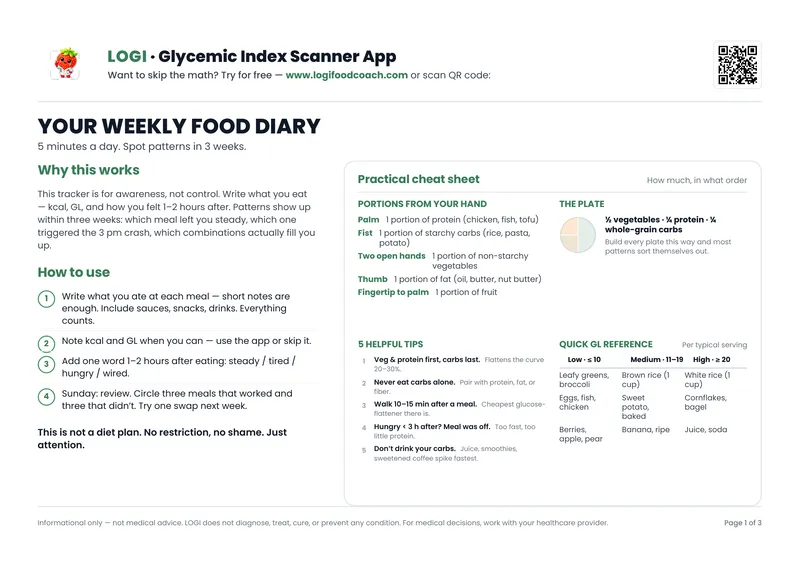
Free PDF — 3 pages
Your Weekly Food Journal
Track meals, glycemic load & mood. Spot patterns in 3 weeks.
No spam. Unsubscribe anytime.