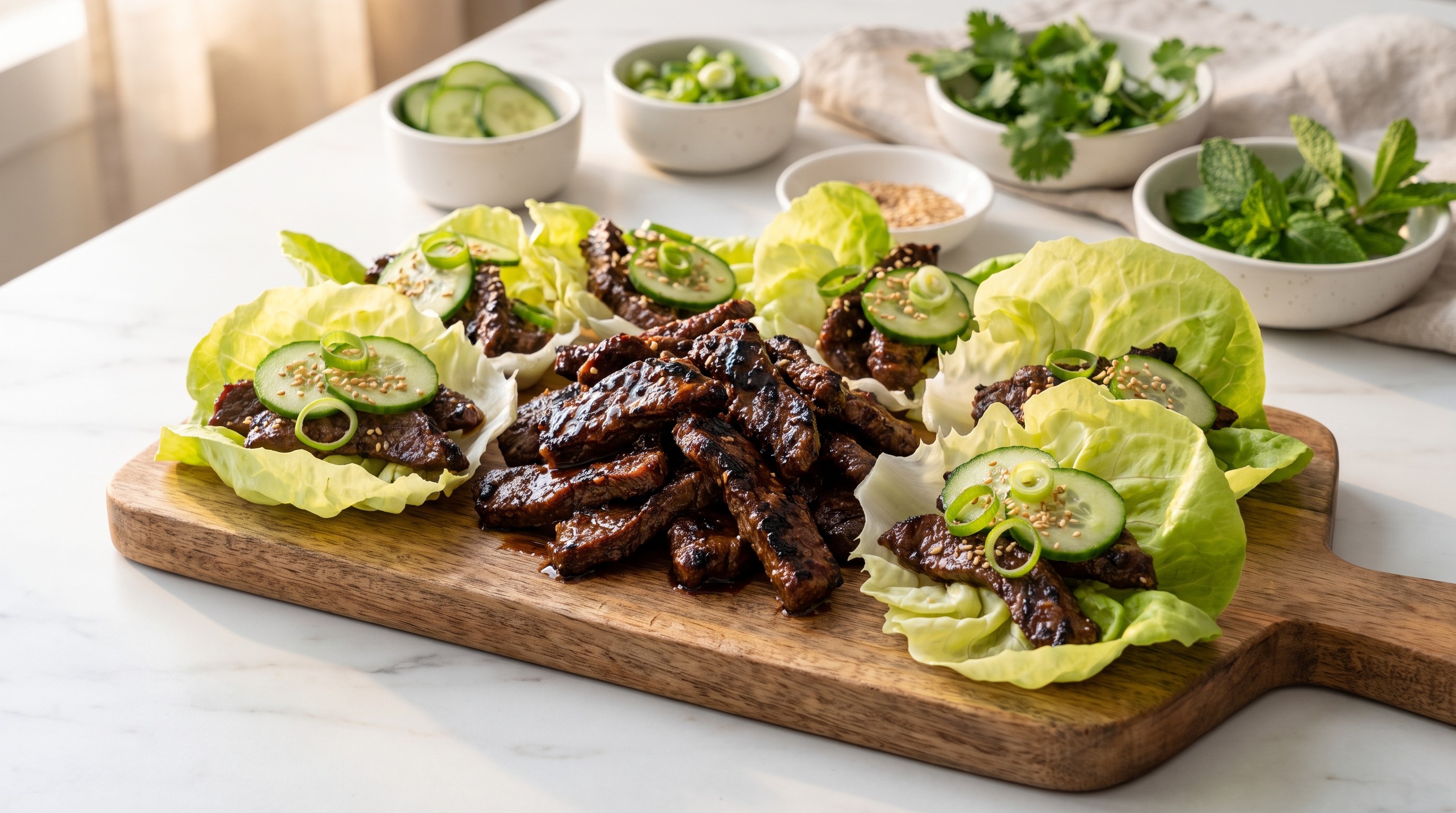
Bulgogi Lettuce Wraps
Smoky Korean bulgogi nestled in crisp lettuce cups — high-protein, nearly zero-starch, and blood-sugar-friendly with pear replacing most of the marinade sugar.
These bulgogi lettuce wraps are a blood-sugar-smart take on one of Korea's most beloved dishes. By swapping the traditional steamed white rice for cool, crunchy butter lettuce cups, you eliminate the biggest glycemic load from the meal entirely. The result is a high-protein, low-carb dinner that keeps your glucose steady while delivering every bit of the smoky, caramelised flavour you expect from proper bulgogi.
The marinade leans on grated pear — a classic Korean technique — to provide gentle sweetness and tenderise the beef with natural enzymes. Pear has a low glycemic index of around 38, making it the ideal stand-in for excess sugar. Only two teaspoons of brown sugar remain in the entire recipe, split across two servings, which contributes to browning and caramelisation without meaningfully raising blood glucose. Combined with garlic, ginger, soy sauce, and toasted sesame oil, the marinade is deeply savoury and complex.
For the best blood sugar response, eat a few plain lettuce leaves and cucumber rounds before diving into the beef — the fibre and water content create a gentle buffer in the stomach. Each serving delivers roughly 50 grams of protein with minimal carbohydrate, making this an excellent option for anyone managing blood sugar through diet. The whole meal comes together in just twenty minutes, proving that glycemic-friendly cooking does not have to mean complicated cooking.
Blood Sugar Impact
Low impact — with a glycemic index of 41 and a moderate glycemic load of 11, this protein-rich meal using lettuce instead of grain-based wraps will produce a gentle, sustained blood sugar rise rather than a sharp spike, providing stable energy for 3-4 hours.
Blood Sugar Tips
- ✓ Eat the lettuce and cucumber components first before adding the marinated beef — the fiber and water content will slow gastric emptying and blunt any sugar absorption from the brown sugar in the marinade.
- ✓ Keep the brown sugar in the bulgogi marinade to a minimum or substitute with a thin layer of grated pear, which already provides natural sweetness with additional fiber.
- ✓ Take a 10-15 minute walk after eating to help your muscles absorb circulating glucose and further flatten any modest blood sugar rise from the meal.
🥗 Ingredients
- 400 g Beef sirloin
- 2.5 tbsp Soy sauce
- 0.5 pcs Pear
- 3 pcs Garlic
- 1 tsp Ginger
- 2 tsp Brown sugar
- 1 tbsp Toasted sesame oil
- 1 pcs Butter lettuce
- 1 pcs Cucumber
- 3 pcs Spring onion
- 2 tsp Vegetable oil
- 1 tbsp Sesame seeds
- 14.1 oz Beef sirloin
- 2.5 tbsp Soy sauce
- 0.5 pcs Pear
- 3 pcs Garlic
- 1 tsp Ginger
- 2 tsp Brown sugar
- 1 tbsp Toasted sesame oil
- 1 pcs Butter lettuce
- 1 pcs Cucumber
- 3 pcs Spring onion
- 2 tsp Vegetable oil
- 1 tbsp Sesame seeds
👨🍳 Instructions
- 1
Combine the soy sauce, finely grated pear, minced garlic, grated ginger, brown sugar, and toasted sesame oil in a wide, shallow bowl. Whisk until the sugar dissolves and the mixture is smooth.
- 2
Add the thinly sliced beef to the marinade and toss until every piece is evenly coated. Set aside at room temperature for 10 minutes to allow the pear enzymes to tenderise the meat.
- 3
While the beef marinates, carefully separate the butter lettuce into individual cup-shaped leaves, rinse under cold water, and pat thoroughly dry with a clean kitchen towel. Arrange the cups on a serving platter.
- 4
Slice the cucumber into thin rounds and cut the spring onions into rings. Set both aside alongside the lettuce cups.
- 5
Place a large skillet or wok over the highest heat and add the vegetable oil. Wait until the oil shimmers and just begins to smoke — this high heat is essential for proper caramelisation.
- 6
Lift the beef from the marinade, allowing excess liquid to drip back into the bowl. Spread the slices in a single layer across the pan, working in two batches if necessary to avoid crowding.
- 7
Let the beef sear undisturbed for about 2 minutes until the underside develops dark, charred edges. Flip the pieces and cook for 1 minute more until caramelised on both sides and just cooked through. Transfer to a plate.
- 8
Divide the hot bulgogi among the lettuce cups. Top each wrap with cucumber rounds and spring onion rings, then scatter sesame seeds over everything. Serve immediately while the beef is still sizzling.
📊 Nutrition Per Serving
| Per Serving | Whole Dish | |
|---|---|---|
| Calories | 660 | 1319 |
| Carbs | 27g | 54g |
| Sugars | 12g | 23g |
| Added Sugars | 4g | 9g |
| Natural Sugars | 7g | 15g |
| Protein | 48g | 96g |
| Fat | 40g | 81g |
| Saturated Fat | 13g | 25g |
| Unsaturated Fat | 28g | 55g |
| Fiber | 4g | 8g |
| Soluble Fiber | 1g | 2g |
| Insoluble Fiber | 3g | 6g |
| Sodium | 1589mg | 3178mg |
Predicted Glucose Response
What if you...
Estimated model — individual responses vary. Not medical advice.
🔄 Lower GI Swaps
Brown sugar has a high GI (~65) and adds pure glucose and fructose to the marinade. Monk fruit sweetener and erythritol have a GI of 0, contributing zero glycemic load. Coconut sugar (GI ~35) is a less aggressive swap that still cuts the glycemic impact nearly in half.
Processed 'flavor' seasonings often contain maltodextrin (GI ~85-105) or dextrose as bulking agents, which spike blood sugar. Fresh spring onions or chives have a very low GI (~15) and add the same aromatic quality with fiber that slows glucose absorption.
Pears (GI ~38) are used in bulgogi as a natural tenderizer and sweetener, but they add a meaningful sugar load. Kiwi (GI ~50 but used in much smaller quantity due to its potent actinidin enzyme) tenderizes effectively with less volume, reducing overall glycemic load. Apple cider vinegar provides acidity for tenderizing with virtually zero GI impact and has been shown to blunt post-meal blood sugar spikes.
While oils have negligible GI themselves, extra virgin olive oil and avocado oil are rich in monounsaturated fats and polyphenols that slow gastric emptying and improve overall glycemic response of the meal, helping to flatten the blood sugar curve from the other ingredients.
🔬 The Science Behind This Recipe
The Science Behind This Recipe
These Bulgogi Lettuce Wraps are a smart choice for steady blood sugar, and it starts with one brilliant swap: crisp lettuce leaves instead of tortillas or rice. That single change dramatically lowers the meal's carbohydrate load. With a Glycemic Index of just 41 and a Glycemic Load of 11 per serving, this dish lands firmly in "low" territory on both scales. Remember, Glycemic Load takes into account not just *how fast* a food raises blood sugar, but *how much* carbohydrate you're actually eating — and that's what really matters on your plate.
The sirloin beef is the anchor here. It's packed with protein and healthy fats, both of which slow down digestion and help your body absorb glucose more gradually. When protein and fat arrive in your stomach alongside any carbohydrates, they act like a natural speed bump — preventing the sharp spike-and-crash cycle that leaves you tired and hungry an hour later. The pear in the marinade adds a touch of natural sweetness with built-in fiber, which further slows sugar absorption compared to using refined sweeteners like honey or brown sugar.
Want to maximize the blood-sugar benefits? Try eating your lettuce wraps in a smart order: nibble on any side vegetables or salad first, enjoy the protein-rich beef next, and save any rice or starchy sides for last. This simple sequencing trick has been shown to reduce post-meal glucose spikes significantly. A short 10–15 minute walk after eating works wonders too — your muscles soak up circulating glucose like a sponge. With the garlic and ginger adding anti-inflammatory benefits alongside bold flavor, this is a meal that genuinely works *with* your metabolism rather than against it.
Related recipes
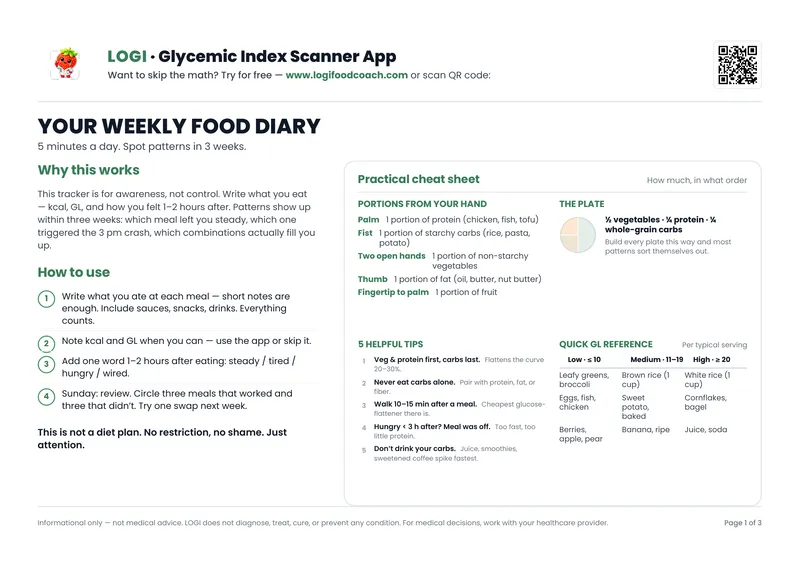
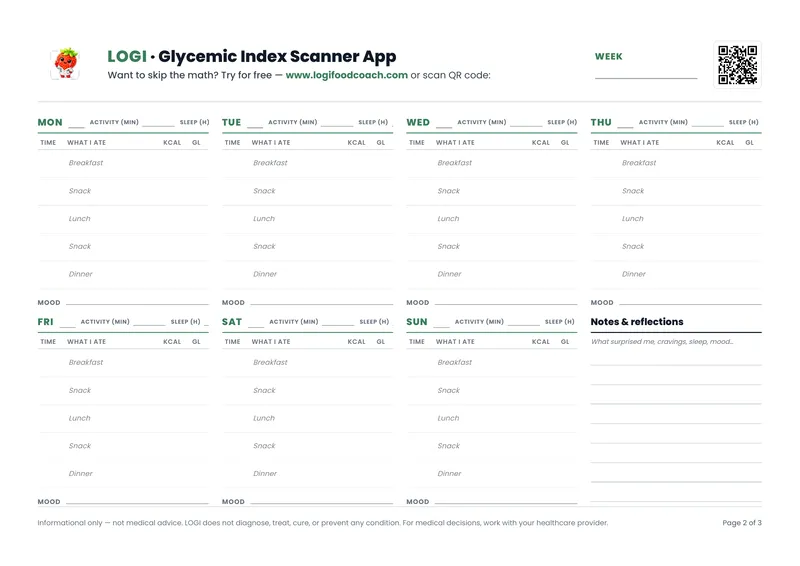
Free PDF — 3 pages
Your Weekly Food Journal
Track meals, glycemic load & mood. Spot patterns in 3 weeks.
No spam. Unsubscribe anytime.