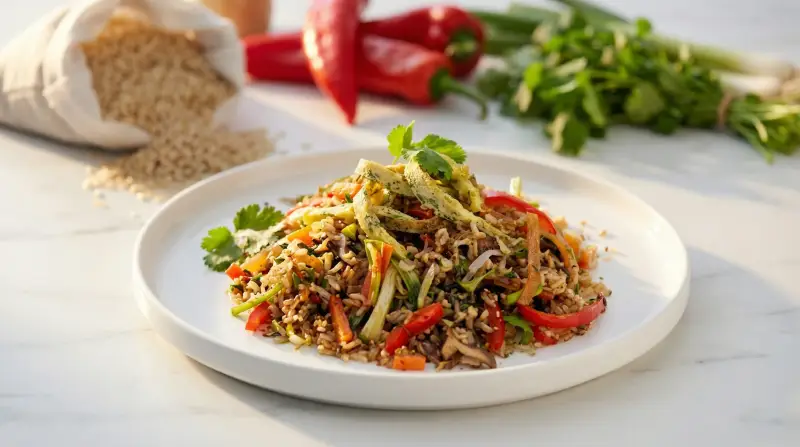
Moderate-GI Brown Rice Stir-Fry with Herb Omelette Ribbons
A vibrant Asian-inspired stir-fry featuring nutty brown basmati rice, crisp vegetables, and delicate coriander omelette strips for steady blood sugar control.
This colorful stir-fry transforms humble brown basmati rice into a glycemic-friendly powerhouse meal that keeps blood sugar stable for hours. Brown basmati rice has a moderate glycemic index (50-55) that is significantly lower than white rice (GI 41-75), thanks to its intact bran layer that slows glucose absorption. While not classified as strictly low-GI, it represents one of the best rice choices for blood sugar management. The fiber-rich vegetables—shiitake mushrooms, carrots, and red peppers—add volume and nutrients while further moderating the glycemic response. The protein-rich coriander omelette ribbons aren't just visually stunning; they're strategically important for blood sugar management. Eating protein alongside carbohydrates significantly reduces post-meal glucose spikes by slowing digestion and improving insulin sensitivity. The aromatic ginger and garlic provide anti-inflammatory compounds that support metabolic health, while the sesame seeds contribute healthy fats and additional protein. For optimal glycemic control, eat the vegetables and omelette first, then enjoy the rice. This food sequencing technique can reduce blood sugar spikes by up to 73% according to recent studies. Each serving contains approximately 3/4 cup cooked brown rice (about 150g), which keeps the glycemic load moderate at 12.4 per serving. The combination of complex carbohydrates, lean protein, healthy fats, and abundant fiber makes this dish ideal for lunch or dinner, providing sustained energy without the crash. Each serving delivers approximately 15-18g of protein and 6-8g of fiber, creating a balanced meal that satisfies hunger while supporting stable glucose levels throughout your day.
Blood Sugar Impact
This meal should produce a gradual, moderate rise in blood sugar with sustained energy for 3-4 hours due to the low GI brown basmati rice, high fiber vegetables, and protein from eggs. The glycemic load of 12.4 indicates a mild overall impact that should avoid sharp spikes.
Blood Sugar Tips
- ✓ Eat the vegetables and egg ribbons first before the rice to slow glucose absorption through fiber and protein
- ✓ Consider a 10-15 minute walk after eating to help muscles absorb glucose and blunt the post-meal blood sugar rise
- ✓ Ensure adequate portion control with the rice (about 1/2 to 3/4 cup cooked) and fill at least half your plate with the vegetable stir-fry
🥗 Ingredients
- 200 g brown basmati rice
- 1 tbsp rapeseed oil
- 30 g fresh ginger, grated
- 3 pcs garlic cloves, finely chopped
- 1 pcs spring onions, finely sliced lengthways
- 150 g shiitake mushrooms, sliced
- 2 pcs carrots, finely sliced into sticks
- 1 pcs red bell pepper, finely sliced
- 3 pcs large eggs, beaten
- 2 tbsp skimmed milk
- 15 g fresh coriander, chopped, plus extra for garnish
- 2 tsp low-sodium soy sauce
- 1 tsp toasted sesame oil
- 2 tbsp chilli jam
- 1 tbsp sesame seeds, toasted
- 7.1 oz brown basmati rice
- 1 tbsp rapeseed oil
- 1.1 oz fresh ginger, grated
- 3 pcs garlic cloves, finely chopped
- 1 pcs spring onions, finely sliced lengthways
- 5.3 oz shiitake mushrooms, sliced
- 2 pcs carrots, finely sliced into sticks
- 1 pcs red bell pepper, finely sliced
- 3 pcs large eggs, beaten
- 2 tbsp skimmed milk
- 0.5 oz fresh coriander, chopped, plus extra for garnish
- 2 tsp low-sodium soy sauce
- 1 tsp toasted sesame oil
- 2 tbsp chilli jam
- 1 tbsp sesame seeds, toasted
👨🍳 Instructions
- 1
Rinse the brown basmati rice thoroughly under cold water until the water runs clear. Cook according to package directions (typically 25-30 minutes in boiling water), then drain well and set aside. Rinsing removes excess starch and helps achieve a lower glycemic response.
- 2
While the rice cooks, prepare all vegetables: grate the ginger, finely chop the garlic, slice the spring onions lengthways into thin strips, slice the shiitake mushrooms, cut the carrots into thin matchsticks, and slice the red pepper into thin strips. Having everything ready ensures quick, even cooking.
- 3
In a small bowl, whisk together 3 large eggs (about 150g total), 2 tablespoons chopped fresh coriander, and a pinch of black pepper until well combined. Set aside for the omelette.
- 4
Heat 2 teaspoons of rapeseed oil in a large wok or frying pan over high heat until shimmering. Add the grated ginger and chopped garlic, stirring constantly for 1 minute until fragrant but not browned. The aromatics will infuse the oil with flavor.
- 5
Add all the prepared vegetables—spring onions, shiitake mushrooms, carrot sticks, and red pepper strips—to the hot wok. Stir-fry over high heat for 3-4 minutes, tossing frequently, until the vegetables are tender-crisp and lightly charred at the edges. Keep them moving to prevent burning while maintaining their crunch. Transfer vegetables to a plate and set aside.
- 6
Heat the remaining 1 teaspoon of rapeseed oil in a small non-stick frying pan over medium-low heat. Pour in the egg mixture, stir once gently, then let it cook undisturbed for 2-3 minutes until almost set with just a slight wobble on top.
- 7
Carefully flip the omelette using a large plate or spatula, and cook the other side for 1-2 minutes until fully set and lightly golden. Transfer to a cutting board and slice into thin ribbons or strips. Set aside for garnishing.
- 8
Return the wok to medium-high heat and add the cooked brown rice. Drizzle in 2 tablespoons low-sodium soy sauce, 1 teaspoon toasted sesame oil, and 1 tablespoon sugar-free chilli jam. Toss everything together for 2-3 minutes until the rice is heated through and well coated with the seasonings.
- 9
Add the cooked vegetables back to the wok with the rice and toss together for 1 minute to combine and heat through. Taste and adjust seasoning if needed with additional soy sauce or black pepper.
- 10
Divide the stir-fried rice and vegetables among four bowls, ensuring each serving contains approximately 3/4 cup (150g) cooked rice. Top each serving with the omelette ribbons, a sprinkle of toasted sesame seeds (about 1 teaspoon per serving), and fresh coriander leaves. For optimal blood sugar control, encourage diners to eat the protein-rich omelette and fiber-rich vegetables first, followed by the rice.
📊 Nutrition Per Serving
| Per Serving | Whole Dish | |
|---|---|---|
| Calories | 245 | 978 |
| Carbs | 30g | 120g |
| Sugars | 11g | 45g |
| Added Sugars | 6g | 22g |
| Natural Sugars | 6g | 23g |
| Protein | 9g | 36g |
| Fat | 11g | 42g |
| Saturated Fat | 2g | 8g |
| Unsaturated Fat | 9g | 34g |
| Fiber | 5g | 18g |
| Soluble Fiber | 1g | 3g |
| Insoluble Fiber | 2g | 8g |
| Sodium | 266mg | 1062mg |
Predicted Glucose Response
What if you...
Estimated model — individual responses vary. Not medical advice.
🔄 Lower GI Swaps
While brown basmati rice is moderate-GI and better than white rice, these alternatives provide even lower glycemic impact for those requiring stricter blood sugar control or seeking to reduce carbohydrate intake.
Carrots have a moderate GI of 35-40 when cooked. These lower-GI vegetable swaps provide similar texture and color while having virtually no impact on blood sugar levels.
These alternatives provide the same umami flavor and salty depth as soy sauce while accommodating dietary restrictions such as gluten sensitivity or soy allergies, with no difference in glycemic impact.
If sugar-free chilli jam is unavailable, these alternatives deliver the spicy heat and flavor complexity without adding sugar or significantly impacting the glycemic profile of the dish.
🔬 The Science Behind This Recipe
Brown basmati rice has a moderate glycemic index of 41-55, making it a better choice than white rice (GI 41-75) but not strictly low-GI. The intact bran layer contains fiber that slows glucose absorption, reducing blood sugar spikes. The strategic combination of protein from eggs and fiber from vegetables further moderates the glycemic response through two mechanisms: protein slows gastric emptying and improves insulin sensitivity, while fiber forms a gel in the digestive tract that delays carbohydrate absorption. Food sequencing—eating protein and vegetables before carbohydrates—can reduce post-meal glucose spikes by up to 73% by priming the digestive system and slowing the rate at which glucose enters the bloodstream. The moderate glycemic load of 12.4 per serving indicates this meal will produce a gradual, sustained rise in blood sugar rather than a sharp spike, providing steady energy for 3-4 hours. The addition of healthy fats from sesame oil and seeds further slows digestion, while ginger and garlic provide anti-inflammatory compounds that support insulin sensitivity and metabolic health.
Related recipes
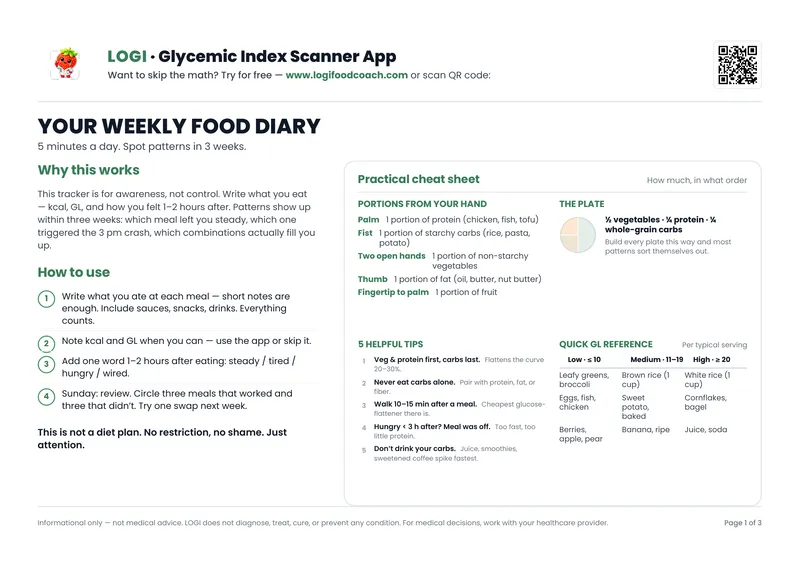
Free PDF — 3 pages
Your Weekly Food Journal
Track meals, glycemic load & mood. Spot patterns in 3 weeks.
No spam. Unsubscribe anytime.