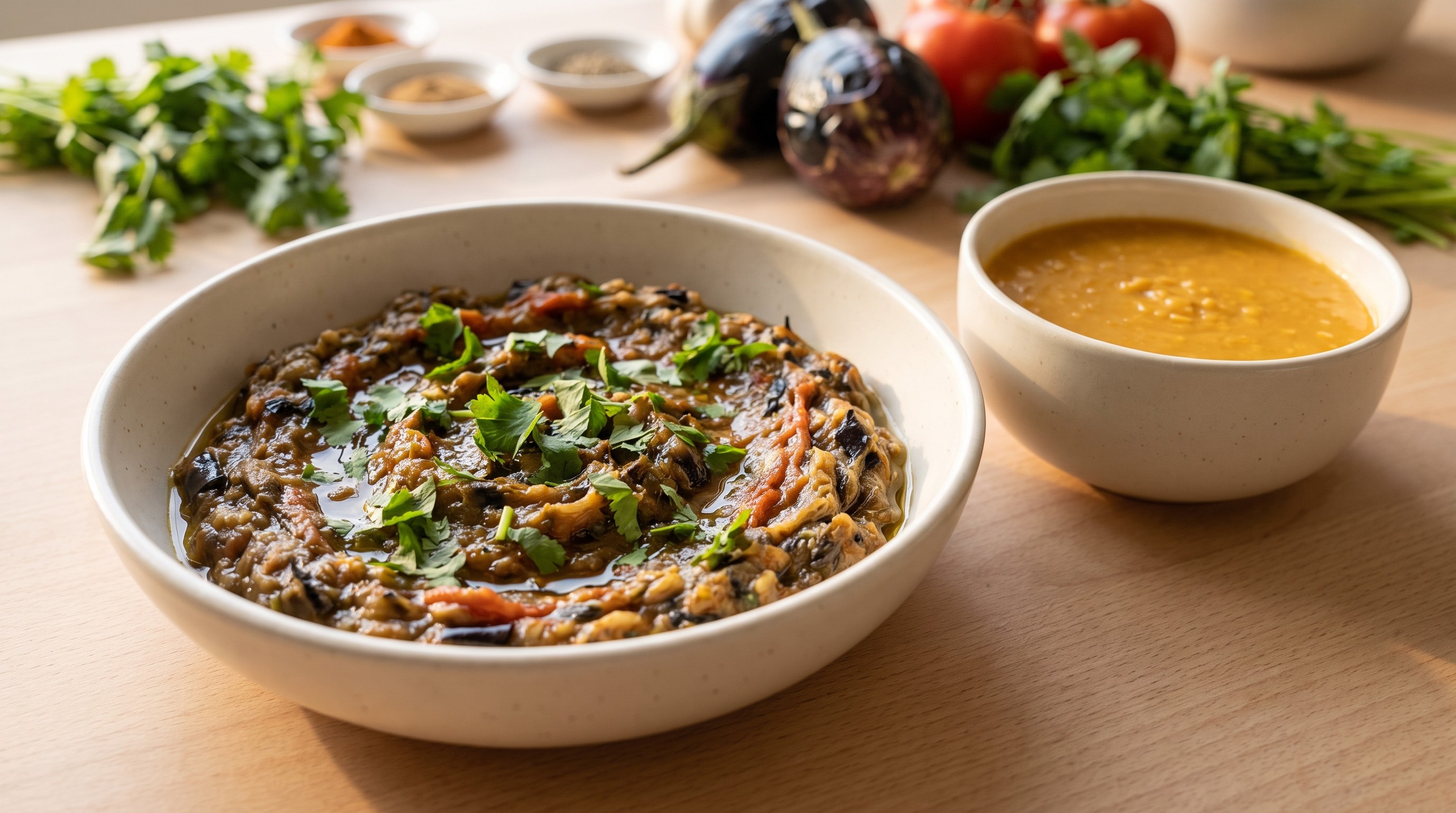
Baingan Bharta with Red Lentil Dal
Smoky charred eggplant folded into a cumin-spiked tomato base and served alongside protein-rich red lentil dal — a naturally low-glycemic Indian meal.
Baingan bharta is one of India's great gifts to anyone watching their blood sugar. The eggplant itself has a glycemic index of roughly 15, and its spongy flesh cooks down into a silky, smoke-scented mash without any need for starchy binders or thickeners. Blistering the halves under a broiler until the skin turns black and papery gives you the same deep char flavour that street vendors coax from open flames — caramelised, slightly bitter, and intensely savoury.
Instead of pairing the bharta with naan or roti, which can send glucose levels climbing, this version sits it next to a simple red lentil dal. Red lentils have a GI of around 26, yet they deliver nearly 25 g of protein per 100 g dry weight along with both soluble and insoluble fibre. That combination slows gastric emptying and blunts the post-meal glucose curve. The turmeric stirred into the lentils adds more than colour: curcumin has been shown to support insulin sensitivity, making this humble spice a functional ingredient as well as a flavourful one.
For the best blood-sugar response, serve the bharta and dal together and eat a few spoonfuls of the vegetable-rich bharta before the lentils — fibre and fat consumed first create a buffer that slows carbohydrate absorption. A squeeze of lemon at the table adds brightness and supplies vitamin C, which may further aid glucose metabolism. The entire meal comes together in under 45 minutes, serves two generously, and reheats beautifully the next day.
Blood Sugar Impact
With a low GI of 22 and a moderate glycemic load of 12.3, this meal should produce a gentle, gradual rise in blood sugar. The high fiber from eggplant and lentils, combined with healthy fats and spices like turmeric and cumin, will slow glucose absorption and support stable energy for 3-4 hours.
Blood Sugar Tips
- ✓ Eat the eggplant bharta portion first before the lentil dal, as the fiber-rich vegetables will slow subsequent carbohydrate absorption.
- ✓ Avoid pairing with white rice or naan — instead serve with a small portion of brown rice or cauliflower rice to keep the overall glycemic load low.
- ✓ Include a short 10-15 minute walk after the meal to enhance glucose uptake by muscles and further blunt any blood sugar rise from the lentils.
🥗 Ingredients
- 350 g Eggplant
- 2 tbsp Vegetable oil
- 100 g Red lentil
- 0.5 tsp Ground turmeric
- 120 g Onion
- 3 pcs Garlic
- 1 pcs Ginger
- 1 tsp Cumin seed
- 180 g Tomato
- 0.5 tsp Red chili powder
- 0.75 tsp Salt
- 10 g Coriander leaf
- 12.3 oz Eggplant
- 2 tbsp Vegetable oil
- 3.5 oz Red lentil
- 0.5 tsp Ground turmeric
- 4.2 oz Onion
- 3 pcs Garlic
- 1 pcs Ginger
- 1 tsp Cumin seed
- 6.3 oz Tomato
- 0.5 tsp Red chili powder
- 0.75 tsp Salt
- 0.4 oz Coriander leaf
👨🍳 Instructions
- 1
Position an oven rack about 15 cm from the broiler element and preheat the broiler to 230 °C (450 °F). Line a baking tray with foil for easy cleanup.
- 2
Slice the eggplant in half lengthwise and score the cut surface in a deep crosshatch pattern, spacing cuts about 2 cm apart. Brush 1 teaspoon of oil over the scored flesh, then lay both halves cut-side up on the prepared tray. Broil for 12–13 minutes, flip skin-side up, and continue broiling another 12 minutes until the skin is blistered and blackened and the flesh feels completely soft when pressed. Remove and set aside to cool slightly.
- 3
While the eggplant chars, rinse the red lentils under cold water until the water runs clear. Place them in a small saucepan with 400 ml of water and the ground turmeric. Bring to a boil over high heat, then lower to a gentle simmer and cook uncovered for 18–20 minutes, stirring occasionally, until the lentils are completely soft and have broken down into a thick, porridge-like consistency. Add a splash of water if they thicken too quickly.
- 4
While the eggplant and lentils are cooking, dice the onion finely, mince the garlic cloves, grate the ginger, and roughly chop the tomatoes.
- 5
Heat the remaining oil in a wide skillet or kadai over medium heat. Drop in the cumin seeds and let them sizzle for 20–30 seconds until they darken a shade and release a nutty aroma. Add the diced onion and cook, stirring often, for about 5 minutes until the pieces turn soft and lightly golden at the edges.
- 6
Stir the minced garlic and grated ginger into the onions and cook for 1 minute until fragrant. Add the chopped tomatoes, red chili powder, and salt. Cook for 3–4 minutes, pressing the tomatoes with the back of a spoon, until they collapse into a thick, jammy sauce.
- 7
Scoop the cooled eggplant flesh away from the charred skins using a spoon, discarding the skins. Roughly mash the flesh with a fork — leave some texture rather than making it completely smooth. Fold the mashed eggplant into the tomato-onion mixture and cook together for 3–4 minutes over medium heat, stirring to combine.
- 8
Tear or roughly chop the fresh coriander leaves and scatter them over the bharta. Serve immediately in shallow bowls with the warm red lentil dal spooned alongside. For the gentlest blood-sugar response, start with a few bites of the bharta before moving to the dal.
📊 Nutrition Per Serving
| Per Serving | Whole Dish | |
|---|---|---|
| Calories | 407 | 814 |
| Carbs | 55g | 110g |
| Sugars | 12g | 24g |
| Natural Sugars | 12g | 24g |
| Protein | 16g | 33g |
| Fat | 16g | 31g |
| Saturated Fat | 2g | 4g |
| Unsaturated Fat | 13g | 27g |
| Fiber | 13g | 27g |
| Soluble Fiber | 4g | 8g |
| Insoluble Fiber | 9g | 18g |
| Sodium | 889mg | 1779mg |
Predicted Glucose Response
What if you...
Estimated model — individual responses vary. Not medical advice.
🔄 Lower GI Swaps
Red lentils break down quickly when cooked, losing their structure and increasing the rate of starch digestion, which raises their effective glycemic impact. Chana dal (GI ~8), green/brown lentils (GI ~22), and black lentils (GI ~20) retain their shape better during cooking, preserving more resistant starch and resulting in a slower, lower blood sugar response.
Generic vegetable oils (soybean, sunflower, canola) lack the polyphenols and high monounsaturated fat content that help moderate post-meal glucose spikes. Extra virgin olive oil and avocado oil are rich in oleic acid and bioactive compounds that have been shown to improve glycemic response by slowing gastric emptying and enhancing insulin sensitivity.
If canned or processed tomatoes are used, they can have a slightly higher glycemic impact due to concentration of sugars and loss of intact fiber. Fresh Roma tomatoes have more intact cell walls and fiber that slow sugar absorption. Green tomatoes have less sugar overall, and zucchini adds bulk with virtually no glycemic load (GL ~1), helping to lower the dish's total GL while maintaining texture.
🔬 The Science Behind This Recipe
Why This Meal Is a Blood Sugar Win
This dish earns its low-glycemic stripes thanks to a powerful trio: eggplant, red lentils, and turmeric. Eggplant is naturally very low in carbohydrates and rich in soluble fiber, which slows the rate at which sugar enters your bloodstream after eating. Red lentils, while they do contain carbohydrates, come packed with plant-based protein and fiber that act like a built-in brake system — they slow digestion so glucose trickles in gradually rather than flooding in all at once. Together, these two ingredients create a meal that fills you up without the sharp rise and crash you might get from refined grains or starchy sides.
The glycemic load of this recipe sits at just 12.3 per serving, which falls in the low range. This is an important number because it accounts for both the *type* and *amount* of carbohydrates on your plate — not just how quickly a food raises blood sugar (that's the GI), but how much of that food you're actually eating. A small portion of a high-GI food can still have a modest impact, while a mountain of a medium-GI food could spike you. With a GI of only 22 and a moderate serving size, this dal delivers steady, sustained energy rather than a roller-coaster ride.
To get even more out of this meal, try a few simple strategies. Eat the eggplant and vegetables first before digging into the dal — this "veggie-first" approach has been shown to blunt post-meal glucose spikes. The fat from the vegetable oil also helps here, as dietary fat naturally slows gastric emptying and keeps blood sugar more stable. And if you can, take a 10–15 minute walk after eating. Light movement helps your muscles pull glucose from your blood, smoothing out any remaining rise. Small habits, big difference.
Related recipes
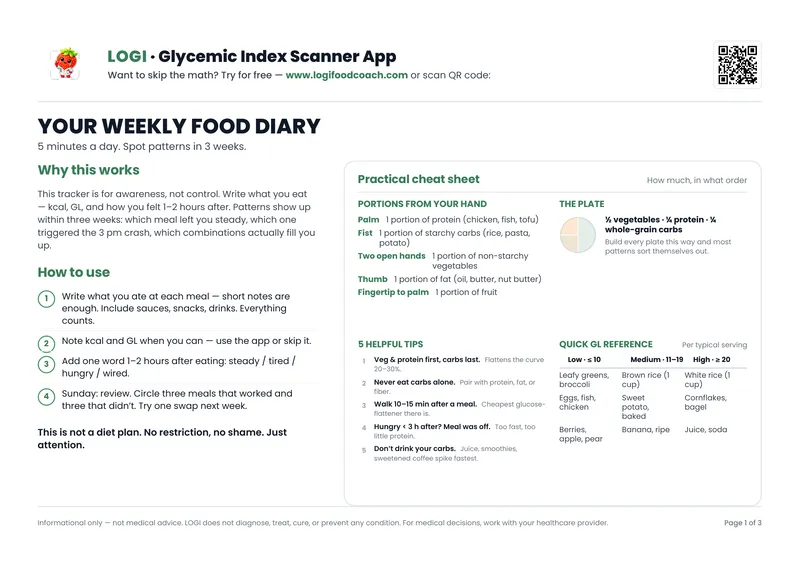
Free PDF — 3 pages
Your Weekly Food Journal
Track meals, glycemic load & mood. Spot patterns in 3 weeks.
No spam. Unsubscribe anytime.