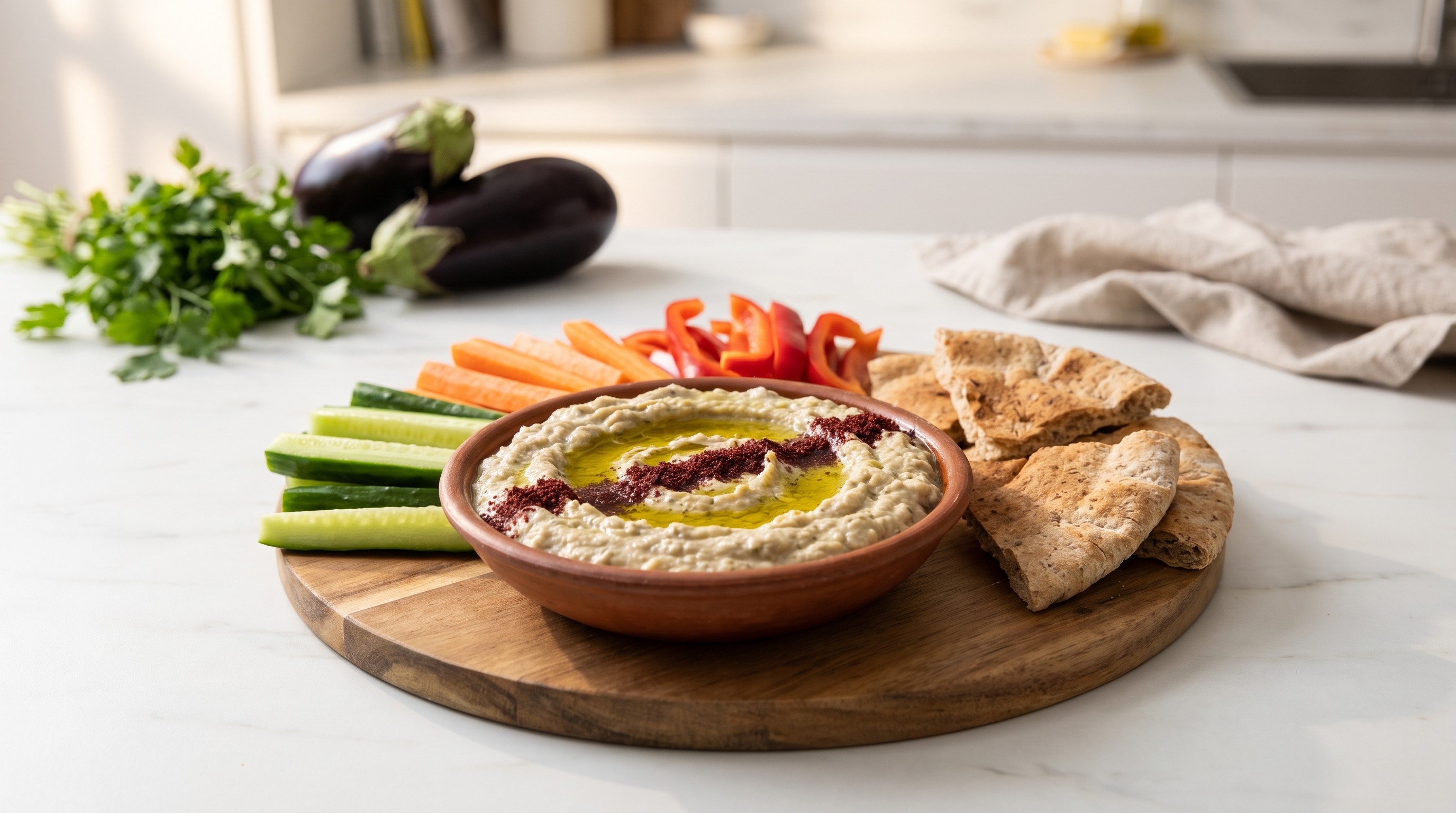
Baba Ganoush with Crudités and Wholegrain Pita
Smoky roasted eggplant mashed with tahini, garlic, and lemon, paired with crisp vegetable sticks for dipping — a naturally blood-sugar-steady Lebanese mezze.
Baba ganoush is one of the most blood-sugar-friendly dips you can make. The base is roasted eggplant, which has a glycemic index of just 15 and is rich in soluble fiber that slows glucose absorption. Combined with tahini — a source of healthy fats and plant protein — and brightened with fresh lemon juice and garlic, this dip delivers deep, smoky flavor without any of the blood sugar spikes that can accompany starchier dips. The generous drizzle of extra-virgin olive oil adds monounsaturated fat, which further blunts the glycemic response of the overall meal.
The crudité platter of cucumber, red bell pepper, and carrot provides additional fiber and a satisfying crunch, while the intact cell structure of raw vegetables further slows digestion. A deliberately small portion of wholegrain pita adds texture contrast without overwhelming the plate with carbohydrates — wholegrain varieties have a moderate glycemic index of around 55, significantly lower than white pita at 70 or above. By keeping the pita portion small and pairing it with the fat-rich dip and fiber-loaded vegetables, the overall glycemic load of this snack remains very low.
For the best blood sugar response, start with the vegetable sticks before reaching for the pita. The fiber and water content of the raw vegetables will begin to slow gastric emptying, meaning any carbohydrates from the pita arrive in your bloodstream more gradually. This dish works beautifully as an afternoon snack, a pre-dinner appetizer, or as part of a larger mezze spread. The tahini and olive oil provide enough fat and protein to keep you satisfied for hours without the energy crash that follows higher-glycemic snacks.
Blood Sugar Impact
Very low blood sugar impact expected. The combination of fiber-rich vegetables, healthy fats from tahini and olive oil, and the low GI of 30 with a glycemic load of 9.6 should produce a gentle, minimal rise in blood glucose with stable energy for 3-4 hours.
Blood Sugar Tips
- ✓ Start with the raw crudités (cucumber, bell pepper, carrot) before dipping into the baba ganoush and pita to front-load fiber and slow gastric emptying.
- ✓ Eat the wholegrain pita last or in small portions, using it mainly as a vehicle for the baba ganoush — the tahini and olive oil fats will blunt any glucose spike from the bread.
- ✓ Take a 10-15 minute walk after eating to further smooth out any modest blood sugar rise from the pita.
🥗 Ingredients
- 1 pcs Eggplant
- 1.5 tbsp Extra-virgin olive oil
- 1 pcs Garlic
- 2 tbsp Tahini
- 1 tbsp Lemon juice
- 0.25 tsp Salt
- 0.5 tsp Sumac
- 1 pcs Cucumber
- 0.5 pcs Red bell pepper
- 1 pcs Carrot
- 1 pcs Wholegrain pita bread
- 1 pcs Eggplant
- 1.5 tbsp Extra-virgin olive oil
- 1 pcs Garlic
- 2 tbsp Tahini
- 1 tbsp Lemon juice
- 0.25 tsp Salt
- 0.5 tsp Sumac
- 1 pcs Cucumber
- 0.5 pcs Red bell pepper
- 1 pcs Carrot
- 1 pcs Wholegrain pita bread
👨🍳 Instructions
- 1
Set the oven to 220 °C (425 °F). Slice the eggplant in half from stem to base and score the exposed flesh in a deep crosshatch pattern, being careful not to pierce the skin. Brush the cut surfaces with one tablespoon of the olive oil.
- 2
Lay the eggplant halves flesh-side down on a parchment-lined baking sheet. Roast for 25 minutes, until the skin has shriveled and the interior is completely soft and collapsing.
- 3
While the eggplant is in the oven, slice the cucumber, red bell pepper, and carrot into sticks roughly the length of your finger. Finely mince the garlic clove. Squeeze the juice from half a lemon and set it aside.
- 4
Remove the eggplant from the oven and immediately scoop the softened flesh into a fine-mesh sieve placed over a bowl. Let excess moisture drain for about two minutes — this step prevents a watery dip. Discard the skins and the drained liquid.
- 5
Transfer the drained eggplant flesh to a mixing bowl. Using a fork, crush it to a rough, rustic texture — keep some chunks intact rather than mashing into a smooth paste, as this gives the dip its characteristic body.
- 6
Fold in the tahini, lemon juice, minced garlic, and salt. Stir until evenly combined but stop before the mixture turns homogeneous — some visible streaks of tahini add visual appeal.
- 7
Spread the baba ganoush across a serving plate, using the back of a spoon to create shallow wells. Drizzle the remaining half tablespoon of olive oil into the wells and dust the surface with sumac for a tangy, ruby-coloured finish.
- 8
Arrange the vegetable sticks alongside the dip and tear the wholegrain pita into rough pieces. For the steadiest blood sugar response, dip the vegetable sticks first — their fiber slows gastric emptying — and enjoy the pita toward the end of the snack.
📊 Nutrition Per Serving
| Per Serving | Whole Dish | |
|---|---|---|
| Calories | 309 | 618 |
| Carbs | 32g | 63g |
| Sugars | 12g | 24g |
| Natural Sugars | 12g | 24g |
| Protein | 7g | 15g |
| Fat | 19g | 38g |
| Saturated Fat | 3g | 5g |
| Unsaturated Fat | 16g | 33g |
| Fiber | 11g | 22g |
| Soluble Fiber | 3g | 7g |
| Insoluble Fiber | 7g | 15g |
| Sodium | 388mg | 775mg |
Predicted Glucose Response
What if you...
Estimated model — individual responses vary. Not medical advice.
🔄 Lower GI Swaps
Whole wheat pita has a moderate-to-high GI (around 55–70) and is the primary glycemic load driver in this recipe. Almond flour crackers (GI ~10–15), flaxseed crackers (GI ~7), and seed-based crisps are very low GI due to their high fat, fiber, and protein content, which dramatically reduces the overall GL of the dish.
Raw carrots have a GI of around 35–45 and are the second-highest glycemic contributor among the crudités. Jicama (GI ~17), daikon radish (GI ~15), and celery (GI ~15) offer a similar satisfying crunch with significantly lower glycemic impact and fewer net carbohydrates per serving.
Red bell peppers already have a low GI (~15), but contain more natural sugars (about 5 g per 100 g) than alternatives like endive, radicchio, or zucchini (1–2 g per 100 g). Swapping reduces the total sugar load of the crudité platter and provides sturdy, scoop-friendly shapes for the dip.
🔬 The Science Behind This Recipe
Why This Recipe Works for Your Blood Sugar
Baba ganoush is a surprisingly powerful ally for steady blood sugar, and it starts with the eggplant. Eggplant is naturally low in carbohydrates and rich in soluble fiber, which slows down digestion and prevents the rapid sugar rush you'd get from starchier foods. When you blend it with tahini — a paste made from sesame seeds — you're adding both healthy fats and plant-based protein to the mix. This combination is key: fat and protein act like a gentle brake on your digestive system, slowing the rate at which glucose enters your bloodstream. The generous drizzle of olive oil does double duty here, contributing heart-healthy monounsaturated fats that further buffer the glycemic response.
With a glycemic load of just 9.6 per serving, this dish falls comfortably in the "low" category (anything under 10 is considered low). That's an important number to understand. While the Glycemic Index tells you how quickly a food raises blood sugar, the Glycemic Load factors in how much carbohydrate you're actually eating. A food might have a moderate GI, but if a typical serving contains very few carbs — as with this eggplant-based dip — the real-world impact on your blood sugar stays minimal. It's the difference between theory and what actually happens on your plate.
To get the most out of this meal, try a simple strategy: start with the raw vegetable crudités before moving to the pita bread. Eating fiber-rich vegetables first creates a protective layer in your digestive tract that slows carbohydrate absorption from the grains that follow. Choosing wholegrain pita over refined white adds another layer of protection, since the intact grain fibers take longer to break down. And if you can, a short 10-to-15-minute walk after eating has been shown to help your muscles absorb glucose more efficiently — turning a great meal into an even smarter one.
Related recipes
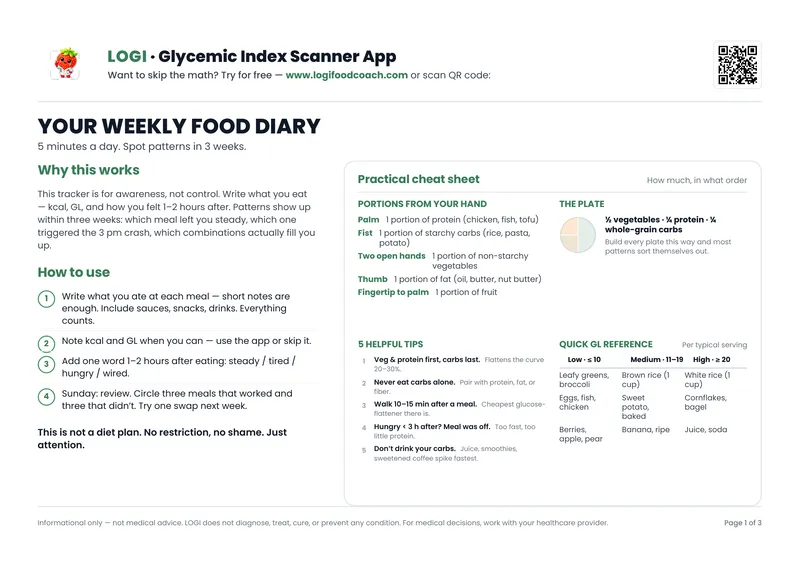
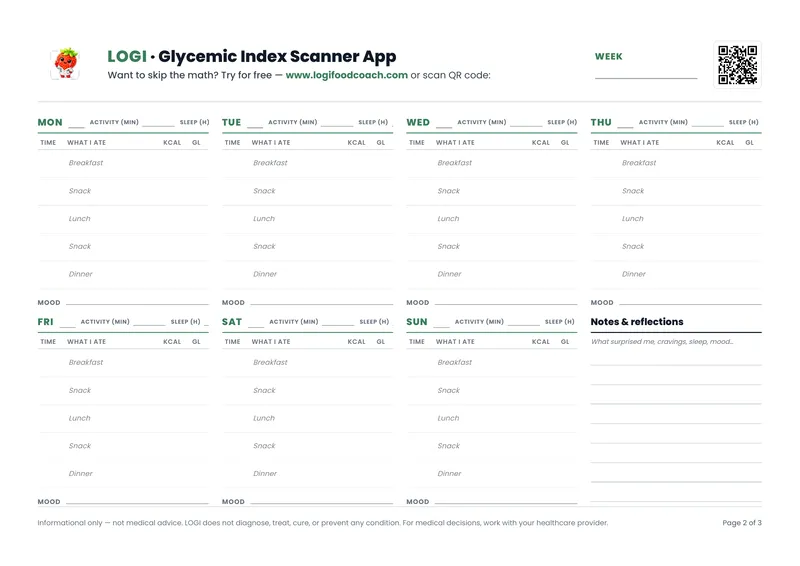
Free PDF — 3 pages
Your Weekly Food Journal
Track meals, glycemic load & mood. Spot patterns in 3 weeks.
No spam. Unsubscribe anytime.