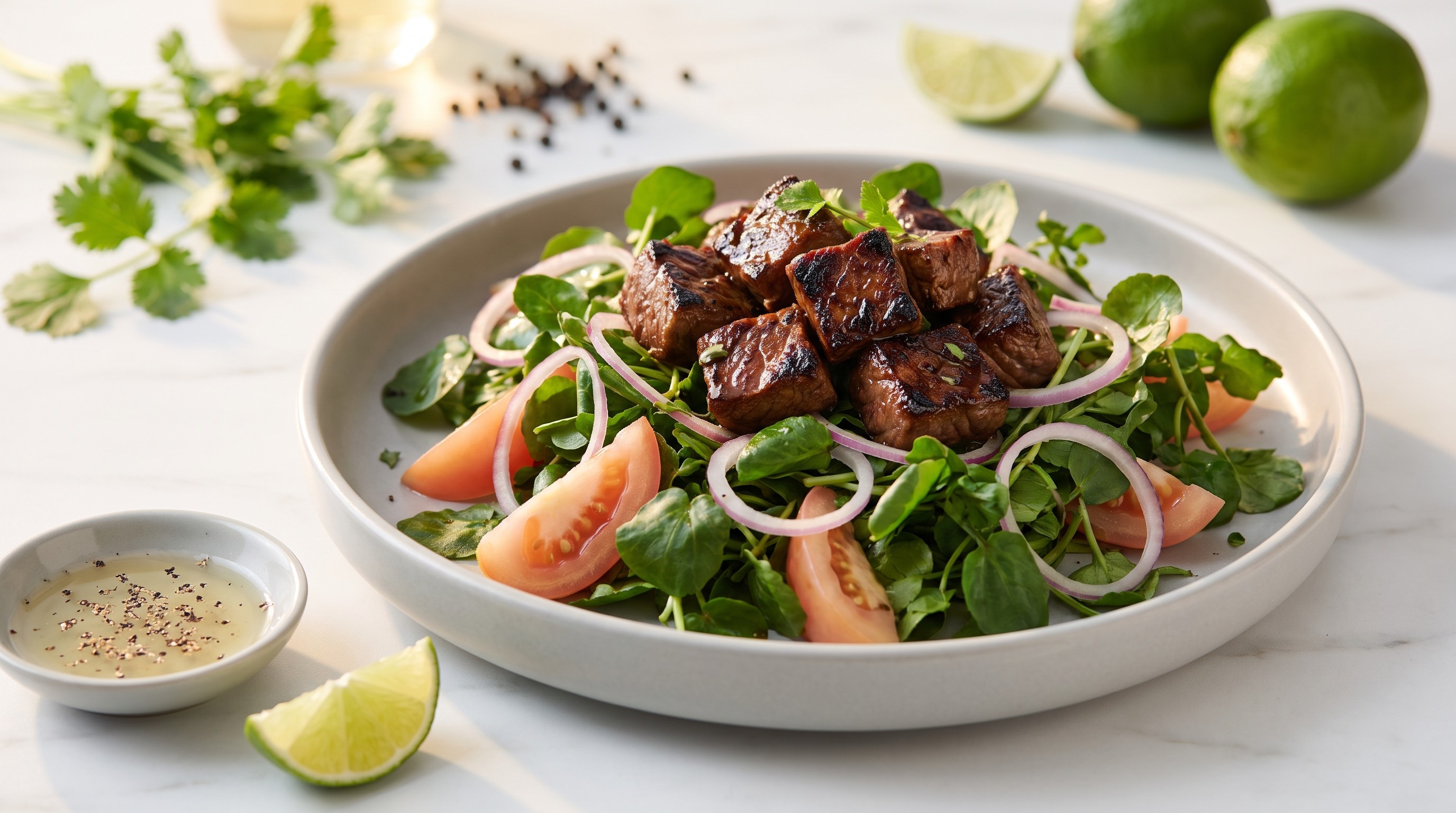
Bò Lúc Lắc (Shaking Beef) with Watercress Salad
Smoky, hard-seared beef cubes piled over peppery watercress, tomato, and red onion — a naturally low-glycemic, high-protein Vietnamese classic.
Bò Lúc Lắc, or shaking beef, is one of Saigon's most iconic dishes — named for the tossing motion that sends marinated beef cubes tumbling across a screaming-hot wok. This version stays completely faithful to the original street-food spirit while being naturally blood-sugar friendly: there is no white rice underneath, no added sugar in the marinade, and no hidden starches anywhere on the plate. Instead, the blistered, caramelized beef lands directly on a bed of raw watercress, cool tomato wedges, and sharp red onion rings, creating a built-in contrast of temperature and texture that makes the rice entirely unnecessary.
From a glycemic perspective, this dish is a near-perfect plate. The beef delivers slow-digesting protein and satiating fat, both of which blunt any glucose response. Watercress is among the most nutrient-dense greens on earth and is virtually carbohydrate-free, while the raw onion and tomato contribute fiber and polyphenols that support healthy insulin signaling. The classic lime-salt-pepper dipping sauce adds bright acidity with zero glycemic impact — and vinegar and citrus have been shown to slow gastric emptying, further flattening any post-meal blood sugar curve.
For the best results, eat the salad greens first, then the beef with the dipping sauce. Pairing the protein with the fiber-rich watercress slows digestion and promotes a gentle, sustained energy release rather than a spike. If you want to extend the meal, serve alongside cauliflower rice or a small portion of cooled and reheated black rice, which has a lower GI than white jasmine rice. This dish is ready in 25 minutes, making it an ideal weeknight dinner for anyone managing blood sugar without sacrificing bold, restaurant-quality flavor.
Blood Sugar Impact
Very low blood sugar impact expected. The combination of high-quality protein from beef, healthy fats, and non-starchy vegetables like watercress and tomatoes results in a very low glycemic load of 3.1, promoting stable blood sugar and sustained energy for 3-4 hours.
Blood Sugar Tips
- ✓ Start with the watercress salad — the fiber and vinegar from the lime juice will slow gastric emptying and blunt any minor glucose response from the tomatoes and onions.
- ✓ Take a 10-15 minute walk after eating to further enhance glucose uptake by your muscles and keep blood sugar flat.
- ✓ Avoid adding sugar-based sauces (like sweet chili or hoisin) on the side, as these can significantly raise the glycemic load of an otherwise excellent low-GI meal.
🥗 Ingredients
- 400 g Beef sirloin steak
- 1.5 tbsp Soy sauce
- 2 tsp Fish sauce
- 3 pcs Garlic
- 1 tsp Black pepper
- 120 g Watercress
- 100 g Red onion
- 2 pcs Tomato
- 40 ml Lime juice
- 0.5 tsp Salt
- 1 tbsp Vegetable oil
- 15 g Butter
- 14.1 oz Beef sirloin steak
- 1.5 tbsp Soy sauce
- 2 tsp Fish sauce
- 3 pcs Garlic
- 1 tsp Black pepper
- 4.2 oz Watercress
- 3.5 oz Red onion
- 2 pcs Tomato
- 3 tbsp Lime juice
- 0.5 tsp Salt
- 1 tbsp Vegetable oil
- 0.5 oz Butter
👨🍳 Instructions
- 1
Place the beef cubes in a medium bowl. Add the soy sauce, fish sauce, minced garlic, and half the freshly ground black pepper. Toss until every piece is evenly coated, then leave at room temperature for 15 minutes so the marinade penetrates the meat. This short, sugar-free marinade keeps the glycemic load at zero while building deep umami flavor.
- 2
While the beef marinates, arrange the watercress across two serving plates, creating a generous bed of greens. Scatter the red onion rings and tomato wedges over the top. Keep the salad at room temperature — the contrast with the searing-hot beef is part of the dish.
- 3
Prepare the dipping sauce by combining the fresh lime juice, fine salt, and the remaining black pepper in a small dish. Stir to dissolve the salt. The acidity from the lime will help moderate any post-meal blood sugar response when eaten alongside the beef.
- 4
Set a heavy skillet, cast-iron pan, or wok over the highest heat your stove can produce. Add the vegetable oil and butter. Wait until the fat is shimmering, the butter foam has fully subsided, and the first wisps of smoke appear — this takes roughly 2 minutes and is essential for a proper sear.
- 5
Lift half the beef cubes from the marinade and shake off excess liquid. Spread them in a single uncrowded layer across the hot pan. Do not move them for a full 60 seconds — this builds the dark, caramelized crust that defines the dish. Then toss or flip once and sear the second side for another 60 seconds for medium-rare. Transfer to a clean plate.
- 6
Return the pan to high heat and allow it to come back to smoking. Sear the remaining beef cubes in the same way — 60 seconds undisturbed, one toss, 60 seconds more. Avoid overcrowding the pan; working in two batches ensures proper browning rather than steaming.
- 7
Immediately pile all the hot, seared beef cubes directly onto the watercress salad. The heat from the beef will gently wilt the top layer of greens while leaving the bottom crisp and peppery, creating layers of texture in every bite.
- 8
Serve at once with the lime dipping sauce alongside. For optimal blood sugar management, take a few bites of the watercress salad first — the fiber and volume from the raw greens slow digestion — then alternate between the beef and vegetables, dipping each piece into the lime-pepper sauce.
📊 Nutrition Per Serving
| Per Serving | Whole Dish | |
|---|---|---|
| Calories | 607 | 1215 |
| Carbs | 15g | 30g |
| Sugars | 6g | 12g |
| Natural Sugars | 6g | 12g |
| Protein | 48g | 96g |
| Fat | 40g | 81g |
| Saturated Fat | 16g | 31g |
| Unsaturated Fat | 25g | 50g |
| Fiber | 3g | 7g |
| Soluble Fiber | 1g | 2g |
| Insoluble Fiber | 2g | 5g |
| Sodium | 1589mg | 3179mg |
Predicted Glucose Response
What if you...
Estimated model — individual responses vary. Not medical advice.
🔄 Lower GI Swaps
Refined vegetable oils are metabolically neutral, whereas extra virgin olive oil and avocado oil are rich in monounsaturated fats that have been shown to improve insulin sensitivity and slow glucose absorption when consumed with a meal, helping to flatten any post-meal blood sugar curve.
Many commercial soy sauces contain small amounts of added sugar and wheat, which contribute trace carbohydrates. Tamari (especially wheat-free varieties) and liquid aminos deliver the same umami depth with fewer hidden sugars, keeping the glycemic load as close to zero as possible.
Ghee is rich in short-chain fatty acids like butyrate, which support gut-mediated glucose regulation and may improve insulin signaling. Extra virgin olive oil provides oleic acid, which slows gastric emptying and helps moderate the overall glycemic response of the meal.
🔬 The Science Behind This Recipe
Why This Dish Is a Blood Sugar Win
Bò Lúc Lắc is a fantastic example of how traditional cooking can naturally align with blood sugar-friendly eating. The star here is sirloin beef — a high-quality protein source with virtually no carbohydrates, meaning it has almost no direct impact on your blood sugar. Protein also triggers a gentle release of hormones that help your body manage glucose more effectively, and it slows down digestion so that any carbs you eat alongside it are absorbed more gradually. Combined with the healthy fats naturally present in beef, you get a meal that keeps you satisfied longer without the energy crashes that follow high-carb dishes.
The aromatic base of garlic, soy sauce, and fish sauce does more than deliver incredible umami flavor. Garlic contains compounds that research suggests may support healthy insulin sensitivity, while the fermented nature of both soy sauce and fish sauce means they contribute bold taste with minimal sugar. Black pepper isn't just a seasoning — it contains piperine, which studies have shown may help improve nutrient absorption and support metabolic function. Together, these ingredients create a deeply flavorful dish without relying on added sugars or starchy sauces that would spike your glucose levels.
With a glycemic load of just 3.1 per serving and an estimated GI of 21, this recipe falls firmly in the "low" category on both scales. Remember, glycemic load matters even more than GI alone because it accounts for how much carbohydrate you're actually eating — not just how fast it hits your bloodstream. To make the most of this meal, enjoy the watercress salad first (fiber and leafy greens help prepare your digestive system), then savor the beef. A short 10-15 minute walk after eating can further smooth out your blood sugar response, turning a delicious dinner into a genuinely supportive choice for your metabolic health.
Related recipes
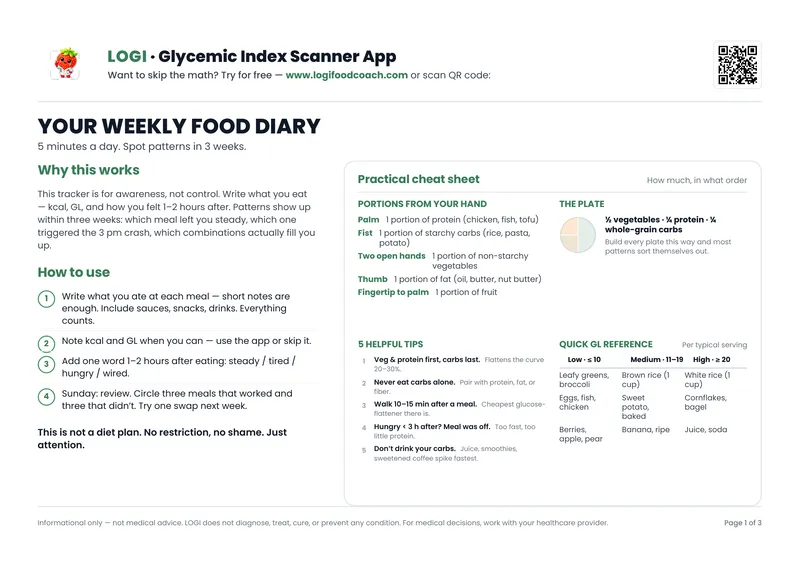
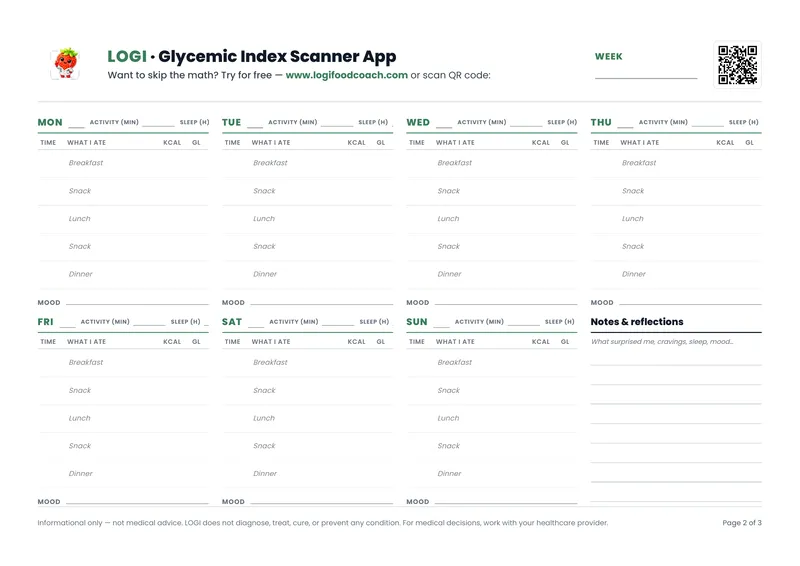
Free PDF — 3 pages
Your Weekly Food Journal
Track meals, glycemic load & mood. Spot patterns in 3 weeks.
No spam. Unsubscribe anytime.