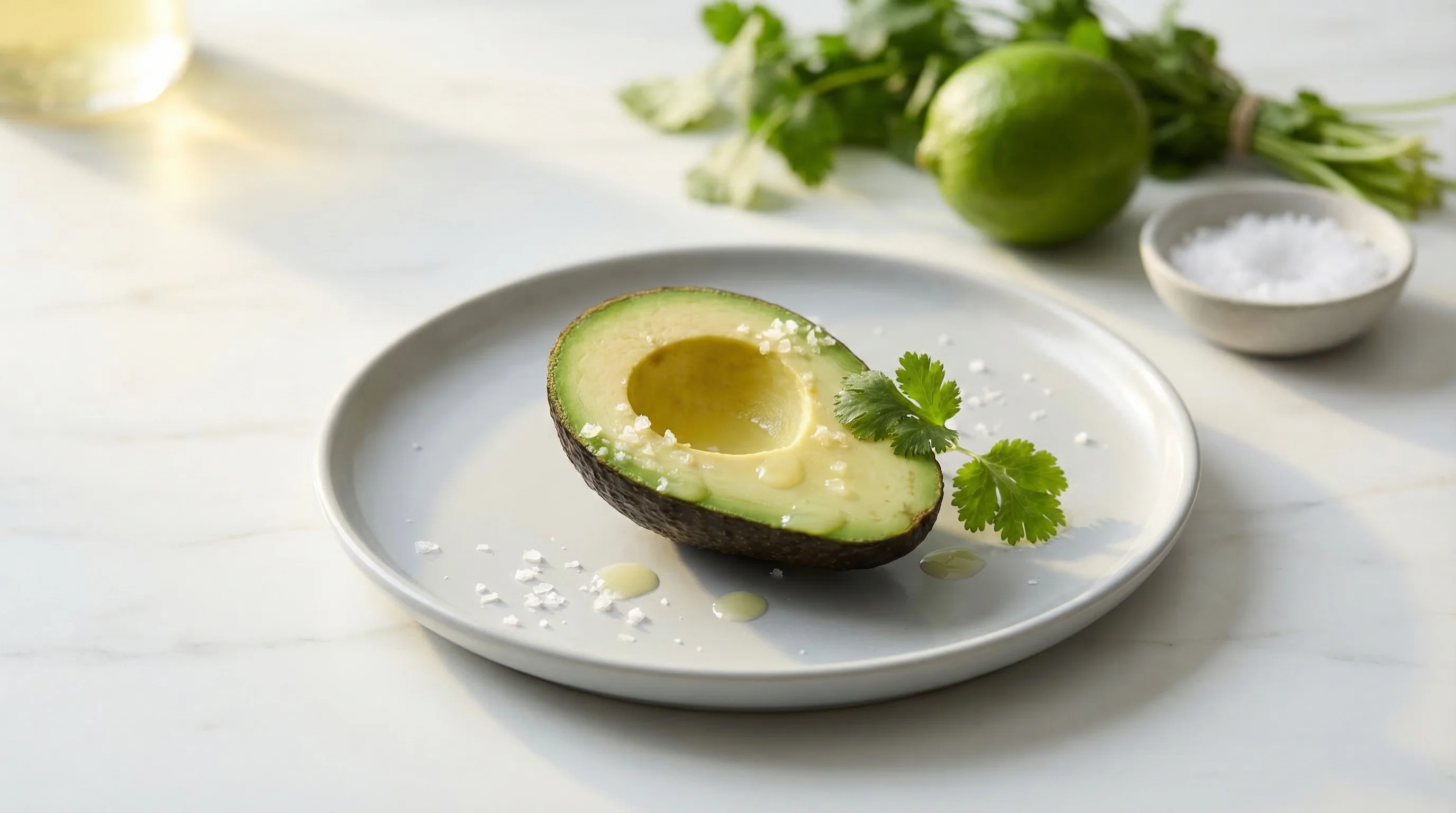
Avocado Half with Salt & Lime
A perfectly simple low-glycemic snack featuring creamy avocado enhanced with bright lime and sea salt—ready in just 2 minutes for stable blood sugar.
This elegantly simple avocado preparation is a nutritional powerhouse for blood sugar management. Avocados rank exceptionally low on the glycemic index with a GI of approximately 15, making them one of the best choices for maintaining stable glucose levels throughout the day. Their rich content of healthy monounsaturated fats and fiber slows digestion and prevents blood sugar spikes, while providing sustained energy without the crash associated with high-carbohydrate snacks.
The addition of fresh lime juice not only brightens the flavor but may also provide metabolic benefits. Citrus acids can help moderate the glycemic response of meals, and the vitamin C supports overall metabolic health. The healthy fats in avocado enhance satiety, helping you feel fuller longer and reducing cravings for high-glycemic foods. This makes it an ideal mid-morning or afternoon snack when energy tends to dip.
For optimal blood sugar management, enjoy this avocado half as a standalone snack or pair it with a hard-boiled egg or a few nuts for additional protein. The combination of healthy fats, fiber, and minimal carbohydrates makes this an excellent choice for anyone following a low-glycemic eating pattern, managing diabetes, or simply seeking sustained energy without glucose fluctuations.
Blood Sugar Impact
Minimal to negligible blood sugar impact. The high healthy fat content and extremely low glycemic load will provide stable energy without causing any significant glucose spike.
Blood Sugar Tips
- ✓ Enjoy as a snack between meals to maintain steady blood sugar levels throughout the day
- ✓ Pair with a protein source like eggs or grilled chicken to create a more complete meal that further stabilizes blood sugar
- ✓ Add this to meals containing higher-carb foods to slow their glucose absorption through the fat content
🥗 Ingredients
- 1 pcs 1 ripe avocado
- 1 tbsp 1 tablespoon fresh lime juice
- 0.5 tsp pinch of sea salt
- 1 pcs 1 ripe avocado
- 1 tbsp 1 tablespoon fresh lime juice
- 0.5 tsp pinch of sea salt
👨🍳 Instructions
- 1
Select a ripe avocado that yields slightly to gentle pressure when squeezed. Rinse the exterior under cool water and pat dry with a clean towel.
- 2
Place the avocado on a cutting board. Using a sharp knife, carefully cut lengthwise around the avocado, following the natural curve and cutting all the way around the pit in the center.
- 3
Gently twist the two halves in opposite directions to separate them. One half will contain the pit while the other will have an empty cavity.
- 4
To remove the pit, carefully strike it with the blade of your knife so the blade embeds slightly, then twist and lift to remove. Alternatively, scoop it out with a spoon. Discard the pit or save for composting.
- 5
Cut a fresh lime in half and squeeze approximately 1 tablespoon of juice over the exposed avocado flesh, ensuring even coverage to prevent browning and add bright citrus flavor.
- 6
Sprinkle a pinch of flaky sea salt evenly over the lime-dressed avocado. The salt will enhance the natural buttery flavor and complement the citrus notes.
- 7
Serve immediately with a spoon for scooping the creamy flesh directly from the skin. Enjoy as a satisfying low-glycemic snack that provides sustained energy and stable blood sugar levels.
📊 Nutrition Per Serving
| Per Serving | Whole Dish | |
|---|---|---|
| Calories | 244 | 244 |
| Carbs | 14g | 14g |
| Sugars | 1g | 1g |
| Natural Sugars | 1g | 1g |
| Protein | 3g | 3g |
| Fat | 23g | 23g |
| Saturated Fat | 3g | 3g |
| Unsaturated Fat | 19g | 19g |
| Fiber | 10g | 10g |
| Soluble Fiber | 3g | 3g |
| Insoluble Fiber | 7g | 7g |
| Sodium | 1151mg | 1151mg |
Predicted Glucose Response
What if you...
Estimated model — individual responses vary. Not medical advice.
🔄 Lower GI Swaps
These mineral-rich salts provide trace minerals like magnesium and potassium that support insulin sensitivity and glucose metabolism, helping maintain stable blood sugar levels throughout the day.
Both alternatives have similar acidity and negligible glycemic impact. Apple cider vinegar has been shown in studies to improve insulin sensitivity and reduce post-meal blood sugar spikes when consumed with meals.
Adding seeds increases protein and fiber content further, which slows digestion and provides an even more sustained energy release, preventing any blood sugar fluctuations while adding healthy fats and minerals that support glucose regulation.
🔬 The Science Behind This Recipe
Why This Works for Your Blood Sugar
Avocados are a blood sugar superstar, and the science backs it up. With a glycemic index of just 13 and a glycemic load of 1.8 per serving, this simple recipe has virtually no impact on your glucose levels. The secret lies in avocado's unique nutritional profile: about 77% of its calories come from heart-healthy monounsaturated fats, while providing nearly 7 grams of fiber per half. This combination of high fat and high fiber means your body digests avocados slowly, releasing minimal glucose into your bloodstream. Unlike carbohydrate-rich foods that trigger rapid blood sugar spikes, the fats in avocado actually slow down gastric emptying—the rate at which food leaves your stomach—giving your body time to process nutrients gradually and steadily.
The lime juice adds more than just flavor. Citric acid has been shown to slightly lower the glycemic response of meals, though the effect is modest. More importantly, when you pair this avocado with other foods throughout your day, it acts as a metabolic buffer. Try eating your avocado before higher-carb foods—this "food sequencing" strategy can reduce glucose spikes by up to 73% according to recent research. The healthy fats help blunt the blood sugar impact of whatever you eat next.
Here's a practical tip: enjoy this as a pre-meal appetizer or pair it with eggs for breakfast. The protein-fat combination will keep you satisfied for hours while maintaining stable blood sugar. Even better, take a 10-minute walk after eating—light movement helps your muscles absorb glucose without requiring extra insulin, further smoothing out any minor blood sugar fluctuations.
Related recipes

Free PDF — 3 pages
Your Weekly Food Journal
Track meals, glycemic load & mood. Spot patterns in 3 weeks.
No spam. Unsubscribe anytime.
