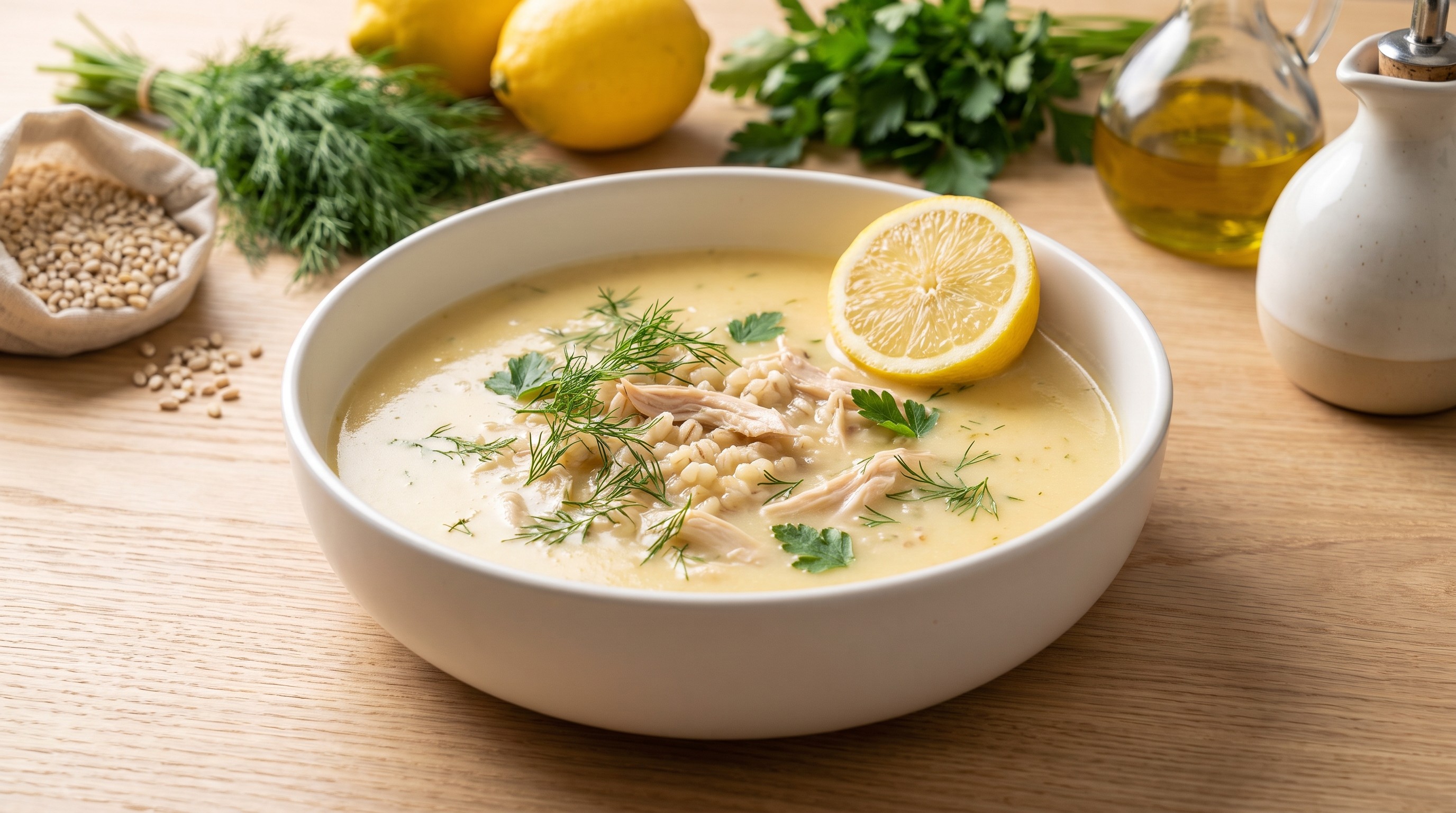
Avgolemono with Pearl Barley
Greece's silky egg-lemon soup gets a blood-sugar-friendly boost from pearl barley — one of the lowest-GI grains — plus tender chicken and bright citrus.
Avgolemono is one of the great comfort soups of Greek cooking, and this version is naturally suited for blood sugar management. Pearl barley, with a glycemic index of just 25–28, replaces the traditional white rice while adding a satisfying nutty chew and a generous dose of soluble fiber — the kind that forms a gel in the gut and slows glucose absorption. Combined with protein-rich chicken thighs and eggs, every bowl delivers a balanced macronutrient profile that promotes a gentle, steady blood sugar curve rather than a sharp spike.
The avgolemono technique itself is a masterclass in naturally creamy soup without flour or starch thickeners. Beating eggs until frothy, whisking in fresh lemon juice, and then slowly tempering the mixture with hot broth creates a velvety, opaque body that coats the barley and shredded chicken beautifully. The acid from the lemon juice also contributes more than flavor — research suggests that vinegar and citrus acids consumed with a meal can reduce the postprandial glycemic response by up to 20–30 percent.
For optimal blood sugar results, begin the meal with a small side of raw or lightly dressed vegetables before ladling the soup. The fiber and volume from greens eaten first further blunt the glucose curve. Pearl barley also continues to exert a beneficial "second meal effect," meaning its fermentable fiber can improve glycemic control even at the next meal. This soup reheats well, though gently — keep the heat low to preserve the egg-lemon emulsion.
Blood Sugar Impact
Very low blood sugar impact expected. With a glycemic load of 8.7 and GI of 24, the pearl barley's soluble beta-glucan fiber, combined with protein from chicken and egg plus fat from olive oil, will produce a slow, gentle glucose rise and stable energy for 3-4 hours.
Blood Sugar Tips
- ✓ Eat the barley, chicken, and vegetables first before drinking the broth — solids slow gastric emptying and blunt any glucose response from the liquid portion.
- ✓ Avoid blending the soup smooth; keeping chunky pieces of barley and chicken preserves the food matrix, which slows digestion compared to a puréed version.
- ✓ Take a 10-15 minute walk after eating — even light movement enhances muscle glucose uptake and can flatten any modest post-meal rise from the barley.
🥗 Ingredients
- 2 pcs Chicken thigh
- 60 g Pearl barley
- 2 pcs Egg
- 70 ml Lemon juice
- 1 pcs Onion
- 1 pcs Carrot
- 1 pcs Celery
- 1 tbsp Olive oil
- 1 pcs Bay leaf
- 5 g Dill
- 900 ml Water
- 1 tsp Salt
- 0.25 tsp Black pepper
- 2 pcs Chicken thigh
- 2.1 oz Pearl barley
- 2 pcs Egg
- 5 tbsp Lemon juice
- 1 pcs Onion
- 1 pcs Carrot
- 1 pcs Celery
- 1 tbsp Olive oil
- 1 pcs Bay leaf
- 0.2 oz Dill
- 3.8 cups Water
- 1 tsp Salt
- 0.25 tsp Black pepper
👨🍳 Instructions
- 1
Prepare the vegetables: cut the onion, carrot, and celery into small, uniform dice so they cook evenly and soften into the broth.
- 2
Warm the olive oil in a large pot over medium heat. Add the diced onion, carrot, and celery and cook, stirring occasionally, for about 4 minutes until the vegetables have softened and turned fragrant.
- 3
Place the chicken thighs into the pot along with the pearl barley, bay leaf, and water. Raise the heat to bring everything to a boil, then lower to a gentle simmer. Let it cook uncovered for 30 minutes, skimming any foam that rises to the surface, until the chicken is cooked through and the barley is plump and tender.
- 4
Carefully transfer the chicken thighs to a cutting board. Once cool enough to handle, pull the meat from the bones in rough shreds, discarding the skin and bones. Return the shredded chicken to the pot and remove the bay leaf.
- 5
Crack the eggs into a medium bowl and whisk vigorously until light and frothy — about 30 seconds. Pour in the lemon juice and whisk again until fully combined.
- 6
Temper the egg-lemon mixture: ladle a spoonful of hot broth from the pot into the bowl while whisking constantly. Repeat with 2–3 more spoonfuls, whisking after each addition. This gradually warms the eggs so they emulsify rather than scramble.
- 7
Take the pot off the heat. Pour the tempered egg-lemon mixture back into the soup in a thin, steady stream, stirring the soup constantly as you pour. The broth will turn silky, creamy, and opaque almost immediately.
- 8
Season with salt and pepper to taste. Ladle into warm bowls and scatter the chopped fresh dill over the top. Serve straight away — the avgolemono is at its silkiest when freshly made. If reheating later, use low heat and stir gently to preserve the emulsion.
📊 Nutrition Per Serving
| Per Serving | Whole Dish | |
|---|---|---|
| Calories | 711 | 1422 |
| Carbs | 37g | 73g |
| Sugars | 6g | 12g |
| Natural Sugars | 6g | 12g |
| Protein | 46g | 91g |
| Fat | 44g | 87g |
| Saturated Fat | 11g | 23g |
| Unsaturated Fat | 28g | 57g |
| Fiber | 8g | 15g |
| Soluble Fiber | 2g | 3g |
| Insoluble Fiber | 6g | 12g |
| Sodium | 1468mg | 2937mg |
Predicted Glucose Response
What if you...
Estimated model — individual responses vary. Not medical advice.
🔄 Lower GI Swaps
Pearl barley (GI ~28) has had its outer bran partially removed. Hulled barley (GI ~20–25) retains more beta-glucan fiber, which slows glucose absorption and lowers the glycemic load. Cauliflower rice and konjac rice have a near-zero GI, drastically cutting the dish's total carbohydrate load and GL.
Cooked carrots have a moderate GI (~39–49) due to starch gelatinization during simmering. Zucchini (GI ~15), celery root (GI ~20), and turnip (GI ~20) all deliver lower glycemic impact while maintaining body and flavor in the broth.
While chicken thigh itself has no GI, keeping the skin adds saturated fat that can impair insulin sensitivity over time. Replacing the skin-on fat with extra-virgin olive oil provides monounsaturated fats and polyphenols shown to improve post-meal glucose response and insulin sensitivity, indirectly supporting better blood sugar control.
🔬 The Science Behind This Recipe
Why This Recipe Works for Blood Sugar
Avgolemono is a classic Greek comfort soup, and this version swaps traditional white rice for pearl barley — a swap that makes a real difference for your blood sugar. Pearl barley is one of the lowest-glycemic grains available, thanks to its unusually high content of beta-glucan, a type of soluble fiber that forms a gel-like layer in your digestive tract. This gel physically slows down the breakdown of starches into glucose, meaning sugar enters your bloodstream gradually rather than all at once. The result? A gentle, sustained energy curve instead of a sharp spike and crash.
But the magic of this soup isn't just the barley — it's how all the ingredients team up. The chicken thigh delivers protein and healthy fats, both of which further slow gastric emptying (how quickly food leaves your stomach). When protein and fat arrive alongside carbohydrates, your body processes the whole meal more slowly, flattening the glucose response even more. The egg in the avgolemono sauce doubles down on this effect, adding another layer of protein and fat that buffers the barley's carbohydrates. Even the lemon juice plays a supporting role — acidity has been shown to modestly reduce the glycemic response of a meal.
With a glycemic load of just 8.7 per serving, this soup falls firmly in the "low" category (under 10). Remember, glycemic load accounts for both the *type* and *amount* of carbohydrate in a real-world portion — it's a much more useful measure than glycemic index alone. To get even more from this meal, try eating any side salad or vegetables first before the soup, and consider a short 10–15 minute walk afterward. These simple habits can reduce post-meal glucose responses by up to 30%, turning an already blood-sugar-friendly meal into an even gentler one.
Related recipes
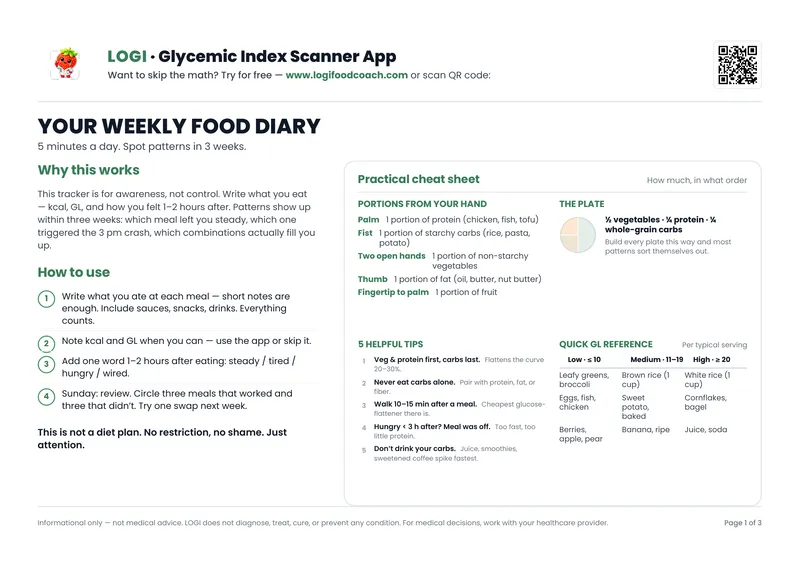
Free PDF — 3 pages
Your Weekly Food Journal
Track meals, glycemic load & mood. Spot patterns in 3 weeks.
No spam. Unsubscribe anytime.