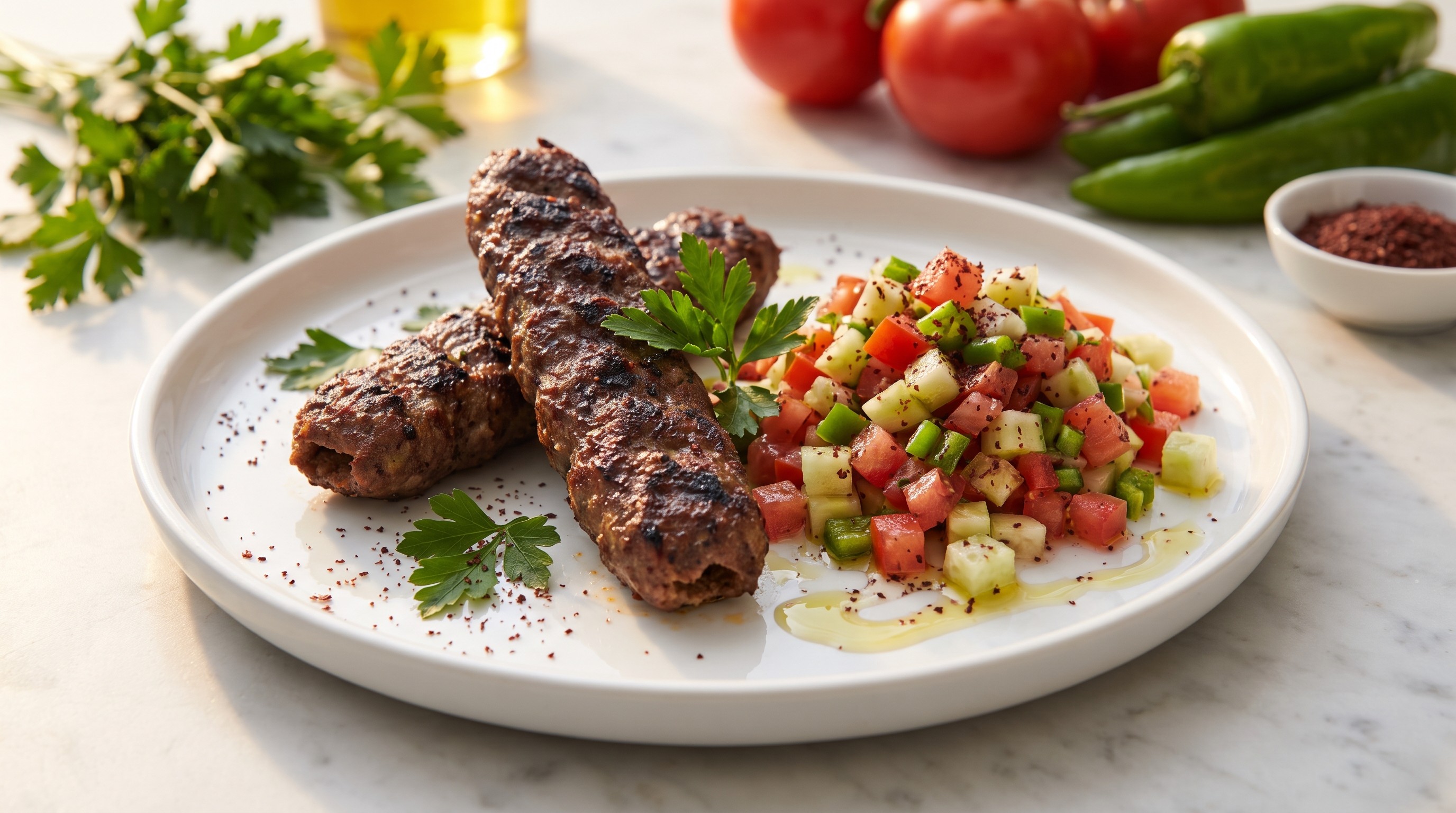
Adana Kebab with Çoban Salatası
Charred, hand-kneaded lamb kebabs with crisp Turkish shepherd's salad — a naturally low-glycemic, high-protein plate designed to keep post-meal blood sugar steady.
This Adana kebab plate is a naturally blood-sugar-friendly meal that requires no substitutions or compromises. Ground lamb provides satiating protein and healthy fats that slow gastric emptying, giving your body time to process nutrients without a glucose spike. The hand-kneaded kebabs get their signature warmth from pul biber (Aleppo pepper flakes), a cornerstone of southeastern Turkish cooking that adds complex, fruity heat without any added sugar or starch.
The accompanying çoban salatası — literally "shepherd's salad" — is a vibrant mix of diced tomatoes, cucumber, and green pepper dressed with lemon juice, olive oil, and tangy sumac. Every ingredient in this salad sits firmly in the low-glycemic category with a GI well under 20, and the raw vegetables deliver fibre that further blunts any glucose response. Sumac, a deep-red berry spice prized across the Eastern Mediterranean, has been studied for its potential role in supporting healthy post-meal blood sugar levels.
For optimal glucose management, eat the çoban salatası first — starting a meal with vegetables and fibre before protein has been shown to reduce post-meal glucose peaks by up to 30 percent. The entire plate contains zero high-GI ingredients, making it one of the rare recipes already perfectly suited for a low-glycemic lifestyle. Without the traditional lavash wrap, this version keeps the focus on protein and vegetables only. Pair with a side of cauliflower rice or grilled aubergine if you want extra volume without raising the glycemic load.
Blood Sugar Impact
Very low blood sugar impact. With a glycemic load of 3.3 and an estimated GI of 20, this protein-and-vegetable-rich meal will produce a minimal, slow rise in blood glucose, providing stable energy for 3-4 hours.
Blood Sugar Tips
- ✓ Eat the Çoban Salatası (shepherd's salad) first — the fiber from tomatoes, cucumber, and peppers slows gastric emptying and blunts any glucose response from the meal.
- ✓ Squeeze extra lemon juice over both the kebab and salad; the acidity has been shown to lower the glycemic response of a meal by up to 20-30%.
- ✓ Avoid pairing with high-GI sides like white rice or pide bread; if you want a starch, choose bulgur pilav, which has a lower GI and adds extra fiber.
🥗 Ingredients
- 1 pcs Onion
- 300 g Lamb mince
- 1 tbsp Pul biber
- 1 tsp Salt
- 2 pcs Tomato
- 1 pcs Cucumber
- 1 pcs Green pepper
- 40 g Red onion
- 15 g Flat-leaf parsley
- 20 ml Lemon juice
- 1 tbsp Extra-virgin olive oil
- 0.5 tsp Sumac
- 1 pcs Onion
- 10.6 oz Lamb mince
- 1 tbsp Pul biber
- 1 tsp Salt
- 2 pcs Tomato
- 1 pcs Cucumber
- 1 pcs Green pepper
- 1.4 oz Red onion
- 0.5 oz Flat-leaf parsley
- 1 tbsp Lemon juice
- 1 tbsp Extra-virgin olive oil
- 0.5 tsp Sumac
👨🍳 Instructions
- 1
Grate the onion on the finest holes of a box grater. Gather the wet pulp into a clean cloth or your fist and squeeze firmly over the sink until no more liquid drips out — removing this moisture is essential so the kebabs char rather than steam on the pan.
- 2
Place the lamb mince in a large bowl along with the squeezed onion pulp, pul biber, and half the salt. Knead the mixture vigorously with your hands for two to three minutes until it feels sticky, cohesive, and pulls away from the bowl cleanly.
- 3
Divide the seasoned lamb into four equal portions. Shape each portion into a flat, elongated oval about two centimetres thick. If you have flat metal skewers, press the meat around them; otherwise, form the kebabs freehand on a lightly oiled tray.
- 4
Set a ridged grill pan or heavy cast-iron skillet over high heat and allow it to get smoking hot — this takes roughly two minutes. A properly heated pan is the key to a deep char without overcooking the interior.
- 5
Lay the kebabs onto the smoking-hot pan without crowding. Cook undisturbed for four to five minutes until a dark, caramelised crust forms on the underside, then flip once and cook the second side for another four to five minutes until charred and cooked through.
- 6
While the kebabs cook, prepare the çoban salatası. Combine the diced tomatoes, cucumber, green pepper, red onion, and chopped parsley in a mixing bowl.
- 7
Drizzle the lemon juice and olive oil over the salad, then sprinkle with the remaining salt and the ground sumac. Toss gently until every piece is lightly coated.
- 8
Transfer the charred kebabs to a serving plate and pile the çoban salatası alongside. Serve immediately — for the best blood-sugar response, begin the meal with a few bites of the fibre-rich salad before moving to the protein.
📊 Nutrition Per Serving
| Per Serving | Whole Dish | |
|---|---|---|
| Calories | 558 | 1116 |
| Carbs | 16g | 33g |
| Sugars | 8g | 16g |
| Natural Sugars | 8g | 16g |
| Protein | 28g | 56g |
| Fat | 43g | 86g |
| Saturated Fat | 16g | 33g |
| Unsaturated Fat | 25g | 50g |
| Fiber | 4g | 9g |
| Soluble Fiber | 1g | 3g |
| Insoluble Fiber | 3g | 6g |
| Sodium | 898mg | 1796mg |
Predicted Glucose Response
What if you...
Estimated model — individual responses vary. Not medical advice.
🔄 Lower GI Swaps
Regular onion contains more natural sugars (especially when cooked and caramelized) that can contribute to glycemic load. Spring onion greens and chives deliver allium flavor with virtually zero sugar content and negligible glycemic impact.
While lemon juice already has a very low GI, vinegar's acetic acid has been shown in clinical studies to reduce postprandial blood glucose response by up to 20-30% when consumed with a meal. Swapping in or adding vinegar amplifies the blood-sugar-blunting effect of the acidic dressing.
Ripe tomatoes, though already low-GI (~15), contain more natural sugars than green tomatoes or raw zucchini. Green tomatoes, zucchini, and radishes all have a lower glycemic index and higher fiber-to-sugar ratio, further minimizing any blood sugar rise.
Raw red onion has moderate natural sugars. Pickling it in vinegar adds acetic acid which actively lowers the glycemic response of the entire meal. Radishes offer a similar peppery crunch with nearly zero glycemic impact and more fiber per gram.
🔬 The Science Behind This Recipe
Why This Recipe Works for Blood Sugar
This Adana kebab is a naturally blood sugar-friendly meal, and the reason starts with what's *not* on the plate: refined carbohydrates. Ground lamb is the star here, and it's essentially a zero-glycemic ingredient — rich in protein and healthy fats, both of which slow the rate at which glucose enters your bloodstream. When you eat protein-rich foods like lamb, your body releases less insulin compared to carb-heavy meals, keeping your energy steady rather than sending you on a spike-and-crash roller coaster. The fat content in lamb also acts as a natural brake, slowing digestion so nutrients are absorbed gradually.
The çoban salatası (shepherd's salad) of fresh tomatoes and onion is the perfect companion. Tomatoes have a low glycemic index and are packed with fiber and water, which add bulk to your meal without meaningfully raising blood sugar. Onions contain a type of soluble fiber called fructans, which feeds beneficial gut bacteria and may actually help improve how your body handles glucose over time. Together, these vegetables create a fiber-rich base that further slows the absorption of any carbohydrates in the meal.
Here's a practical tip: eat your salad *before* the kebab. Research suggests that starting with vegetables and following with protein can reduce post-meal glucose spikes by up to 30% compared to eating everything mixed together. And with a glycemic load of just 3.3 per serving, this meal falls firmly in the "low" category — remember, glycemic load accounts for both the *type* and *amount* of carbohydrates, giving you a much more realistic picture than glycemic index alone. A short 10-15 minute walk after eating can further help your muscles absorb glucose, making this already gentle meal even kinder to your metabolism.
Related recipes
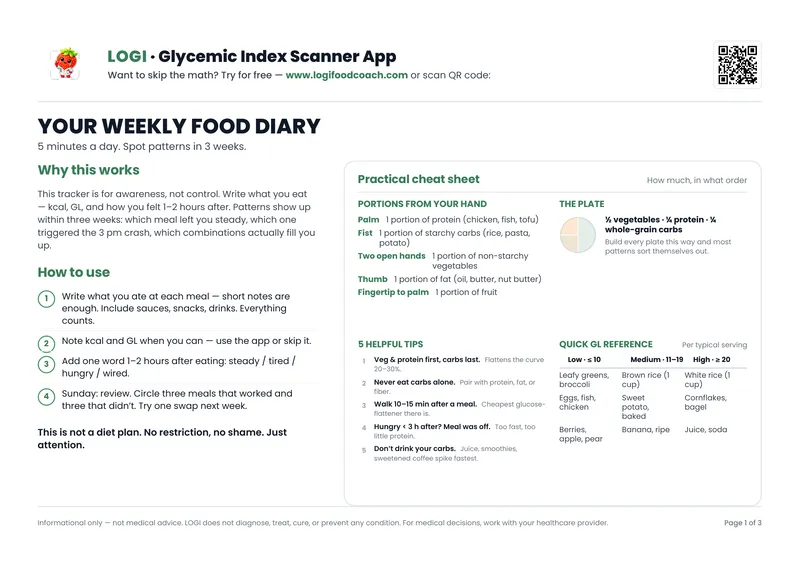
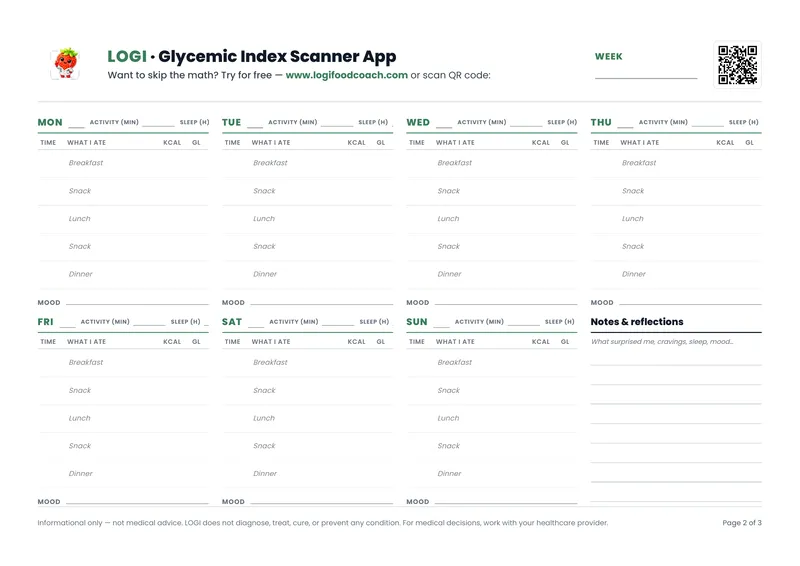
Free PDF — 3 pages
Your Weekly Food Journal
Track meals, glycemic load & mood. Spot patterns in 3 weeks.
No spam. Unsubscribe anytime.