Daily Blood Sugar Management Checklist
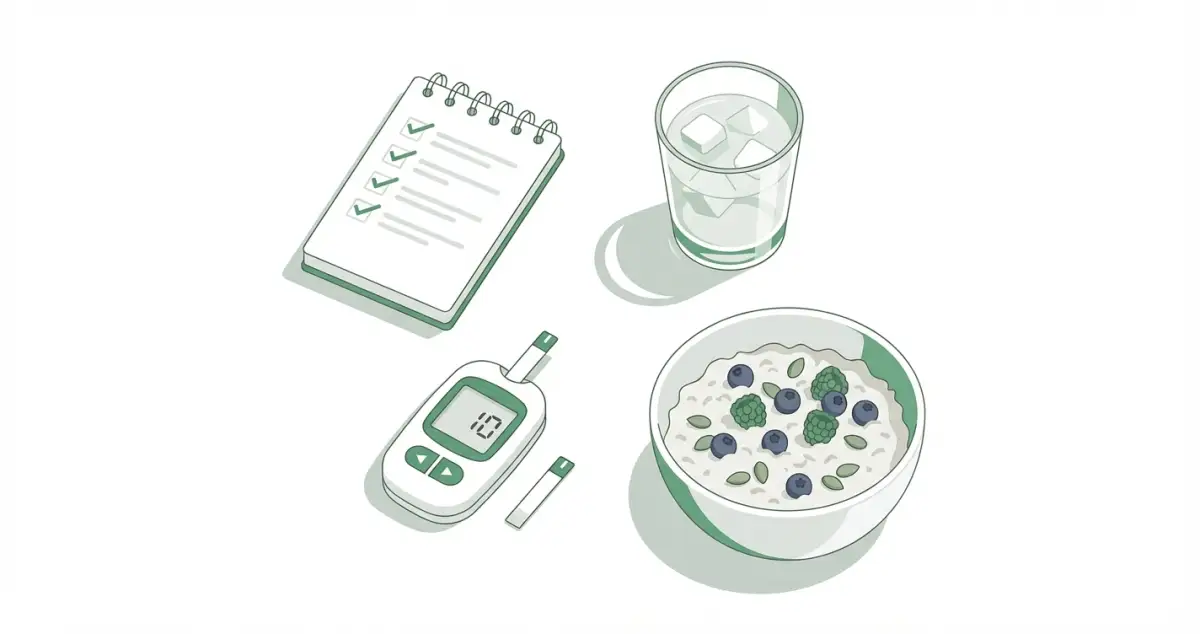
Managing blood sugar levels is crucial for maintaining your health and preventing complications. This guide provides a simple daily checklist to help you stay on track:
- Morning: Test fasting blood sugar (80–130 mg/dL), eat a low-GI breakfast, and log your results.
- Midday: Check pre-lunch levels, eat a balanced, low-GI meal, and stay active after eating.
- Evening: Monitor before dinner (80–130 mg/dL), eat a low-GI dinner, and do light exercise.
- Bedtime: Perform a final blood sugar check (90–150 mg/dL) and review your daily log.
Key Blood Sugar Targets:
| Timing | Target Range (mg/dL) |
|---|---|
| Before Meals | 80–130 |
| 1–2 Hours After Meals | Below 180 |
| Bedtime | 90–150 |
Tools for Success:
- Use a blood glucose meter or digital app to track readings.
- Follow a low-glycemic diet with balanced meals.
- Engage in light physical activity after meals.
By sticking to this routine and using tracking tools, you can better manage your blood sugar and reduce health risks.
When to Check Your Blood Sugar
Morning Blood Sugar Steps
Start your day by testing your fasting blood sugar to check how well your levels were managed overnight. Follow these steps to get an accurate morning reading.
Morning Blood Sugar Test
Perform your fasting blood sugar test between 6:00 AM and 8:00 AM, before eating or drinking anything other than water.
Steps to follow:
- Wash your hands thoroughly with warm water and soap.
- Ensure your meter is calibrated and test strips are not expired.
- Use the first drop of blood for the test.
- Wait about 15 seconds for the result.
Low-GI Breakfast Options
Pick breakfast foods with a low glycemic load to help keep your blood sugar steady:
| Breakfast Item | Serving Size | Glycemic Load |
|---|---|---|
| Steel-cut oats | 1 cup | 9 |
| Greek yogurt with berries | 1 cup | 6 |
| Whole grain toast with avocado | 2 slices | 8 |
| Vegetable omelet | 2 eggs | 2 |
Morning Medication Schedule
For oral medications, take them 15–30 minutes before eating. If you use insulin, test your blood sugar first, then inject rapid-acting insulin about 15 minutes before your meal. Stick to a consistent schedule for long-acting insulin doses.
Record Morning Numbers
Use a digital app to keep track of your morning routine:
- Log breakfast items and their glycemic load.
- Record your blood sugar readings.
- Note the timing and dosage of medications.
- Set reminders for future testing times.
Midday Blood Sugar Control
Pre-Lunch Testing
Check your blood sugar before lunch, aiming for a range of 80–130 mg/dL. Wash your hands thoroughly and ensure your glucose meter is properly calibrated. Use your reading to plan a balanced, low-GI meal that keeps your levels steady.
Low-GI Lunch Guide
For lunch, focus on foods that provide a slow, steady release of energy. Combine lean proteins, fiber-rich veggies, and healthy fats for the best results.
| Lunch Component | Recommended Options | Key Benefits |
|---|---|---|
| Protein Base | Lentils (1 cup) | 18g protein; helps lower post-meal blood sugar by 20% |
| Plant Protein | Chickpeas (1 cup) | 15g protein, 13g fiber |
| Healthy Fat | Avocado (1/3 fruit) | 4.5g fiber; supports better insulin response |
| Lean Protein | Salmon (4 oz) | 22g protein; helps stabilize blood sugar |
“Lunch, like other eating windows during the day, causes blood sugar to rise.” – Elizabeth Shaw, M.S., RDN
Once you’ve finished eating, a bit of light activity can help keep your levels stable.
After-Lunch Movement
Engage in gentle activity within 30 minutes after eating to promote stable blood sugar levels.
“When you are walking and active after a meal, the demand for energy goes toward your many organs and tissues, but especially the muscles.” – L.J. Amaral M.S., RDN, CSO
Here are a few easy post-lunch activities to try:
- Take a 5-minute walk
- Do some light stretching or yoga
- Practice tai chi or work on light gardening
- Choose stairs over elevators
Make sure to record your readings and meal details afterward to track your progress effectively.
Lunch Data Recording
Keep track of your pre-lunch readings, meal components (including portions and glycemic load), post-meal activity, and any symptoms. Tools like the Logi app (free, with premium at $39.99/year) can help you log everything accurately and make daily adjustments as needed.
Evening Blood Sugar Management
As the day comes to a close, taking a few simple steps can help keep your blood sugar levels steady through the night.
Pre-Dinner Testing
Before sitting down for dinner, check your blood sugar. Aim for a pre-meal range of 80–130 mg/dL. If your levels are higher than this, consider adding non-starchy vegetables to your meal to help bring them down. Use this reading to guide your portion sizes and food choices for dinner.
Planning a Low-GI Dinner
A well-balanced, low-GI dinner can make a big difference in managing your blood sugar. Focus on meals that include lean proteins and fiber-rich vegetables. Here are some ideas to get you started:
| Meal Type | Main Components | Benefits for Blood Sugar |
|---|---|---|
| Seafood-Based | Ginger Roasted Salmon & Broccoli | Packed with protein and omega-3s |
| Plant-Based | Simple Low-GI Tofu Stir-Fry | Low-carb and high in fiber |
| One-Pot | One-Pot Garlicky Shrimp & Spinach | Easy to prepare and protein-rich |
| Bowl Style | Mediterranean Hummus Bowl | Fiber-packed for steady energy |
“Low-glycemic meals aren’t necessarily low-carb, but eating low-GI foods can help regulate insulin levels and avoid spikes in your blood sugar.”
– Kelsey Butler, MS, RDN
To keep your dinner blood sugar-friendly, fill half your plate with non-starchy vegetables. Watch out for sauces and dressings, as they can sometimes contain hidden sugars.
Light Evening Exercise
A little movement after dinner can go a long way in balancing your blood sugar and supporting overnight stability. Try to do some light exercise within 30 minutes of eating. Keep it gentle so it doesn’t interfere with your sleep. Here are a few options:
- A quick 5-minute walk around your neighborhood
- Gentle yoga or light stretching
- Tai chi exercises
- Simple gardening tasks
“Any light-moderate exercise could work! Swimming is great for those with gait instability, yoga, biking, tai chi, gardening, Pilates, and moderate housework.”
– L.J. Amaral M.S., RDN, CSO
Bedtime Blood Sugar Check
Checking your blood sugar one last time before bed can offer valuable insights into how your body is managing overnight. Perform this check about two hours after dinner or right before going to sleep. Your goal should still be within the 80–180 mg/dL range. Use a tracking app to log your readings for future reference.
If your levels are lower than your target range, have a small snack with carbohydrates to stabilize them. On the other hand, if your levels are higher than desired, consider discussing adjustments to your dinner timing or portion sizes with your healthcare provider.
Blood Sugar Tracking Tools
Incorporate effective tools into your routine to better manage your blood sugar levels.
Blood Sugar Meters Guide
When selecting a blood glucose meter, focus on these key features:
| Feature | Importance | What to Look For |
|---|---|---|
| Accuracy | Ensures dependable readings | Clinically validated devices approved by health authorities |
| Test Strip Cost | Impacts long-term affordability | Consider the ongoing cost of replacement test strips |
| Memory Capacity | Allows for trend analysis over time | Devices that store a sufficient amount of historical data |
| Data Sharing | Eases collaboration with healthcare team | Meters with wireless connectivity or mobile app integration for easy data sync |
These features help streamline your tracking and make it more effective.
Digital Tracking Methods
Digital tools can simplify blood sugar management. For example, the Logi – Glycemic Index Tracker App offers:
- A meal glycemic load scanner
- A daily meal tracker
- Health insights for each meal
- A tool to find low GI/GL food alternatives
The Premium version goes further, providing personalized recommendations and advanced insights to refine your control.
These tools let you make real-time adjustments to your daily habits based on data.
Making Daily Adjustments
Use your tracked data to refine your blood sugar management throughout the day.
| Time of Day | Target Range (mg/dL) | Suggestions |
|---|---|---|
| Before Meals | 80–130 | Adjust portion sizes; opt for low GI foods |
| 2 Hours After Meals | Below 180 | Include light physical activity |
| Bedtime | 90–150 | Consider a small snack if needed |
The Logi app’s insights can guide you in understanding how specific meals impact your levels.
Medical Check-up Schedule
Pair regular medical visits with your tracking efforts to maintain long-term control.
| Check-up Type | Frequency | Purpose |
|---|---|---|
| Primary Care | Every 3–4 months | Review readings and adjust your plan |
| A1C Test | Every 3 months | Evaluate long-term sugar control |
| Eye Exam | Annually | Monitor for diabetes-related vision issues |
| Foot Exam | At every visit | Check circulation and nerve health |
Bring your blood sugar logs - whether digital or written - to these appointments. They’ll help your provider make more informed decisions about your care plan.
Conclusion
Managing blood sugar effectively requires sticking to a consistent daily routine. Here’s a simple, actionable plan based on strategies discussed earlier. The Cleveland Clinic highlights:
“Blood sugar monitoring is one of the most important and helpful tools for managing diabetes - especially for those who take insulin”
Keeping your blood sugar in check can help reduce the risk of complications like:
- Eye problems
- Kidney issues
- Heart disease
- Nerve damage
- Stroke
Using digital tools for tracking, scheduling regular doctor visits, and attending DSMES (Diabetes Self-Management Education and Support) sessions can make a big difference in maintaining control. Studies show that spending over 10 hours in DSMES over 6–12 months can lead to better overall health and even lower mortality rates.
Here’s a quick breakdown of key daily actions:
| Time of Day | Key Actions | Target Range (mg/dL) |
|---|---|---|
| Morning | Test fasting glucose; plan a low-GI breakfast | 80–130 |
| Midday | Check levels before lunch; stay active after eating | 80–130 |
| Evening | Monitor before dinner; include light exercise | 80–130 |
| Bedtime | Do a final check; review your daily log | 90–150 |
Further Reading
Take control of your blood sugar
Scan your meals, track glycemic load, and see your patterns — all in one app.
Start Free Trial →