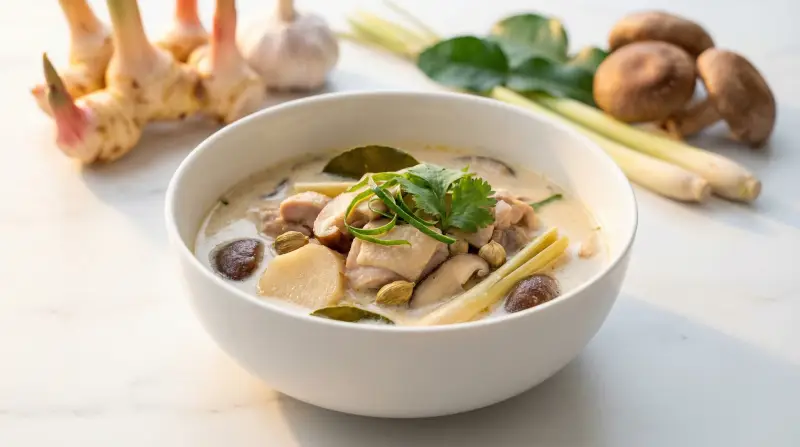
Thailändische Kokos-Hühnersuppe mit niedrigem glykämischen Index (Tom Kha Gai)
Aromatische thailändische Suppe mit zartem Hühnchen in cremiger Kokosbrühe, von Natur aus niedrig-glykämisch und entzündungshemmend. In unter einer Stunde fertig für stabilen Blutzucker.
Diese authentische thailändische Kokos-Hühnersuppe bietet kräftige südostasiatische Aromen und unterstützt gleichzeitig einen gesunden Blutzuckerspiegel. Anders als traditionelle Versionen, die oft zugesetzten Zucker enthalten, setzt dieses Rezept auf die natürliche Süße der Kokosmilch und aromatischer Kräuter, um eine sättigende, stoffwechselanregende Mahlzeit zu kreieren.
Die Kombination aus proteinreichem Hühnchen, gesunden Fetten aus der Kokosmilch und Ballaststoffen aus den Pilzen schafft ein ideales Makronährstoff-Gleichgewicht, das Blutzuckerspitzen verhindert. Galgant (Thai-Ingwer) und Zitronengras liefern entzündungshemmende Verbindungen, die die Insulinsensitivität verbessern können, während die mittelkettigen Triglyceride in der Kokosmilch schnell aufgenommen werden und anhaltende Energie liefern, ohne den Glukosespiegel zu beeinflussen. Die Shiitake-Pilze sorgen für Umami-Tiefe und Beta-Glucane, die die Kohlenhydrataufnahme verlangsamen.
Diese Suppe ist perfekt für das Blutzuckermanagement, wenn sie als vollständige Mahlzeit gegessen wird. Der hohe Protein- und Fettgehalt sorgt für eine allmähliche Verdauung und gleichmäßige Energiefreisetzung. Für optimale glykämische Kontrolle genießen Sie diese Suppe als Vorspeise oder kombinieren Sie sie mit nicht-stärkehaltigem Gemüse. Die wärmenden Gewürze und die reichhaltige Brühe machen sie sehr sättigend und reduzieren das Verlangen nach kohlenhydratreichen Lebensmitteln später am Tag.
Blutzucker-Auswirkung
Minimale Auswirkung auf den Blutzucker zu erwarten aufgrund der sehr niedrigen glykämischen Last von 0,5 und einem GI von 20. Die Kombination aus Protein vom Hühnchen, gesunden Fetten aus der Kokosmilch und ballaststoffreichen Pilzen liefert stabile Energie für 3-4 Stunden ohne nennenswerte Glukosespitzen.
Blutzucker-Tipps
- ✓ Iss diese Suppe als Teil einer vollständigen Mahlzeit und nicht allein, um die Sättigung zu maximieren und eine ausreichende Proteinzufuhr durch das Hühnchen sicherzustellen
- ✓ Füge zusätzliches nicht-stärkehaltiges Gemüse wie Pak Choi, Kohl oder Paprika hinzu, um den Ballaststoffgehalt zu erhöhen und die Verdauung weiter zu verlangsamen
- ✓ Vermeide die Kombination mit Beilagen mit hohem glykämischen Index wie weißem Reis; verwende bei Bedarf stattdessen eine kleine Portion Blumenkohlreis
🥗 Zutaten
- 50 g großes Stück Thai-Ingwer (Galgant), geschält und gehackt
- 2 pcs Knoblauchzehen
- 2 pcs ganze Kardamomkapseln
- 2 pcs Zitronengrasstangen
- 11 pcs Kaffir-Limettenblätter
- 1420 ml natriumarme Hühnerbrühe
- 454 g Hähnchenbrust oder -schenkel aus Freilandhaltung, in 2,5 cm große Stücke geschnitten
- 70 g Shiitake-Pilze, gehackt
- 400 ml ungesüßte Bio-Kokosmilch
- 3 tbsp Fischsauce
- 2 tbsp Chiliöl und frische Korianderblätter zum Garnieren
- 1.8 oz großes Stück Thai-Ingwer (Galgant), geschält und gehackt
- 2 pcs Knoblauchzehen
- 2 pcs ganze Kardamomkapseln
- 2 pcs Zitronengrasstangen
- 11 pcs Kaffir-Limettenblätter
- 6.0 cups natriumarme Hühnerbrühe
- 1.0 lb Hähnchenbrust oder -schenkel aus Freilandhaltung, in 2,5 cm große Stücke geschnitten
- 2.5 oz Shiitake-Pilze, gehackt
- 1.7 cups ungesüßte Bio-Kokosmilch
- 3 tbsp Fischsauce
- 2 tbsp Chiliöl und frische Korianderblätter zum Garnieren
👨🍳 Anleitung
- 1
Bereite das Zitronengras vor, indem du mit einem scharfen Messer die holzige Basis abschneidest und die harten äußeren Schichten entfernst. Schneide die zarten inneren Stangen in 5 cm lange Stücke und stelle sie beiseite.
- 2
Gib die Zitronengrasstücke, den gehackten Galgant, die Kaffir-Limettenblätter und die Knoblauchzehen in einen Mixer. Mixe mehrmals kurz, bis die Zutaten zu einer groben, duftenden Paste zerkleinert sind. Du musst möglicherweise 2-3 Esslöffel Wasser hinzufügen, um den Mixvorgang zu erleichtern.
- 3
Erhitze einen großen Suppentopf bei mittlerer bis hoher Hitze. Gib die gemixte Gewürzpaste und die Kardamomkapseln hinzu und rühre 1 bis 2 Minuten lang ständig, bis die Mischung sehr aromatisch wird und ihre ätherischen Öle freisetzt. Die Paste sollte brutzeln und aromatisch werden, aber nicht anbrennen.
- 4
Gieße die Hühnerbrühe hinzu und bringe sie zum Kochen. Sobald sie kocht, reduziere die Hitze auf niedrig und lasse die Brühe 20 bis 30 Minuten sanft köcheln, damit die Aromen tief in die Flüssigkeit einziehen können. Die Brühe sollte eine blassgelbe Farbe und einen intensiven Duft entwickeln.
- 5
Gieße die aromatisierte Brühe durch ein feinmaschiges Sieb in einen sauberen großen Topf und drücke mit dem Rücken eines Löffels auf die festen Bestandteile, um maximalen Geschmack zu extrahieren. Entsorge die festen Bestandteile und stelle die gesiebte Brühe wieder auf den Herd.
- 6
Gib die Hähnchenstücke und die geschnittenen Shiitake-Pilze zur gesiebten Brühe. Lasse alles bei mittlerer bis niedriger Hitze 20 bis 25 Minuten köcheln, bis das Hühnchen vollständig durchgegart und zart ist. Das Hühnchen sollte eine Kerntemperatur von 74°C erreichen und die Pilze sollten weich und aromatisch sein.
- 7
Nimm den Topf vom Herd und rühre die Kokosmilch und die Fischsauce ein, bis alles vollständig vermischt und cremig ist. Probiere und passe die Würzung bei Bedarf an, indem du mehr Fischsauce für Salzigkeit oder einen Spritzer Limettensaft für Frische hinzufügst.
- 8
Schöpfe die Suppe in Schalen und garniere mit einem Schuss Chiliöl und frischen Korianderblättern. Serviere sie sofort, solange sie heiß ist, für optimale Blutzuckervorteile. Jede Portion liefert etwa 350 ml Suppe mit ausgewogenem Protein und gesunden Fetten.
📊 Nährwerte pro Portion
| Pro Portion | Gesamtes Gericht | |
|---|---|---|
| Kalorien | 304 | 2125 |
| Kohlenhydrate | 14g | 96g |
| Zucker | 3g | 20g |
| Natürlicher Zucker | 3g | 20g |
| Protein | 22g | 156g |
| Fett | 19g | 133g |
| Gesättigtes Fett | 13g | 92g |
| Ungesättigtes Fett | 6g | 41g |
| Ballaststoffe | 4g | 29g |
| Lösliche Ballaststoffe | 1g | 9g |
| Unlösliche Ballaststoffe | 3g | 20g |
| Natrium | 1217mg | 8522mg |
Vorhergesagte Glukosereaktion
Was wäre, wenn du...
Geschätztes Modell — individuelle Reaktionen variieren. Keine medizinische Beratung.
🔄 Niedrigere GI-Alternativen
Die Verwendung von mit Brühe verdünnter Kokosnusscreme oder das Hinzufügen von MCT-Öl erhöht das Fett-Kohlenhydrat-Verhältnis, was die Glukoseaufnahme weiter verlangsamt und die gesamte glykämische Reaktion der Suppe reduziert.
Fettere Stücke wie Hähnchenschenkel enthalten mehr Fett und weniger Protein pro Portion, was die Verdauung verlangsamt und im Vergleich zu magerer Hähnchenbrust eine allmählichere Blutzuckerreaktion erzeugt.
Enoki- und Mu-Err-Pilze haben einen etwas niedrigeren Kohlenhydratgehalt als Shiitake und eine höhere Ballaststoffdichte, was zu einer noch niedrigeren glykämischen Wirkung führt, während die authentische Textur der thailändischen Suppe erhalten bleibt.
Viele handelsübliche Fischsaucen enthalten zugesetzten Zucker, der die glykämische Last erhöhen kann; Kokos-Aminos und zuckerfreie Alternativen bieten Umami-Geschmack ohne blutzuckersteigernde Zusätze.
🔬 Die Wissenschaft hinter diesem Rezept
Warum dieses Rezept für die Blutzuckerkontrolle funktioniert
Diese aromatische thailändische Suppe ist ein Meisterwerk des Blutzuckermanagements mit einer außergewöhnlich niedrigen glykämischen Last von nur 0,5 pro Portion. Das Geheimnis liegt in ihrer proteinreichen Basis und den aromatischen Zutaten, die praktisch keine Kohlenhydrate enthalten. Hühnchen liefert hochwertiges Protein, das die Verdauung verlangsamt und eine gleichmäßige Glukosefreisetzung fördert, während Kokosmilch gesunde Fette hinzufügt, die die Insulinreaktion deines Körpers weiter moderieren. Wenn du Protein und Fett zusammen isst, entleert sich dein Magen langsamer, was die schnellen Blutzuckerspitzen verhindert, die mit kohlenhydratreichen Mahlzeiten verbunden sind.
Die aromatischen Zutaten – Galgant, Zitronengras, Kaffir-Limettenblätter, Knoblauch und Kardamom – sind wahre Nährstoffbomben, die minimale Kohlenhydrate beisteuern und gleichzeitig möglicherweise die Insulinsensitivität verbessern. Galgant und Knoblauch enthalten Verbindungen, die den Glukosestoffwechsel verbessern können, während die ätherischen Öle in Zitronengras und Kaffir-Limettenblättern Geschmack ohne Zucker hinzufügen. Diese Kräuter und Gewürze ermöglichen es dir, tiefe, befriedigende und komplexe Aromen zu kreieren, ohne auf süße oder stärkehaltige Zutaten zurückzugreifen, die deinen Blutzucker in die Höhe treiben würden.
Um die Blutzuckerstabilität beim Genuss dieser Suppe zu maximieren, solltest du sie mit einer kleinen Portion braunem Reis oder Reisnudeln kombinieren, anstatt Kohlenhydrate allein zu essen. Wenn du Kohlenhydrate hinzufügst, iss zuerst die Suppe – das Protein und Fett bilden einen "Puffer" in deinem Verdauungssystem, der die Kohlenhydrataufnahme verlangsamt. Dies ist ein perfektes Beispiel dafür, wie die glykämische Last wichtiger ist als der glykämische Index: Selbst wenn du eine Zutat mit mittlerem GI hinzufügst, bleibt die Gesamtwirkung niedrig, weil der gesamte Kohlenhydratgehalt pro Portion minimal bleibt.
Ähnliche Rezepte
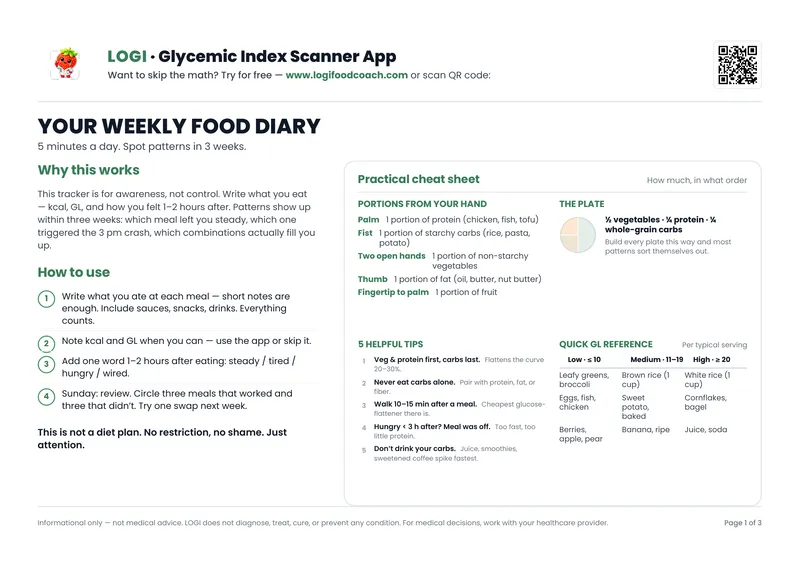
Kostenloses PDF — 3 Seiten
Dein Wochen-Ernährungstagebuch
Mahlzeiten, glykämische Last & Stimmung erfassen. Muster in 3 Wochen erkennen.
Kein Spam. Jederzeit abmeldbar.