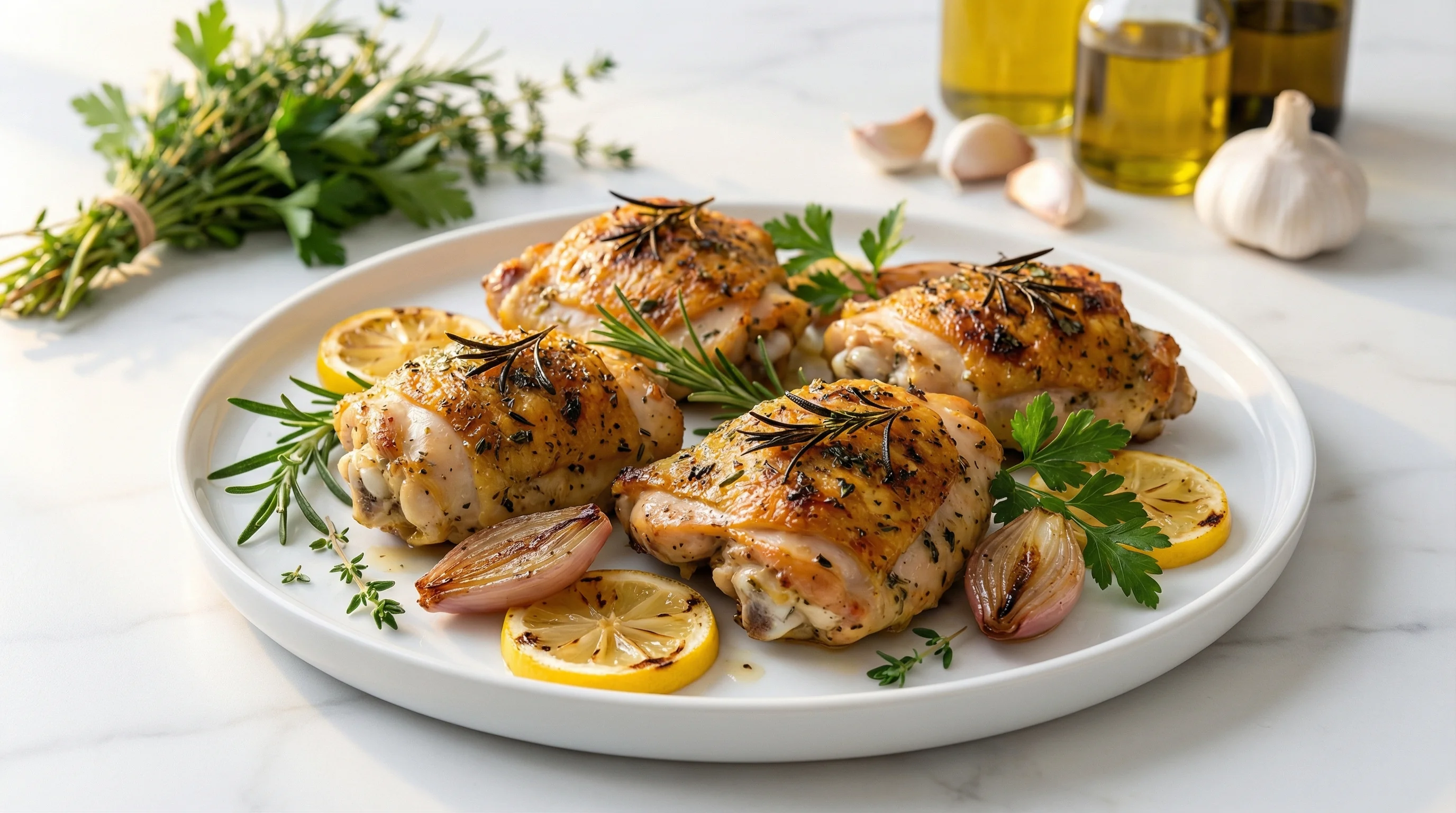
Mediterranean Herb-Crusted Chicken Thighs with Charred Rosemary
Succulent bone-in chicken thighs infused with aromatic herbs and balsamic create a blood sugar-friendly one-pan dinner that's both satisfying and nourishing.
This Mediterranean-inspired chicken dish exemplifies how delicious low-glycemic eating can be. Bone-in, skin-on chicken thighs provide sustained energy through quality protein and healthy fats, which help stabilize blood sugar levels throughout your meal. The combination of fresh rosemary, oregano, and garlic not only creates incredible flavor but also delivers anti-inflammatory compounds that support metabolic health.
The charred rosemary technique intensifies the herb's natural oils, creating a fragrant marinade when combined with extra virgin olive oil and balsamic vinegar. Olive oil's monounsaturated fats slow glucose absorption, making this an ideal choice for blood sugar management. The addition of shallots and lemon provides aromatic depth while keeping the glycemic load minimal—both ingredients score low on the glycemic index and add beneficial antioxidants.
For optimal blood sugar control, pair this protein-rich chicken with non-starchy vegetables like roasted broccoli, cauliflower, or a large mixed green salad. The high protein and fat content means this meal will keep you satisfied for hours without causing glucose spikes. Consider eating your vegetables first, then the chicken, to further moderate blood sugar response. This one-pan wonder proves that managing your glycemic health doesn't mean sacrificing flavor or convenience. Each serving provides 1-2 chicken thighs, delivering approximately 35-40g of protein with virtually no carbohydrates for exceptional blood sugar stability.
Blutzucker-Auswirkung
Minimal blood sugar impact expected. This protein-rich meal with healthy fats will provide stable, sustained energy for 4-5 hours with virtually no glucose spike due to the negligible carbohydrate content.
Blutzucker-Tipps
- ✓ Pair with non-starchy vegetables like roasted broccoli, cauliflower, or a leafy green salad to add fiber and volume without raising blood sugar
- ✓ Add a small portion of complex carbohydrates like quinoa or sweet potato if desired, eating them last after the protein and vegetables
- ✓ Take a 10-15 minute walk after eating to enhance insulin sensitivity and promote glucose uptake by muscles
🥗 Zutaten
- 1.5 oz bone-in chicken thighs with skin
- 2 pcs fresh rosemary sprigs
- 4 tbsp extra virgin olive oil
- 2 tbsp fresh lemon juice
- 2 tbsp balsamic vinegar
- 3 pcs fresh garlic cloves
- 0.5 tsp kosher salt
- 0.5 tsp black pepper
- 1 tsp dried oregano
- 2 pcs shallots, chopped
- 1 pcs fresh lemon, thinly sliced
- 2 tbsp fresh parsley, chopped
- 1.5 oz bone-in chicken thighs with skin
- 2 pcs fresh rosemary sprigs
- 4 tbsp extra virgin olive oil
- 2 tbsp fresh lemon juice
- 2 tbsp balsamic vinegar
- 3 pcs fresh garlic cloves
- 0.5 tsp kosher salt
- 0.5 tsp black pepper
- 1 tsp dried oregano
- 2 pcs shallots, chopped
- 1 pcs fresh lemon, thinly sliced
- 2 tbsp fresh parsley, chopped
👨🍳 Anleitung
- 1
Position oven rack to center and preheat to 400°F (200°C). Remove 10 chicken thighs from refrigeration and use paper towels to thoroughly pat them dry, which ensures crispy skin. Set aside at room temperature for 15-20 minutes while preparing the herb marinade.
- 2
Heat a dry cast iron skillet or heavy-bottomed pan over medium heat. Add 4 rosemary sprigs directly to the dry pan and toast for 3-4 minutes, turning occasionally, until the leaves become fragrant and develop char marks. This intensifies the aromatic oils and creates deeper flavor.
- 3
Strip the charred rosemary leaves from their woody stems and transfer to a medium mixing bowl. Add 4 tablespoons olive oil, 2 tablespoons freshly squeezed lemon juice, 2 tablespoons balsamic vinegar (a small amount that adds flavor without significantly impacting blood sugar), 4 minced garlic cloves, 1 teaspoon salt, 0.5 teaspoon black pepper, and 1 teaspoon dried oregano. Whisk vigorously until the marinade is well emulsified and aromatic.
- 4
Heat 1 tablespoon of olive oil in a large oven-safe skillet over medium-high heat until shimmering. Season all 10 chicken thighs lightly with remaining salt, then carefully place them skin-side down in the hot pan, working in batches if necessary. Sear without moving for 8-10 minutes, rotating the pan occasionally for even browning, until the skin turns deeply golden and releases easily from the pan.
- 5
Carefully pour off excess rendered fat from the pan, leaving about 1 tablespoon for moisture. Flip chicken thighs skin-side up and scatter the 2 finely chopped shallots around them. Generously brush or pour the herb marinade over the chicken and shallots, ensuring even distribution, then tuck lemon slices between the pieces.
- 6
Transfer the skillet to the preheated oven and roast for 25-30 minutes, until the chicken reaches an internal temperature of 165°F (74°C) at the thickest part, avoiding bone contact with the thermometer. For extra-crispy skin, switch to broil at 500°F for the final 1-2 minutes, watching carefully to prevent burning.
- 7
Remove pan from oven and transfer chicken to a cutting board. Tent loosely with aluminum foil and allow to rest for 5-10 minutes, which redistributes the juices throughout the meat. Serve 1-2 chicken thighs per person (depending on size and appetite), garnish with freshly chopped parsley, and spoon the pan juices and caramelized shallots over top for maximum flavor.
📊 Nährwerte pro Portion
| Pro Portion | Gesamtes Gericht | |
|---|---|---|
| Kalorien | 430 | 2151 |
| Kohlenhydrate | 48g | 242g |
| Zucker | 7g | 35g |
| Natürlicher Zucker | 7g | 35g |
| Protein | 11g | 55g |
| Fett | 25g | 127g |
| Gesättigtes Fett | 9g | 45g |
| Ungesättigtes Fett | 17g | 83g |
| Ballaststoffe | 15g | 74g |
| Lösliche Ballaststoffe | 4g | 22g |
| Unlösliche Ballaststoffe | 10g | 52g |
| Natrium | 7807mg | 39035mg |
Vorhergesagte Glukosereaktion
Was wäre, wenn du...
Geschätztes Modell — individuelle Reaktionen variieren. Keine medizinische Beratung.
🔄 Niedrigere GI-Alternativen
Balsamic vinegar contains residual sugars from the grape must reduction process, which can raise blood sugar. Red wine vinegar, apple cider vinegar, and white wine vinegar have virtually no sugar content and won't impact glycemic load while still providing acidity and flavor depth.
While shallots have a relatively low glycemic impact, using scallion greens, chives, or leek greens provides even lower carbohydrate content per serving, further minimizing any potential blood sugar response while maintaining aromatic flavor in the herb crust.
While lemon juice is already low-glycemic, using lime juice or enhancing lemon juice with extra zest allows you to reduce the total volume of juice needed while maintaining bright citrus flavor, thereby reducing the small amount of natural fruit sugars and keeping glycemic load at absolute minimum.
🔬 Die Wissenschaft hinter diesem Rezept
This Mediterranean chicken dish is a blood sugar superstar, with a remarkably low glycemic load of just 0.8 per serving. The secret lies in its protein-forward composition and complete absence of refined carbohydrates. Chicken thighs provide high-quality protein and healthy fats that slow digestion and create a steady, sustained release of energy rather than a blood sugar spike. Unlike chicken breast, thighs contain more monounsaturated fats, which research shows can improve insulin sensitivity over time. When you eat protein-rich meals like this, your body releases less insulin and maintains more stable glucose levels for hours afterward.
The supporting cast of ingredients works synergistically to enhance metabolic benefits. Olive oil contributes additional monounsaturated fats and polyphenols that have been shown to reduce post-meal glucose responses. Fresh rosemary isn't just aromatic—it contains carnosic acid and rosmarinic acid, compounds that may help improve insulin action and glucose uptake in cells. The acidic components (lemon juice and balsamic vinegar) further slow gastric emptying, meaning food moves more gradually from your stomach to your intestines, preventing the rapid glucose absorption that causes spikes.
Here's a practical tip: pair this chicken with non-starchy vegetables and a small portion of quinoa or sweet potato if desired, eating the vegetables first to maximize fiber's blood sugar-buffering effects. The beauty of this recipe is its flexibility—you can enjoy it knowing that the glycemic load remains minimal regardless of portion size, since the main ingredients contain virtually no carbohydrates. Consider taking a 10-15 minute walk after your meal to further support healthy glucose metabolism, as light movement helps muscles absorb glucose without requiring extra insulin.