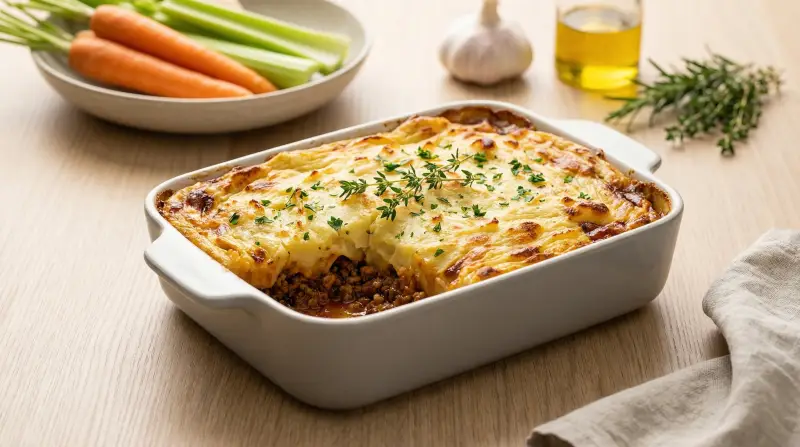
Low-GI Cottage Pie mit Carisma-Kartoffeln
Eine blutzuckerfreundliche Variante des britischen Klassikers mit magerem Rinderhack, ballaststoffreichem Gemüse und speziellen Low-GI Carisma-Kartoffeln für gleichmäßige Energie.
Dieser neu interpretierte Cottage Pie beweist, dass Wohlfühlessen den Blutzuckerspiegel unterstützen kann. Durch die Verwendung von Carisma-Kartoffeln – eine besondere Sorte mit einem GI von etwa 53-59 im Vergleich zu normalen Kartoffeln mit 70-90 – haben wir diesen britischen Klassiker in ein diabetikerfreundliches Gericht verwandelt, das den Blutzucker nicht in die Höhe treibt. Die herzhafte Füllung kombiniert mageres Rinderhack mit etwas Speck für mehr Geschmackstiefe, während Karotten, Sellerie und Erbsen Ballaststoffe liefern, die die Verdauung verlangsamen und die glykämische Reaktion abmildern.
Das Geheimnis der blutzuckerfreundlichen Wirkung dieses Rezepts liegt in der durchdachten Zutatenwahl und Zubereitungsart. Rotwein sorgt für Fülle bei minimalem Kohlenhydratgehalt, und der großzügige Gemüseanteil erhöht die Ballaststoffdichte des Gerichts. Der fettreduzierte Käse als Topping liefert Eiweiß und Kalzium ohne überschüssiges gesättigtes Fett und hilft so, den Blutzuckerspiegel nach dem Essen weiter zu stabilisieren. Eine Portion enthält etwa 180 g des fertigen Gerichts und bietet eine ausgewogene Menge, die die glykämische Last bei 29 hält.
Für optimale Blutzuckerkontrolle servieren Sie diesen Cottage Pie mit einem großen Beilagensalat mit Olivenöl und Essig und essen Sie zuerst das Gemüse. Diese Essreihenfolge kann nachweislich Blutzuckerspitzen um bis zu 73% reduzieren. Die Kombination aus Eiweiß vom Rind, komplexen Kohlenhydraten aus Carisma-Kartoffeln und reichlich Ballaststoffen ergibt eine ausgewogene Mahlzeit, die 3-4 Stunden lang gleichmäßige Energie liefert, ohne den Absturz, den man von Wohlfühlessen mit hohem GI kennt. Der Speck wird sparsam zur Geschmacksverbesserung eingesetzt und nicht als Hauptzutat, wodurch die gesättigten Fettsäuren im Rahmen bleiben, während der traditionelle Geschmack erhalten bleibt.
Blutzucker-Auswirkung
Dieser Cottage Pie führt zu einem moderaten Blutzuckeranstieg aufgrund des mittleren GI (59) und der glykämischen Last von 29. Die Kombination aus Eiweiß vom Rind, Ballaststoffen aus Gemüse und Fett aus Speck und Olivenöl hilft, die Glukoseaufnahme zu verlangsamen und liefert 3-4 Stunden lang gleichmäßige Energie mit einem allmählichen Anstieg statt einer steilen Spitze.
Blutzucker-Tipps
- ✓ Essen Sie zuerst die gemüsereiche Hackfleischfüllung, bevor Sie das Kartoffeltopping essen, um die Kohlenhydrataufnahme zu verlangsamen und die glykämische Reaktion zu reduzieren
- ✓ Kombinieren Sie Ihre Mahlzeit mit einem großen Beilagensalat mit Essigdressing, da die Essigsäure Blutzuckerspitzen um bis zu 30% abmildern kann
- ✓ Machen Sie nach dem Essen einen 10-15-minütigen Spaziergang, um den Muskeln zu helfen, Glukose aufzunehmen und den Blutzucker nach der Mahlzeit zu senken
🥗 Zutaten
- 1 tsp natives Olivenöl extra
- 100 g durchwachsener Speck, gehackt
- 1 pcs Zwiebel, fein gewürfelt
- 1 pcs Karotte, geschält und fein gehackt
- 1 pcs Stange Staudensellerie, geputzt und fein gehackt
- 2 pcs große Knoblauchzehen, zerdrückt
- 500 g mageres Rinderhackfleisch
- 1 tbsp Tomatenmark, ohne Salzzusatz
- 250 ml Rotwein
- 1 tbsp frischer Thymian, fein gehackt
- 0.5 tsp frisch gemahlener schwarzer Pfeffer
- 1 cup tiefgekühlte Erbsen
- 1 tbsp Weizenmehl Type 405
- 250 ml salzreduzierte Rinderbrühe
- 1 pcs Lorbeerblatt
- 1000 g Carisma-Kartoffeln, geschält und halbiert
- 80 ml fettreduzierte Milch
- 50 g geriebener fettreduzierter Cheddar
- 1 tsp natives Olivenöl extra
- 3.5 oz durchwachsener Speck, gehackt
- 1 pcs Zwiebel, fein gewürfelt
- 1 pcs Karotte, geschält und fein gehackt
- 1 pcs Stange Staudensellerie, geputzt und fein gehackt
- 2 pcs große Knoblauchzehen, zerdrückt
- 1.1 lb mageres Rinderhackfleisch
- 1 tbsp Tomatenmark, ohne Salzzusatz
- 1.1 cups Rotwein
- 1 tbsp frischer Thymian, fein gehackt
- 0.5 tsp frisch gemahlener schwarzer Pfeffer
- 1 cup tiefgekühlte Erbsen
- 1 tbsp Weizenmehl Type 405
- 1.1 cups salzreduzierte Rinderbrühe
- 1 pcs Lorbeerblatt
- 2.2 lb Carisma-Kartoffeln, geschält und halbiert
- 5 tbsp fettreduzierte Milch
- 1.8 oz geriebener fettreduzierter Cheddar
👨🍳 Anleitung
- 1
Heize deinen Backofen auf 200°C (Ober-/Unterhitze) vor. Schiebe den Rost in die mittlere Schiene für gleichmäßiges Garen.
- 2
Erhitze das Olivenöl in einem großen beschichteten Bräter oder einer tiefen Pfanne bei mittlerer bis hoher Hitze. Gib den gehackten Speck dazu und brate ihn 4-5 Minuten unter gelegentlichem Rühren goldbraun an, bis er sein Fett ausgelassen hat.
- 3
Füge die gewürfelte Zwiebel, die gehackte Karotte, den Sellerie und den zerdrückten Knoblauch zum Speck in die Pfanne. Brate alles 5-6 Minuten unter häufigem Rühren, bis das Gemüse weich wird und die Zwiebel glasig ist. Diese Gemüsebasis liefert wichtige Ballaststoffe, die die Glukoseaufnahme verlangsamen.
- 4
Erhöhe die Hitze etwas und gib das magere Rinderhackfleisch in die Pfanne. Zerteile es mit einem Kochlöffel und brate es 6-8 Minuten, bis es vollständig durchgebraten ist und keine rosa Stellen mehr hat. Rühre das Tomatenmark, den Rotwein, den gehackten Thymian, schwarzen Pfeffer und die tiefgekühlten Erbsen unter. Lass die Mischung kräftig aufkochen, reduziere dann die Hitze auf mittlere bis niedrige Stufe und lass alles 8-10 Minuten köcheln, bis die Flüssigkeit um etwa ein Drittel eingekocht ist.
- 5
Streue das Mehl über die Fleischmischung und rühre es gründlich unter. Gieße die Rinderbrühe dazu und füge das Lorbeerblatt hinzu. Lass alles weitere 10-12 Minuten unter gelegentlichem Rühren köcheln, bis die Soße zu einer sämigen, bratensaucenartigen Konsistenz eindickt. Nimm die Pfanne vom Herd, entferne das Lorbeerblatt, decke die Pfanne ab und stelle sie beiseite, während du die Kartoffelhaube zubereitest.
- 6
Während das Fleisch köchelt, die halbierten Carisma-Kartoffeln in einen großen Topf geben und mit kaltem Wasser bedecken. Bei starker Hitze zum Kochen bringen, dann auf mittlere Hitze reduzieren und 15-18 Minuten kochen, bis die Kartoffeln vollständig weich sind, wenn man mit einer Gabel hineinsticht. Gründlich abgießen und die Kartoffeln in den heißen Topf zurückgeben. Die fettreduzierte Milch hinzufügen und kräftig stampfen, bis alles vollkommen glatt und cremig ist, ohne Klumpen.
- 7
Die Fleischmischung in eine ofenfeste Auflaufform (etwa 23x30 cm) geben und gleichmäßig auf dem Boden verteilen. Den Carisma-Kartoffelbrei über die Fleischschicht löffeln, vorsichtig verstreichen, um alles vollständig zu bedecken und eine gleichmäßige Oberfläche zu schaffen. Mit einer Gabel dekorative Rillen auf der Oberseite ziehen, falls gewünscht – diese werden schön knusprig. Den geriebenen fettreduzierten Cheddar gleichmäßig über die Kartoffelschicht streuen.
- 8
Die fertig geschichtete Cottage Pie in den vorgeheizten Ofen stellen und 28-32 Minuten backen, bis die Oberfläche goldbraun wird und der Käse schmilzt und Blasen wirft. Für zusätzliche Bräunung kann man 2-3 Minuten unter dem Grill fertig backen, dabei aber aufmerksam bleiben, damit nichts verbrennt. Vor dem Servieren 5 Minuten ruhen lassen, damit die Schichten sich setzen – so lässt sich das Gericht leichter portionieren und die Vorteile für den Blutzucker werden maximiert, indem das Gericht etwas abkühlen kann.
📊 Nährwerte pro Portion
| Pro Portion | Gesamtes Gericht | |
|---|---|---|
| Kalorien | 564 | 3383 |
| Kohlenhydrate | 41g | 247g |
| Zucker | 6g | 37g |
| Natürlicher Zucker | 6g | 37g |
| Protein | 29g | 176g |
| Fett | 28g | 170g |
| Gesättigtes Fett | 11g | 67g |
| Ungesättigtes Fett | 15g | 88g |
| Ballaststoffe | 6g | 37g |
| Lösliche Ballaststoffe | 2g | 10g |
| Unlösliche Ballaststoffe | 4g | 26g |
| Natrium | 600mg | 3598mg |
Vorhergesagte Glukosereaktion
Was wäre, wenn du...
Geschätztes Modell — individuelle Reaktionen variieren. Keine medizinische Beratung.
🔄 Niedrigere GI-Alternativen
Mandel- und Kokosmehl haben im Vergleich zu Weizenmehl minimale Auswirkungen auf den Blutzucker (GI ~0-45 vs. 70), während Xanthan für Bindung sorgt, ohne Kohlenhydrate oder glykämische Wirkung.
Grüne Bohnen, Zucchini und Blumenkohl haben eine deutlich niedrigere glykämische Last als Erbsen (GL 1-3 im Vergleich zu 4-5 pro Portion) und helfen dabei, den Gesamtkohlenhydratgehalt zu reduzieren, während das Gemüsevolumen erhalten bleibt.
Knollensellerie, Steckrübe und Rettich haben einen niedrigeren glykämischen Index (GI 35-30) und weniger Gesamtkohlenhydrate als Karotten (GI 39), wodurch die glykämische Last der Gemüsebasis insgesamt reduziert wird.
Während Rotwein nur minimal Zucker enthält, eliminiert der Ersatz durch Rinderbrühe Restzucker vollständig, oder die Verwendung von Essig mit Wasser liefert Säure ohne jegliche glykämische Auswirkung und optimiert so die Blutzuckerreaktion weiter.
Das Verdünnen oder Ersetzen von konzentriertem Tomatenmark durch weniger konzentrierte Alternativen reduziert den konzentrierten Zucker und die glykämische Last, während der kräftige Umami-Geschmack und die Farbe der Sauce erhalten bleiben.
🔬 Die Wissenschaft hinter diesem Rezept
Warum dieser Cottage Pie den Blutzucker nicht in die Höhe treibt
Dieser Cottage Pie zeigt, wie clevere Zutatentausche ein traditionell glykämisches Wohlfühlessen in eine blutzuckerfreundliche Mahlzeit verwandeln können. Der Star ist hier die Carisma-Kartoffel – eine speziell gezüchtete Sorte mit einem glykämischen Index um 53, verglichen mit normalen mehligen Kartoffeln bei 85. Carisma-Kartoffeln enthalten mehr resistente Stärke, eine Kohlenhydratart, die der Körper langsam verdaut, fast wie Ballaststoffe. Das bedeutet, dass Glukose allmählich ins Blut gelangt, statt auf einmal hineinzufluten. Die moderate glykämische Last von 29,0 pro Portion zeigt uns, dass dieses Gericht zwar Kohlenhydrate enthält, die Gesamtmenge aber das System nicht überfordert.
Die Basis des Rezepts aus Olivenöl, Speck und Gemüse schafft einen Stoffwechselpuffer, der die Verdauung zusätzlich verlangsamt. Wenn Sie Fett und Eiweiß zusammen mit Kohlenhydraten essen, entleert sich der Magen langsamer, was die Blutzuckerkurve glättet. Der Speck liefert Eiweiß und Fett, während Olivenöl herzgesunde einfach ungesättigte Fettsäuren beisteuert, die laut Studien die Insulinempfindlichkeit verbessern können. Das ballaststoffreiche Gemüse – Zwiebel, Karotte und Sellerie – sorgt für Volumen und zusätzliche Nährstoffe, die eine gleichmäßige Energiefreisetzung unterstützen.
Um den Blutzuckernutzen dieser Mahlzeit zu maximieren, versuchen Sie, zuerst Ihr Gemüse und Eiweiß zu essen und das Kartoffeltopping für zuletzt aufzuheben. Diese Strategie der "Essreihenfolge" kann Blutzuckerspitzen nach dem Essen um bis zu 40% reduzieren. Kombinieren Sie Ihre Portion mit einem Beilagensalat mit Essigdressing, das nachweislich die Kohlenhydrataufnahme bremst. Ein 10-15-minütiger Spaziergang nach dem Essen hilft den Muskeln, Glukose effizienter aufzunehmen und hält den Blutzucker im optimalen Bereich.
Ähnliche Rezepte
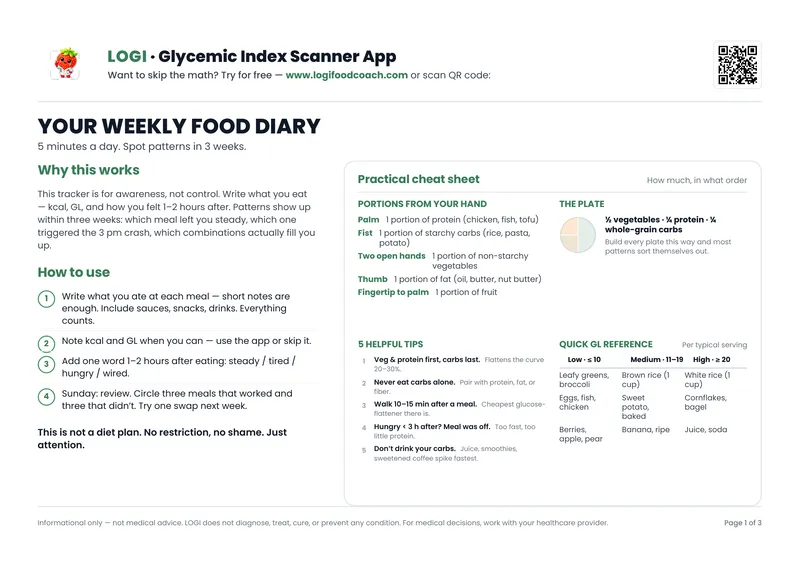
Kostenloses PDF — 3 Seiten
Dein Wochen-Ernährungstagebuch
Mahlzeiten, glykämische Last & Stimmung erfassen. Muster in 3 Wochen erkennen.
Kein Spam. Jederzeit abmeldbar.