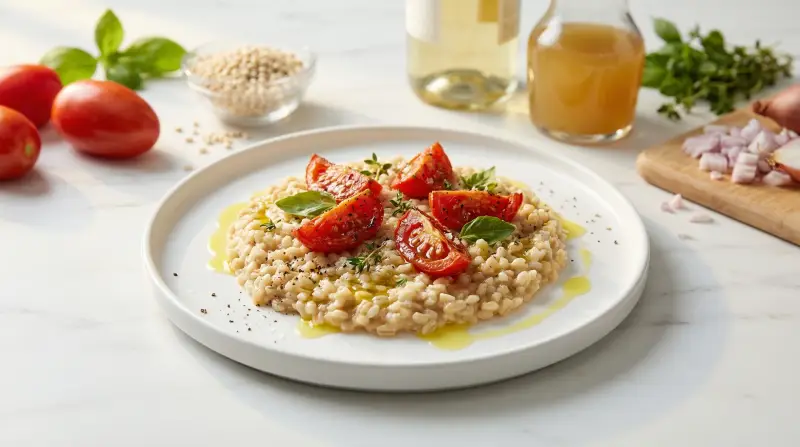
Perlgraupen-Risotto mit langsam gerösteten Tomaten und frischen Kräutern
Cremiges Perlgraupen-Risotto mit karamellisierten Ofentomaten und aromatischen Kräutern. Eine ballaststoffreiche Alternative zu traditionellem Reis-Risotto mit niedrigem glykämischen Index.
Dieses nahrhafte Perlgraupen-Risotto verwandelt ein klassisches italienisches Wohlfühlgericht in ein blutzuckerfreundliches Kraftpaket. Perlgraupen haben einen bemerkenswert niedrigen glykämischen Index von 21 und sind damit eine der besten Getreidesorten, um den Blutzuckerspiegel den ganzen Tag über stabil zu halten. Anders als Risotto mit weißem Reis, das schnelle Blutzuckerspitzen verursachen kann, verlangsamt der lösliche Ballaststoffgehalt der Graupen die Verdauung und fördert eine allmähliche Glukoseaufnahme.
Die langsam gerösteten Tomaten entwickeln tiefe, konzentrierte Aromen, während ihre natürliche Säure hilft, die glykämische Reaktion der gesamten Mahlzeit zu regulieren. Frische Kräuter wie Basilikum, Petersilie und Thymian verleihen nicht nur lebendigen mediterranen Geschmack, sondern liefern auch wertvolle Pflanzenstoffe, die den Stoffwechsel unterstützen. Die Zugabe von nativem Olivenöl extra liefert gesunde einfach ungesättigte Fette, die die Kohlenhydrataufnahme zusätzlich verlangsamen.
Für ein optimales Blutzuckermanagement servierst du dieses Risotto am besten als Teil einer ausgewogenen Mahlzeit zusammen mit einer mageren Proteinquelle und beginnst deine Mahlzeit mit einem kleinen grünen Salat. Die Kombination aus dem Beta-Glucan-Ballaststoff der Graupen, dem Protein aus Parmesankäse und gesunden Fetten ergibt ein sättigendes Gericht, das dich stundenlang satt hält, ohne die Blutzucker-Achterbahn. Dieses Rezept beweist, dass Essen für einen stabilen Blutzucker nicht bedeutet, auf die cremigen, wohltuenden Texturen zu verzichten, nach denen du dich sehnst.
Blutzucker-Auswirkung
Diese Mahlzeit hat nur minimale Auswirkungen auf den Blutzuckerspiegel, da Perlgraupen einen niedrigen glykämischen Index und eine niedrige glykämische Last haben. Du kannst mit stabiler, anhaltender Energie für 3-4 Stunden rechnen, ohne nennenswerte Spitzen oder Einbrüche.
Blutzucker-Tipps
- ✓ Fügen Sie eine Proteinquelle wie gegrilltes Hähnchen, weiße Bohnen oder Parmesan hinzu, um die Verdauung weiter zu verlangsamen und den Blutzuckerspiegel zu stabilisieren
- ✓ Iss vor dem Risotto einen kleinen Beilagensalat mit Olivenöl-Dressing, um Ballaststoffe und gesunde Fette hinzuzufügen, die den glykämischen Anstieg abmildern
- ✓ Machen Sie nach dem Essen einen 10-15-minütigen Spaziergang, um die Muskeln bei der Glukoseaufnahme zu unterstützen und einen leichten Blutzuckeranstieg zu vermeiden
🥗 Zutaten
- 10 pcs große Flaschentomaten, geschält und geviertelt
- 2 tbsp natives Olivenöl extra
- 0.5 tsp Salz, geteilt
- 0.5 tsp frisch gemahlener schwarzer Pfeffer, geteilt
- 4 cup natriumarme Gemüsebrühe
- 3 cup Wasser
- 2 pcs Schalotten, fein gehackt
- 0.25 cup trockener Weißwein
- 2 cup Perlgraupen
- 3 tbsp frisches Basilikum, gehackt, plus ganze Blätter zum Garnieren
- 3 tbsp frische glatte Petersilie, gehackt
- 1.5 tbsp frischer Thymian, gehackt
- 0.5 cup Parmesankäse, gerieben, plus extra zum Garnieren
- 10 pcs große Flaschentomaten, geschält und geviertelt
- 2 tbsp natives Olivenöl extra
- 0.5 tsp Salz, geteilt
- 0.5 tsp frisch gemahlener schwarzer Pfeffer, geteilt
- 4 cup natriumarme Gemüsebrühe
- 3 cup Wasser
- 2 pcs Schalotten, fein gehackt
- 0.25 cup trockener Weißwein
- 2 cup Perlgraupen
- 3 tbsp frisches Basilikum, gehackt, plus ganze Blätter zum Garnieren
- 3 tbsp frische glatte Petersilie, gehackt
- 1.5 tbsp frischer Thymian, gehackt
- 0.5 cup Parmesankäse, gerieben, plus extra zum Garnieren
👨🍳 Anleitung
- 1
Heizen Sie den Ofen auf 230°C (Ober-/Unterhitze) vor. Legen Sie ein großes Backblech mit Backpapier aus oder verwenden Sie eine beschichtete Form. Verteilen Sie die geviertelten Tomaten in einer Schicht auf dem vorbereiteten Blech, träufeln Sie 1 Esslöffel Olivenöl darüber und würzen Sie mit der Hälfte von Salz und Pfeffer. Vorsichtig vermengen, damit alles gleichmäßig bedeckt ist, dann 25-30 Minuten rösten, bis die Tomaten karamellisiert sind und an den Rändern leicht gebräunt werden. 16 Spalten für die Garnitur des fertigen Gerichts beiseite stellen.
- 2
Während die Tomaten rösten, Gemüsebrühe und Wasser in einem mittelgroßen Topf vermischen. Die Mischung bei starker Hitze zum leichten Kochen bringen, dann auf kleine Hitze reduzieren und während des gesamten Kochvorgangs sanft köcheln lassen. Die Flüssigkeit warm zu halten ist wichtig für die richtige Risotto-Konsistenz.
- 3
Die restlichen 2 Esslöffel Olivenöl in einem großen, schweren Topf oder Bräter bei mittlerer Hitze erhitzen. Die gehackten Schalotten hinzufügen und 2-3 Minuten unter häufigem Rühren anschwitzen, bis sie weich, aromatisch und glasig sind, aber nicht gebräunt.
- 4
Den trockenen Weißwein zu den Schalotten in den Topf gießen und 2-3 Minuten unter gelegentlichem Rühren kochen lassen, bis der Großteil der Flüssigkeit verdampft ist und man den Alkohol nicht mehr riecht. Durch das Kochen verdampfen der Alkohol und eventuelle Restzucker, nur der Geschmack bleibt. Die Perlgraupen in den Topf geben und etwa 1 Minute unter ständigem Rühren anrösten, damit jedes Korn mit dem Öl und den Aromen ummantelt wird.
- 5
Beginnen Sie, die warme Brühe in halben Tassen portionsweise zu den Graupen zu geben und rühren Sie häufig um. Warten Sie, bis jede Zugabe fast vollständig aufgesogen ist, bevor Sie die nächste Kelle Flüssigkeit hinzufügen. Dieser schrittweise Prozess, der insgesamt 45-50 Minuten dauert, ermöglicht es den Graupen, ihre Stärke freizusetzen und eine cremige Konsistenz zu entwickeln, während sie gleichmäßig garen. Die Graupen sind fertig, wenn die Körner weich sind, aber noch einen angenehmen Biss haben.
- 6
Den Topf von der Herdplatte nehmen und vorsichtig die gerösteten Tomaten (außer den zurückbehaltenen Spalten für die Garnitur), gehacktes Basilikum, Petersilie, Thymian und geriebenen Parmesankäse unterheben. Das restliche Salz und den Pfeffer hinzufügen und alles gründlich vermengen. Abschmecken und bei Bedarf nachwürzen.
- 7
Das Risotto auf acht vorgewärmte flache Schalen verteilen. Jede Portion mit 2 zurückbehaltenen gerösteten Tomatenspalten und ein paar ganzen Basilikumblättern belegen. Mit einem Sparschäler frische Parmesanspäne über jede Portion hobeln. Sofort servieren, solange es heiß und cremig ist.
- 8
Für eine optimale Blutzuckerkontrolle kombinieren Sie dieses Risotto mit gegrilltem Hähnchen, Fisch oder weißen Bohnen für zusätzliches Eiweiß. Beginnen Sie Ihre Mahlzeit am besten mit einem gemischten grünen Salat mit Essigdressing, um die Blutzuckerreaktion weiter zu dämpfen.
📊 Nährwerte pro Portion
| Pro Portion | Gesamtes Gericht | |
|---|---|---|
| Kalorien | 157 | 1259 |
| Kohlenhydrate | 22g | 175g |
| Zucker | 4g | 35g |
| Natürlicher Zucker | 4g | 35g |
| Protein | 5g | 41g |
| Fett | 6g | 44g |
| Gesättigtes Fett | 2g | 13g |
| Ungesättigtes Fett | 4g | 31g |
| Ballaststoffe | 4g | 31g |
| Lösliche Ballaststoffe | 1g | 7g |
| Unlösliche Ballaststoffe | 1g | 11g |
| Natrium | 730mg | 5843mg |
Vorhergesagte Glukosereaktion
Was wäre, wenn du...
Geschätztes Modell — individuelle Reaktionen variieren. Keine medizinische Beratung.
🔄 Niedrigere GI-Alternativen
Geschälte Gerste und Gerstengrütze sind weniger verarbeitet als Perlgerste, behalten mehr Ballaststoffe und haben einen niedrigeren glykämischen Index (etwa 25-30 im Vergleich zu 35 bei Perlgerste), was die Glukoseaufnahme noch weiter verlangsamt
Das Ersetzen von Wein durch säurehaltige Alternativen wie Essig oder Zitronensaft fügt Säure hinzu, die die glykämische Reaktion der Mahlzeit insgesamt senken kann, indem sie die Stärkeverdauung verlangsamt, ohne dabei Restzucker aus Wein hinzuzufügen
Die Verwendung der grünen Teile von Lauch oder Frühlingszwiebeln liefert ein ähnliches aromatisches Aroma mit etwas mehr Ballaststoffen und geringerer Kohlenhydratdichte als Schalotten, wodurch die Auswirkung auf den Blutzucker minimiert wird
Hefeflocken sind kohlenhydratfrei und fügen Umami hinzu, ohne den Blutzucker zu beeinflussen, während gereifter Pecorino einen etwas höheren Protein- und Fettgehalt als Parmesan hat, was die glykämische Reaktion weiter abschwächt
🔬 Die Wissenschaft hinter diesem Rezept
Warum dieses Rezept einen stabilen Blutzucker unterstützt
Dieses Perlgraupen-Risotto ist ein Paradebeispiel für gutes Blutzuckermanagement, angefangen beim Hauptdarsteller: Perlgraupen. Anders als weißer Reis, der den Blutzucker schnell in die Höhe treiben kann, haben Graupen einen bemerkenswert niedrigen glykämischen Index von 21 – einen der niedrigsten unter allen Getreidesorten. Das Geheimnis liegt im hohen Gehalt an löslichen Ballaststoffen, besonders Beta-Glucan, das im Verdauungstrakt eine gelartige Substanz bildet. Diese Ballaststoffe verlangsamen den Abbau von Kohlenhydraten zu Glukose und sorgen so für eine sanfte, gleichmäßige Energiefreisetzung statt eines steilen Anstiegs. Studien zeigen, dass Beta-Glucan den Blutzuckeranstieg nach dem Essen um bis zu 30% im Vergleich zu raffinierten Getreideprodukten senken kann.
Das Olivenöl in diesem Rezept ist nicht nur für den Geschmack da – es ist ein stoffwechselfreundlicher Verbündeter. Gesunde Fette zu einer kohlenhydratreichen Mahlzeit zu geben, verlangsamt die Magenentleerung deutlich, das heißt, das Essen wandert langsamer vom Magen in den Darm, wo die Glukoseaufnahme stattfindet. Das sorgt für eine noch sanftere Blutzuckerkurve. Die langsam gerösteten Tomaten liefern zusätzliche Ballaststoffe und sind reich an Chrom, einem Mineral, das Insulin dabei hilft, effizienter zu arbeiten. Zusammen erzeugen diese Zutaten das, was Ernährungswissenschaftler eine „abgeflachte glykämische Reaktion" nennen.
Hier ein praktischer Tipp, um den Nutzen dieses Rezepts zu maximieren: Beginne deine Mahlzeit mit einem kleinen Salat mit Essigdressing, dann genieße dein Risotto. Die Essigsäure im Essig verbessert nachweislich die Insulinempfindlichkeit um bis zu 34%, wenn sie vor Kohlenhydraten konsumiert wird. Nach dem Essen kann ein 10-15-minütiger Spaziergang deinen Muskeln helfen, Glukose effizienter aufzunehmen und so jeden Blutzuckeranstieg weiter abzumildern. Mit einer glykämischen Last von nur 5,8 pro Portion beweist dieses Gericht, dass Wohlfühlessen und Stoffwechselgesundheit absolut zusammenpassen können.
Ähnliche Rezepte
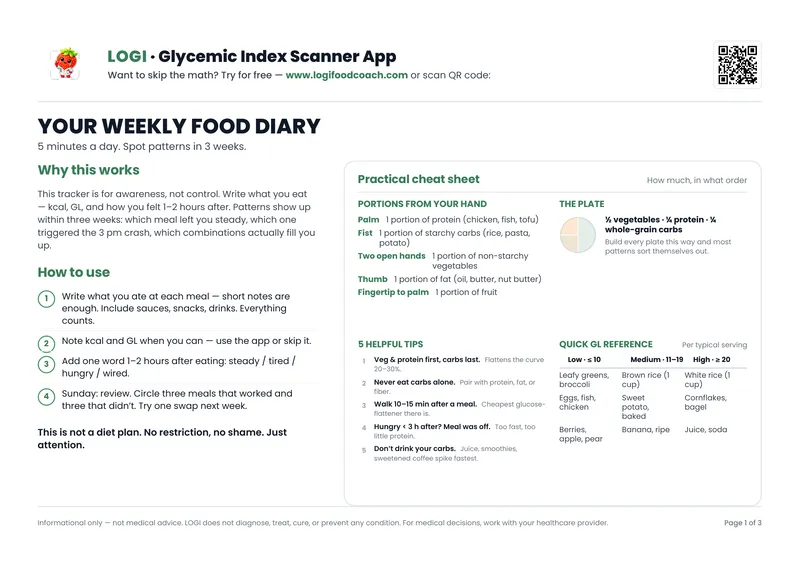
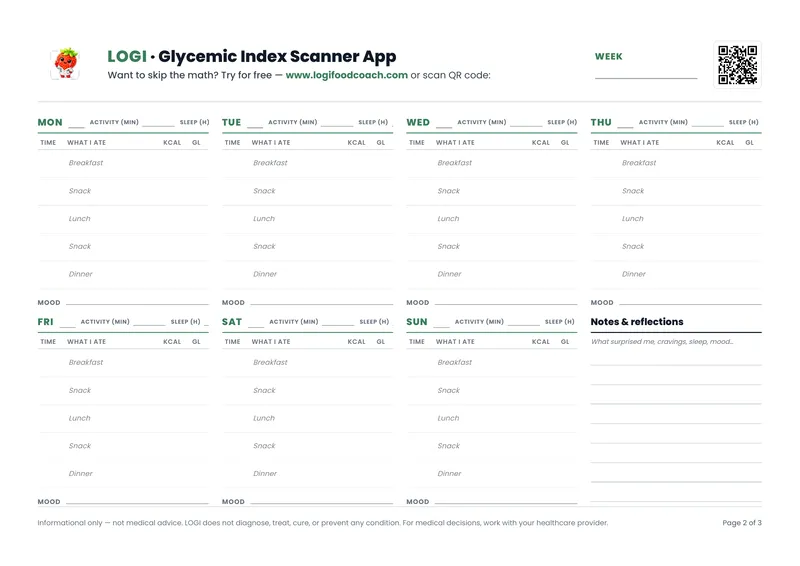
Kostenloses PDF — 3 Seiten
Dein Wochen-Ernährungstagebuch
Mahlzeiten, glykämische Last & Stimmung erfassen. Muster in 3 Wochen erkennen.
Kein Spam. Jederzeit abmeldbar.