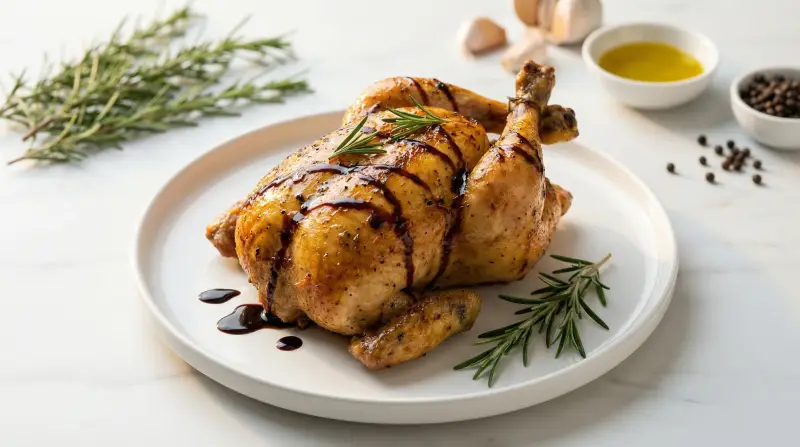
Kräuter-Brathähnchen mit Balsamico-Reduktion
Saftiges Brathähnchen mit aromatischen Kräutern und einer würzigen Balsamico-Glasur – eine proteinreiche, niedrig-glykämische Mahlzeit, die den Blutzucker nicht in die Höhe treibt.
Dieses Kräuter-Brathähnchen zeigt, wie einfache, natürliche Zutaten eine sättigende Mahlzeit ergeben, die perfekt für die Blutzuckerkontrolle geeignet ist. Das Hauptprotein – Hähnchen – hat praktisch keinen Einfluss auf den Glukosespiegel und liefert gleichzeitig wichtige Nährstoffe, die den Energiehaushalt über den Tag hinweg stabilisieren. Frischer Rosmarin und Knoblauch sorgen nicht nur für tollen Geschmack, sondern enthalten auch Verbindungen, die eine gesunde Insulinfunktion unterstützen können.
Die Balsamico-Reduktion verwendet nur wenig braunen Zucker, wodurch die glykämische Last bemerkenswert niedrig bleibt und trotzdem diese typische süß-säuerliche Komplexität entsteht. Anders als traditionelle Soßen voller Mehl und Fett setzt diese Glasur auf die natürliche Konzentration von Balsamico-Essig, der trotz seiner Süße einen relativ niedrigen glykämischen Index hat. Die Essigsäure im Essig kann laut Studien helfen, Blutzuckerspitzen nach dem Essen zu mildern, wenn sie zusammen mit Protein verzehrt wird.
Für optimale Blutzuckerkontrolle serviere dieses Hähnchen mit nicht-stärkehaltigem Gemüse wie geröstetem Rosenkohl oder einem großen grünen Salat mit Olivenöl. Die Kombination aus magerem Protein, gesunden Fetten und Ballaststoffen ergibt einen ausgewogenen Teller, der für stabile Glukosewerte sorgt. Entferne die Haut vor dem Essen, um gesättigte Fette zu reduzieren, während der ganze kräutergewürzte Geschmack darunter erhalten bleibt. Dieses Rezept beweist, dass Essen für die glykämische Gesundheit nicht bedeutet, auf Geschmack zu verzichten – es geht darum, Zutaten klug zu wählen und ihre natürlichen Qualitäten zur Geltung zu bringen.
Blutzucker-Auswirkung
Minimaler Einfluss auf den Blutzucker zu erwarten. Der hohe Proteingehalt des Hähnchens kombiniert mit gesunden Fetten aus Olivenöl sorgt für stabile, anhaltende Energie über 3-4 Stunden mit praktisch keinem Glukoseanstieg. Die kleine Menge brauner Zucker in der Balsamico-Reduktion trägt vernachlässigbar zur gesamten glykämischen Last bei.
Blutzucker-Tipps
- ✓ Füge eine großzügige Portion nicht-stärkehaltiges Gemüse wie gerösteten Brokkoli, Rosenkohl oder einen Blattsalat hinzu, um Ballaststoffe zu erhöhen und den Blutzucker weiter zu stabilisieren
- ✓ Iss das Hähnchen und Gemüse, bevor du eventuell hinzugefügte stärkehaltige Beilagen verzehrst
- ✓ Die Balsamico-Reduktion enthält etwas Zucker, also träufle sie sparsam auf, anstatt das Hähnchen damit zu ertränken, um die glykämische Wirkung minimal zu halten
🥗 Zutaten
- 4 oz ganzes Hähnchen
- 1 tbsp frischer Rosmarin
- 1 pcs Knoblauchzehe
- 1 tbsp Olivenöl
- 0.125 tsp frisch gemahlener schwarzer Pfeffer
- 8 pcs frische Rosmarinzweige
- 0.5 cup Balsamico-Essig
- 1 tsp brauner Zucker
- 4 oz ganzes Hähnchen
- 1 tbsp frischer Rosmarin
- 1 pcs Knoblauchzehe
- 1 tbsp Olivenöl
- 0.125 tsp frisch gemahlener schwarzer Pfeffer
- 8 pcs frische Rosmarinzweige
- 0.5 cup Balsamico-Essig
- 1 tsp brauner Zucker
👨🍳 Anleitung
- 1
Heize deinen Ofen auf 175 °C vor. Während der Ofen heizt, bereite deinen Arbeitsplatz mit einem Schneidebrett, einem scharfen Messer und einer Bratpfanne vor.
- 2
Hacke den Esslöffel frische Rosmarinblätter zusammen mit der Knoblauchzehe fein, bis du eine duftende Kräuterpaste hast. Das setzt die ätherischen Öle frei, die das Hähnchen von innen heraus würzen.
- 3
Tupfe das Hähnchen mit Küchenpapier vollständig trocken. Schiebe vorsichtig deine Finger unter die Brust- und Schenkelhaut, um sie vom Fleisch zu lösen und Taschen zu bilden. Reibe das Olivenöl direkt auf das freigelegte Fleisch und massiere dann die Rosmarin-Knoblauch-Mischung gleichmäßig über die geölten Stellen. Würze mit dem schwarzen Pfeffer.
- 4
Stecke 2 frische Rosmarinzweige in die Bauchhöhle des Hähnchens für aromatischen Geschmack beim Braten. Binde die Schenkel mit Küchengarn zusammen und stecke die Flügelspitzen unter den Körper, um gleichmäßiges Garen und eine ansprechende Präsentation zu gewährleisten.
- 5
Lege das vorbereitete Hähnchen mit der Brustseite nach oben in deine Bratpfanne. Brate es 80-90 Minuten (20-25 Minuten pro Pfund) und bestreiche es alle 20 Minuten mit dem angesammelten Bratensaft. Das Hähnchen ist fertig, wenn ein Fleischthermometer, das in den dicksten Teil des Schenkels gesteckt wird, 165 °F anzeigt und der Saft klar austritt.
- 6
Während das Hähnchen nach dem Braten ruht, bereite die Balsamico-Reduktion zu. Gib den Balsamico-Essig und den braunen Zucker in einen kleinen Topf bei mittlerer bis niedriger Hitze. Erwärme es sanft und rühre, bis sich der Zucker vollständig aufgelöst hat – etwa 2-3 Minuten. Lass es nicht kochen, da dies die komplexen Geschmacksnoten bewahrt.
- 7
Lege das gebratene Hähnchen auf ein Schneidebrett und lass es 10 Minuten ruhen. Tranchiere es in Portionen und entferne und entsorge die Haut, um gesättigte Fette zu reduzieren, während das kräutergewürzte Fleisch darunter erhalten bleibt.
- 8
Richte die tranchierten Hähnchenteile auf einer Servierplatte an. Träufle die warme Balsamico-Reduktion darüber, garniere mit den restlichen frischen Rosmarinzweigen und serviere sofort mit nicht-stärkehaltigem Gemüse für eine vollständige niedrig-glykämische Mahlzeit.
📊 Nährwerte pro Portion
| Pro Portion | Gesamtes Gericht | |
|---|---|---|
| Kalorien | 527 | 4217 |
| Kohlenhydrate | 5g | 40g |
| Zucker | 3g | 24g |
| Zugesetzter Zucker | 1g | 4g |
| Natürlicher Zucker | 3g | 20g |
| Protein | 41g | 330g |
| Fett | 36g | 286g |
| Gesättigtes Fett | 10g | 80g |
| Ungesättigtes Fett | 20g | 159g |
| Ballaststoffe | 1g | 5g |
| Lösliche Ballaststoffe | 0g | 2g |
| Unlösliche Ballaststoffe | 0g | 3g |
| Natrium | 164mg | 1309mg |
Vorhergesagte Glukosereaktion
Was wäre, wenn du...
Geschätztes Modell — individuelle Reaktionen variieren. Keine medizinische Beratung.
🔄 Niedrigere GI-Alternativen
Brauner Zucker hat einen hohen glykämischen Index von 64 und verursacht schnelle Blutzuckerspitzen. Diese kalorienfreien Süßstoffe haben keinen Einfluss auf den Blutzuckerspiegel und liefern trotzdem Süße, um die Säure des Balsamico-Essigs auszugleichen.
Traditioneller Balsamico-Essig enthält konzentrierten Traubenzucker, der den Blutzucker erhöhen kann. Diese Alternativen liefern Säure ohne Zuckergehalt, halten die glykämische Last nahe null und bewahren gleichzeitig die Geschmackskomplexität.
Obwohl Knoblauch in kleinen Mengen eine relativ geringe glykämische Wirkung hat, reduziert die Verwendung von Knoblauch-Öl oder die Beschränkung auf gerösteten Knoblauch den Kohlenhydratgehalt weiter und hilft, eine noch niedrigere glykämische Last für das gesamte Gericht zu erhalten.
🔬 Die Wissenschaft hinter diesem Rezept
Warum dieses Rezept den Blutzucker stabil hält
Dieses Kräuter-Brathähnchen ist ein Paradebeispiel für blutzuckerfreundliches Essen, mit einer glykämischen Last von nur 0,6 und einem geschätzten GI von 29. Das Geheimnis liegt darin, was hier *nicht* enthalten ist: raffinierte Kohlenhydrate. Hähnchen besteht aus reinem Protein und Fett, was bedeutet, dass es praktisch keinen Einfluss auf den Blutzuckerspiegel hat. Wenn du proteinreiche Lebensmittel wie Hähnchen isst, zerlegt dein Körper sie in Aminosäuren statt in Glukose, was anhaltende Energie ohne den Anstieg-und-Absturz-Zyklus liefert. Die gesunden Fette im Hähnchen und im Olivenöl verlangsamen zusätzlich die Verdauung, sodass du dich länger satt fühlst, während der Blutzucker bemerkenswert stabil bleibt.
Die aromatischen Kräuter und der Knoblauch sind nicht nur Geschmacksverstärker – sie sind Stoffwechsel-Verbündete. Rosmarin enthält Verbindungen, die die Insulinsensitivität verbessern können und deinen Zellen helfen, Glukose effizienter zu nutzen. Knoblauch wurde auf sein Potenzial untersucht, eine gesunde Blutzuckerregulation zu unterstützen, auch wenn du ihn hier wegen seines leckeren Geschmacks genießt und nicht in medizinischen Dosen. Das Olivenöl liefert herzgesunde einfach ungesättigte Fette, die nicht nur Fülle verleihen, sondern auch eine bessere glykämische Kontrolle fördern, wenn sie als Teil deiner Gesamternährung verzehrt werden.
Hier ein praktischer Tipp: Serviere dieses Hähnchen mit nicht-stärkehaltigem Gemüse wie geröstetem Rosenkohl oder einem Blattsalat, und wenn du eine Stärkebeilage wie Süßkartoffel oder Quinoa hinzufügst, iss sie zuletzt. Dieser Ansatz "Gemüse und Protein zuerst, Kohlenhydrate zuletzt" kann den Glukoseanstieg durch Kohlenhydrate laut aktueller Forschung um bis zu 73 % reduzieren. Das Protein und Fett aus deinem Hähnchen schaffen einen Puffer, der die Kohlenhydrataufnahme verlangsamt und zeigt, dass die Reihenfolge der Lebensmittel für die Blutzuckerkontrolle wirklich wichtig ist.
Ähnliche Rezepte
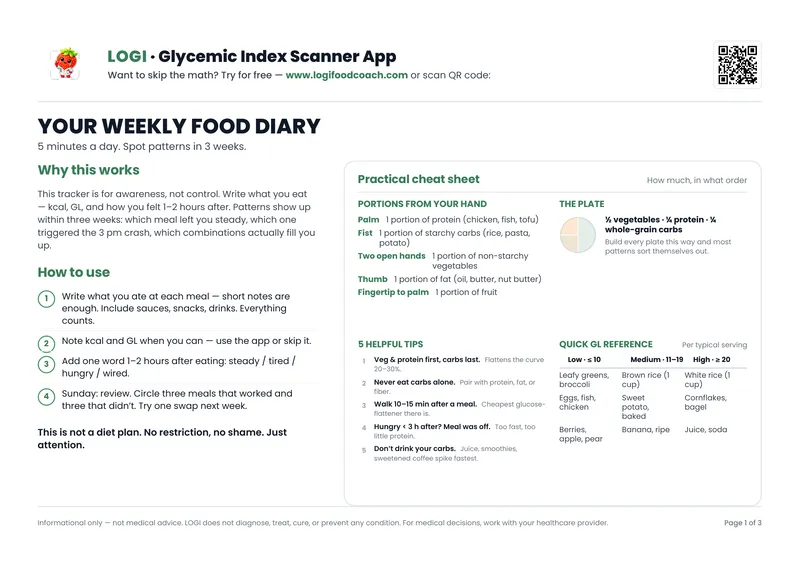
Kostenloses PDF — 3 Seiten
Dein Wochen-Ernährungstagebuch
Mahlzeiten, glykämische Last & Stimmung erfassen. Muster in 3 Wochen erkennen.
Kein Spam. Jederzeit abmeldbar.