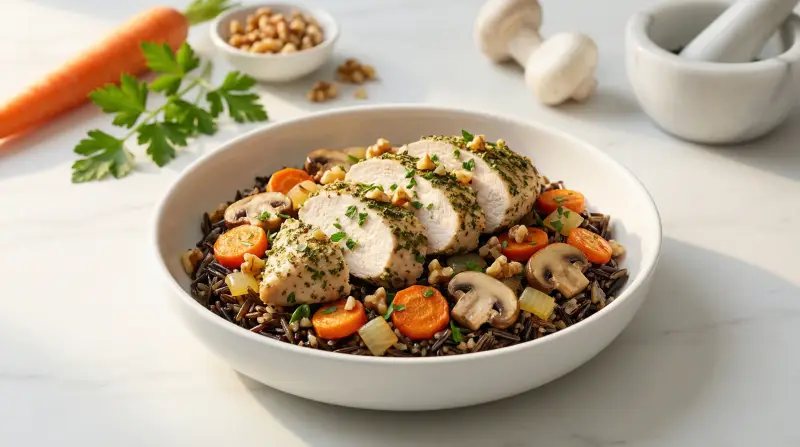
Miska z dzikim ryżem i pieczonymi warzywami korzeniowymi z kurczakiem w ziołach o niskim indeksie glikemicznym
Pełnowartościowy posiłek w jednej misce z dzikim ryżem, pieczonymi warzywami i chudym kurczakiem — stworzony, by utrzymać stabilny poziom cukru we krwi i dostarczyć satysfakcjonującego smaku.
Ta pożywna miska łączy orzechową głębię dzikiego ryżu z kolorowymi warzywami korzeniowymi i delikatną piersią z kurczaka, tworząc idealnie zrównoważony posiłek do kontroli poziomu cukru we krwi. Dziki ryż wyróżnia się jako wyjątkowy wybór zbożowy z indeksem glikemicznym wynoszącym zaledwie 45-57, znacznie niższym niż 73 dla białego ryżu. Jego wysoka zawartość błonnika i skrobi opornej spowalnia wchłanianie glukozy, zapewniając jednocześnie stabilną energię przez cały dzień.
Przepis prezentuje buraki, dynię piżmową i marchew — warzywa, które mimo naturalnej słodyczy mają umiarkowane obciążenie glikemiczne, gdy są spożywane z białkiem i zdrowymi tłuszczami. Orzechy włoskie dostarczają kwasów tłuszczowych omega-3 i dodatkowego błonnika, dodatkowo łagodząc odpowiedź glikemiczną. Pieczarki dodają głębi umami, praktycznie nie wnosząc węglowodanów, a liście buraka dostarczają minerałów i przeciwutleniaczy bez wpływu na poziom cukru we krwi.
Dla optymalnej kontroli glikemicznej zacznij posiłek od jedzenia kurczaka i warzyw, zostawiając dziki ryż na koniec. Wykazano, że taka kolejność jedzenia zmniejsza skoki glukozy po posiłku nawet o 40%. Połączenie chudego białka, zdrowych tłuszczów z orzechów włoskich i oliwy z oliwek oraz warzyw bogatych w błonnik tworzy synergiczny efekt, który promuje stabilny poziom cukru we krwi przez 3-4 godziny po jedzeniu. Każda porcja zawiera 1 szklankę ugotowanego dzikiego ryżu, 170 gramów piersi z kurczaka i 2 szklanki pieczonych warzyw, zapewniając obciążenie glikemiczne wynoszące zaledwie 12,5 na porcję.
Wpływ na cukier we krwi
Ten posiłek będzie miał minimalny do umiarkowanego wpływu na poziom cukru we krwi z powolnym, stabilnym wzrostem dzięki niskiemu IG wynoszącemu 32 i umiarkowanemu obciążeniu glikemicznemu 12,5. Połączenie dzikiego ryżu, białka, zdrowych tłuszczów z orzechów włoskich i warzyw bogatych w błonnik powinno zapewnić stabilną energię przez 3-4 godziny bez znaczących skoków.
Porady o cukrze
- ✓ Zjedz najpierw warzywa i kurczaka przed dzikim ryżem, aby spowolnić wchłanianie węglowodanów i złagodzić odpowiedź glukozową
- ✓ Połącz ten posiłek z 10-15 minutowym spacerem po jedzeniu, aby pomóc mięśniom wchłonąć glukozę i dodatkowo zminimalizować wzrost poziomu cukru we krwi
- ✓ Zadbaj o odpowiednią kontrolę porcji dzikiego ryżu (około pół do trzech czwartych szklanki ugotowanego) i nałóż dużo warzyw niskoskrobiowych, aby zmaksymalizować spożycie błonnika
🥗 Składniki
- 1 tbsp olej rzepakowy, podzielony
- 2 cup marchew, pokrojona w plastry
- 1 cup żółta cebula, pokrojona w kostkę
- 1 cup świeże pieczarki, pokrojone w plastry
- 2 tbsp świeża natka pietruszki, posiekana
- 1 cup surowy dziki ryż
- 2 tbsp orzechy włoskie, posiekane
- 1 tbsp świeżo zmielony czarny pieprz
- 2.5 cup bulion drobiowy bez dodatku soli
- 8 oz piersi z kurczaka bez kości i skóry
- 2 cup czerwone buraki, pokrojone w kostkę
- 1 cup dynia piżmowa, obrana i pokrojona w kostkę
- 2 cup liście buraka, posiekane
- 1 tbsp ocet balsamiczny
- 2 tbsp suszone żurawiny, niesłodzone
- 1 tbsp olej rzepakowy, podzielony
- 2 cup marchew, pokrojona w plastry
- 1 cup żółta cebula, pokrojona w kostkę
- 1 cup świeże pieczarki, pokrojone w plastry
- 2 tbsp świeża natka pietruszki, posiekana
- 1 cup surowy dziki ryż
- 2 tbsp orzechy włoskie, posiekane
- 1 tbsp świeżo zmielony czarny pieprz
- 2.5 cup bulion drobiowy bez dodatku soli
- 8 oz piersi z kurczaka bez kości i skóry
- 2 cup czerwone buraki, pokrojone w kostkę
- 1 cup dynia piżmowa, obrana i pokrojona w kostkę
- 2 cup liście buraka, posiekane
- 1 tbsp ocet balsamiczny
- 2 tbsp suszone żurawiny, niesłodzone
👨🍳 Instrukcje
- 1
Postaw duży rondel na średnim ogniu i dodaj 1 łyżkę oliwy z oliwek. Gdy zacznie lśnić, dodaj pokrojoną w plastry marchew, pokrojoną w kostkę cebulę, pieczarki i posiekaną natkę pietruszki. Smaż warzywa przez 8-10 minut, od czasu do czasu mieszając, aż cebula stanie się przezroczysta i zacznie nabierać złotobrązowych krawędzi.
- 2
Dodaj dziki ryż, posiekane orzechy włoskie, czarny pieprz, 0,5 łyżeczki soli morskiej i 3 szklanki niskosodowego bulionu drobiowego do podsmażonych warzyw. Wymieszaj, następnie zwiększ ogień, aby doprowadzić mieszankę do wrzenia. Po zagotowaniu zmniejsz ogień do niskiego, przykryj szczelnie przylegającą pokrywką i gotuj na wolnym ogniu przez 40-45 minut, aż dziki ryż będzie miękki i wchłonie większość płynu. Zdejmij z ognia i odstaw przykryty na 5 minut.
- 3
Podczas gdy ryż się gotuje, przygotuj ziołową panierkę, łącząc 1 łyżeczkę suszonego tymianku, 1 łyżeczkę suszonego rozmarynu i pozostałe 0,25 łyżeczki soli morskiej w małej misce. Osusz 4 piersi z kurczaka (po 170 gramów każda) ręcznikiem papierowym i natrzyj je dokładnie mieszanką ziołową. Rozgrzej 1 łyżkę pozostałej oliwy z oliwek na dużej patelni na średnio wysokim ogniu. Umieść przyprawione piersi z kurczaka na gorącej patelni i smaż przez 5-6 minut z każdej strony, aż będą złotobrązowe, a temperatura wewnętrzna osiągnie 75°C. Przenieś ugotowanego kurczaka na deskę do krojenia, przykryj folią i odstaw na 5 minut przed pokrojeniem.
- 4
Używając tej samej patelni z aromatycznym sosem z kurczaka, dodaj pozostałą 1 łyżkę oliwy z oliwek wraz z 2 szklankami pokrojonych w kostkę buraków i 2 szklankami pokrojonej w kostkę dyni piżmowej. Gotuj na średnim ogniu przez 15-20 minut, mieszając co 3-4 minuty, aż dynia nabierze skarmelizowanych krawędzi, a oba warzywa będą miękkie po przekłuciu widelcem. Naturalne cukry stworzą piękną glazurę na dnie patelni.
- 5
Dodaj 2 szklanki posiekanych liści buraka, 2 łyżki octu balsamicznego i 0,25 szklanki niesłodzonych suszonych żurawin do pieczonych warzyw. Mieszaj przez 1-2 minuty, aż liście zwiędną i staną się miękkie. Dodaj ugotowaną mieszankę dzikiego ryżu do patelni i delikatnie wymieszaj wszystko razem, zeskrobując skarmelizowane kawałki z dna, aby włączyć te smaki do całego dania.
- 6
Podziel mieszankę warzyw i ryżu równo na cztery miski, około 1,5 szklanki na porcję. Pokrój odpoczęte piersi z kurczaka po skosie na paski o grubości pół cala i ułóż je na każdej misce, rozkładając około 170 gramów kurczaka na porcję. Dla optymalnej kontroli poziomu cukru we krwi zjedz najpierw kurczaka i warzywa, a następnie dokończ dzikim ryżem. Podawaj natychmiast, gdy jest ciepłe.
📊 Wartości odżywcze na porcję
| Na porcję | Całe danie | |
|---|---|---|
| Kalorie | 280 | 1121 |
| Węglowodany | 34g | 134g |
| Cukry | 12g | 47g |
| Cukry naturalne | 12g | 47g |
| Białko | 22g | 87g |
| Tłuszcz | 8g | 32g |
| Tłuszcz nasycony | 1g | 4g |
| Tłuszcze nienasycone | 7g | 28g |
| Błonnik | 7g | 29g |
| Błonnik rozpuszczalny | 1g | 6g |
| Błonnik nierozpuszczalny | 4g | 14g |
| Sód | 656mg | 2626mg |
Przewidywana odpowiedź glukozowa
A gdybyś...
Model szacunkowy — indywidualne reakcje mogą się różnić. To nie porada medyczna.
🔄 Zamienniki o niższym IG
Oliwa z oliwek extra virgin dostarcza doskonałych tłuszczów jednonienasyconych korzystnych dla serca i polifenoli, które mogą poprawić wrażliwość na insulinę, podczas gdy olej z awokado oferuje wyższą temperaturę dymienia do gotowania w wysokiej temperaturze bez uszczerbku dla korzyści dla poziomu cukru we krwi.
Czarny ryż ma podobny IG wynoszący 42-45 z jeszcze wyższą zawartością przeciwutleniaczy, podczas gdy komosa ryżowa (IG 53) dostarcza pełnowartościowego białka i gotuje się w połowie czasu, obie utrzymując doskonałą kontrolę poziomu cukru we krwi.
Pierś z indyka dostarcza identycznego chudego białka z nieco większą ilością witamin z grupy B, podczas gdy twarde tofu i tempeh oferują roślinne opcje białka z dodatkowym błonnikiem i fitonutrientami, które wspierają stabilny poziom cukru we krwi bez produktów zwierzęcych.
Dynia kabocha ma niższy indeks glikemiczny (około 50 w porównaniu do 51 dla dyni piżmowej) ze słodszą, kremową konsystencją, podczas gdy dynia żołędna zapewnia podobne wartości odżywcze z nieco mniejszą ilością naturalnego cukru na porcję.
Orzechy pekan oferują podobną zawartość omega-3 z maślanym smakiem i nieco niższą zawartością węglowodanów, podczas gdy migdały dostarczają więcej błonnika (3,5 g na uncję) i witaminy E, obie wspierając stabilność poziomu cukru we krwi.
Ocet jabłkowy, jak wykazały badania, poprawia wrażliwość na insulinę i zmniejsza poziom cukru we krwi po posiłku nawet o 20%, podczas gdy ocet winny czerwony zapewnia podobną kwasowość bez dodanych cukrów występujących w niektórych odmianach balsamicznych.
🔬 Nauka za tym przepisem
Wyjątkowe korzyści dzikiego ryżu dla poziomu cukru we krwi wynikają z jego unikalnej struktury botanicznej — to właściwie nasiona trawy wodnej, a nie prawdziwy ryż. Dzięki temu ma o 30% więcej białka niż biały ryż i trzykrotnie więcej błonnika — 3 gramy na szklankę ugotowanego ryżu. Wysoka zawartość błonnika i białka działa synergicznie, spowalniając trawienie węglowodanów i wchłanianie glukozy. Dziki ryż zawiera również znaczące ilości skrobi opornej, rodzaju węglowodanu, który opiera się trawieniu w jelicie cienkim i działa bardziej jak błonnik, karmiąc korzystne bakterie jelitowe przy minimalnym wpływie na glukozę we krwi. Połączenie białka z kurczaka (24 gramy na porcję 170 gramów), zdrowych tłuszczów jednonienasyconych z oliwy z oliwek i orzechów włoskich oraz błonnika z warzyw tworzy to, co dietetycy nazywają "stłumioną odpowiedzią glikemiczną" — co oznacza, że poziom cukru we krwi rośnie stopniowo i pozostaje stabilny dłużej. Warzywa korzeniowe, choć zawierają naturalne cukry, są spożywane w kontrolowanych porcjach wraz z białkiem i tłuszczem, co dramatycznie zmniejsza ich wpływ glikemiczny w porównaniu do jedzenia ich samodzielnie. Badania pokazują, że jedzenie białka i warzyw przed węglowodanami może zmniejszyć skoki cukru we krwi po posiłku o 29-40%, dlatego ten przepis zaleca taką kolejność jedzenia.
Podobne przepisy
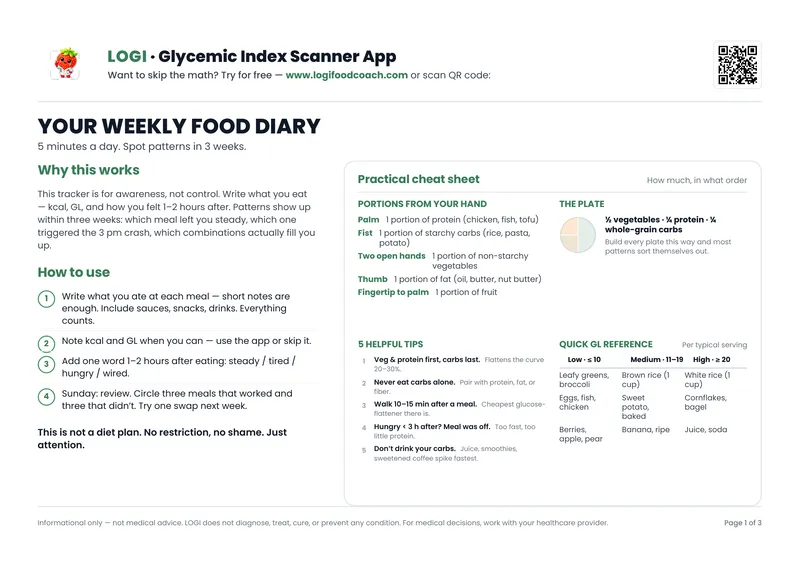
Darmowy PDF — 3 strony
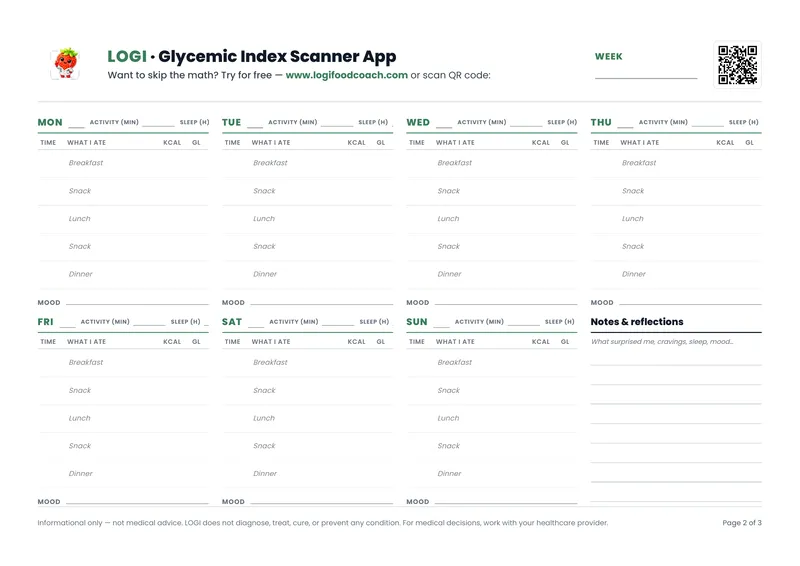
Tygodniowy dziennik jedzenia
Notuj posiłki, ładunek glikemiczny i samopoczucie. Wzorce widać po 3 tygodniach.
Zero spamu. Wypisz się kiedy chcesz.