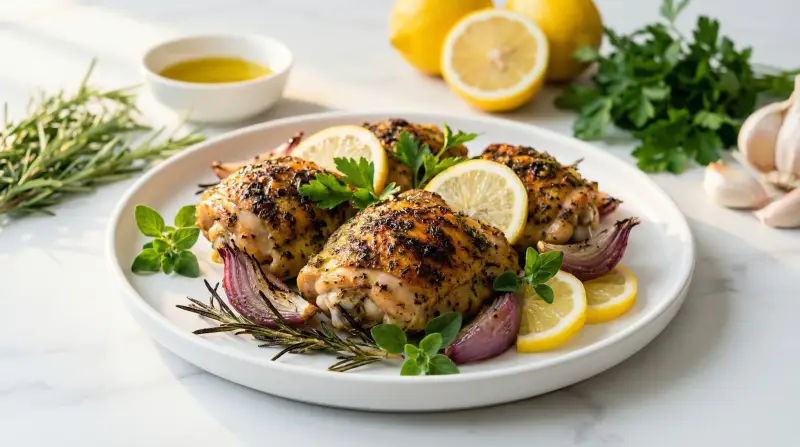
Muslos de pollo con costra de hierbas mediterráneas y romero carbonizado
Jugosos muslos de pollo con hueso infusionados con hierbas aromáticas y balsámico ácido crean una cena amigable con el azúcar en sangre que está lista en menos de una hora con solo 50 minutos de tiempo total.
Este plato de pollo de inspiración mediterránea ofrece un sabor excepcional mientras apoya niveles estables de azúcar en sangre a través de su equilibrio perfecto de proteína y grasas saludables. Los muslos de pollo con hueso y piel proporcionan energía sostenida sin elevar la glucosa, mientras que el adobo a base de aceite de oliva rico en hierbas y vinagre balsámico añade profundidad sin azúcares agregados.
La técnica de carbonizar romero fresco libera sus aceites esenciales y crea una base ahumada y aromática que impregna todo el plato. Combinado con ajo, orégano y un toque de limón, esta receta muestra cómo ingredientes simples y naturales pueden crear resultados de calidad de restaurante. La grasa de pollo derretida y las chalotas caramelizadas forman una salsa de sartén naturalmente sabrosa que no requiere espesantes ni almidones.
Desde una perspectiva glucémica, esta receta es ideal para el manejo del azúcar en sangre. El alto contenido de proteína (aproximadamente 35g por porción) y las grasas saludables ralentizan la digestión y promueven la saciedad durante horas. Acompaña este plato con vegetales sin almidón como brócoli asado o una ensalada de hojas verdes mixtas aderezada con aceite de oliva extra virgen para crear una comida completa de bajo índice glucémico. Para un control óptimo de la glucosa, come primero tu guarnición de vegetales, luego disfruta el pollo—esta secuencia puede reducir los picos de azúcar en sangre después de comer hasta en un 40%.
Impacto en el azúcar
Se espera un impacto mínimo en el azúcar en sangre. Esta comida rica en proteína y grasa con prácticamente cero carbohidratos proporcionará energía estable y sostenida durante 4-5 horas sin causar picos de glucosa.
Consejos azúcar
- ✓ Acompaña con vegetales sin almidón como hojas verdes, brócoli o coliflor para añadir fibra y volumen sin aumentar la carga glucémica
- ✓ Agrega una pequeña porción de carbohidratos complejos como quinoa o lentejas si lo deseas, comiéndolos al final después de la proteína y los vegetales
- ✓ Las grasas saludables del aceite de oliva y la proteína del pollo promoverán la saciedad - evita agregar guarniciones de alto índice glucémico como arroz blanco o pan
🥗 Ingredientes
- 1.5 oz muslos de pollo con hueso y piel
- 2 pcs ramitas de romero fresco
- 60 ml aceite de oliva extra virgen
- 30 ml jugo de limón fresco
- 2 tbsp vinagre balsámico
- 3 pcs dientes de ajo frescos
- 0.5 tsp sal kosher
- 0.5 tsp pimienta negra
- 1 tsp orégano seco
- 2 pcs chalotas, picadas
- 1 pcs limón fresco, en rodajas finas
- 2 tbsp perejil fresco, picado
- 1.5 oz muslos de pollo con hueso y piel
- 2 pcs ramitas de romero fresco
- 4 tbsp aceite de oliva extra virgen
- 2 tbsp jugo de limón fresco
- 2 tbsp vinagre balsámico
- 3 pcs dientes de ajo frescos
- 0.5 tsp sal kosher
- 0.5 tsp pimienta negra
- 1 tsp orégano seco
- 2 pcs chalotas, picadas
- 1 pcs limón fresco, en rodajas finas
- 2 tbsp perejil fresco, picado
👨🍳 Instrucciones
- 1
Coloca la rejilla del horno en el centro y precalienta a 400°F (200°C). Retira los muslos de pollo del refrigerador y usa toallas de papel para secarlos completamente en todas las superficies—esto asegura una piel crujiente y dorada. Deja a temperatura ambiente mientras preparas el adobo de hierbas.
- 2
Calienta una sartén de hierro fundido seca o una sartén pesada apta para horno a fuego medio. Agrega las ramitas de romero directamente a la sartén seca y tuesta durante 3-4 minutos, volteando ocasionalmente, hasta que las hojas se vuelvan fragantes y desarrollen marcas carbonizadas. Los aceites se liberarán y perfumarán tu cocina maravillosamente. Este proceso de carbonización intensifica los compuestos aromáticos de la hierba sin agregar carbohidratos ni afectar el azúcar en sangre.
- 3
Desprende las hojas de romero carbonizadas de sus tallos leñosos y transfiere a un tazón mediano. Agrega el aceite de oliva, jugo de limón fresco, vinagre balsámico, ajo picado, media cucharadita de sal, pimienta negra y orégano seco. Bate vigorosamente hasta que el adobo emulsione en un aderezo cohesivo. Ten en cuenta que aunque el vinagre balsámico contiene azúcares naturales, las 2 cucharadas usadas entre 5 porciones contribuyen carbohidratos mínimos por porción.
- 4
Agrega 1 cucharada de aceite de oliva a tu sartén apta para horno y calienta a fuego medio-alto hasta que brille. Sazona los muslos de pollo con una pizca generosa de sal en ambos lados. Colócalos cuidadosamente con la piel hacia abajo en la sartén caliente, acomodándolos en una sola capa sin amontonar. Sella sin mover durante 8-10 minutos, rotando la sartén ocasionalmente para un dorado uniforme, hasta que la piel se torne profundamente dorada y se desprenda fácilmente de la sartén.
- 5
Vierte cuidadosamente la mayor parte de la grasa derretida de la sartén, dejando aproximadamente 1 cucharada para humedad y sabor. Voltea los muslos de pollo con la piel hacia arriba. Esparce las chalotas picadas alrededor de las piezas de pollo, luego barniza o vierte generosamente el adobo de hierbas sobre todo. Acomoda las rodajas de limón entre las piezas de pollo.
- 6
Transfiere la sartén al horno precalentado y asa durante 25-30 minutos, hasta que el pollo alcance una temperatura interna de 165°F (74°C) cuando se mida en la parte más gruesa sin tocar el hueso. Para una piel extra crujiente, cambia a asar a 500°F (260°C) durante el último 1-2 minutos, vigilando cuidadosamente para evitar que se queme.
- 7
Retira la sartén del horno y transfiere el pollo a una tabla de cortar. Cubre ligeramente con papel aluminio y deja reposar durante 5-10 minutos—esto redistribuye los jugos para máxima ternura. Sirve el pollo con las chalotas caramelizadas y los jugos de la sartén vertidos encima, decorado con perejil fresco picado.
📊 Nutrición por porción
| Por porción | Plato entero | |
|---|---|---|
| Calorías | 376 | 1881 |
| Carbohidratos | 7g | 35g |
| Azúcares | 3g | 13g |
| Azúcares naturales | 3g | 13g |
| Proteína | 25g | 124g |
| Grasa | 29g | 143g |
| Grasa saturada | 6g | 31g |
| Grasas insaturadas | 21g | 103g |
| Fibra | 1g | 7g |
| Fibra soluble | 0g | 2g |
| Fibra insoluble | 1g | 5g |
| Sodio | 347mg | 1735mg |
Respuesta glucémica prevista
¿Y si tú...
Modelo estimado — las respuestas individuales varían. No es consejo médico.
🔄 Alternativas de bajo IG
El vinagre balsámico contiene azúcares residuales del mosto de uva que pueden elevar el azúcar en sangre. El vinagre de vino tinto, vinagre de manzana y vinagre de vino blanco tienen prácticamente cero contenido de azúcar y no impactarán la carga glucémica mientras aún proporcionan acidez y profundidad de sabor.
Aunque las chalotas tienen un impacto glucémico bajo, usar las partes verdes de las cebolletas, cebollino o puerros proporciona un contenido de carbohidratos aún más insignificante, minimizando aún más cualquier efecto potencial en el azúcar en sangre mientras se mantiene el sabor aromático en la costra de hierbas.
El jugo de limón o lima recién exprimido asegura que no haya azúcares agregados. Algunos jugos de limón embotellados contienen conservantes o pequeñas cantidades de azúcar agregada que pueden aumentar innecesariamente la carga glucémica, aunque el impacto es mínimo con cítricos frescos.
🔬 La ciencia detrás de esta receta
Este plato de pollo mediterráneo es una clase magistral en alimentación amigable con el azúcar en sangre, con una carga glucémica de solo 0.9 y un índice glucémico estimado de 14—ambos valores excepcionalmente bajos que lo hacen ideal para un control estable de la glucosa. El secreto está en su base rica en proteína y grasa: los muslos de pollo proporcionan proteína de alta calidad y grasas saludables que ralentizan la digestión y previenen los picos rápidos de azúcar en sangre asociados con comidas altas en carbohidratos. Cuando comes proteína primero, desencadena la liberación de hormonas como GLP-1 que ayudan a regular la respuesta de insulina y mantienen tus niveles de glucosa estables durante horas después de comer.
Los ingredientes de apoyo funcionan sinérgicamente para mejorar los beneficios metabólicos. El aceite de oliva contribuye grasas monoinsaturadas saludables para el corazón que ralentizan aún más el vaciado gástrico—la velocidad a la que la comida sale de tu estómago—lo que se traduce en una liberación más gradual de cualquier glucosa en tu torrente sanguíneo. El romero fresco no es solo aromático; contiene compuestos como el ácido carnósico que las investigaciones sugieren pueden mejorar la sensibilidad a la insulina y ayudar a tus células a usar la glucosa de manera más eficiente. Los componentes ácidos—jugo de limón y vinagre balsámico—son adiciones particularmente inteligentes, ya que la acidez ha demostrado reducir los aumentos de glucosa después de las comidas al ralentizar la descomposición de carbohidratos y mejorar la función de la insulina.
Para un manejo óptimo del azúcar en sangre, acompaña este plato con una porción generosa de vegetales sin almidón como coles de Bruselas asadas o una ensalada de hojas verdes comida primero, seguida del pollo. Este enfoque de "vegetales primero, proteína segundo, carbohidratos al final" puede reducir los picos de glucosa hasta en un 73% según estudios recientes. Si agregas una pequeña porción de granos integrales o vegetales con almidón, cómelos después de haber terminado la mayor parte de tu proteína y vegetales. Una caminata de 10-15 minutos después de tu comida puede mejorar aún más la captación de glucosa por tus músculos, haciendo de esta comida mediterránea parte de una estrategia integral de manejo del azúcar en sangre.
Recetas relacionadas
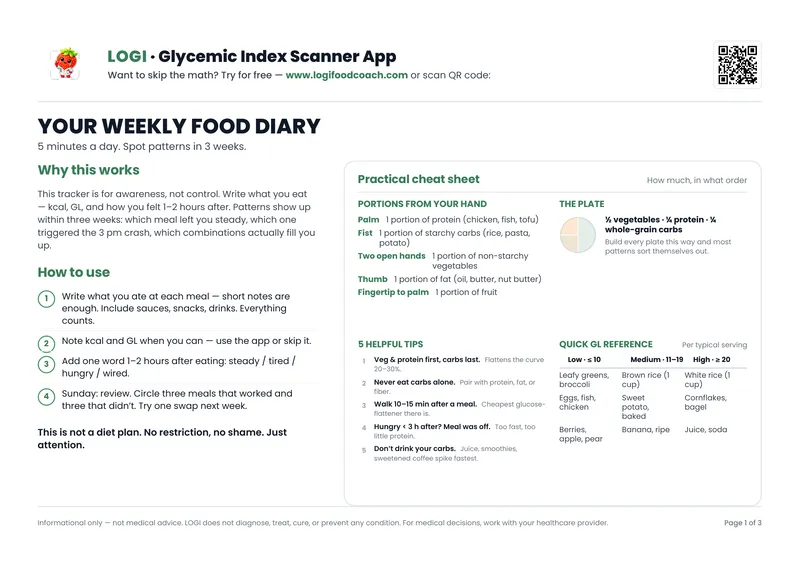
PDF gratis — 3 páginas
Tu diario semanal de comidas
Registra comidas, carga glucémica y estado de ánimo. Detecta patrones en 3 semanas.
Sin spam. Cancela cuando quieras.