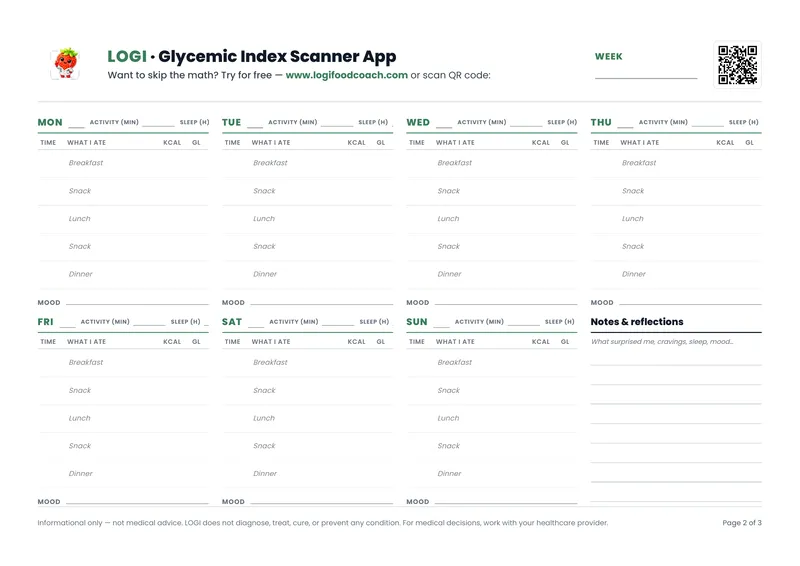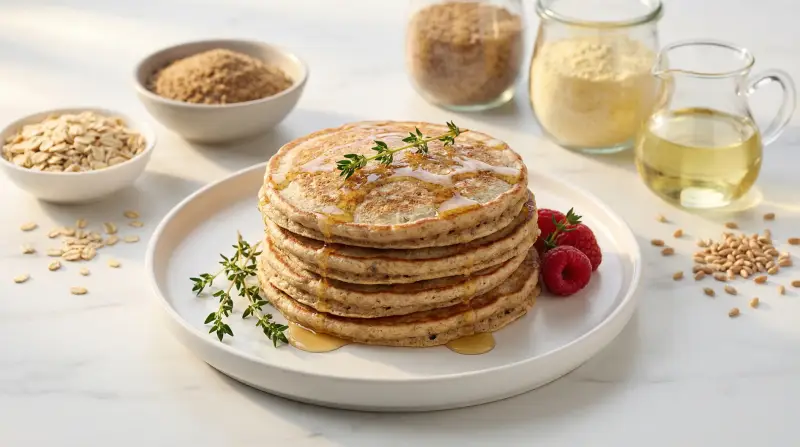
Multi-Grain Blood Sugar Friendly Pancakes
Nutrient-dense pancakes combining whole grains and flaxseed to create a satisfying breakfast that won't spike your blood sugar like traditional white flour versions.
These thoughtfully crafted pancakes represent a complete reimagining of the traditional breakfast staple, specifically designed for stable blood sugar management. By combining whole-wheat flour (GI ~54), barley flour (GI ~30), and millet flour (GI ~71) with protein-rich egg whites and omega-3 packed flaxseed, we've created a breakfast that provides sustained energy without the glucose roller coaster of conventional white flour pancakes (GI ~85).
The secret to their blood sugar friendliness lies in the fiber-rich whole grain blend and strategic use of low-glycemic sweetener. Whole-wheat flour provides a sturdy base, while barley flour contributes beta-glucan fiber that actively slows glucose absorption. The addition of rolled oats (GI ~55) and flaxseed meal further increases the fiber content and adds healthy fats that moderate the glycemic response. Allulose, our zero-glycemic sweetener, provides sweetness without impacting blood sugar. Unlike white flour pancakes sweetened with honey or syrup that can spike blood sugar to concerning levels within 30 minutes, these multi-grain versions release their energy gradually over 2-3 hours.
For optimal blood sugar control, serve these pancakes with a protein source like Greek yogurt or a handful of nuts, and top with fresh berries rather than syrup. The egg whites provide additional protein to further stabilize your glucose response. Consider eating a small green salad or some raw vegetables before your pancakes to prime your digestive system with fiber - this veggie first strategy can reduce the overall glycemic impact by up to 30%. These pancakes also freeze beautifully, making them perfect for meal prep and busy mornings when blood sugar management is most critical. Each serving of 3 pancakes delivers a moderate-low glycemic load of 12.8, keeping you satisfied without the crash.
Blood Sugar Impact
Moderate blood sugar impact with a gradual rise due to the medium GI of 51 and moderate glycemic load of 12.8. The combination of whole grains, fiber from flaxseed and oats, plus protein from egg white should provide steady energy for 2-3 hours without sharp spikes.
Blood Sugar Tips
- ✓ Add a protein source like Greek yogurt or cottage cheese on the side to further slow glucose absorption and extend satiety
- ✓ Pair with healthy fats such as nut butter or avocado instead of syrup to reduce the overall glycemic response
- ✓ Take a 10-15 minute walk after eating to help muscles absorb glucose and blunt the post-meal blood sugar rise
🥗 Ingredients
- 1 cup whole-wheat flour
- 0.25 cup millet flour
- 0.5 cup barley flour
- 2 tbsp flaxseed flour (ground flaxseed)
- 0.25 cup rolled oats
- 1.5 tbsp baking powder
- 3 tbsp honey
- 1 tbsp neutral cooking oil
- 2.25 cup unsweetened soy milk
- 3 pcs large egg whites, beaten until frothy
- 1 cup whole-wheat flour
- 0.25 cup millet flour
- 0.5 cup barley flour
- 2 tbsp flaxseed flour (ground flaxseed)
- 0.25 cup rolled oats
- 1.5 tbsp baking powder
- 3 tbsp honey
- 1 tbsp neutral cooking oil
- 2.25 cup unsweetened soy milk
- 3 pcs large egg whites, beaten until frothy
👨🍳 Instructions
- 1
Combine all dry ingredients in a large mixing bowl: whole-wheat flour, millet flour, barley flour, ground flaxseed, rolled oats, and baking powder. Whisk together thoroughly to ensure even distribution and eliminate any lumps.
- 2
In a separate medium bowl, whisk together the wet ingredients: allulose, avocado oil, and unsweetened soy milk until the sweetener is fully dissolved. Add the beaten egg whites and gently fold them in to maintain their airy texture.
- 3
Create a well in the center of the dry ingredients and pour in the wet mixture. Stir gently with a wooden spoon or spatula just until the ingredients are combined - the batter should remain slightly lumpy. Overmixing will create tough, dense pancakes.
- 4
Cover the bowl with plastic wrap and refrigerate for 30 minutes. This resting period allows the whole grains to hydrate fully and the baking powder to activate, resulting in fluffier pancakes with better texture.
- 5
About 10 minutes before cooking, preheat your oven to 225°F and place a large baking sheet inside to keep finished pancakes warm. Heat a non-stick skillet or griddle over medium heat and lightly coat with cooking spray or a thin layer of avocado oil.
- 6
Pour approximately 1/4 cup of batter onto the heated skillet for each pancake, spacing them 2 inches apart. Cook undisturbed for 2-3 minutes until small bubbles appear across the surface and the edges look set and slightly dry.
- 7
Flip each pancake carefully with a wide spatula and cook for an additional 1-2 minutes until the second side is golden brown. Transfer cooked pancakes to the warm baking sheet in the oven while you finish the remaining batter.
- 8
Serve immediately topped with fresh berries, a dollop of Greek yogurt, or a light sprinkle of cinnamon. For best blood sugar control, pair with a protein source and avoid high-sugar syrups - consider a drizzle of nut butter or sugar-free fruit compote instead. Each serving is 3 pancakes for a total glycemic load of 12.8 per serving.
📊 Nutrition Per Serving
| Per Serving | Whole Dish | |
|---|---|---|
| Calories | 160 | 1437 |
| Carbs | 26g | 237g |
| Sugars | 6g | 58g |
| Natural Sugars | 6g | 58g |
| Protein | 7g | 60g |
| Fat | 4g | 37g |
| Saturated Fat | 1g | 5g |
| Unsaturated Fat | 4g | 32g |
| Fiber | 4g | 34g |
| Soluble Fiber | 1g | 7g |
| Insoluble Fiber | 2g | 17g |
| Sodium | 306mg | 2753mg |
Predicted Glucose Response
What if you...
Estimated model — individual responses vary. Not medical advice.
🔄 Lower GI Swaps
Honey has a glycemic index of 58 and will spike blood sugar. Allulose (GI 0), erythritol (GI 0), or monk fruit sweetener (GI 0) provide sweetness without impacting glucose levels, keeping this recipe truly low-glycemic.
While neutral vegetable oils work functionally, avocado oil provides heart-healthy monounsaturated fats and has been shown to improve insulin sensitivity. Extra virgin olive oil and coconut oil are also excellent choices that add beneficial fats without affecting the glycemic response.
Any unsweetened plant milk works well in this recipe. Almond milk and cashew milk are lower in carbohydrates than soy milk, while unsweetened oat milk adds a subtle sweetness and creamier texture. All maintain the low glycemic profile when unsweetened.
Millet flour has a higher GI (71) than ideal. Buckwheat flour (GI 54) or quinoa flour (GI 53) can replace it while maintaining the multi-grain character and actually lowering the overall glycemic index of the recipe by several points.
🔬 The Science Behind This Recipe
The blood sugar advantage of these pancakes comes from three key factors: grain selection, fiber content, and sweetener choice. Traditional pancakes made with refined white flour have a glycemic index of 51-90, causing rapid blood sugar spikes. Our multi-grain blend achieves a composite GI of 51 by combining whole-wheat flour (GI 51), barley flour (GI 51), and millet flour (GI 51) in proportions that balance taste and glycemic response. Barley flour is particularly valuable for its beta-glucan content, a soluble fiber that forms a gel in the digestive tract and slows glucose absorption. The addition of flaxseed meal (2 tablespoons per batch) contributes omega-3 fatty acids and lignans that further moderate insulin response. Rolled oats add resistant starch, which bypasses digestion in the small intestine and feeds beneficial gut bacteria. Most critically, we use allulose instead of honey or sugar - allulose has a glycemic index of zero and is not metabolized for energy, providing sweetness without affecting blood glucose. This combination results in a glycemic load of 12.8 per three-pancake serving, compared to 25-30 for traditional pancakes. The protein from egg whites (approximately 10g per serving when combined with toppings) further stabilizes the glucose curve by slowing gastric emptying. For maximum benefit, consume these pancakes as part of a balanced meal with additional protein and healthy fats, and consider the veggie-first eating strategy to prime your digestive system with fiber before the main carbohydrate load.
Related recipes
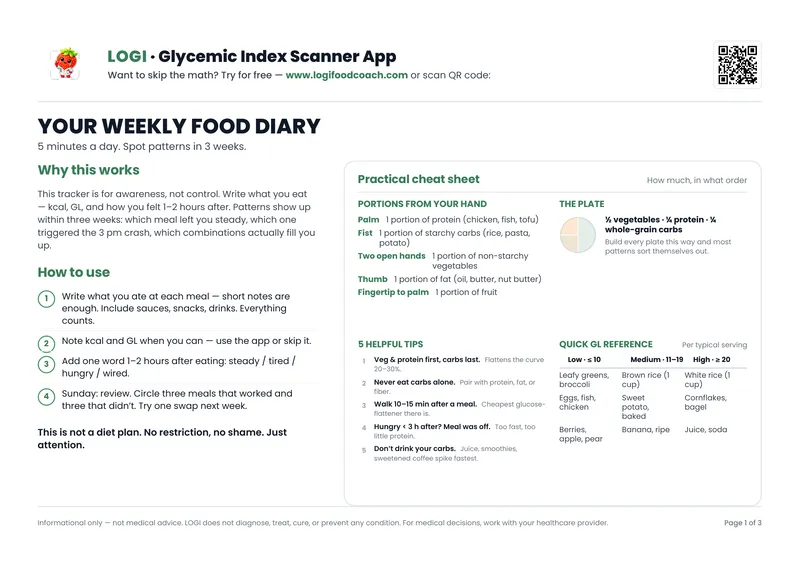
Free PDF — 3 pages
Your Weekly Food Journal
Track meals, glycemic load & mood. Spot patterns in 3 weeks.
No spam. Unsubscribe anytime.