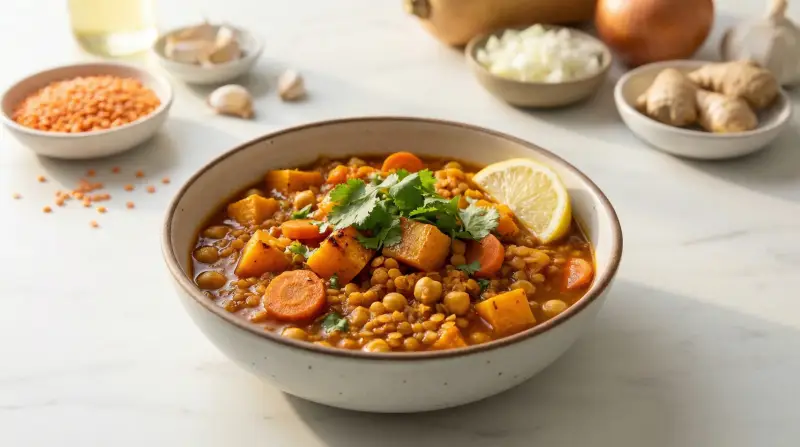
Moroccan-Spiced Lentil and Chickpea Stew with Roasted Vegetables
A fiber-rich, plant-based stew combining red lentils and chickpeas with aromatic spices—perfect for steady blood sugar and lasting satisfaction.
This nourishing one-pot stew exemplifies blood sugar-friendly cooking at its finest. Red lentils and chickpeas provide a powerful combination of plant protein and soluble fiber that slows glucose absorption, while butternut squash offers complex carbohydrates with a moderate glycemic load when paired with legumes. The anti-inflammatory spices—turmeric, cumin, ginger, and saffron—not only create layers of warming flavor but may also support insulin sensitivity.
What makes this recipe particularly effective for glycemic control is the synergy between ingredients. The high fiber content from lentils (about 8g per serving) and chickpeas creates a gel-like consistency during digestion that moderates blood sugar spikes. Healthy fats from peanuts further slow carbohydrate absorption, while the acidic lemon juice has been shown to lower the glycemic response of meals. This is comfort food that works with your metabolism, not against it.
For optimal blood sugar management, enjoy this stew as your main course with a side of leafy greens eaten first. The substantial protein and fiber content means you'll stay satisfied for hours without energy crashes. Leftovers actually improve in flavor and maintain their low-glycemic properties, making this an ideal meal prep option for the week ahead.
Blood Sugar Impact
This meal will have a low, gradual impact on blood sugar due to its low GI of 23 and moderate glycemic load of 13.3. The high fiber content from lentils, chickpeas, and vegetables will promote steady glucose release and sustained energy for 4-5 hours without significant spikes.
Blood Sugar Tips
- ✓ Eat the roasted vegetables and a portion of the stew first before consuming the lentils and chickpeas to further slow carbohydrate absorption
- ✓ Add a tablespoon of olive oil or a small handful of nuts on top to increase healthy fats, which will further blunt the glycemic response
- ✓ Pair this meal with a 10-15 minute walk after eating to help muscles absorb glucose and maintain stable blood sugar levels
🥗 Ingredients
- 907 g butternut squash, peeled, seeded and cubed
- 3 pcs large carrots, peeled and sliced
- 2 pcs large onions, chopped
- 3 pcs garlic cloves, minced
- 946 ml low-sodium vegetable stock
- 200 g red lentils, rinsed
- 2 tbsp no-salt-added tomato paste
- 2 tbsp fresh ginger, peeled and minced
- 2 tsp ground cumin
- 1 tsp ground turmeric
- 0.25 tsp saffron threads
- 1 tsp freshly ground black pepper
- 60 ml fresh lemon juice
- 280 g canned chickpeas, drained and rinsed
- 70 g roasted unsalted peanuts, chopped
- 15 g fresh cilantro, chopped
- 2.0 lb butternut squash, peeled, seeded and cubed
- 3 pcs large carrots, peeled and sliced
- 2 pcs large onions, chopped
- 3 pcs garlic cloves, minced
- 4.0 cups low-sodium vegetable stock
- 7.1 oz red lentils, rinsed
- 2 tbsp no-salt-added tomato paste
- 2 tbsp fresh ginger, peeled and minced
- 2 tsp ground cumin
- 1 tsp ground turmeric
- 0.25 tsp saffron threads
- 1 tsp freshly ground black pepper
- 4 tbsp fresh lemon juice
- 9.9 oz canned chickpeas, drained and rinsed
- 2.5 oz roasted unsalted peanuts, chopped
- 0.5 oz fresh cilantro, chopped
👨🍳 Instructions
- 1
Heat a large Dutch oven or heavy-bottomed pot over medium-low heat. Add the chopped onions, cubed butternut squash, and sliced carrots. Cook gently for 12-15 minutes, stirring occasionally, until the onions become translucent and begin to develop golden-brown edges. Add the minced garlic during the last 2 minutes of cooking.
- 2
Pour in the vegetable stock and use a wooden spoon to scrape up any caramelized vegetable bits from the bottom of the pot—these add depth of flavor. Bring the mixture to a gentle simmer.
- 3
Stir in the rinsed red lentils, tomato paste, minced ginger, cumin, turmeric, saffron, and black pepper. Mix thoroughly to ensure the tomato paste and spices are evenly distributed throughout the liquid.
- 4
Cover the pot with a lid and reduce heat to low. Simmer gently for 75-90 minutes, stirring every 20 minutes, until the lentils have completely broken down and the butternut squash is fork-tender. The stew should have a thick, hearty consistency. If it becomes too thick, add water or additional stock in 1/4-cup increments.
- 5
Add the drained chickpeas and fresh lemon juice to the pot. Stir well and cook uncovered for an additional 5 minutes to heat the chickpeas through and allow the lemon juice to brighten all the flavors.
- 6
Taste and adjust seasoning if needed. The stew should have a balanced flavor profile with warmth from the spices, brightness from the lemon, and natural sweetness from the vegetables.
- 7
Ladle the stew into bowls and garnish each serving generously with chopped roasted peanuts and fresh cilantro. The peanuts add healthy fats and satisfying crunch, while the cilantro provides a fresh, herbaceous finish.
- 8
Serve immediately while hot. For optimal blood sugar control, consider eating a small salad of leafy greens before the stew, and pair with additional non-starchy vegetables if desired. Store leftovers in airtight containers in the refrigerator for up to 5 days, or freeze for up to 3 months.
📊 Nutrition Per Serving
| Per Serving | Whole Dish | |
|---|---|---|
| Calories | 294 | 2348 |
| Carbs | 50g | 400g |
| Sugars | 9g | 73g |
| Natural Sugars | 9g | 73g |
| Protein | 15g | 116g |
| Fat | 6g | 48g |
| Saturated Fat | 1g | 6g |
| Unsaturated Fat | 5g | 40g |
| Fiber | 15g | 123g |
| Soluble Fiber | 4g | 30g |
| Insoluble Fiber | 9g | 71g |
| Sodium | 455mg | 3637mg |
Predicted Glucose Response
What if you...
Estimated model — individual responses vary. Not medical advice.
🔄 Lower GI Swaps
Butternut squash has a moderate glycemic index (51) and higher carbohydrate content. Cauliflower, zucchini, and eggplant are very low-carb vegetables with minimal impact on blood sugar, helping to lower the overall glycemic load of the stew.
Carrots have a higher glycemic index (39-92 depending on cooking method) and natural sugars. Bell peppers, green beans, and celery have negligible carbohydrates and virtually no impact on blood glucose levels.
While chickpeas are nutritious, they have a moderate glycemic index (28-36). Increasing lentils (GI 21-32), using black soybeans (GI 15), or lupini beans (very low carb) provides similar protein and fiber with lower blood sugar impact.
Peanuts have a slightly higher carbohydrate content than tree nuts. Almonds, walnuts, and pecans have lower net carbs, more favorable fat profiles, and minimal effect on blood glucose while adding similar texture and richness.
Commercial vegetable stocks often contain added sugars, maltodextrin, or high-GI starches. Bone broth, sugar-free homemade stock, or mushroom broth provide flavor without hidden carbohydrates that can raise blood sugar.
🔬 The Science Behind This Recipe
This Moroccan-spiced stew is a masterclass in blood sugar management, thanks to its star players: lentils and chickpeas. Both legumes are packed with soluble fiber and resistant starch, which slow down digestion and create a gradual, steady release of glucose into your bloodstream rather than a sharp spike. Lentils contain about 8 grams of fiber per half-cup serving, while chickpeas add another 6 grams—this fiber forms a gel-like substance in your digestive tract that acts as a buffer, preventing rapid sugar absorption. The protein content in these legumes (about 9 grams per serving each) further stabilizes blood sugar by slowing gastric emptying and triggering the release of hormones that help regulate glucose levels.
The butternut squash and carrots, while containing natural sugars, are transformed into blood-sugar-friendly ingredients when combined with the fiber-rich legumes. This is where Glycemic Load becomes crucial—it's not just about the type of carbohydrate (Glycemic Index), but the amount you're actually eating and what you're eating it with. The squash and carrots provide complex carbohydrates that digest more slowly than refined grains, and when eaten alongside the protein and fiber from legumes, their impact on blood sugar is significantly blunted. The estimated GI of 23 is impressively low (under 55 is considered low-glycemic), while the Glycemic Load of 13.3 per serving is also in the low range (under 10 is low, 11-19 is moderate).
To maximize the blood sugar benefits of this stew, start your meal with a small side salad before diving into the main dish—eating vegetables first has been shown to reduce post-meal glucose spikes by up to 30%. Adding a tablespoon of olive oil or a dollop of tahini increases the healthy fat content, which further slows digestion. Finally, take a 10-15 minute walk after eating to help your muscles absorb glucose more efficiently, turning a blood-sugar-friendly meal into an even more powerful metabolic tool.
Related recipes
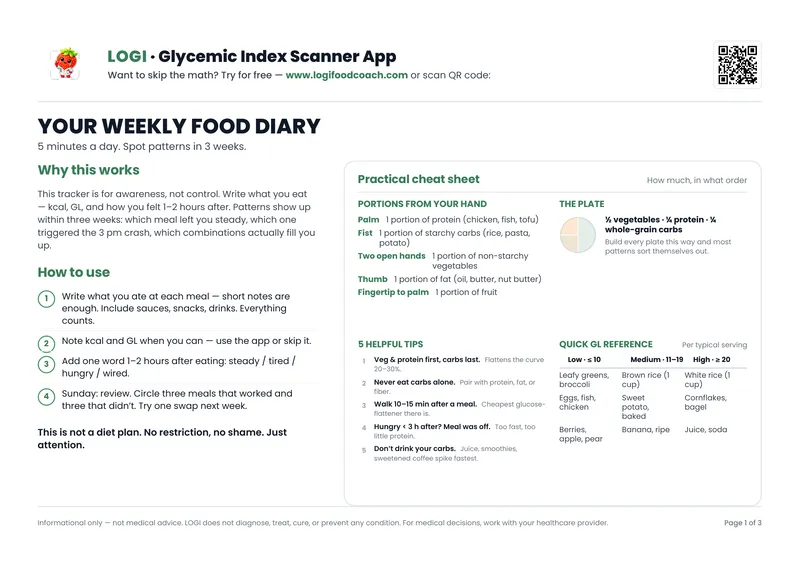
Free PDF — 3 pages
Your Weekly Food Journal
Track meals, glycemic load & mood. Spot patterns in 3 weeks.
No spam. Unsubscribe anytime.