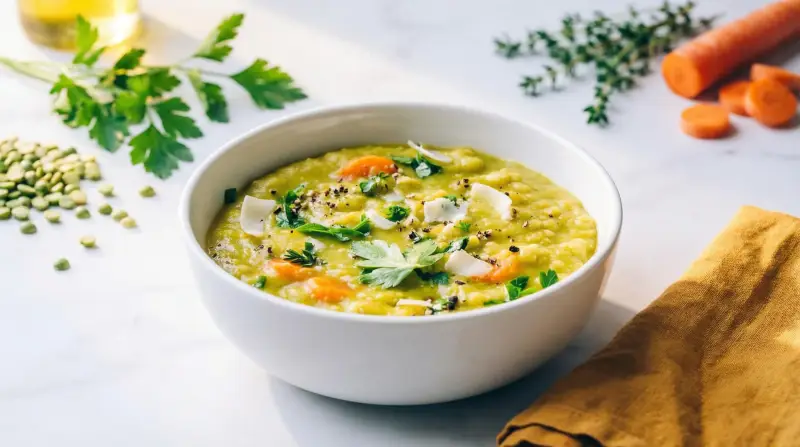
Low-Glycemic Vegan Split Pea Soup
A blood sugar-friendly split pea soup loaded with fiber-rich legumes and vegetables. This hearty, plant-based meal keeps you satisfied without spiking glucose.
This nourishing vegan split pea soup is a glycemic health champion, featuring split peas with a low GI of 29—one of the best legumes for blood sugar management. The combination of soluble fiber from split peas and resistant starch helps slow glucose absorption, while the aromatic vegetables add nutrients without raising blood sugar.
What makes this soup particularly beneficial for metabolic health is its high protein and fiber content from whole, unprocessed ingredients. Split peas provide 16 grams of fiber per cup, which helps stabilize blood sugar levels for hours after eating. The addition of healthy fats from olive oil further slows digestion, creating a gentle, sustained energy release. Unlike cream-based soups or those with white potatoes, this recipe relies entirely on low-GI vegetables and legumes.
For optimal blood sugar control, enjoy this soup as a complete meal with a side of leafy greens. Each serving contains approximately 1.5 cups of soup, providing a balanced 48 grams of carbohydrates with 12 grams of fiber, resulting in a moderate glycemic load of 23.7 per serving. The lemon juice and tamari add depth while providing minimal carbohydrate impact. This is an ideal make-ahead meal that actually improves in flavor overnight, making blood sugar-friendly eating convenient and delicious.
Blood Sugar Impact
This soup should have a low to moderate blood sugar impact due to its low GI of 29 and moderate glycemic load of 23.7. The split peas provide fiber and protein that slow digestion, resulting in gradual glucose release and stable energy for 3-4 hours.
Blood Sugar Tips
- ✓ Add a tablespoon of olive oil or a handful of nuts on top to further slow digestion and reduce the glycemic response
- ✓ Eat the soup slowly over 15-20 minutes rather than consuming it quickly, as this allows your body to better regulate insulin release
- ✓ Pair with a side of non-starchy vegetables like a green salad to add more fiber and reduce the overall glycemic impact of the meal
🥗 Ingredients
- 2 tbsp olive oil
- 1 pcs large yellow onion, chopped
- 1 cup celery, chopped
- 1 cup carrots, chopped
- 3 pcs garlic cloves, minced
- 2 pcs bay leaves
- 0.5 tsp black pepper
- 0.5 tsp sea salt
- 1 tbsp fresh thyme
- 1 tsp dried oregano
- 0.5 tsp smoked paprika
- 454 g dry split peas, rinsed
- 1420 ml vegetable broth
- 2 tsp tamari
- 1 tbsp fresh lemon juice
- 2 tbsp fresh parsley, chopped, for garnish
- 2 tbsp olive oil
- 1 pcs large yellow onion, chopped
- 1 cup celery, chopped
- 1 cup carrots, chopped
- 3 pcs garlic cloves, minced
- 2 pcs bay leaves
- 0.5 tsp black pepper
- 0.5 tsp sea salt
- 1 tbsp fresh thyme
- 1 tsp dried oregano
- 0.5 tsp smoked paprika
- 1.0 lb dry split peas, rinsed
- 6.0 cups vegetable broth
- 2 tsp tamari
- 1 tbsp fresh lemon juice
- 2 tbsp fresh parsley, chopped, for garnish
👨🍳 Instructions
- 1
Heat the olive oil in a large Dutch oven or heavy-bottomed stockpot over medium heat. Once shimmering, add the chopped onion, celery, carrots, and minced garlic. Sauté the vegetables, stirring occasionally, until they become fragrant and begin to soften, approximately 5 to 7 minutes. The vegetables should be tender but not browned.
- 2
Add the bay leaves, black pepper, sea salt, fresh thyme, dried oregano, and smoked paprika to the softened vegetables. Stir continuously for about 1 minute to toast the spices and release their aromatic oils. This step enhances the depth of flavor in your soup.
- 3
Pour in the rinsed split peas and stir them into the vegetable and spice mixture, coating them evenly. Cook for another minute, allowing the peas to absorb some of the flavors before adding liquid.
- 4
Add the vegetable broth to the pot and stir well to combine all ingredients. Increase the heat to bring the mixture to a rolling boil, then immediately reduce the heat to low. Cover the pot with a lid and let the soup simmer gently for approximately 60 minutes, or until the split peas are completely tender and beginning to break down. Stir occasionally to prevent sticking.
- 5
Once the split peas have softened and the soup has thickened to your desired consistency, remove the bay leaves and thyme sprigs and discard them. Stir in the tamari and fresh lemon juice, which will brighten the flavors and add a subtle tang. Taste and adjust seasoning with additional salt and pepper if needed.
- 6
For optimal blood sugar management, let the soup cool slightly before serving—this allows resistant starch to form, further lowering the glycemic impact. Ladle the soup into bowls and garnish with freshly chopped parsley and cracked black pepper. If desired, add a small amount of nutritional yeast for a cheesy flavor without dairy.
- 7
Store leftovers in an airtight container in the refrigerator for up to 5 days, or freeze for up to 3 months. The soup will thicken upon standing; simply add additional vegetable broth or water when reheating to reach your preferred consistency. This soup pairs beautifully with a large green salad eaten first to further stabilize blood sugar response.
📊 Nutrition Per Serving
| Per Serving | Whole Dish | |
|---|---|---|
| Calories | 520 | 2078 |
| Carbs | 83g | 333g |
| Sugars | 16g | 64g |
| Natural Sugars | 16g | 64g |
| Protein | 31g | 122g |
| Fat | 9g | 35g |
| Saturated Fat | 1g | 5g |
| Unsaturated Fat | 8g | 30g |
| Fiber | 32g | 130g |
| Soluble Fiber | 1g | 2g |
| Insoluble Fiber | 1g | 5g |
| Sodium | 1720mg | 6880mg |
Predicted Glucose Response
What if you...
Estimated model — individual responses vary. Not medical advice.
🔄 Lower GI Swaps
Carrots have a moderate glycemic index (35-92 depending on cooking). Zucchini, green beans, and cauliflower are non-starchy vegetables with minimal impact on blood sugar, keeping the glycemic load lower while adding texture and nutrients.
Using the green parts of leeks or scallions provides onion-like flavor with less natural sugar content than yellow onions, resulting in a lower glycemic impact while maintaining aromatic depth.
While split peas have a GI of 25-32, green and black lentils have a slightly lower GI (21-25) and cook faster, reducing starch breakdown. Mung beans also have a low GI around 25-31 with less overall carbohydrate density, further reducing glycemic load.
Commercial vegetable broths often contain added sugars or high-glycemic vegetables. Mushroom broth or homemade versions allow control over ingredients, eliminating hidden sugars that can raise the overall glycemic load of the soup.
🔬 The Science Behind This Recipe
Why This Recipe Works for Blood Sugar Balance
This vegan split pea soup is a blood sugar champion thanks to its star ingredient: split peas. These legumes are packed with soluble fiber and resistant starch, which slow down digestion and create a gradual release of glucose into your bloodstream rather than a sharp spike. Split peas contain about 16 grams of fiber per cup, and this fiber forms a gel-like substance in your digestive tract that literally slows the absorption of carbohydrates. The protein content (about 16 grams per cup) further stabilizes blood sugar by triggering a more measured insulin response. This combination is why split peas have a remarkably low GI of 29—well below the 55 threshold for low-glycemic foods.
The supporting cast of vegetables adds another layer of blood sugar protection. Onions contain quercetin, a compound that may help improve insulin sensitivity, while garlic has been shown in studies to support healthy glucose metabolism. The olive oil is crucial here: healthy fats slow gastric emptying, meaning food leaves your stomach more gradually and prevents that post-meal glucose surge. Carrots, despite their reputation, contribute minimal glycemic impact when cooked in this context because their natural sugars are buffered by all the fiber and fat in the dish.
Understanding Glycemic Load (GL) is key—it accounts for both the quality and quantity of carbohydrates. At 23.7 per serving, this soup falls in the "medium" range, but that's still excellent for a complete, satisfying meal. To optimize your blood sugar response even further, start your meal with a small green salad, and consider taking a 10-15 minute walk after eating to help your muscles absorb glucose more efficiently.
Related recipes

Free PDF — 3 pages
Your Weekly Food Journal
Track meals, glycemic load & mood. Spot patterns in 3 weeks.
No spam. Unsubscribe anytime.
