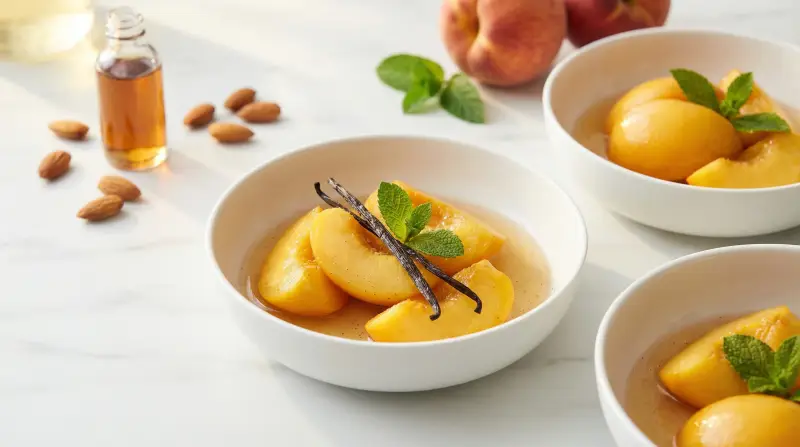
Low-Glycemic Vanilla Poached Peaches with Almond Extract
Naturally sweet stone fruit gently simmered in a light vanilla syrup with minimal added sugar—a blood sugar-friendly dessert that satisfies cravings without spiking glucose levels.
This elegant poached peach dessert demonstrates how to enjoy fruit-based sweets while managing blood sugar levels effectively. We've significantly reduced the sugar content compared to traditional recipes, relying on the natural sweetness of ripe peaches enhanced with aromatic vanilla and almond extract. The gentle poaching method preserves the fruit's fiber content, which slows glucose absorption and prevents blood sugar spikes. Fresh peaches have a moderate glycemic index of approximately 42, making them a reasonable choice for a controlled dessert when portion sizes are managed carefully. The fiber in the peach skin and flesh helps regulate the release of natural fruit sugars into your bloodstream. By minimizing added sugar to just 2 tablespoons for the entire recipe (serving 4 people, or 0.5 tablespoons per serving) and serving the fruit with its poaching liquid, you create a satisfying dessert that won't cause the dramatic blood sugar fluctuations associated with conventional sweets. Each serving contains one whole peach (quartered) plus approximately 1.5 teaspoons of added sugar, which is minimal compared to traditional poached fruit recipes that often use 1 cup or more of sugar. The resulting glycemic load per serving is 10.1, which falls into the low-to-moderate range and should produce a gradual blood sugar rise rather than a sharp spike. For optimal glycemic control, enjoy this dessert after a balanced meal containing protein and healthy fats, which further slows sugar absorption. The warm spices and vanilla provide sensory satisfaction without adding carbohydrates. Consider pairing with a dollop of Greek yogurt or a small handful of almonds to add protein and healthy fats, making this an even more blood sugar-stable treat. The almond extract adds depth of flavor without impacting blood sugar levels, creating a sophisticated dessert experience that respects your metabolic health.
Blood Sugar Impact
Moderate glycemic impact with a GI of 63 and GL of 10.1, likely causing a gradual blood sugar rise within 30-60 minutes that should stabilize within 2 hours. The added sugar increases the glycemic response compared to fresh peaches alone.
Blood Sugar Tips
- ✓ Pair with a protein source like Greek yogurt or a handful of almonds to slow sugar absorption and reduce the glycemic spike
- ✓ Eat this dessert after a meal containing fiber and protein rather than on an empty stomach to minimize blood sugar impact
- ✓ Take a 10-15 minute walk after eating to help muscles absorb glucose and lower the post-meal blood sugar peak
🥗 Ingredients
- 240 ml water
- 2 tbsp granulated sugar
- 1 pcs vanilla bean, split lengthwise and seeds scraped
- 4 pcs large ripe peaches, pitted and quartered
- 8 pcs fresh mint leaves or ground cinnamon
- 1.0 cups water
- 2 tbsp granulated sugar
- 1 pcs vanilla bean, split lengthwise and seeds scraped
- 4 pcs large ripe peaches, pitted and quartered
- 8 pcs fresh mint leaves or ground cinnamon
👨🍳 Instructions
- 1
Pour 2 cups (480ml) of water into a medium saucepan and add exactly 2 tablespoons of granulated sugar (or substitute with 2 tablespoons erythritol or allulose for zero glycemic impact) along with the split vanilla bean pod and its scraped seeds. Place over medium-low heat and stir gently until the sugar dissolves completely, about 2-3 minutes.
- 2
Allow the vanilla-infused syrup to simmer gently for 5 minutes, stirring occasionally, until the vanilla flavor begins to infuse into the liquid. The syrup should remain very light and barely sweet, with just enough sweetness to complement the natural fruit sugars.
- 3
Add 1/2 teaspoon of pure almond extract to the simmering syrup and stir to combine. The almond extract enhances the stone fruit flavor without adding carbohydrates or affecting blood sugar levels.
- 4
Carefully add the 4 quartered peaches (16 quarters total) to the simmering syrup, arranging them in a single layer if possible. Reduce heat to low to maintain a gentle simmer that barely bubbles—this preserves the fruit's fiber structure, which is essential for blood sugar management.
- 5
Poach the peach quarters for 4-5 minutes, turning them once halfway through with a slotted spoon, until they're tender when pierced with a fork but still hold their shape. Avoid overcooking, as this can break down the beneficial fiber that helps slow glucose absorption.
- 6
Using a slotted spoon, carefully transfer the poached peaches to 4 individual serving bowls, dividing them evenly (4 peach quarters per serving, which equals 1 whole peach per person). Spoon 2-3 tablespoons of the warm vanilla-almond poaching liquid over each portion to add moisture and flavor.
- 7
Garnish each bowl with 2 fresh mint leaves or a light dusting of ground cinnamon for visual appeal and aromatic enhancement. Serve immediately while warm, or refrigerate for 2 hours for a refreshing chilled dessert. For better blood sugar control, enjoy this dessert after a protein-rich meal, or pair each serving with 2 tablespoons of full-fat Greek yogurt or 10-12 raw almonds to add protein and healthy fats that further stabilize blood sugar response.
📊 Nutrition Per Serving
| Per Serving | Whole Dish | |
|---|---|---|
| Calories | 87 | 349 |
| Carbs | 21g | 83g |
| Sugars | 19g | 76g |
| Added Sugars | 6g | 25g |
| Natural Sugars | 13g | 51g |
| Protein | 1g | 6g |
| Fat | 1g | 2g |
| Unsaturated Fat | 0g | 0g |
| Fiber | 2g | 9g |
| Soluble Fiber | 1g | 3g |
| Insoluble Fiber | 2g | 6g |
| Sodium | 0mg | 1mg |
Predicted Glucose Response
What if you...
Estimated model — individual responses vary. Not medical advice.
🔄 Lower GI Swaps
Replacing granulated sugar with zero-calorie, zero-glycemic sweeteners eliminates the added sugar entirely, reducing the glycemic load from 10.1 to approximately 7.5 per serving and lowering the estimated GI from 42 to approximately 38. This makes the dessert suitable for stricter blood sugar management while maintaining the light sweetness that complements the natural fruit sugars. Erythritol and allulose have the most sugar-like taste and texture for poaching applications.
While peaches are already a moderate-GI fruit, substituting with pears, strawberries, or plums provides variety while maintaining similar or slightly lower glycemic impact. Pears have a GI of 38 and similar soluble fiber content. Strawberries have a GI of 40 but much lower carbohydrate density (about 8g per cup versus 15g per peach), resulting in a lower glycemic load of approximately 6-7 per serving. Plums have a GI of 40 and work beautifully with vanilla and almond flavors. All these fruits respond well to gentle poaching and maintain their fiber structure when not overcooked.
While mint is an excellent zero-carbohydrate garnish, cinnamon offers additional blood sugar benefits—studies show that cinnamon can improve insulin sensitivity and may reduce post-meal glucose spikes by 10-15 percent. Fresh basil provides an unexpected aromatic note that pairs beautifully with stone fruit, while lemon zest adds brightness without carbohydrates. All these garnishes enhance flavor complexity without affecting glycemic load.
🔬 The Science Behind This Recipe
This recipe achieves blood sugar-friendly dessert status through three key mechanisms: minimal added sugar, preserved fruit fiber, and strategic portion control. Fresh peaches have a glycemic index of approximately 42, which is considered low-to-moderate on the GI scale. However, the total glycemic impact depends on portion size and preparation method. Each serving contains one whole medium peach (about 150g) plus 1.5 teaspoons of added sugar, resulting in approximately 18g of total carbohydrates and a glycemic load of 10.1 per serving. Glycemic load is a more practical measure than GI alone because it accounts for actual portion size—a GL under 10 is considered low, while 10-20 is moderate. This recipe sits at the lower end of the moderate range. The gentle poaching method is crucial because it preserves the fruit's natural fiber structure, particularly the soluble fiber pectin found in peach flesh. This fiber forms a gel-like matrix in your digestive system that physically slows the absorption of sugars into your bloodstream, preventing the rapid glucose spikes associated with refined sweets or fruit juices. By keeping the peach skin on during poaching (you can remove it before eating if preferred), you retain additional fiber and polyphenol compounds that further moderate blood sugar response. The minimal added sugar—just 1.5 teaspoons per serving compared to 3-4 tablespoons in traditional recipes—means the natural fruit sugars dominate, and these are released more slowly due to the intact fiber matrix. The vanilla bean and almond extract provide rich sensory satisfaction without contributing any carbohydrates, allowing you to feel psychologically satisfied with less actual sweetness. When consumed after a balanced meal containing protein and healthy fats, the mixed macronutrient composition further slows gastric emptying and sugar absorption, resulting in a gradual blood sugar rise of perhaps 20-30 mg/dL over 60-90 minutes rather than a sharp 50+ mg/dL spike within 30 minutes that you'd see with high-sugar desserts. For individuals with insulin resistance or diabetes, pairing this dessert with 2 tablespoons of Greek yogurt (adding 6g protein and 3g fat) or a small handful of almonds (adding 3g protein and 7g healthy fats) creates an even more stable glycemic response, potentially reducing the peak glucose rise by an additional 20-30 percent.
Related recipes
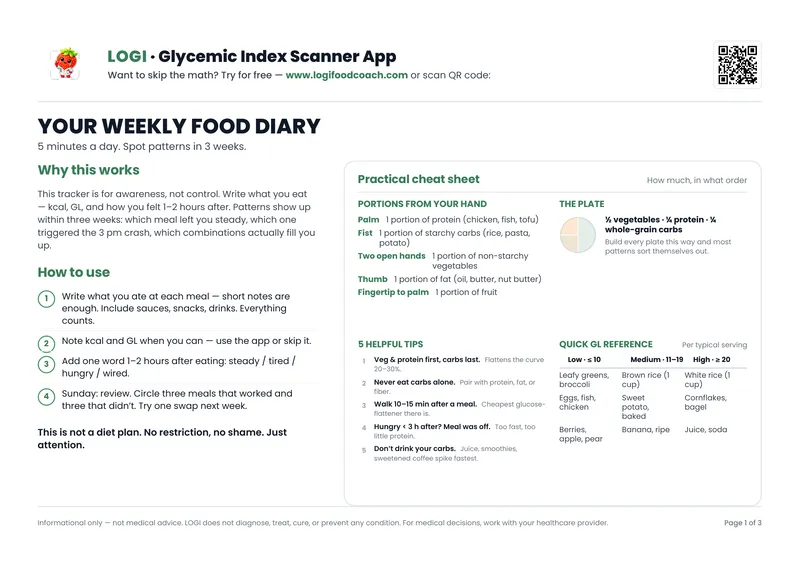
Free PDF — 3 pages
Your Weekly Food Journal
Track meals, glycemic load & mood. Spot patterns in 3 weeks.
No spam. Unsubscribe anytime.