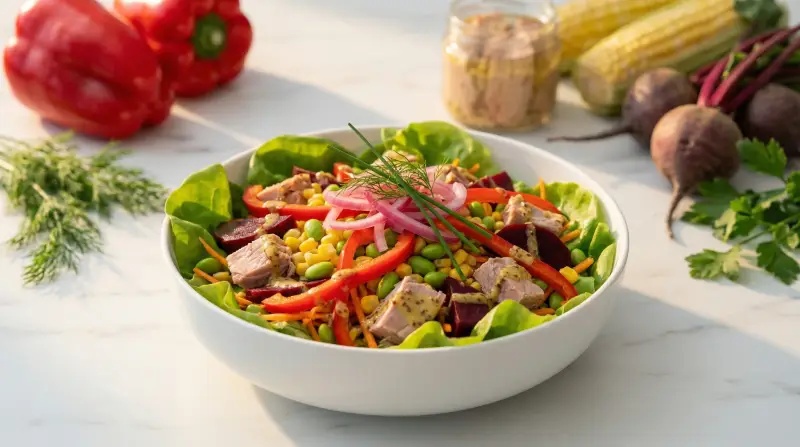
Mediterranean Rainbow Tuna Salad with Mustard Dressing
A vibrant, protein-packed salad featuring colorful vegetables and lean tuna, dressed with tangy mustard vinaigrette—perfect for stable blood sugar levels.
This Mediterranean-inspired rainbow salad is a nutritional powerhouse designed with blood sugar management in mind. Combining lean protein from tuna with an array of fiber-rich vegetables, this dish provides sustained energy without causing glucose spikes. The colorful mix of red peppers, carrots, sugar snap peas, and beetroot delivers essential vitamins, minerals, and antioxidants while keeping the glycemic load remarkably low.
The beauty of this salad lies in its balanced macronutrient profile. The tuna provides high-quality protein that slows digestion and moderates blood sugar response, while the vegetables contribute both soluble and insoluble fiber. We've modified the traditional recipe by using a lighter dressing and emphasizing the vegetable-to-grain ratio. The wholegrain mustard adds flavor complexity and contains compounds that may help improve insulin sensitivity.
Important note about ingredients: This recipe includes a small amount of sweetcorn (340g total, about 85g per serving), which has a moderate glycemic index of around 60. While the overall dish maintains a low GI of 35 due to the protein, fiber, and fat content, you can further optimize blood sugar control by swapping the corn for lower-GI alternatives like chickpeas, green beans, or additional sugar snap peas. If keeping the corn, the portion size has been carefully calculated to maintain the overall glycemic load under 12 per serving. The beetroot, while also having a moderate GI of 35, is used in a controlled portion (6 small pieces total) to minimize glycemic impact.
The creamy mustard dressing combines mayonnaise with lemon juice and wholegrain mustard, creating a tangy, satisfying coating that adds healthy fats to further stabilize blood sugar response. For optimal glycemic control, enjoy this salad as a complete meal, eating the protein and vegetables first before any higher-carb components. This recipe is ideal for meal prep, as the components stay fresh for several days when stored separately. The combination of textures—from crisp peppers to tender beetroot—keeps every bite interesting. Pair this salad with a handful of nuts or seeds for additional healthy fats that further stabilize blood sugar. It's a perfect lunch option that will keep you satisfied for hours without the afternoon energy crash.
Blood Sugar Impact
This meal will have a low to moderate blood sugar impact with a gradual, sustained rise due to its low GI of 35 and moderate glycemic load of 11.6. The combination of protein from tuna, fiber from vegetables, and healthy fats from mayonnaise will promote stable energy for 3-4 hours without significant spikes.
Blood Sugar Tips
- ✓ Eat the protein-rich tuna and fiber-dense vegetables like bell peppers and sugar snap peas first before consuming the higher-carb corn and beetroot to slow glucose absorption
- ✓ Add a tablespoon of olive oil or extra healthy fats to the dressing to further slow digestion and minimize any blood sugar rise
- ✓ Take a 10-15 minute walk after eating to help muscles absorb glucose and keep blood sugar levels stable
🥗 Ingredients
- 1 pcs red bell pepper, sliced
- 1 pcs large carrot, grated
- 340 g canned sweetcorn kernels, drained
- 150 g sugar snap peas
- 6 pcs cooked baby beetroot, quartered
- 185 g canned tuna in spring water, drained and flaked
- 100 g mayonnaise
- 1 tbsp fresh lemon juice
- 2 tsp wholegrain mustard
- 1 tsp water
- 4 cup lettuce leaves
- 1 pcs spring onion, sliced
- 1 pcs red bell pepper, sliced
- 1 pcs large carrot, grated
- 12.0 oz canned sweetcorn kernels, drained
- 5.3 oz sugar snap peas
- 6 pcs cooked baby beetroot, quartered
- 6.5 oz canned tuna in spring water, drained and flaked
- 3.5 oz mayonnaise
- 1 tbsp fresh lemon juice
- 2 tsp wholegrain mustard
- 1 tsp water
- 4 cup lettuce leaves
- 1 pcs spring onion, sliced
👨🍳 Instructions
- 1
Begin by preparing all your vegetables. Wash and slice the red bell pepper into thin strips, grate the carrot using a box grater, trim the sugar snap peas, and quarter the cooked baby beetroot. Drain the canned sweetcorn thoroughly in a colander, pressing gently to remove excess liquid.
- 2
Open the can of tuna and drain it completely, pressing gently to remove excess water. Flake the tuna into bite-sized pieces using a fork, ensuring no large chunks remain. Set aside.
- 3
In a large mixing bowl, combine the sliced red pepper, grated carrot, drained sweetcorn, sugar snap peas, quartered beetroot, and flaked tuna. Gently toss the ingredients together until evenly distributed, being careful not to break up the beetroot too much.
- 4
Prepare the mustard dressing by whisking together 100g mayonnaise, 1 tablespoon fresh lemon juice, 2 tablespoons wholegrain mustard, and 2 tablespoons water in a small bowl. Mix vigorously until the dressing is smooth and well-emulsified. The water helps thin the mayonnaise to create a pourable consistency. Adjust consistency with additional water if needed, adding 1 teaspoon at a time.
- 5
Wash and dry the lettuce leaves thoroughly using a salad spinner or clean kitchen towel. Arrange them as a bed in a large serving bowl or on individual plates, creating a nest to hold the salad mixture.
- 6
Spoon the colorful tuna and vegetable mixture onto the lettuce-lined bowl. Distribute evenly if serving family-style, or divide among four individual plates for portion control, ensuring each serving gets approximately 85g of the corn mixture.
- 7
Drizzle the mustard dressing over the top of the salad just before serving, using approximately 2-3 tablespoons per serving. Garnish with thinly sliced spring onion for a fresh, mild onion flavor and visual appeal.
- 8
Serve immediately for best texture and freshness. For optimal blood sugar management, eat the protein and non-starchy vegetables first, saving any higher-carb components like sweetcorn for last. Store any leftover components separately in airtight containers in the refrigerator for up to 3 days. Keep the dressing separate until ready to serve to maintain crispness.
📊 Nutrition Per Serving
| Per Serving | Whole Dish | |
|---|---|---|
| Calories | 362 | 1449 |
| Carbs | 28g | 111g |
| Sugars | 12g | 48g |
| Added Sugars | 0g | 0g |
| Natural Sugars | 12g | 47g |
| Protein | 19g | 75g |
| Fat | 21g | 83g |
| Saturated Fat | 3g | 14g |
| Unsaturated Fat | 17g | 69g |
| Fiber | 6g | 24g |
| Soluble Fiber | 2g | 6g |
| Insoluble Fiber | 4g | 15g |
| Sodium | 271mg | 1082mg |
Predicted Glucose Response
What if you...
Estimated model — individual responses vary. Not medical advice.
🔄 Lower GI Swaps
Corn has a higher glycemic index (52-55) compared to chickpeas (GI 28), edamame (GI 15), or green beans (GI 15), which will cause a slower, more gradual rise in blood sugar levels.
Raw carrots have a moderate GI of 35-40, while celery, cucumber, and radishes have negligible glycemic impact (GI <15), helping to lower the overall glycemic load of the salad.
Beetroot has a relatively high GI of 64, whereas cherry tomatoes (GI 15), red cabbage (GI 10), and zucchini (GI 15) have minimal impact on blood sugar while maintaining color and crunch.
While mayonnaise is low-GI, replacing it with avocado, Greek yogurt, or tahini adds healthy fats and protein that further slow glucose absorption and improve satiety without adding any glycemic load.
Sugar snap peas contain more natural sugars (GI 45-50) than snow peas, green beans, or asparagus (all GI 15-20), making these alternatives better choices for minimizing blood sugar spikes.
🔬 The Science Behind This Recipe
Why This Salad Keeps Your Blood Sugar Steady
This Mediterranean Rainbow Tuna Salad is a masterclass in blood sugar management, with a glycemic load of just 11.6 and an estimated GI of 35—both well within the low-glycemic range. The secret lies in how these colorful vegetables work together to slow down glucose absorption. Bell peppers, sugar snap peas, and beetroot are packed with fiber, which acts like a speed bump in your digestive system, slowing the breakdown of carbohydrates into sugar. Meanwhile, the tuna provides lean protein that further moderates your body's insulin response. Even the small amount of corn, which has a higher GI on its own, gets "buffered" by the fiber and protein from the other ingredients, demonstrating an important principle: it's not just what you eat, but what you eat it with.
The concept of Glycemic Load is crucial here. While individual ingredients might have varying GI values, the total amount of carbohydrates in this salad is relatively low, which is why the GL stays under 12. Think of it this way: GI tells you how fast a food raises blood sugar, but GL tells you how much it raises it. This salad delivers maximum nutrition and satisfaction with minimal glucose impact.
To optimize this meal even further, start by eating the vegetables first, then the tuna, saving any bread or crackers for last. This "food sequencing" strategy can reduce post-meal glucose spikes by up to 40%. Adding a tablespoon of olive oil in your dressing provides healthy fats that slow digestion even more, and taking a 10-minute walk after eating helps your muscles absorb glucose without requiring extra insulin.
Related recipes
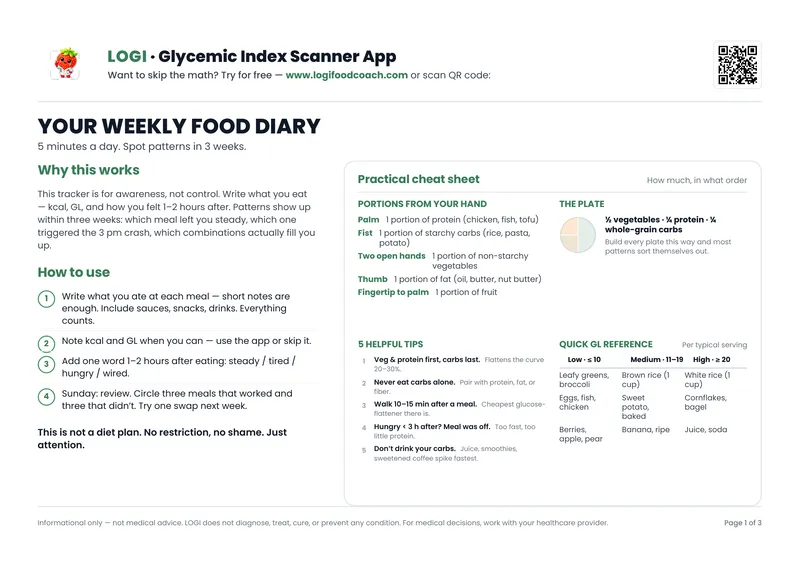
Free PDF — 3 pages
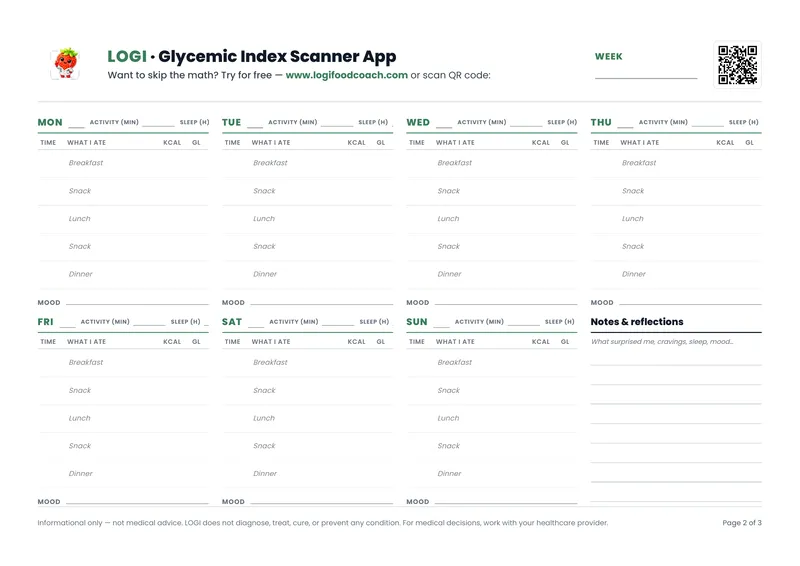
Your Weekly Food Journal
Track meals, glycemic load & mood. Spot patterns in 3 weeks.
No spam. Unsubscribe anytime.