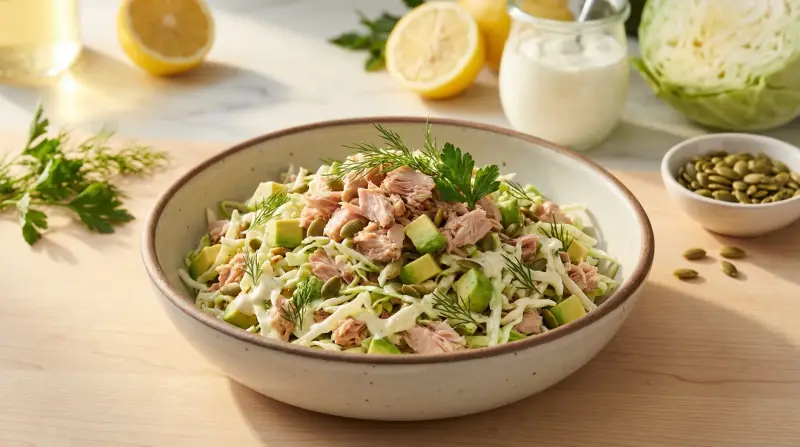
Low-Glycemic Tuna Avocado Power Slaw
A protein-packed, blood sugar-friendly salad featuring omega-3 rich tuna, creamy avocado, and crunchy vegetables with a tangy Greek yogurt dressing.
This nutrient-dense power slaw is specifically designed to keep your blood sugar stable while delivering maximum flavor and satisfaction. The combination of lean protein from tuna, healthy monounsaturated fats from avocado, and fiber-rich vegetables creates a perfectly balanced meal that won't spike your glucose levels.
What makes this recipe exceptional for glycemic control is the strategic pairing of ingredients. The Greek yogurt provides additional protein and probiotics, while pumpkin seeds add magnesium—a mineral crucial for insulin sensitivity. The coleslaw base offers substantial fiber and volume without carbohydrates that raise blood sugar. Avocado's healthy fats slow digestion, creating a gentle, sustained energy release rather than a glucose spike.
This salad is ideal for lunch when you need sustained afternoon energy without the post-meal crash. The omega-3 fatty acids in tuna support metabolic health, while the combination of protein and fat keeps you satisfied for hours. With a glycemic load near zero and packed with micronutrients, this recipe proves that eating for blood sugar management can be absolutely delicious. Prepare it in just minutes for a restaurant-quality meal that supports your health goals.
Blood Sugar Impact
Minimal blood sugar impact expected due to the very low glycemic load of 4.3 and GI of 21. This meal should provide stable, sustained energy for 3-4 hours without causing significant glucose spikes, thanks to the high protein from tuna, healthy fats from avocado, and fiber from vegetables.
Blood Sugar Tips
- ✓ Eat this meal slowly over 15-20 minutes to allow satiety signals to register and further stabilize blood sugar response
- ✓ Consider having this as a lunch option followed by a brief 10-15 minute walk to enhance insulin sensitivity
- ✓ Pair with additional non-starchy vegetables like cucumber or bell peppers to increase fiber content and volume without affecting blood sugar
🥗 Ingredients
- 185 g tuna in spring water, drained
- 3 cup coleslaw mix
- 1 pcs avocado, diced
- 0.25 cup pumpkin seeds
- 1 tbsp fresh lemon juice
- 0.25 cup Greek yogurt
- 1 tbsp whole-egg mayonnaise
- 0.5 tsp Dijon mustard
- 0.25 tsp black pepper
- 6.5 oz tuna in spring water, drained
- 3 cup coleslaw mix
- 1 pcs avocado, diced
- 0.25 cup pumpkin seeds
- 1 tbsp fresh lemon juice
- 0.25 cup Greek yogurt
- 1 tbsp whole-egg mayonnaise
- 0.5 tsp Dijon mustard
- 0.25 tsp black pepper
👨🍳 Instructions
- 1
Prepare your dressing base by combining the Greek yogurt, whole-egg mayonnaise, Dijon mustard, and freshly squeezed lemon juice in a small mixing bowl.
- 2
Whisk the dressing ingredients together vigorously until completely smooth and well emulsified, creating a creamy, tangy base. Season generously with freshly ground black pepper to taste.
- 3
Open and thoroughly drain the canned tuna, pressing gently to remove excess water. Flake the tuna into bite-sized chunks using a fork.
- 4
In a large salad bowl, combine the coleslaw mix with the flaked tuna, distributing the protein evenly throughout the vegetables.
- 5
Cut the avocado in half, remove the pit, and dice the flesh into bite-sized cubes. Gently fold the avocado into the tuna and coleslaw mixture, being careful not to mash it.
- 6
Pour the prepared yogurt dressing over the salad and toss gently but thoroughly, ensuring every ingredient is lightly coated with the creamy dressing.
- 7
Divide the slaw between two serving bowls or plates, creating an attractive mound of the colorful mixture.
- 8
Finish each serving by sprinkling pumpkin seeds generously over the top for added crunch, healthy fats, and a boost of magnesium. Serve immediately for best texture and flavor.
📊 Nutrition Per Serving
| Per Serving | Whole Dish | |
|---|---|---|
| Calories | 577 | 1154 |
| Carbs | 19g | 37g |
| Sugars | 7g | 13g |
| Added Sugars | 1g | 2g |
| Natural Sugars | 6g | 11g |
| Protein | 37g | 74g |
| Fat | 40g | 80g |
| Saturated Fat | 6g | 12g |
| Unsaturated Fat | 33g | 66g |
| Fiber | 9g | 18g |
| Soluble Fiber | 3g | 5g |
| Insoluble Fiber | 6g | 13g |
| Sodium | 451mg | 901mg |
Predicted Glucose Response
What if you...
Estimated model — individual responses vary. Not medical advice.
🔄 Lower GI Swaps
Pre-packaged coleslaw may contain added sugars or high-GI dressings. Using fresh raw vegetables ensures zero added sugars and maximizes fiber content, which slows glucose absorption and keeps the glycemic load minimal.
While mayonnaise has a low GI, replacing it with heart-healthy oils or tahini eliminates any potential added sugars and provides omega-3 fatty acids and monounsaturated fats that improve insulin sensitivity and help stabilize blood sugar levels.
Switching to full-fat versions reduces the lactose content per serving and provides more fat to slow digestion, resulting in a more gradual blood sugar rise. The higher fat content also increases satiety and reduces the overall glycemic impact of the meal.
While pumpkin seeds are excellent, hemp seeds, chia seeds, and flaxseeds have even higher omega-3 content and more soluble fiber, which forms a gel in the digestive tract that significantly slows glucose absorption and reduces post-meal blood sugar spikes.
🔬 The Science Behind This Recipe
# Why This Recipe Keeps Your Blood Sugar Steady
This Tuna Avocado Power Slaw is a masterclass in blood sugar management, with a remarkably low glycemic load of just 4.3 and a GI of 21. The secret lies in how its ingredients work together to prevent glucose spikes. Coleslaw (primarily cabbage) provides fiber and volume with minimal carbohydrates—cruciferous vegetables like cabbage contain only about 3-4g of carbs per cup, most of which is indigestible fiber that actually slows sugar absorption. This fiber creates a gel-like consistency in your digestive tract, acting as a natural brake on how quickly any carbohydrates enter your bloodstream.
The tuna and avocado form a powerful duo for metabolic health. Tuna delivers lean protein (about 20g per 3-ounce serving) that triggers a slower, more gradual insulin response compared to carbohydrate-heavy meals. Avocado contributes healthy monounsaturated fats that further slow gastric emptying—essentially, your stomach takes longer to process the meal, resulting in a gentle, sustained release of energy rather than a sharp spike. These fats also improve insulin sensitivity over time, helping your cells respond more effectively to the hormone that regulates blood sugar.
The pumpkin seeds add both protein and magnesium, a mineral that plays a crucial role in glucose metabolism. Studies show that magnesium helps insulin transport glucose into cells more efficiently. To maximize the blood sugar benefits of this meal, eat it mindfully and consider taking a 10-15 minute walk afterward—light movement helps muscles absorb glucose without requiring extra insulin. The lemon juice not only adds flavor but also provides a touch of acidity, which research suggests may slightly blunt the glycemic response to any meal.
Related recipes
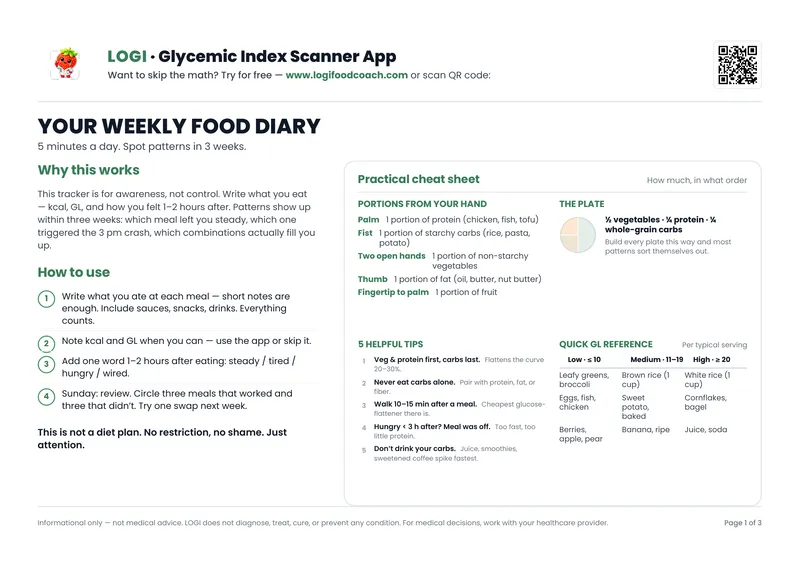
Free PDF — 3 pages
Your Weekly Food Journal
Track meals, glycemic load & mood. Spot patterns in 3 weeks.
No spam. Unsubscribe anytime.