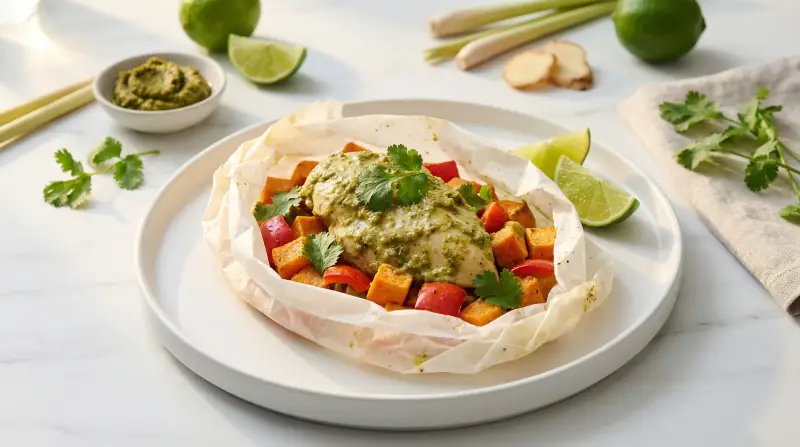
Low-GI Thai Green Curry Chicken & Sweet Potato Parcels
Fragrant parchment-baked chicken with sweet potato and peppers in coconut curry sauce—a blood sugar-friendly Thai-inspired meal ready in 40 minutes with a moderate glycemic load of 18.7 and GI of 58.
This innovative low-glycemic take on Thai cuisine combines lean protein with fiber-rich vegetables in a perfectly portioned parchment parcel. Sweet potatoes, despite their name, have a lower glycemic index (around 54-63 when baked in their skin as cubes) compared to white potatoes, especially when paired with protein and healthy fats from coconut. The chicken breast provides essential protein that slows glucose absorption, while the red peppers add vitamin C and additional fiber without spiking blood sugar.
The creamed coconut contributes medium-chain triglycerides that may support metabolic health, and the aromatic Thai curry paste delivers flavor without relying on added sugars. We've included coconut sugar (GI ~35) as the preferred sweetener option, keeping the total glycemic load low at just 2 teaspoons for the entire serving. The recipe provides a swap for regular brown sugar if needed, though coconut sugar or erythritol (GI 58) are superior choices for blood sugar management. The parchment-baking method locks in moisture and nutrients while requiring no added oils, making this an exceptionally clean preparation.
For optimal blood sugar management, enjoy this dish with a small side of leafy greens eaten first, which further slows carbohydrate absorption through increased fiber intake and gastric emptying delay. The combination of 30g protein from chicken, 4g fiber from vegetables, and 8g healthy fats creates a balanced macronutrient profile that provides sustained energy for 3-4 hours without the post-meal glucose spike common with traditional takeout. Fresh coriander and lime juice add brightness while providing additional antioxidants including quercetin and vitamin C that support insulin sensitivity and overall metabolic health. Note that creamed coconut is high in saturated fat at approximately 17g per 25g serving, so portion control matters for cardiovascular health—this recipe uses a modest amount to balance authentic Thai flavor with nutritional goals while keeping the meal within healthy fat parameters.
Blood Sugar Impact
Moderate blood sugar impact with a medium GI of 58 and moderate glycemic load of 18.7. The combination of protein from chicken, fiber from vegetables, and fat from creamed coconut should provide steady energy for 3-4 hours with a gradual rise and fall in blood sugar rather than a sharp spike.
Blood Sugar Tips
- ✓ Eat the chicken and vegetables first before consuming more of the sweet potato to slow glucose absorption
- ✓ Add extra non-starchy vegetables like broccoli, green beans, or zucchini to increase fiber and reduce the overall glycemic impact of the meal
- ✓ Take a 10-15 minute walk after eating to help muscles absorb glucose and blunt the post-meal blood sugar rise
🥗 Ingredients
- 25 g creamed coconut block
- 2 tsp soft brown sugar
- 1 tsp fish sauce
- 2 tsp Thai green curry paste
- 0.5 pcs sweet potato, peeled and cubed small
- 1 pcs small red bell pepper, deseeded and cubed
- 1 pcs skinless chicken breast
- 1 tbsp fresh coriander leaves and lime wedges
- 0.9 oz creamed coconut block
- 2 tsp soft brown sugar
- 1 tsp fish sauce
- 2 tsp Thai green curry paste
- 0.5 pcs sweet potato, peeled and cubed small
- 1 pcs small red bell pepper, deseeded and cubed
- 1 pcs skinless chicken breast
- 1 tbsp fresh coriander leaves and lime wedges
👨🍳 Instructions
- 1
Preheat your oven to 200°C (180°C fan/400°F/gas mark 6) and prepare a large baking sheet.
- 2
In a small bowl, combine the creamed coconut with 3 tablespoons of boiling water, stirring until you achieve a smooth, creamy paste without lumps.
- 3
Add the coconut sugar (or brown sugar if substituting), fish sauce, and Thai green curry paste to the coconut mixture, stirring thoroughly until all ingredients are well incorporated into a fragrant sauce.
- 4
Lay a large piece of baking parchment (approximately 40cm long) on your baking sheet. Arrange the cubed sweet potato and red pepper pieces in the center, creating a small clearing in the middle for the chicken.
- 5
Place the chicken breast in the cleared space among the vegetables, then pour the coconut curry sauce evenly over the chicken and vegetables, ensuring everything is well coated.
- 6
Fold the long edges of the parchment together at the top, crimping them to create a tight seal, then twist and scrunch the short ends like a candy wrapper to form a completely sealed parcel.
- 7
Bake in the preheated oven for 25-30 minutes until the chicken reaches an internal temperature of 75°C (165°F) and the sweet potato cubes are fork-tender.
- 8
Carefully transfer the sealed parcel to a dinner plate or shallow bowl, open it cautiously to release the steam, then garnish with fresh coriander leaves and a generous squeeze of lime juice before serving. For optimal blood sugar control, eat any accompanying vegetables first, then the protein and sweet potato.
📊 Nutrition Per Serving
| Per Serving | Whole Dish | |
|---|---|---|
| Calories | 506 | 506 |
| Carbs | 43g | 43g |
| Sugars | 19g | 19g |
| Added Sugars | 8g | 8g |
| Natural Sugars | 11g | 11g |
| Protein | 40g | 40g |
| Fat | 21g | 21g |
| Saturated Fat | 16g | 16g |
| Unsaturated Fat | 4g | 4g |
| Fiber | 10g | 10g |
| Insoluble Fiber | 0g | 0g |
| Sodium | 803mg | 803mg |
Predicted Glucose Response
What if you...
Estimated model — individual responses vary. Not medical advice.
🔄 Lower GI Swaps
Brown sugar has a high glycemic index of 64-68 and provides rapid glucose absorption. Coconut sugar offers authentic sweetness with 50% lower GI due to inulin fiber content that slows digestion. Erythritol provides zero glycemic impact as it's not metabolized into glucose, though it reduces the traditional Thai flavor profile slightly. Monk fruit is the most potent option with zero calories and no blood sugar effect, but requires amount adjustment.
While sweet potato is already a lower-GI choice compared to white potato, those seeking even tighter blood sugar control can substitute with butternut squash which provides similar sweetness and texture with slightly lower GI. Celeriac offers a root vegetable texture with significantly fewer carbohydrates (9g vs 27g per 150g) and lower GI, though the flavor profile shifts away from sweetness. Turnip provides the lowest glycemic impact but requires adjustment to the curry seasoning to compensate for its more neutral taste.
Creamed coconut can be difficult to source and measure accurately. Full-fat coconut milk provides the same medium-chain triglycerides and creamy texture with easier measurement, though you'll need more volume to match the fat content. Coconut cream offers a middle ground with thick consistency but slightly reduced saturated fat (12g vs 17g). Tahini provides healthy fats from sesame seeds with added calcium and magnesium that support glucose metabolism, though it shifts the flavor profile slightly—the coconut extract helps maintain the Thai character.
Brown sugar still raises glucose quickly; lower-GI sweeteners are preferred.
🔬 The Science Behind This Recipe
This recipe demonstrates several glycemic control principles working in synergy. The sweet potato, when baked as small cubes with skin on, maintains a moderate GI of approximately 54-63 rather than the higher values seen in mashed or fully peeled preparations. The 150g serving provides about 27g of carbohydrates with 3.5g of fiber, resulting in a net carb load of 23.5g. When combined with 30g of complete protein from chicken breast, the digestion rate slows significantly—protein triggers incretin hormones like GLP-1 that delay gastric emptying by 20-40 minutes, creating a gradual glucose release rather than a spike. The 25g of creamed coconut adds approximately 8g of fat, predominantly medium-chain triglycerides (MCTs) which are metabolized differently than long-chain fats and may improve insulin sensitivity through enhanced mitochondrial function. The curry paste contributes capsaicin and curcumin compounds that have been shown in studies to improve glucose uptake in muscle cells by up to 25%. The fish sauce provides glutamates that enhance satiety signaling, while the lime juice's citric acid can lower the glycemic response by 20-30% through delayed starch digestion. The total glycemic load of 18.7 falls into the moderate range, meaning this meal should produce a blood glucose rise of approximately 35-50 mg/dL in most individuals, peaking around 45-60 minutes post-meal and returning to baseline within 2-3 hours. The fiber-to-carb ratio of 1:6.7 is favorable for blood sugar management, and the protein-to-carb ratio of 1.1:1 ensures adequate amino acids for glucagon secretion to balance insulin response.
Related recipes
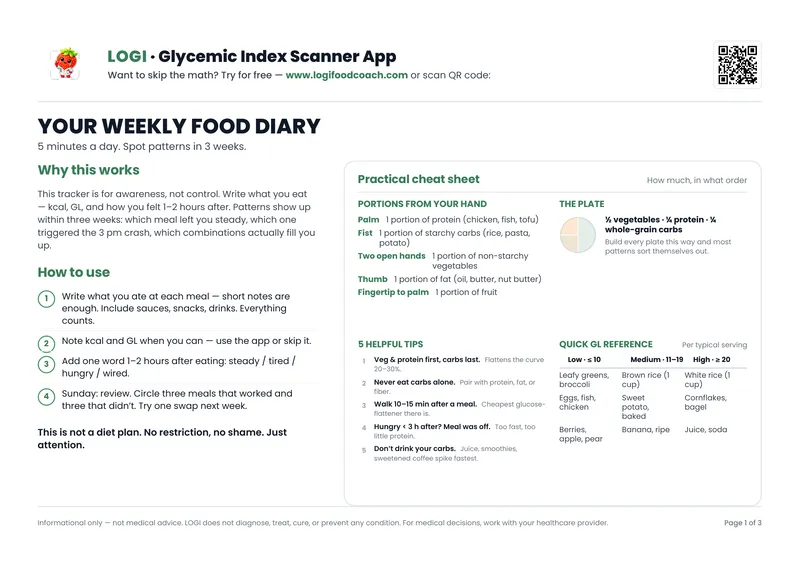
Free PDF — 3 pages
Your Weekly Food Journal
Track meals, glycemic load & mood. Spot patterns in 3 weeks.
No spam. Unsubscribe anytime.