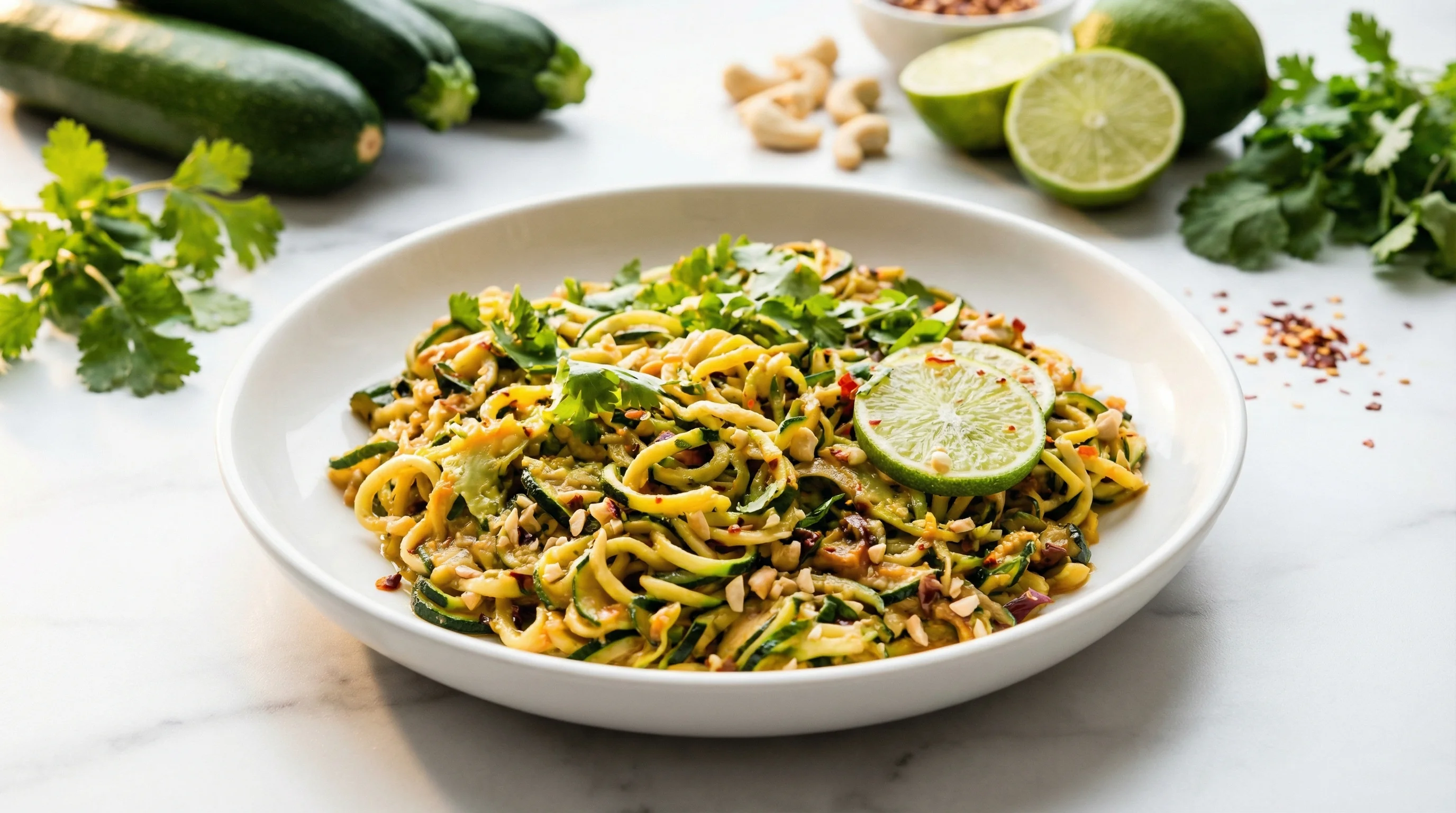
Low-Glycemic Spiralized Vegetable Stir-Fry with Cashew Sauce
A vibrant 20-minute stir-fry featuring spiralized zucchini noodles in a creamy cashew sauce. Perfect for blood sugar balance with low-GI vegetables and healthy fats.
This spiralized vegetable stir-fry is a game-changer for anyone managing blood sugar levels. By replacing traditional high-glycemic noodles with spiralized zucchini and yellow squash, you'll enjoy a satisfying meal that won't spike your glucose. The creamy cashew sauce provides healthy fats and protein that slow digestion and promote steady energy levels throughout your day.
The beauty of this recipe lies in its glycemic-friendly ingredients. Zucchini noodles have virtually no impact on blood sugar, while the addition of Napa cabbage adds fiber and nutrients. The cashew butter provides protein and healthy monounsaturated fats that help moderate the glycemic response of your entire meal. Using tamari instead of regular soy sauce keeps sodium in check while maintaining that umami depth. For sweetness, this recipe uses monk fruit sweetener or allulose as the primary low-glycemic option, though agave nectar is listed as an alternative for those who prefer it despite its higher glycemic impact.
For optimal blood sugar management, eat the cabbage and vegetables first before moving to the zucchini noodles. This eating sequence helps slow glucose absorption. The sesame oil and nut butter create a satisfying richness that keeps you full for hours, preventing those mid-afternoon energy crashes. Add grilled chicken, shrimp, or tofu for extra protein to further stabilize your blood sugar response. Each serving provides approximately 2 cups of vegetables, ensuring the glycemic load remains low. This one-pan wonder proves that eating for glycemic health can be both delicious and incredibly simple.
Blood Sugar Impact
This meal will have minimal impact on blood sugar levels, providing stable energy for 3-4 hours. The low glycemic load of 3.7 and GI of 22, combined with high fiber vegetables and healthy fats from cashew butter and sesame oil, will result in a very gradual glucose rise.
Blood Sugar Tips
- ✓ Eat this meal slowly over 15-20 minutes to allow satiety signals to register and further slow glucose absorption
- ✓ Add a protein source like tofu, chicken, or shrimp to further stabilize blood sugar and increase meal satisfaction
- ✓ Take a 10-15 minute walk after eating to help muscles absorb glucose and prevent any minor blood sugar elevation
🥗 Ingredients
- 3 pcs zucchini and/or yellow squash, spiralized into noodles
- 1 cup Napa cabbage, chopped
- 0.25 cup red or green onion, chopped
- 1 tbsp sesame oil
- 4 tbsp creamy cashew or almond butter
- 1 tsp red chili flakes
- 2 tbsp tamari or coconut aminos
- 1 tsp agave nectar
- 1 tsp garlic, minced
- 0.25 tsp five spice Asian seasoning
- 1 pcs sea salt
- 0.25 tsp black pepper
- 1 tbsp Asian chili sauce, gluten-free
- 3 pcs zucchini and/or yellow squash, spiralized into noodles
- 1 cup Napa cabbage, chopped
- 0.25 cup red or green onion, chopped
- 1 tbsp sesame oil
- 4 tbsp creamy cashew or almond butter
- 1 tsp red chili flakes
- 2 tbsp tamari or coconut aminos
- 1 tsp agave nectar
- 1 tsp garlic, minced
- 0.25 tsp five spice Asian seasoning
- 1 pcs sea salt
- 0.25 tsp black pepper
- 1 tbsp Asian chili sauce, gluten-free
👨🍳 Instructions
- 1
Using a spiralizer, transform the zucchini and yellow squash into noodle-like strands. Place the spiralized vegetables on paper towels and gently press to remove excess moisture, which prevents a watery stir-fry and helps maintain the best texture.
- 2
Prepare your vegetables by chopping the Napa cabbage into bite-sized pieces and dicing the red or green onion. Mince the garlic cloves finely. Set these aside in separate bowls for easy access during cooking.
- 3
In a small bowl, whisk together the cashew butter, tamari, minced garlic, red chili flakes, five spice seasoning, and monk fruit sweetener or allulose. This creates your satay-style sauce base. If the nut butter is thick, you can thin it slightly with a teaspoon of water to achieve a pourable consistency.
- 4
Heat a large wok or skillet over medium-high heat and add the sesame oil. Once shimmering, pour in your prepared sauce mixture and stir constantly for 30-45 seconds until it becomes fragrant and slightly loosened.
- 5
Add the chopped onion and Napa cabbage to the wok. Stir-fry for 2-3 minutes until the cabbage begins to soften and the onion becomes translucent. For optimal blood sugar control, you can eat some of these fiber-rich vegetables first before adding the zucchini noodles.
- 6
Add the spiralized zucchini noodles to the wok along with the sea salt and black pepper. Toss everything together vigorously for 2-3 minutes, ensuring the noodles are well-coated with the cashew sauce but still maintain a slight crunch. Avoid overcooking to prevent sogginess.
- 7
Remove from heat immediately once the vegetables are tender-crisp and evenly coated. Serve hot in three equal portions of approximately 2 cups each. Garnish with additional red chili flakes, fresh cilantro, sliced green onions, or a drizzle of Asian chili sauce if desired. For a complete low-glycemic meal, top with grilled chicken, shrimp, or tofu to add protein that further stabilizes blood sugar levels.
📊 Nutrition Per Serving
| Per Serving | Whole Dish | |
|---|---|---|
| Calories | 1020 | 3059 |
| Carbs | 121g | 363g |
| Sugars | 40g | 120g |
| Added Sugars | 29g | 88g |
| Natural Sugars | 10g | 31g |
| Protein | 24g | 72g |
| Fat | 58g | 173g |
| Saturated Fat | 20g | 61g |
| Unsaturated Fat | 38g | 113g |
| Fiber | 30g | 90g |
| Soluble Fiber | 9g | 27g |
| Insoluble Fiber | 21g | 63g |
| Sodium | 15437mg | 46312mg |
Predicted Glucose Response
What if you...
Estimated model — individual responses vary. Not medical advice.
🔄 Lower GI Swaps
Agave nectar has a GI of 10-19 but still contains fructose that impacts blood sugar. Monk fruit, allulose, and stevia have zero glycemic impact and won't raise blood glucose at all.
While cashews have a moderate GI of 25, almonds (GI 0), macadamia nuts (GI 10), and sesame seeds in tahini (GI 35) have lower glycemic values and provide better blood sugar stability with higher fat-to-carb ratios.
Regular onions have a GI of 10-15 and contain more carbohydrates. Using only the green parts of scallions, chives, or leeks provides similar flavor with virtually no glycemic impact due to minimal carbohydrate content.
Commercial chili sauces often contain added sugars that raise the glycemic load. Fresh peppers, chili oil, and crushed pepper flakes have zero glycemic impact while delivering the same heat and flavor.
🔬 The Science Behind This Recipe
This spiralized vegetable stir-fry is a blood sugar champion, with an exceptionally low glycemic load of just 3.7 and a GI of 22. The secret lies in its foundation of non-starchy vegetables like zucchini and napa cabbage, which are packed with fiber and water but contain minimal carbohydrates. Zucchini, in particular, is about 95% water and provides soluble fiber that slows down digestion, creating a gentle, sustained release of glucose rather than a sharp spike. The napa cabbage adds additional fiber and volume, helping you feel satisfied without loading up on carbs. This high fiber-to-carbohydrate ratio is exactly what keeps your blood sugar stable after eating.
The cashew butter and sesame oil play crucial supporting roles in this recipe's metabolic benefits. Cashew butter provides both healthy fats and plant-based protein, which significantly slow the absorption of any carbohydrates in the meal. When you eat fat alongside carbs, your stomach empties more slowly, leading to a gradual rise in blood sugar rather than a rapid surge. The sesame oil contributes additional healthy fats plus compounds called lignans that may improve insulin sensitivity over time. Together, these ingredients create what nutritionists call a "balanced plate" that minimizes glucose fluctuations.
To maximize the blood sugar benefits of this dish, try eating it as your main course rather than alongside high-carb sides. The generous portion of vegetables will fill you up with minimal impact on your glucose levels. If you want to add more protein, consider topping it with grilled chicken, tofu, or a soft-boiled egg. Taking a 10-15 minute walk after enjoying this meal can further help your muscles absorb glucose, keeping your blood sugar in an even healthier range.