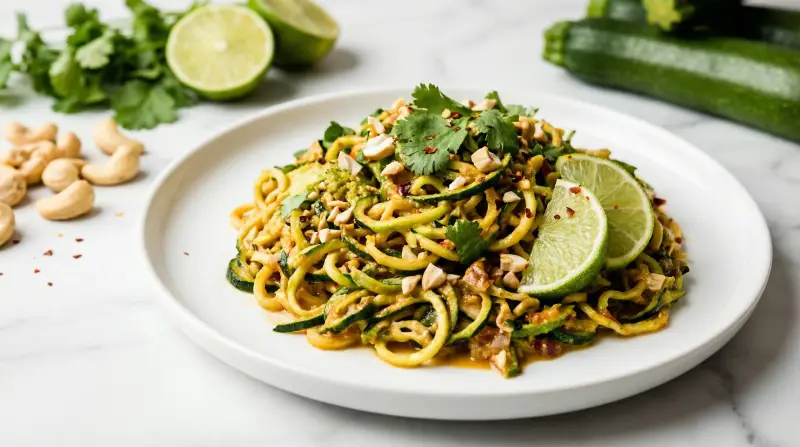
Low-Glycemic Cashew Satay Zucchini Noodle Stir-Fry
A vibrant 20-minute stir-fry featuring spiralized zucchini in creamy cashew satay sauce. Blood sugar-friendly with fiber-rich vegetables and healthy fats.
This nutrient-dense vegetable stir-fry is specifically designed to support stable blood sugar levels while delivering bold Asian-inspired flavors. By replacing traditional high-glycemic noodles with spiralized zucchini, we've created a dish that's rich in fiber, low in carbohydrates, and packed with vitamins. The creamy cashew butter sauce provides healthy fats and protein that slow glucose absorption, while the abundance of non-starchy vegetables adds volume and nutrients without spiking blood sugar.
The combination of sesame oil and nut butter creates a satisfying richness that helps you feel full longer, reducing post-meal cravings. Napa cabbage and zucchini are both low-glycemic vegetables that provide essential minerals and antioxidants. The tamari adds umami depth without added sugars, making this dish suitable for those managing diabetes or following a low-glycemic lifestyle.
For optimal blood sugar control, eat the vegetables first before adding any protein, and consider pairing this dish with grilled chicken, shrimp, or tofu for additional protein. The fiber from the vegetables combined with healthy fats from nuts and seeds creates an ideal macronutrient balance that promotes steady energy throughout the day. This one-pan meal proves that eating for glycemic health doesn't mean sacrificing flavor or satisfaction.
Blood Sugar Impact
Minimal blood sugar impact expected due to the very low glycemic load of 3.8 and GI of 22. This meal should provide stable, sustained energy for 3-4 hours without significant glucose spikes, thanks to the high fiber content from zucchini noodles and vegetables, plus healthy fats from cashew butter and sesame oil.
Blood Sugar Tips
- ✓ Eat the vegetables first before moving to the cashew satay sauce to maximize fiber intake and slow digestion
- ✓ Add a protein source like grilled chicken, tofu, or edamame to further stabilize blood sugar and increase satiety
- ✓ Take a 10-15 minute walk after eating to help muscles absorb any glucose and maintain steady blood sugar levels
🥗 Ingredients
- 3 pcs zucchini and/or yellow squash, spiralized into noodles
- 1 cup Napa cabbage, chopped
- 0.25 cup red or green onion, chopped
- 1 tbsp sesame oil
- 4 tbsp creamy cashew or almond butter
- 1 tsp red chili flakes
- 2 tbsp tamari or coconut aminos
- 1 tsp agave nectar
- 1 tsp garlic, minced
- 0.25 tsp five spice Asian seasoning
- 1 pcs sea salt
- 0.25 tsp black pepper
- 1 tbsp Asian chili sauce
- 3 pcs zucchini and/or yellow squash, spiralized into noodles
- 1 cup Napa cabbage, chopped
- 0.25 cup red or green onion, chopped
- 1 tbsp sesame oil
- 4 tbsp creamy cashew or almond butter
- 1 tsp red chili flakes
- 2 tbsp tamari or coconut aminos
- 1 tsp agave nectar
- 1 tsp garlic, minced
- 0.25 tsp five spice Asian seasoning
- 1 pcs sea salt
- 0.25 tsp black pepper
- 1 tbsp Asian chili sauce
👨🍳 Instructions
- 1
Using a spiralizer, transform the zucchini and yellow squash into noodle-like strands. Place the spiralized vegetables between layers of paper towels and gently press to remove excess moisture, which prevents a watery final dish. Set the prepared noodles aside while you prep the remaining ingredients.
- 2
Prepare your vegetables by finely chopping the Napa cabbage into bite-sized pieces and dicing the red or green onion. Mince the garlic cloves. Having all ingredients prepped before cooking ensures the stir-fry comes together quickly without overcooking the delicate zucchini noodles.
- 3
In a large wok or deep skillet over medium heat, combine the cashew butter (measured level, not heaping, to control calories and fat content), sesame oil, unsweetened tamari, minced garlic, and red chili flakes. Stir continuously as the mixture warms and the nut butter melts into a smooth, fragrant sauce. This should take about 1-2 minutes. The healthy fats in this sauce help slow glucose absorption.
- 4
Add the chopped onion and Napa cabbage to the sauce. Increase heat to medium-high and stir-fry for 1-2 minutes until the cabbage begins to soften slightly but retains its crunch. These fiber-rich vegetables provide bulk and nutrients without impacting blood sugar.
- 5
Add the spiralized zucchini noodles to the wok along with the five spice powder, sea salt, and black pepper. Toss everything together vigorously for 2-3 minutes, ensuring the noodles are evenly coated with the satay sauce. Cook just until the zucchini is tender but still has a slight bite to avoid mushiness.
- 6
If using a low-glycemic sweetener for a touch of sweetness, sprinkle the monk fruit sweetener or allulose over the stir-fry now and toss to combine. Note: Avoid agave nectar as it has a high glycemic index of approximately 65, which can spike blood sugar. For optimal blood sugar control, consider omitting sweetener entirely as the natural sweetness from the vegetables and richness of the nut butter provide plenty of flavor.
- 7
Remove the stir-fry from heat immediately once the vegetables are tender-crisp. Divide among serving bowls and garnish with additional red chili flakes, fresh cilantro, sliced green onions, or a squeeze of lime juice if desired. For those who enjoy extra heat, drizzle with sugar-free Asian chili sauce.
- 8
For a complete low-glycemic meal, pair this vegetable stir-fry with grilled chicken, beef, shrimp, or firm tofu. The added protein further stabilizes blood sugar response. Store leftovers in an airtight container in the refrigerator for up to 4 days, though the texture is best when freshly prepared.
📊 Nutrition Per Serving
| Per Serving | Whole Dish | |
|---|---|---|
| Calories | 230 | 689 |
| Carbs | 19g | 56g |
| Sugars | 10g | 29g |
| Added Sugars | 2g | 7g |
| Natural Sugars | 7g | 22g |
| Protein | 8g | 24g |
| Fat | 15g | 46g |
| Saturated Fat | 3g | 8g |
| Unsaturated Fat | 12g | 37g |
| Fiber | 4g | 11g |
| Soluble Fiber | 1g | 3g |
| Insoluble Fiber | 2g | 6g |
| Sodium | 801mg | 2402mg |
Predicted Glucose Response
What if you...
Estimated model — individual responses vary. Not medical advice.
🔄 Lower GI Swaps
Agave nectar has a GI of 10-19 but is high in fructose which can impact blood sugar over time. Monk fruit, allulose, and stevia have zero glycemic impact and won't raise blood glucose at all.
Cashews have a higher carbohydrate content (27g per 100g) compared to almonds (22g), macadamias (14g), or sesame seeds in tahini (24g). Lower carb nut butters result in less blood sugar impact per serving.
Onions contain about 9g carbs per 100g. Using only the green parts of scallions, chives, or leeks provides similar flavor with significantly fewer carbohydrates and a lower glycemic load.
Many commercial chili sauces contain added sugars that increase glycemic load. Fresh chilies or sugar-free versions eliminate hidden sugars while maintaining heat and flavor without blood sugar spikes.
🔬 The Science Behind This Recipe
This Cashew Satay Zucchini Noodle Stir-Fry is a masterclass in blood sugar management, with an exceptionally low glycemic load of just 3.8 and a GI of 22. The secret lies in swapping traditional wheat noodles for spiralized zucchini, which transforms this dish from a potential glucose spike into a metabolic win. Zucchini is over 95% water and packed with fiber, meaning it adds volume and satisfaction without the rapid carbohydrate breakdown that sends blood sugar soaring. The napa cabbage contributes additional fiber and virtually no digestible carbs, creating a bulky, filling base that slows gastric emptying—the rate at which food leaves your stomach and enters your bloodstream.
The cashew butter is the metabolic hero here, providing both healthy fats and plant-based protein that dramatically slow carbohydrate absorption. When fat and protein are present in a meal, they trigger hormones that delay digestion and create a gentler, more gradual rise in blood glucose rather than a sharp spike. The sesame oil amplifies this effect with additional healthy fats while adding depth of flavor. This combination means your body releases glucose into the bloodstream slowly and steadily, preventing the insulin surge that can lead to energy crashes and increased hunger later.
To maximize the blood sugar benefits of this dish, eat your vegetables first before any other components of your meal, and consider taking a 10-15 minute walk afterward. Even light movement helps muscles absorb glucose without requiring extra insulin. The beauty of this recipe is that the glycemic load is so low—remember, it's not just about the glycemic index but the actual amount of carbohydrate present—that you can enjoy a generous portion without worry. This is sustainable eating that supports stable energy throughout your day.
Related recipes
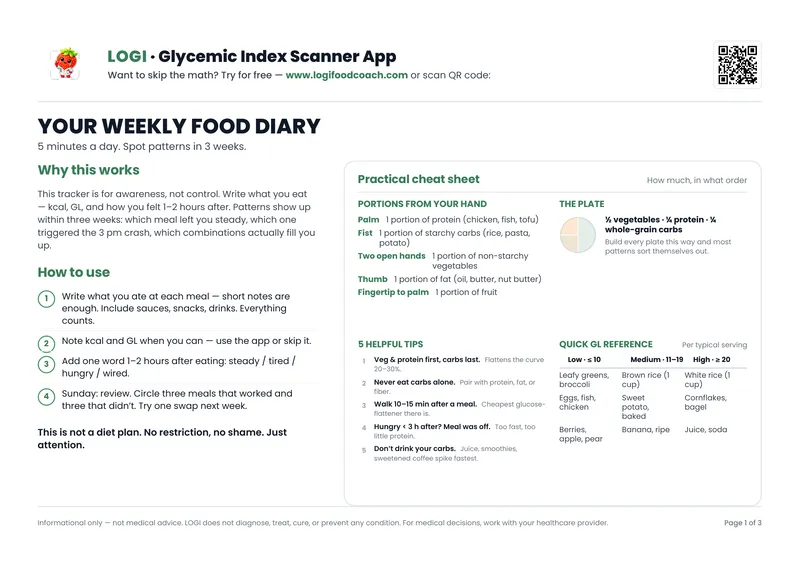
Free PDF — 3 pages
Your Weekly Food Journal
Track meals, glycemic load & mood. Spot patterns in 3 weeks.
No spam. Unsubscribe anytime.