Mediterranean Roasted Pepper and Tomato Soup with Cucumber Mint Yogurt
A vibrant, blood sugar-friendly soup featuring fiber-rich vegetables and cooling yogurt. Enjoy hot or chilled for steady energy without the spike.
This nourishing Mediterranean soup is a masterclass in blood sugar management through whole food ingredients. Red peppers, tomatoes, and aromatic vegetables create a naturally sweet base without added sugars, while their high fiber content slows glucose absorption. The addition of olive oil provides healthy fats that further moderate the glycemic response, making this an ideal meal for sustained energy.
The cooling cucumber yogurt topping isn't just delicious—it's strategic. Greek yogurt adds protein to balance the meal's macronutrient profile, while cucumber provides additional fiber and hydration. This combination helps prevent the rapid blood sugar elevation that can occur with carbohydrate-only meals. The soup's generous vegetable content means you're getting substantial volume and satisfaction with minimal impact on glucose levels.
For optimal blood sugar control, enjoy this soup as part of a complete meal. Start by eating the yogurt topping first to prime your digestive system with protein and fat, then savor the soup slowly. The recipe works beautifully both hot and cold, making it perfect for meal prep. Pair with a small portion of whole grain bread or serve alongside grilled fish for additional protein. This approach ensures steady energy levels for 3-4 hours without the afternoon crash.
Blood Sugar Impact
This soup will have minimal blood sugar impact due to its low glycemic load (5.5) and low GI (25). The combination of fiber-rich vegetables, healthy fats from olive oil, and protein from Greek yogurt will result in slow, steady glucose absorption with stable energy for 3-4 hours.
Blood Sugar Tips
- ✓ Add a protein source like grilled chicken, white beans, or chickpeas to further slow glucose absorption and increase satiety
- ✓ Consume the Greek yogurt topping generously as the protein and fat will help blunt any blood sugar rise from the soup
- ✓ Pair with a small portion of whole grain bread or crackers rather than refined white bread if you want additional carbohydrates
🥗 Ingredients
- 2 tbsp extra virgin olive oil
- 2 pcs yellow onions, finely sliced
- 1 pcs carrot, finely chopped
- 3 pcs red bell peppers, roughly chopped
- 3 pcs garlic cloves, thinly sliced
- 1 pcs fresh red chili pepper, sliced
- 400 g canned chopped tomatoes
- 900 ml low-sodium vegetable stock
- 4 tbsp plain Greek yogurt
- 0.5 pcs cucumber, halved and deseeded
- 2 tbsp fresh mint leaves, chopped
- 2 tbsp extra virgin olive oil
- 2 pcs yellow onions, finely sliced
- 1 pcs carrot, finely chopped
- 3 pcs red bell peppers, roughly chopped
- 3 pcs garlic cloves, thinly sliced
- 1 pcs fresh red chili pepper, sliced
- 14.1 oz canned chopped tomatoes
- 3.8 cups low-sodium vegetable stock
- 4 tbsp plain Greek yogurt
- 0.5 pcs cucumber, halved and deseeded
- 2 tbsp fresh mint leaves, chopped
👨🍳 Instructions
- 1
Heat the olive oil in a large heavy-bottomed saucepan over medium heat. Add the sliced onions, chopped carrot, and red peppers to the pan. Cook gently for 15 minutes, stirring occasionally, until the vegetables soften and begin to caramelize slightly.
- 2
Add the sliced garlic and chili pepper to the softened vegetables. Continue cooking for 2-3 minutes until fragrant, stirring frequently to prevent the garlic from burning.
- 3
Pour in the canned chopped tomatoes and 800ml of the vegetable stock. Stir well to combine all ingredients. Bring the mixture to a gentle boil, then reduce heat and simmer uncovered for 10-15 minutes until all vegetables are completely tender.
- 4
While the soup simmers, prepare the cucumber yogurt topping. Coarsely grate the cucumber half, then squeeze firmly in a clean kitchen towel to remove excess water. In a small bowl, combine the squeezed cucumber with Greek yogurt and chopped mint. Season with a pinch of salt and pepper, then refrigerate until serving.
- 5
Once the vegetables are fully tender, remove the soup from heat. Using an immersion blender, puree the soup until completely smooth and velvety. If the consistency is too thick, add the remaining 100ml of stock gradually until you reach your desired texture.
- 6
Return the blended soup to medium-low heat and warm through for 2-3 minutes. Taste and adjust seasoning with salt and freshly ground black pepper as needed.
- 7
Ladle the hot soup into four serving bowls. Top each portion with a generous dollop of the cucumber mint yogurt and finish with a drizzle of extra virgin olive oil. For blood sugar management, eat the yogurt topping first, then enjoy the soup slowly. This can also be served chilled as a gazpacho-style dish.
📊 Nutrition Per Serving
| Per Serving | Whole Dish | |
|---|---|---|
| Calories | 189 | 758 |
| Carbs | 25g | 102g |
| Sugars | 14g | 56g |
| Natural Sugars | 14g | 56g |
| Protein | 6g | 23g |
| Fat | 8g | 31g |
| Saturated Fat | 1g | 4g |
| Unsaturated Fat | 6g | 26g |
| Fiber | 6g | 25g |
| Soluble Fiber | 1g | 4g |
| Insoluble Fiber | 2g | 9g |
| Sodium | 1046mg | 4186mg |
Predicted Glucose Response
What if you...
Estimated model — individual responses vary. Not medical advice.
🔄 Lower GI Swaps
Carrots have a moderate glycemic index (35-92 depending on cooking method). Zucchini, celery, and cauliflower are non-starchy vegetables with minimal impact on blood sugar and virtually zero glycemic load, helping keep the overall GL even lower.
While onions are relatively low-GI, using leek greens, a smaller amount of shallots, or fennel provides similar aromatic flavor with even less natural sugar content and lower carbohydrate density, further minimizing blood sugar impact.
Full-fat Greek yogurt is already low-GI, but unsweetened coconut yogurt has virtually no carbohydrates, while full-fat sour cream and kefir provide tangy creaminess with minimal sugar and additional probiotics that may help with glucose metabolism.
Commercial vegetable stocks often contain hidden sugars, starches, or maltodextrin that can raise glycemic load. Bone broth and pure mushroom broth contain virtually no carbohydrates, ensuring zero blood sugar impact from the liquid base.
🔬 The Science Behind This Recipe
Why This Soup Keeps Your Blood Sugar Steady
This Mediterranean soup is a masterclass in blood sugar management, with a remarkably low glycemic load of just 5.5 per serving. The secret lies in how the ingredients work together to slow down glucose absorption. Red bell peppers and tomatoes, while naturally containing some sugars, are packed with fiber and water—both of which significantly slow digestion. The fiber acts like a protective barrier in your digestive tract, preventing rapid sugar absorption into your bloodstream. Meanwhile, the generous amount of olive oil provides healthy fats that further delay stomach emptying, keeping your blood sugar response gentle and sustained rather than spiked.
The supporting cast of vegetables plays a crucial role too. Onions and carrots contribute additional fiber and contain compounds that may actually improve insulin sensitivity over time. Garlic brings more than just flavor—it contains allicin, which research suggests can help moderate blood glucose levels. When you combine these vegetables with the cucumber mint yogurt topping, you're adding protein and probiotics that create an even more balanced glycemic response. The protein in yogurt requires time to digest, which means the carbohydrates from the vegetables enter your system even more gradually.
To maximize the blood sugar benefits of this soup, try eating it as a first course before any higher-carb foods in your meal. Starting with a fiber-rich, fat-containing soup essentially "primes" your digestive system to handle subsequent carbohydrates more efficiently. You might also consider taking a 10-minute walk after your meal—light movement helps your muscles absorb glucose without requiring extra insulin, making this already low-glycemic dish work even better for your metabolic health.
Related recipes
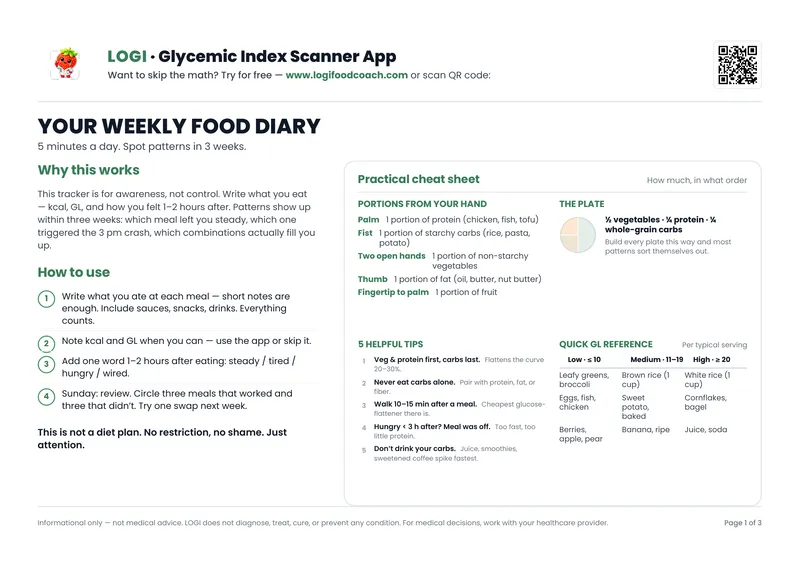
Free PDF — 3 pages
Your Weekly Food Journal
Track meals, glycemic load & mood. Spot patterns in 3 weeks.
No spam. Unsubscribe anytime.