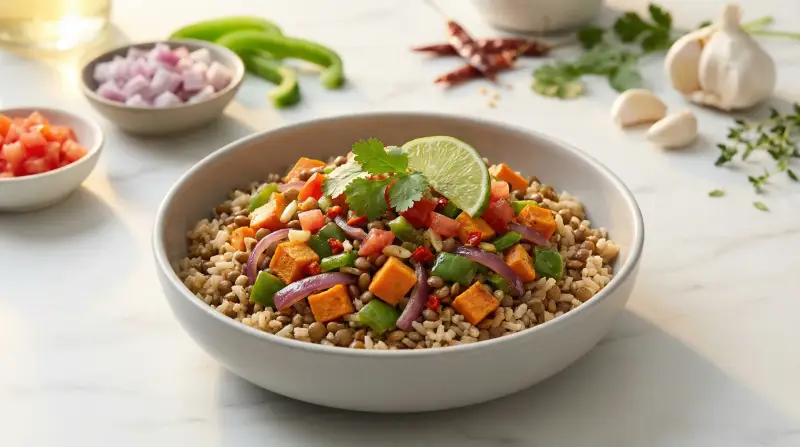
Blood Sugar-Friendly Southwestern Veggie & Lentil Bowl
A fiber-rich, plant-based bowl combining protein-packed lentils, nutrient-dense vegetables, and brown rice for sustained energy without blood sugar spikes.
This nourishing Southwestern-inspired bowl is specifically designed to support stable blood sugar levels while delivering exceptional flavor and nutrition. The combination of brown rice and dual lentils creates a low-glycemic foundation that releases energy slowly, preventing the rapid glucose spikes associated with refined grains. Both green and red lentils are nutritional powerhouses with a glycemic index around 32, making them ideal for blood sugar management.
The recipe strategically incorporates fiber-rich vegetables like kale, bell peppers, and sweet potato, which slow digestion and moderate glucose absorption. Sweet potatoes, despite their natural sweetness, have a lower glycemic impact than white potatoes when consumed with protein and fat. The addition of black beans further boosts the protein and soluble fiber content, creating a complete amino acid profile that promotes satiety and metabolic stability.
For optimal blood sugar control, consider eating the kale and vegetables first before the grains—this "food sequencing" technique can reduce post-meal glucose spikes by up to 73%. The fresh lime juice and vinegar add acidity that helps slow carbohydrate breakdown, while cumin provides anti-inflammatory benefits. This one-bowl meal delivers sustained energy for 4-6 hours, making it perfect for lunch or dinner when you need lasting fuel without the crash.
Blood Sugar Impact
This meal should produce a gradual, moderate rise in blood sugar with sustained energy for 3-4 hours due to its low GI of 27 and moderate glycemic load of 12.5. The combination of fiber-rich lentils, vegetables, and complex carbohydrates promotes steady glucose release rather than sharp spikes.
Blood Sugar Tips
- ✓ Eat the vegetables and lentils first before the sweet potato and brown rice to slow carbohydrate absorption
- ✓ Add a tablespoon of olive oil or a small portion of avocado to further reduce the glycemic response through healthy fats
- ✓ Take a 10-15 minute walk after eating to help muscles absorb glucose and prevent blood sugar elevation
🥗 Ingredients
- 2 tsp canola oil
- 1 cup red onion, chopped
- 2 cup green bell pepper, chopped
- 1 pcs chile pepper of your choice, minced
- 2 pcs garlic cloves, minced
- 1 cup sweet potato, diced
- 1 cup tomato, chopped
- 1 cup brown rice, uncooked
- 0.5 cup green lentils, dried
- 0.5 cup red lentils, dried
- 1 tbsp ground cumin
- 1 tbsp fresh ground black pepper
- 1 tbsp red wine vinegar
- 2 cup no-salt-added vegetable stock
- 2 cup water
- 4 cup kale, chopped
- 1 cup cooked black beans
- 2 tbsp fresh cilantro, minced
- 4 pcs lime wedges
- 2 tsp canola oil
- 1 cup red onion, chopped
- 2 cup green bell pepper, chopped
- 1 pcs chile pepper of your choice, minced
- 2 pcs garlic cloves, minced
- 1 cup sweet potato, diced
- 1 cup tomato, chopped
- 1 cup brown rice, uncooked
- 0.5 cup green lentils, dried
- 0.5 cup red lentils, dried
- 1 tbsp ground cumin
- 1 tbsp fresh ground black pepper
- 1 tbsp red wine vinegar
- 2 cup no-salt-added vegetable stock
- 2 cup water
- 4 cup kale, chopped
- 1 cup cooked black beans
- 2 tbsp fresh cilantro, minced
- 4 pcs lime wedges
👨🍳 Instructions
- 1
Heat the canola oil in a large, deep sauté pan or Dutch oven over medium-high heat. Once the oil shimmers, add the chopped red onion and cook for 3-4 minutes, stirring occasionally, until it begins to soften.
- 2
Add the chopped green bell peppers, minced chile pepper, minced garlic, diced sweet potato, and chopped tomato to the pan. Sauté the vegetable mixture for 10-12 minutes, stirring frequently, until the onions become translucent and the sweet potato begins to soften slightly.
- 3
Stir in the uncooked brown rice, green lentils, and red lentils, coating them with the vegetable mixture. Add the ground cumin, black pepper, and red wine vinegar, stirring well to distribute the spices evenly throughout.
- 4
Pour in the vegetable stock and water, stirring to combine all ingredients. Increase heat to bring the mixture to a rolling boil, then immediately reduce heat to low to maintain a gentle simmer.
- 5
Cover the pan tightly with a lid and simmer for 45 minutes without lifting the lid. The rice and lentils should absorb the liquid and become tender. If any excess liquid remains after 45 minutes, remove the lid and simmer uncovered for an additional 5 minutes.
- 6
Remove the pan from heat and let it rest, covered, for 5 minutes. This allows the grains to finish steaming and the flavors to meld together.
- 7
Add the chopped kale, cooked black beans, and minced cilantro to the pan. Gently fold these ingredients into the warm grain mixture until the kale wilts slightly from the residual heat, about 2-3 minutes.
- 8
Divide the bowl among six serving dishes. Garnish each portion with a lime wedge and encourage diners to squeeze fresh lime juice over their bowl just before eating. For optimal blood sugar control, eat the vegetables and beans first, then the grains.
📊 Nutrition Per Serving
| Per Serving | Whole Dish | |
|---|---|---|
| Calories | 282 | 1690 |
| Carbs | 51g | 303g |
| Sugars | 7g | 39g |
| Natural Sugars | 7g | 39g |
| Protein | 15g | 91g |
| Fat | 3g | 19g |
| Saturated Fat | 0g | 2g |
| Unsaturated Fat | 3g | 16g |
| Fiber | 18g | 109g |
| Soluble Fiber | 4g | 23g |
| Insoluble Fiber | 9g | 53g |
| Sodium | 364mg | 2185mg |
Predicted Glucose Response
What if you...
Estimated model — individual responses vary. Not medical advice.
🔄 Lower GI Swaps
Sweet potatoes have a moderate to high glycemic index (63-70). Cauliflower, zucchini, and turnips are non-starchy vegetables with minimal impact on blood sugar, keeping the GL much lower while adding volume and fiber.
Brown rice has a GI of 50-55. Cauliflower rice has virtually no glycemic impact, while quinoa (GI 53) and barley (GI 28) provide lower glycemic alternatives with more protein and soluble fiber to slow glucose absorption.
While canola oil doesn't directly affect blood sugar, extra virgin olive oil and avocado oil contain more monounsaturated fats and polyphenols that improve insulin sensitivity and help moderate post-meal glucose response.
While red onions are relatively low-glycemic, shallots and leeks have slightly lower carbohydrate content per serving and provide similar flavor with marginally less impact on blood glucose levels.
🔬 The Science Behind This Recipe
Why This Bowl Keeps Your Blood Sugar Steady
This Southwestern bowl is a masterclass in blood sugar management, with a remarkably low glycemic index of 27 and a glycemic load of just 12.5 per serving. The star ingredient here is lentils, which are packed with both soluble fiber and plant-based protein. That fiber forms a gel-like substance in your digestive tract, dramatically slowing down how quickly glucose enters your bloodstream. Meanwhile, the protein content (about 18g per cup of cooked lentils) further delays digestion and helps your body process carbohydrates more gradually. This combination means you'll experience a gentle, sustained rise in blood sugar rather than a sharp spike followed by an energy crash.
The vegetables in this recipe aren't just flavor—they're functional blood sugar allies. Bell peppers, onions, and chile peppers are all low in carbohydrates but high in fiber and water content, which adds bulk to your meal without adding glycemic load. The capsaicin in chile peppers may even boost your metabolism slightly and improve insulin sensitivity. When you combine these non-starchy vegetables with lentils, you're creating a meal where the majority of the volume comes from low-glycemic ingredients, naturally limiting the overall impact on your blood sugar.
Here's a pro tip to maximize the blood sugar benefits: eat your vegetables first, then your lentils. This "food sequencing" strategy has been shown to reduce post-meal glucose spikes by up to 73% in some studies. The fiber from the vegetables creates a physical barrier in your stomach, slowing the absorption of the starches that follow. Pair this bowl with a 10-minute walk after eating, and you'll help your muscles absorb glucose more efficiently, keeping your blood sugar in an even healthier range.
Related recipes
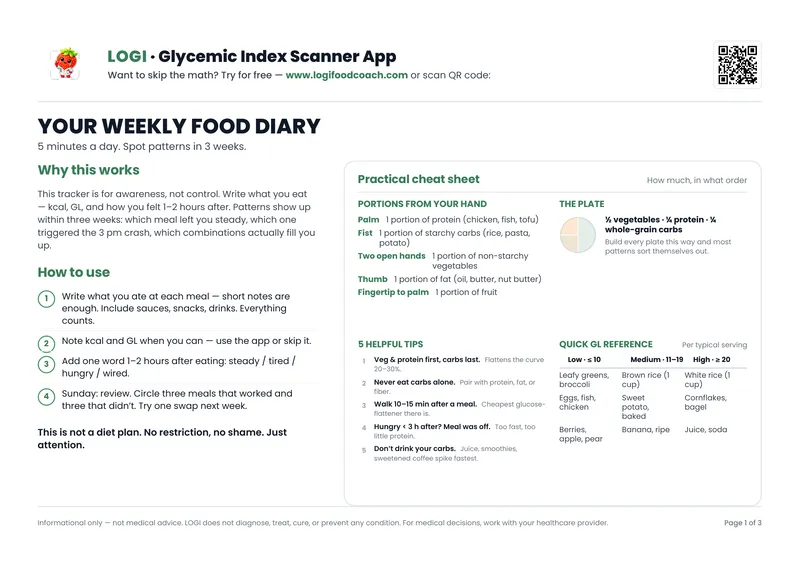
Free PDF — 3 pages
Your Weekly Food Journal
Track meals, glycemic load & mood. Spot patterns in 3 weeks.
No spam. Unsubscribe anytime.