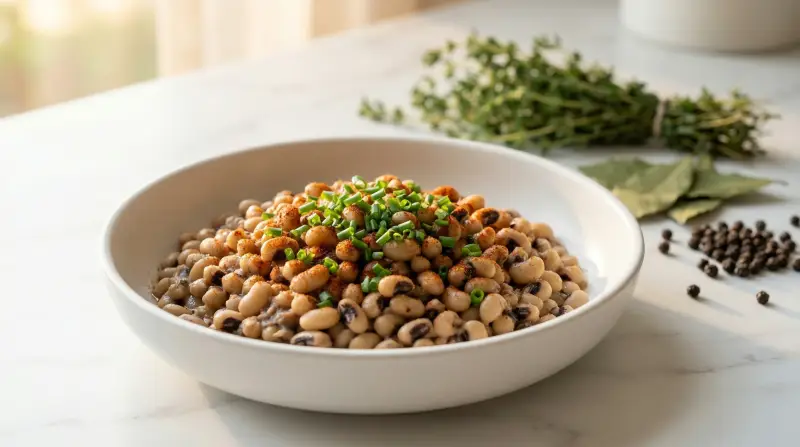
Slow-Baked Southern Black-Eyed Peas with Smoky Herbs
Tender black-eyed peas simmered with aromatic herbs and a hint of smoke create a blood sugar-friendly comfort dish that's rich in fiber and plant protein.
Black-eyed peas are a nutritional powerhouse for blood sugar management, offering a low glycemic index of approximately 36 along with abundant soluble fiber that slows glucose absorption. This Southern-inspired recipe transforms humble legumes into a deeply flavorful dish without relying on meat or added sugars. The slow oven-baking method allows the peas to absorb the aromatic blend of thyme, oregano, and paprika while developing a creamy texture that satisfies without spiking blood sugar.
The combination of protein (about 8g per serving) and fiber (nearly 6g per serving) makes this dish ideal for stabilizing blood sugar levels throughout the day. Unlike refined starches, black-eyed peas release energy slowly, preventing the rapid glucose spikes associated with white rice or processed foods. The addition of herbs and spices not only enhances flavor but may also provide anti-inflammatory benefits that support metabolic health. The capsaicin in hot sauce may offer additional metabolic benefits by supporting insulin sensitivity.
For optimal blood sugar control, serve these peas as part of a balanced meal alongside non-starchy vegetables like collard greens or roasted Brussels sprouts. Each serving provides approximately 3/4 cup of cooked peas, delivering the low glycemic load of 5.6 that makes this dish ideal for blood sugar management. The fiber-rich legumes pair beautifully with a small portion of quinoa or cauliflower rice. Consider eating your vegetables first, then the peas, to further moderate glucose response. This dish also makes excellent meal prep, as the flavors deepen overnight and the resistant starch content increases when cooled and reheated, offering additional blood sugar benefits.
Blood Sugar Impact
This meal will have a low to moderate blood sugar impact due to the low glycemic index (36) and modest glycemic load (5.6). The black-eyed peas provide fiber and protein that promote steady glucose absorption, resulting in stable energy for 3-4 hours without significant spikes.
Blood Sugar Tips
- ✓ Pair this dish with a non-starchy vegetable like leafy greens or roasted broccoli to add more fiber and further slow glucose absorption
- ✓ Eat this meal with a small portion of healthy fats such as avocado or a drizzle of olive oil to enhance satiety and minimize any blood sugar rise
- ✓ Consider taking a 10-15 minute walk after eating to help muscles absorb glucose and maintain stable blood sugar levels
🥗 Ingredients
- 453 g dried black-eyed peas
- 1 tbsp vegan broth powder
- 1 tsp fine sea salt
- 1 tsp tabasco sauce
- 1 tsp dried parsley
- 0.75 tsp smoked paprika
- 0.5 tsp dried thyme
- 0.5 tsp dried oregano
- 0.5 tsp freshly ground black pepper
- 0.125 tsp liquid smoke
- 2 tbsp fresh chives, chopped
- 16.0 oz dried black-eyed peas
- 1 tbsp vegan broth powder
- 1 tsp fine sea salt
- 1 tsp tabasco sauce
- 1 tsp dried parsley
- 0.75 tsp smoked paprika
- 0.5 tsp dried thyme
- 0.5 tsp dried oregano
- 0.5 tsp freshly ground black pepper
- 0.125 tsp liquid smoke
- 2 tbsp fresh chives, chopped
👨🍳 Instructions
- 1
Position an oven rack in the center and preheat your oven to 300°F (150°C). This low temperature ensures the black-eyed peas cook gently and evenly, developing a creamy interior without bursting.
- 2
Rinse the dried black-eyed peas thoroughly in a fine-mesh strainer under cold running water, removing any debris or damaged peas. Drain well and transfer to a 3-quart Dutch oven or heavy oven-safe pot with a tight-fitting lid.
- 3
Add the vegan broth powder, salt, tabasco sauce, dried parsley, smoked paprika, dried thyme, dried oregano, black pepper, and liquid smoke directly to the pot with the peas. Stir to distribute the seasonings evenly throughout.
- 4
Pour enough cold water over the seasoned peas to cover them by approximately 2 inches (about 1200ml total). Stir once more to ensure all ingredients are well combined. Cover the pot securely with the lid.
- 5
Transfer the covered Dutch oven to the preheated oven and bake for 75 minutes, or until the peas are tender but still hold their shape. Check at the 60-minute mark—cooking time may vary slightly depending on the age of your dried peas.
- 6
Using heavy oven mitts, carefully remove the hot Dutch oven from the oven and place it on a stovetop burner. Remove the lid and set the burner to medium heat.
- 7
Cook the peas uncovered, stirring frequently with a wooden spoon, for 5-7 minutes until the cooking liquid reduces and thickens into a flavorful, slightly creamy sauce that coats the peas. Be careful not to let them stick to the bottom.
- 8
Taste and adjust seasoning if needed with additional salt or hot sauce. Serve hot in shallow bowls, with each serving providing approximately 3/4 cup of peas. Garnish with freshly chopped chives if desired. For optimal blood sugar control, pair with a generous portion of leafy greens or non-starchy vegetables.
📊 Nutrition Per Serving
| Per Serving | Whole Dish | |
|---|---|---|
| Calories | 94 | 563 |
| Carbs | 17g | 104g |
| Sugars | 3g | 16g |
| Added Sugars | 0g | 1g |
| Natural Sugars | 3g | 16g |
| Protein | 6g | 37g |
| Fat | 1g | 3g |
| Saturated Fat | 0g | 1g |
| Unsaturated Fat | 0g | 2g |
| Fiber | 5g | 32g |
| Soluble Fiber | 0g | 1g |
| Insoluble Fiber | 0g | 1g |
| Sodium | 702mg | 4210mg |
Predicted Glucose Response
What if you...
Estimated model — individual responses vary. Not medical advice.
🔄 Lower GI Swaps
Green lentils have a lower glycemic index (30 vs 42), black soybeans have minimal carbohydrates with GI under 15, and lupini beans are extremely low-carb with negligible glycemic impact, all providing better blood sugar control than black-eyed peas.
Commercial broth powders often contain added sugars, maltodextrin, or cornstarch that raise glycemic load, while homemade broths and bone/mushroom broths contain no added carbohydrates and won't spike blood sugar.
Some commercial hot sauces contain added sugars or corn syrup that increase glycemic load, while fresh peppers and pure dried spices contain capsaicin without any carbohydrates and may even improve insulin sensitivity.
While paprika itself is low-glycemic, these alternatives provide the same smoky flavor with added capsaicin from hotter peppers, which research suggests may help improve glucose metabolism and insulin response.
🔬 The Science Behind This Recipe
The Science Behind This Blood Sugar-Friendly Dish
Black-eyed peas are a blood sugar management superstar, and this recipe showcases exactly why legumes earn their reputation as low-glycemic powerhouses. With a glycemic index of just 36 and a remarkably low glycemic load of 5.6 per serving, this dish won't send your glucose soaring. The secret lies in the black-eyed peas' unique composition: they're packed with both soluble and insoluble fiber (about 6 grams per half-cup serving) and plant-based protein (around 7 grams). This fiber-protein duo slows down digestion significantly, meaning the carbohydrates are released into your bloodstream gradually rather than all at once. Think of it like a slow-drip coffee maker versus dumping grounds directly into hot water—the steady release prevents that sharp glucose spike and subsequent crash.
The beauty of this recipe is its simplicity, which actually works in your favor metabolically. The vegetable broth and herbs add flavor without introducing additional sugars or fast-digesting carbohydrates. When you eat this dish, the fiber forms a gel-like substance in your digestive tract that physically slows the absorption of glucose. Meanwhile, the protein content triggers the release of hormones that help your body process sugar more efficiently. This is why a glycemic load of 5.6 is considered very low—it accounts for both the quality of the carbohydrates (the GI) and the actual amount you're consuming in a realistic serving.
To maximize the blood sugar benefits, try eating this as part of a balanced meal with some healthy fats like olive oil drizzled on top, or serve it alongside leafy greens. The additional fat will slow digestion even further. A 10-15 minute walk after your meal can also help your muscles absorb glucose more effectively, keeping your blood sugar stable and steady.
Related recipes

Free PDF — 3 pages
Your Weekly Food Journal
Track meals, glycemic load & mood. Spot patterns in 3 weeks.
No spam. Unsubscribe anytime.
