Crispy Smashed Brussels Sprouts with Parmesan
Golden, crispy Brussels sprouts with a tender center and savory Parmesan crust. A low-glycemic side dish that's both satisfying and blood sugar-friendly.
These crispy smashed Brussels sprouts are a perfect example of how delicious low-glycemic eating can be. Brussels sprouts have a remarkably low glycemic index of around 15, making them an excellent choice for maintaining stable blood sugar levels. When combined with olive oil and Parmesan cheese, the overall dish has an estimated GI of 33, which remains in the low-glycemic range. Their high fiber content (about 3.3g per 100g) slows glucose absorption, while their rich nutrient profile supports overall metabolic health.
The preparation method enhances both flavor and glycemic benefits. Boiling the sprouts first ensures a tender interior, while the high-heat roasting creates a caramelized, crispy exterior without adding refined carbohydrates. The olive oil provides healthy monounsaturated fats that further slow digestion and improve satiety. Parmesan cheese adds protein and fat, creating a more balanced macronutrient profile that prevents blood sugar spikes.
This dish works beautifully as part of a blood sugar-friendly meal strategy. Serve these sprouts as a first course or alongside lean protein to maximize the "food order effect" - eating vegetables first can reduce post-meal glucose spikes by up to 73% according to recent studies. The combination of fiber, healthy fats, and minimal carbohydrates makes this an ideal side dish for anyone managing their glycemic response, whether for diabetes management, weight control, or sustained energy throughout the day.
Blood Sugar Impact
Minimal blood sugar impact expected. The low glycemic load of 1.3 and GI of 33, combined with high fiber from Brussels sprouts and healthy fats from olive oil and parmesan, will result in very stable blood sugar with sustained energy for 3-4 hours.
Blood Sugar Tips
- ✓ Eat this as a side dish with a protein source like chicken or fish to further stabilize blood sugar and increase satiety
- ✓ The healthy fats from olive oil and parmesan will slow digestion - don't skip these ingredients
- ✓ Enjoy this dish earlier in your meal or as an appetizer to leverage the fiber content for better blood sugar control throughout the rest of your meal
🥗 Ingredients
- 454 g Brussels sprouts
- 2 tbsp olive oil, plus more for baking sheet
- 1 tsp garlic powder
- 2.5 tsp sea salt, divided
- 0.125 tsp cayenne pepper
- 0.5 cup Parmesan cheese, grated and divided
- 1.0 lb Brussels sprouts
- 2 tbsp olive oil, plus more for baking sheet
- 1 tsp garlic powder
- 2.5 tsp sea salt, divided
- 0.125 tsp cayenne pepper
- 0.5 cup Parmesan cheese, grated and divided
👨🍳 Instructions
- 1
Preheat your oven to 425°F (218°C). Prepare a large baking sheet by brushing it lightly with olive oil or coating with cooking spray to prevent sticking.
- 2
Bring a large pot of water to a rolling boil and add 2 teaspoons of sea salt. Add the Brussels sprouts to the boiling water and cook for 8-10 minutes until they're fork-tender but not mushy. You should be able to easily pierce them with a knife.
- 3
Drain the Brussels sprouts immediately and transfer them to an ice bath or run under cold water to stop the cooking process. Pat them completely dry with paper towels or a clean kitchen towel - this step is crucial for achieving maximum crispiness.
- 4
Transfer the dried Brussels sprouts to a large mixing bowl. Drizzle with 2 tablespoons of olive oil, then add the garlic powder, remaining 1/2 teaspoon sea salt, and cayenne pepper. Add 5 tablespoons of the grated Parmesan cheese and toss everything together until the sprouts are evenly coated.
- 5
Arrange the seasoned Brussels sprouts on your prepared baking sheet in a single layer, spacing them about 1.5-2 inches apart. Using the bottom of a drinking glass, mason jar, or measuring cup, press down firmly on each sprout to smash it flat, creating more surface area for crisping.
- 6
Sprinkle the remaining 3 tablespoons of Parmesan cheese over the smashed sprouts. Roast in the preheated oven for 25-30 minutes, carefully flipping each sprout halfway through cooking, until both sides are golden brown and crispy at the edges. Serve immediately while hot and crispy.
📊 Nutrition Per Serving
| Per Serving | Whole Dish | |
|---|---|---|
| Calories | 160 | 642 |
| Carbs | 11g | 45g |
| Sugars | 3g | 10g |
| Natural Sugars | 3g | 10g |
| Protein | 9g | 34g |
| Fat | 10g | 41g |
| Saturated Fat | 3g | 12g |
| Unsaturated Fat | 7g | 29g |
| Fiber | 4g | 18g |
| Sodium | 1645mg | 6580mg |
Predicted Glucose Response
What if you...
Estimated model — individual responses vary. Not medical advice.
🔄 Lower GI Swaps
Nutritional yeast has zero glycemic impact and adds umami flavor, while aged hard cheeses like pecorino and manchego have negligible carbohydrates and won't raise blood sugar at all
These oils have zero glycemic impact like olive oil, but avocado and macadamia oils have higher smoke points for crisping at high heat without breaking down, while coconut oil's medium-chain triglycerides may improve insulin sensitivity
Adding cinnamon has been shown to improve insulin sensitivity and lower post-meal blood sugar spikes, while turmeric and ginger may enhance glucose metabolism and reduce insulin resistance
Mineral-rich salts provide trace minerals like chromium and magnesium that support healthy insulin function and glucose metabolism, potentially improving blood sugar regulation
🔬 The Science Behind This Recipe
Why This Recipe Keeps Blood Sugar Steady
Brussels sprouts are a blood sugar superstar, and here's why: they're packed with both fiber and protein for a vegetable. With about 3.3 grams of fiber per cup, they slow down digestion significantly, which means the small amount of carbohydrates they contain gets released into your bloodstream gradually rather than all at once. This is exactly what creates their impressively low glycemic index of 33. Think of fiber as a speed bump for your digestive system—it forces your body to process food more slowly, preventing those sharp glucose spikes that leave you feeling energized one moment and crashed the next.
The addition of olive oil makes this dish even more blood-sugar friendly. Healthy fats slow gastric emptying, which means food stays in your stomach longer before moving to your intestines where glucose absorption happens. This fat-carb pairing is one of the simplest tricks for managing blood sugar: never eat carbohydrates naked! Even though Brussels sprouts are already low-carb, the olive oil provides additional metabolic benefits and helps your body absorb fat-soluble vitamins like vitamin K, which Brussels sprouts contain in abundance.
The extraordinarily low glycemic load of 1.3 tells the complete story. While glycemic index measures how quickly a food raises blood sugar, glycemic load accounts for portion size—and that's what really matters. A serving of these crispy Brussels sprouts contains so few digestible carbohydrates that even if you ate double the portion, you'd barely move the needle on your glucose meter. For context, anything under 10 is considered low glycemic load. At 1.3, this dish is essentially a free food for blood sugar management, making it perfect as a side dish or even a standalone snack.
Related recipes
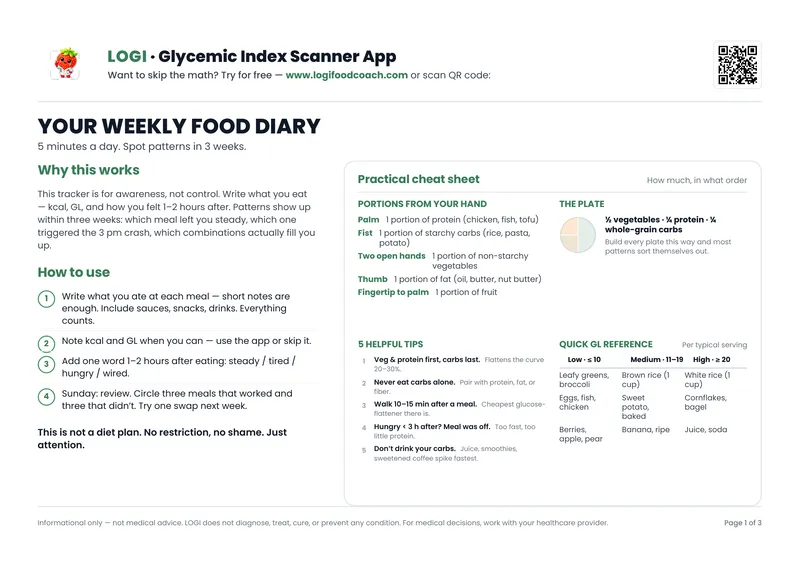
Free PDF — 3 pages
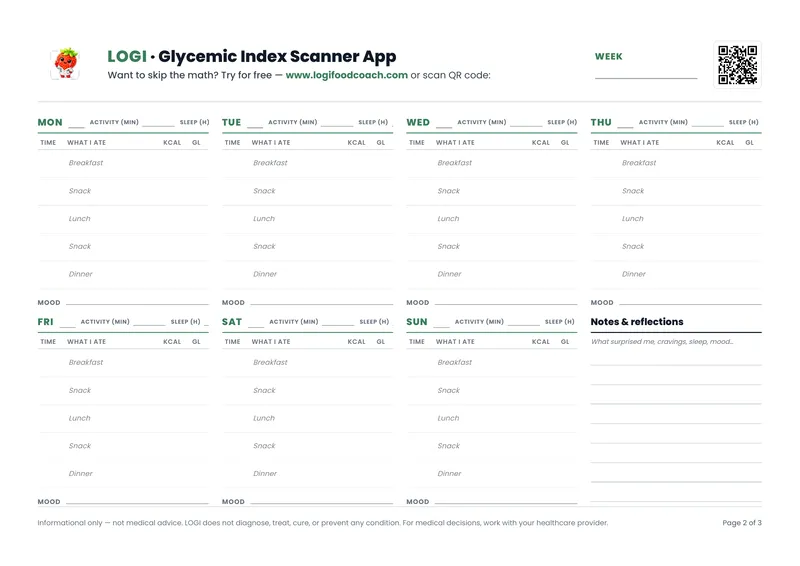
Your Weekly Food Journal
Track meals, glycemic load & mood. Spot patterns in 3 weeks.
No spam. Unsubscribe anytime.