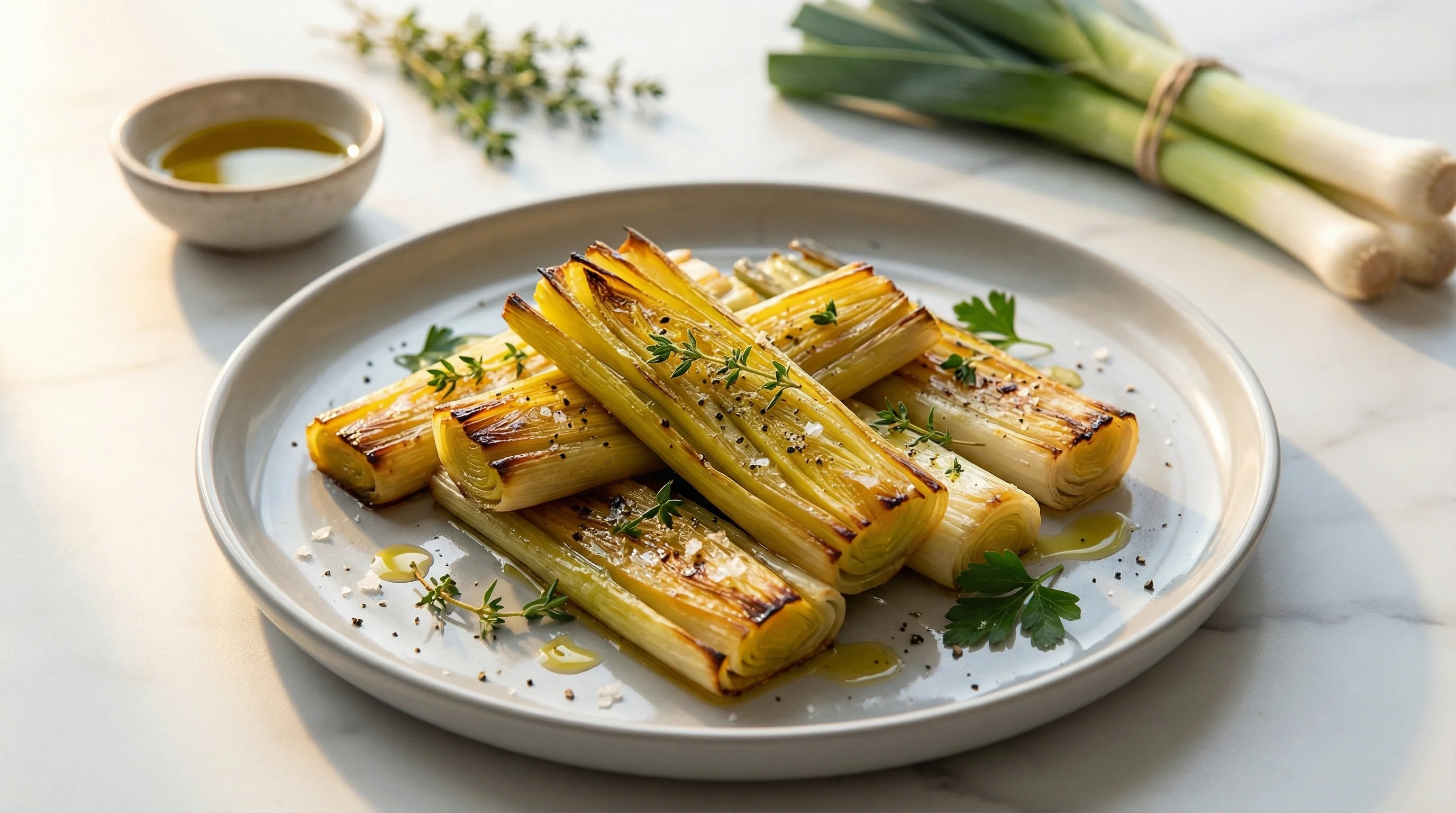
Slow-Roasted Caramelized Leeks with Olive Oil
Tender, golden leeks roasted to buttery perfection—a low-glycemic side dish that won't spike blood sugar while delivering rich, caramelized flavor.
These slow-roasted leeks are a revelation for anyone managing blood sugar levels. Leeks belong to the allium family and have a remarkably low glycemic index, making them an excellent choice for stable glucose control. The long, gentle roasting process transforms their natural sugars through caramelization without creating the blood sugar spike associated with high-heat cooking of starchy vegetables.
The olive oil in this recipe serves a dual purpose: it enhances the absorption of fat-soluble nutrients while further slowing glucose absorption. Leeks are rich in prebiotic fiber, which supports gut health and helps regulate blood sugar over time. Unlike potatoes or other starchy sides, leeks provide complex carbohydrates that digest slowly, preventing the rapid glucose elevation that can occur with refined starches.
This dish pairs beautifully with protein-rich mains like grilled fish, roasted chicken, or grass-fed beef. For optimal glycemic control, enjoy these leeks as part of a balanced meal where you eat your protein and vegetables before any grains. The high fiber content and low glycemic load make this an ideal side dish for lunch or dinner, supporting sustained energy without the afternoon crash.
Blood Sugar Impact
Minimal blood sugar impact due to very low glycemic load (1.5) and low GI (16). This dish will provide stable energy without causing significant glucose spikes, making it an excellent choice for blood sugar management.
Blood Sugar Tips
- ✓ Pair with a protein source like grilled chicken, fish, or legumes to create a more complete meal that further stabilizes blood sugar
- ✓ Use these leeks as a side dish at the beginning of your meal to benefit from the fiber content before eating higher-carb foods
- ✓ Add a splash of vinegar or lemon juice before serving, as the acidity can help slow glucose absorption even further
🥗 Ingredients
- 4 pcs 4 medium leeks, white and light green parts
- 60 ml 1/4 cup extra virgin olive oil
- 1 tbsp 1 tablespoon sea salt
- 4 pcs 4 medium leeks, white and light green parts
- 4 tbsp 1/4 cup extra virgin olive oil
- 1 tbsp 1 tablespoon sea salt
👨🍳 Instructions
- 1
Begin by thoroughly cleaning the leeks under cold running water, separating the layers to remove any trapped dirt or sand. Trim away the dark green tops and remove approximately half an inch from the root end. Slice each leek lengthwise down the middle to create two halves.
- 2
Position an empty rimmed baking sheet in your oven and preheat to 400°F (200°C). Allowing the pan to heat ensures immediate contact heat when the leeks are added, promoting better caramelization.
- 3
While the oven preheats, combine the halved leeks, olive oil, and sea salt in a large mixing bowl. Toss thoroughly with your hands or tongs, ensuring every surface is evenly coated with the oil and salt mixture.
- 4
Carefully remove the hot baking sheet from the oven and arrange the leeks cut-side down in a single layer. Cover the entire sheet tightly with aluminum foil, crimping the edges to create a sealed environment. Return to the oven and immediately reduce the temperature to 300°F (150°C).
- 5
Roast the covered leeks for 75 to 90 minutes, until they become very soft and tender when pierced with a fork. The low temperature and covered environment create a gentle steaming effect that breaks down the fibers without burning.
- 6
Remove the baking sheet from the oven and carefully peel back the foil. Using tongs, flip each leek half so the cut side faces up. Discard the foil.
- 7
Increase the oven temperature to 400°F (200°C) and return the uncovered leeks to the oven. Roast for an additional 15 to 20 minutes until the edges turn crispy and deep golden brown, with visible caramelization on the surface.
- 8
Transfer the roasted leeks to a serving platter and allow to rest for 2-3 minutes before serving. The leeks should be buttery-soft inside with crispy, caramelized exteriors. Serve immediately as a low-glycemic side dish alongside your choice of protein.
📊 Nutrition Per Serving
| Per Serving | Whole Dish | |
|---|---|---|
| Calories | 229 | 915 |
| Carbs | 2g | 8g |
| Sugars | 1g | 4g |
| Natural Sugars | 1g | 4g |
| Protein | 0g | 2g |
| Fat | 25g | 100g |
| Saturated Fat | 9g | 35g |
| Unsaturated Fat | 16g | 65g |
| Fiber | 0g | 2g |
| Sodium | 9506mg | 38022mg |
Predicted Glucose Response
What if you...
Estimated model — individual responses vary. Not medical advice.
🔄 Lower GI Swaps
While leeks already have a low glycemic impact, zucchini and bell peppers contain even fewer carbohydrates (2-3g per 100g vs 14g in leeks), resulting in virtually zero glycemic load while maintaining a similar mild, sweet flavor when roasted
Avocado and macadamia oils contain higher levels of monounsaturated fats which have been shown to improve insulin sensitivity and slow carbohydrate absorption even more effectively than olive oil, further blunting any blood sugar response
Adding herbs and spices increases polyphenol content without adding carbohydrates, and compounds in rosemary and garlic have been shown to improve glucose metabolism and insulin function, enhancing the blood-sugar-friendly profile of the dish
🔬 The Science Behind This Recipe
# The Science Behind Slow-Roasted Caramelized Leeks
This elegant dish is a masterclass in blood sugar management, with a remarkably low glycemic index of 16 and glycemic load of just 1.5 per serving. Leeks belong to the allium family and contain significantly less sugar than their sweeter cousins, onions and shallots. What makes leeks particularly special for glucose control is their high content of soluble fiber, especially inulin—a prebiotic fiber that slows digestion and creates a gentle, sustained release of energy rather than a sharp glucose spike. When you slow-roast leeks, you're concentrating their natural flavors while maintaining their fiber structure, which continues to work its blood-sugar-stabilizing magic even as the vegetable caramelizes.
The generous use of extra virgin olive oil in this recipe isn't just for flavor—it's a strategic metabolic move. Healthy fats like those found in olive oil dramatically slow gastric emptying, meaning your stomach takes longer to pass food into your small intestine where glucose absorption occurs. This creates a more gradual rise in blood sugar levels. The monounsaturated fats in olive oil also improve insulin sensitivity over time, helping your cells respond more effectively to insulin signals. Additionally, these fats trigger the release of hormones that promote satiety, preventing the blood sugar roller coaster that comes from eating carbohydrates alone.
To maximize the blood sugar benefits of this dish, serve it as a first course before any higher-carbohydrate foods in your meal. This "vegetables first" strategy primes your digestive system with fiber and fat, creating a protective buffer that blunts glucose response to subsequent courses. The minimal carbohydrate content (about 6 grams per serving) combined with the fiber and fat means this dish can be enjoyed freely without concern for glucose spikes, making it an ideal side for anyone focused on metabolic health.