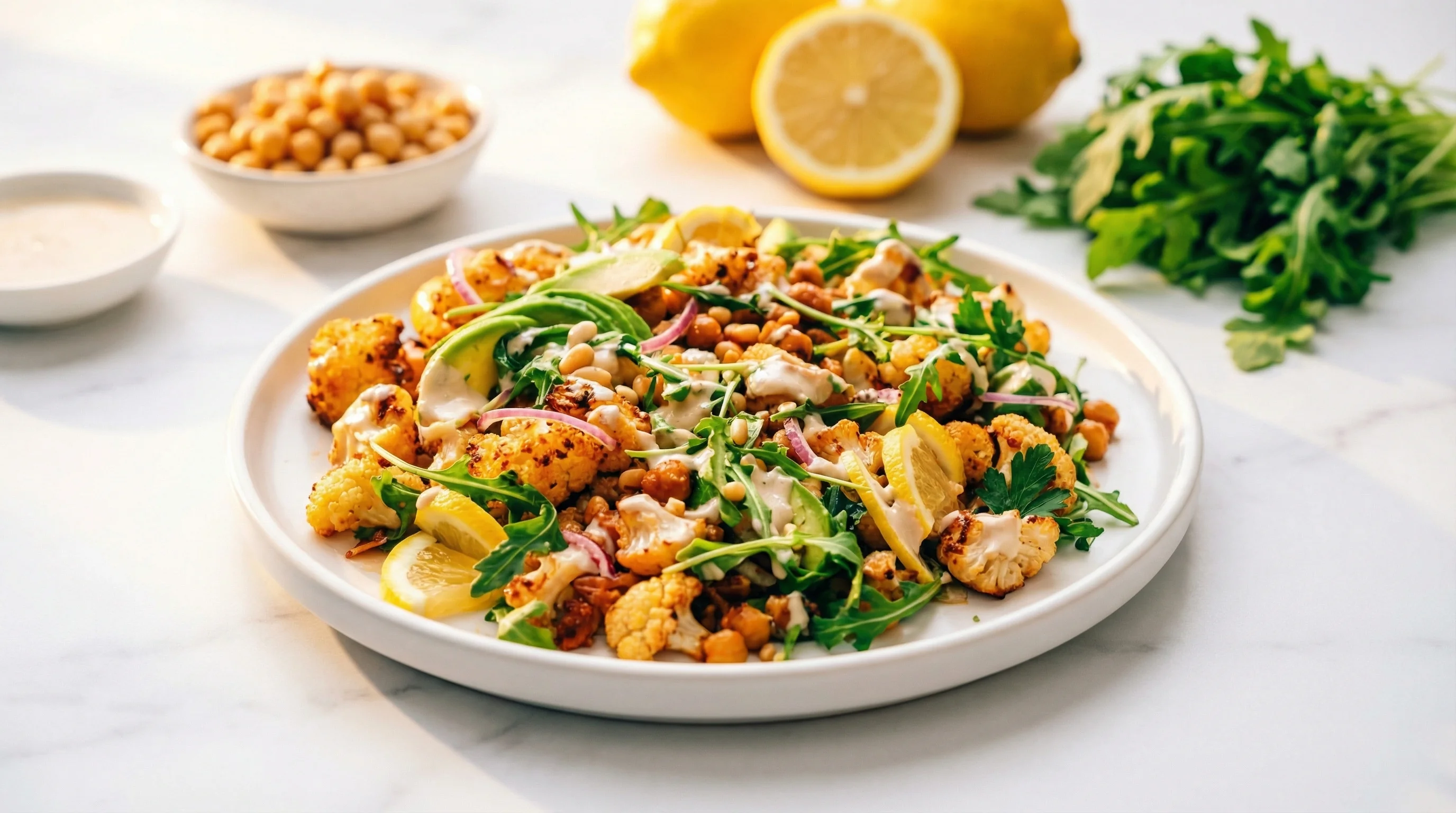
Roasted Cauliflower and Chickpea Power Salad with Creamy Tahini Dressing
A nutrient-dense, blood sugar-friendly salad featuring fiber-rich roasted cauliflower and chickpeas, peppery arugula, and heart-healthy fats from avocado and tahini.
This vibrant power salad is a masterclass in blood sugar management through smart ingredient pairing. The combination of fiber-rich cauliflower and chickpeas creates a satisfying base with a low glycemic impact, while the healthy fats from avocado, tahini, and pine nuts slow glucose absorption and keep you feeling full for hours.
Roasting the cauliflower and chickpeas with aromatic spices not only develops deep, caramelized flavors but also enhances their nutritional profile. Chickpeas provide plant-based protein and resistant starch that supports stable blood sugar levels, while cauliflower delivers filling fiber with minimal carbohydrate impact. The peppery arugula adds a fresh, slightly bitter note that complements the creamy tahini dressing perfectly.
For optimal glycemic control, eat the arugula and vegetables first, then move to the protein-rich chickpeas. The monounsaturated fats from avocado and tahini help blunt any blood sugar spike, making this an ideal lunch that won't cause an afternoon energy crash. This salad works beautifully as a standalone meal or paired with grilled fish or chicken for additional protein.
Blood Sugar Impact
This meal will have a minimal to low impact on blood sugar levels, providing steady energy for 3-4 hours. The combination of fiber-rich vegetables, protein and fat from chickpeas and olive oil, along with the low glycemic load of 12, will result in a gradual, sustained rise in blood glucose rather than a spike.
Blood Sugar Tips
- ✓ Eat the arugula and roasted cauliflower first before the chickpeas to maximize the fiber's blood sugar-blunting effect
- ✓ Add a protein source like grilled chicken, salmon, or a boiled egg to further slow digestion and stabilize blood sugar
- ✓ Take a 10-15 minute walk after eating to help muscles absorb glucose and prevent any minor elevation in blood sugar
🥗 Ingredients
- 1 pcs medium head of cauliflower, cut into small florets
- 15 oz canned chickpeas, rinsed and drained
- 2 tbsp extra virgin olive oil
- 1 tsp fine sea salt
- 0.5 tsp ground cumin
- 0.5 tsp garlic powder
- 0.5 tsp onion powder
- 0.5 tsp smoked paprika
- 0.25 tsp freshly-cracked black pepper
- 5 oz fresh arugula
- 1 pcs large ripe avocado, thinly sliced
- 0.5 pcs small red onion, thinly sliced
- 0.33 cup toasted pine nuts
- 1 pcs lemon wedges, for serving
- 0.25 cup tahini
- 3 tbsp freshly-squeezed lemon juice
- 1 pcs garlic clove, pressed or minced
- 1 pcs medium head of cauliflower, cut into small florets
- 15 oz canned chickpeas, rinsed and drained
- 2 tbsp extra virgin olive oil
- 1 tsp fine sea salt
- 0.5 tsp ground cumin
- 0.5 tsp garlic powder
- 0.5 tsp onion powder
- 0.5 tsp smoked paprika
- 0.25 tsp freshly-cracked black pepper
- 5 oz fresh arugula
- 1 pcs large ripe avocado, thinly sliced
- 0.5 pcs small red onion, thinly sliced
- 0.33 cup toasted pine nuts
- 1 pcs lemon wedges, for serving
- 0.25 cup tahini
- 3 tbsp freshly-squeezed lemon juice
- 1 pcs garlic clove, pressed or minced
👨🍳 Instructions
- 1
Preheat your oven to 425°F (220°C). Line a large rimmed baking sheet with parchment paper or lightly coat with cooking spray to prevent sticking.
- 2
In a large mixing bowl, combine the cauliflower florets and drained chickpeas. Drizzle with olive oil, then add the sea salt, cumin, garlic powder, onion powder, smoked paprika, and black pepper. Toss everything together thoroughly until the vegetables are evenly coated with oil and spices.
- 3
Spread the seasoned cauliflower and chickpeas in a single layer across the prepared baking sheet, ensuring they're not overcrowded. Roast in the preheated oven for 25-30 minutes, stirring once at the halfway point, until the cauliflower develops golden-brown edges and becomes fork-tender. Remove from oven and let cool slightly.
- 4
While the vegetables roast, prepare the tahini dressing. In a small bowl or mason jar, whisk together the tahini, lemon juice, cumin, and minced garlic. Add 2 tablespoons of warm water and whisk vigorously until smooth and creamy. If the dressing is too thick, add additional warm water one tablespoon at a time until you reach a pourable consistency. Season with salt and pepper to taste.
- 5
Arrange the fresh arugula on a large serving platter or in a wide salad bowl. Top with the thinly sliced red onion, avocado slices, and toasted pine nuts, distributing them evenly across the greens.
- 6
Add the warm roasted cauliflower and chickpeas to the salad, scattering them over the arugula and other ingredients. The warmth will slightly wilt the arugula, creating a pleasant textural contrast.
- 7
Drizzle the creamy tahini dressing generously over the entire salad. Serve immediately with extra lemon wedges on the side for squeezing. For best blood sugar control, encourage diners to eat the vegetables first, followed by the chickpeas and other components.
📊 Nutrition Per Serving
| Per Serving | Whole Dish | |
|---|---|---|
| Calories | 1087 | 4348 |
| Carbs | 112g | 447g |
| Sugars | 11g | 45g |
| Natural Sugars | 11g | 45g |
| Protein | 31g | 125g |
| Fat | 70g | 281g |
| Saturated Fat | 25g | 98g |
| Unsaturated Fat | 46g | 183g |
| Fiber | 34g | 135g |
| Soluble Fiber | 10g | 40g |
| Insoluble Fiber | 24g | 94g |
| Sodium | 9833mg | 39331mg |
Predicted Glucose Response
What if you...
Estimated model — individual responses vary. Not medical advice.
🔄 Lower GI Swaps
White beans have a lower glycemic index (35) compared to chickpeas (28-36), black soybeans have an extremely low GI of around 15, and edamame has a GI of approximately 15-20, all providing better blood sugar control while maintaining protein and fiber content.
Scallions and chives have minimal carbohydrate content and virtually no glycemic impact, while shallots contain slightly less sugar than red onions, all providing onion flavor with reduced blood sugar response.
While pine nuts are already low-glycemic, walnuts, pecans, and macadamia nuts have even lower carbohydrate content and higher healthy fat ratios, resulting in negligible glycemic impact and enhanced blood sugar stability.
Almond butter, sunflower seed butter, and hemp seed butter have slightly lower carbohydrate content than tahini and higher protein-to-carb ratios, providing creaminess with even more stable blood sugar response.
🔬 The Science Behind This Recipe
# The Science Behind Your Blood Sugar-Friendly Power Salad
This roasted cauliflower and chickpea salad is a masterclass in blood sugar management, with a remarkably low glycemic index of 28 and a glycemic load of just 12 per serving. The magic lies in how these ingredients work together to slow down glucose absorption. Cauliflower, being a non-starchy vegetable, contains virtually no carbohydrates that convert to sugar, while providing filling fiber that creates a "speed bump" in your digestive system. The chickpeas, though they do contain carbohydrates, are packed with both protein (about 7 grams per half cup) and fiber (6 grams), which dramatically slows their breakdown into glucose. This combination means your blood sugar rises gently rather than spiking sharply.
The olive oil and tahini dressing play a crucial supporting role by adding healthy fats that further slow digestion. When fat is present in a meal, your stomach empties more gradually, releasing sugars into your bloodstream at a steadier pace. The cumin isn't just for flavor—research suggests it may help improve insulin sensitivity. Together, these ingredients create what nutritionists call a "balanced plate" that keeps your glucose response minimal and sustained.
To maximize these benefits, try eating the cauliflower first, then the chickpeas. This "food sequencing" strategy has been shown to reduce post-meal glucose spikes by up to 73% in some studies. The fiber from vegetables consumed first creates a protective coating in your intestines. Also, remember that glycemic load accounts for portion size—this recipe's low GL of 12 means even a generous serving won't overwhelm your system. A 10-minute walk after eating can further help your muscles absorb glucose, keeping levels even more stable.