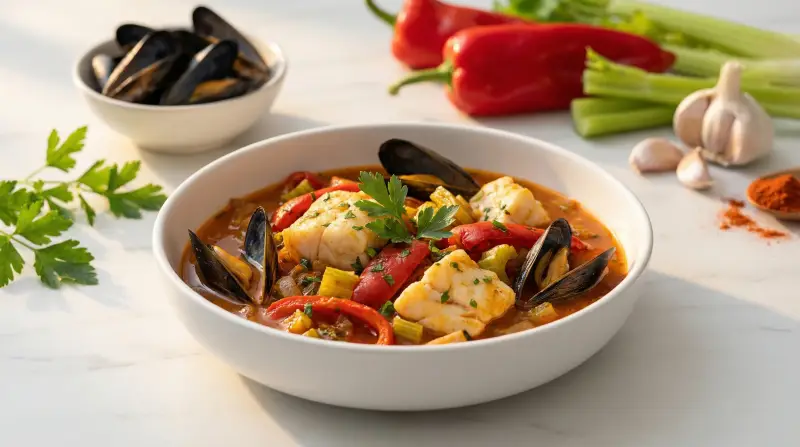
Mediterranean Paprika Seafood Stew
A vibrant, low-GI fish stew packed with vegetables and lean protein. This one-pot wonder delivers 3 servings of vegetables while keeping blood sugar stable.
This Mediterranean-inspired seafood stew is a perfect example of how delicious low-glycemic eating can be. Built on a foundation of fiber-rich vegetables like onions, celery, and roasted peppers, this dish provides sustained energy without blood sugar spikes.
The combination of lean white fish and optional mussels delivers high-quality protein that slows glucose absorption and promotes satiety. Paprika adds not just vibrant color and smoky depth, but also contains capsaicin compounds that may improve insulin sensitivity. The tomato-based sauce is naturally low-GI, while the generous amount of fresh parsley contributes additional fiber, vitamins, and antioxidants that support metabolic health.
For optimal blood sugar management, enjoy this stew as your main course paired with a small portion of quinoa or cauliflower rice. The high vegetable content means you're getting substantial nutrition with minimal glycemic impact. Eating the vegetables and protein first, then any grain accompaniment, further helps moderate your glucose response. This warming, satisfying meal proves that managing blood sugar doesn't mean sacrificing flavor or comfort.
Blood Sugar Impact
Minimal blood sugar impact expected due to very low glycemic load (3.8) and GI (19). This meal should provide stable, sustained energy for 3-4 hours without significant glucose spikes, thanks to high protein from seafood and healthy fats from olive oil.
Blood Sugar Tips
- ✓ Eat the vegetables and broth first before the seafood to further slow digestion and nutrient absorption
- ✓ Pair with a small portion of whole grain bread or quinoa if desired, but eat it last to minimize any additional glycemic impact
- ✓ Take a 10-15 minute walk after eating to help muscles absorb any glucose and maintain stable blood sugar levels
🥗 Ingredients
- 1 tbsp olive oil
- 2 pcs onions, halved and thinly sliced
- 2 pcs celery stalks, finely chopped
- 30 g fresh flat-leaf parsley, leaves and stalks separated
- 2.5 tsp paprika
- 200 g roasted red peppers, drained and thickly sliced
- 400 g canned chopped tomatoes with garlic
- 400 g white fish fillet, cut into large chunks
- 200 g fresh mussels, optional
- 1 tbsp olive oil
- 2 pcs onions, halved and thinly sliced
- 2 pcs celery stalks, finely chopped
- 1.1 oz fresh flat-leaf parsley, leaves and stalks separated
- 2.5 tsp paprika
- 7.1 oz roasted red peppers, drained and thickly sliced
- 14.1 oz canned chopped tomatoes with garlic
- 14.1 oz white fish fillet, cut into large chunks
- 7.1 oz fresh mussels, optional
👨🍳 Instructions
- 1
Heat the olive oil in a large, deep skillet or Dutch oven over medium heat. Add the sliced onions and chopped celery along with a pinch of salt.
- 2
Cover the pan and cook the vegetables gently for about 10 minutes, stirring occasionally, until they become soft and translucent but not browned.
- 3
While the vegetables cook, separate the parsley leaves from the stalks. Place the parsley stalks and half of the leaves in a food processor with a splash of olive oil and a pinch of salt and pepper. Pulse until you have a smooth green paste. Set aside the remaining parsley leaves for garnish.
- 4
Add the minced garlic to the softened onions and celery, stirring for 1 minute until fragrant. Then add the parsley paste and paprika. Stir well and cook for 2-3 minutes until the paprika releases its oils and the mixture becomes aromatic.
- 5
Add the sliced roasted red peppers, canned tomatoes, and fish stock to the pan. Stir to combine, then let the mixture simmer uncovered for 10 minutes until the sauce thickens and reduces slightly. The sauce should be rich and concentrated.
- 6
Arrange the white fish chunks and mussels (if using) on top of the tomato sauce. Cover the pan with a lid and simmer gently for 5-7 minutes until the fish is opaque and flakes easily, and the mussels have opened. Discard any mussels that remain closed.
- 7
Gently fold the seafood into the sauce, being careful not to break up the fish too much. Taste and adjust seasoning with salt and pepper as needed.
- 8
Serve the stew in deep bowls (approximately 1.5 cups per serving), garnished with the reserved fresh parsley leaves. For best blood sugar control, eat the vegetables and fish first before adding any grain accompaniment like a small portion (1/3 cup) of quinoa or cauliflower rice.
📊 Nutrition Per Serving
| Per Serving | Whole Dish | |
|---|---|---|
| Calories | 232 | 928 |
| Carbs | 18g | 70g |
| Sugars | 9g | 34g |
| Natural Sugars | 9g | 34g |
| Protein | 27g | 108g |
| Fat | 6g | 24g |
| Saturated Fat | 1g | 4g |
| Unsaturated Fat | 4g | 17g |
| Fiber | 5g | 18g |
| Soluble Fiber | 1g | 4g |
| Insoluble Fiber | 2g | 10g |
| Sodium | 348mg | 1392mg |
Predicted Glucose Response
What if you...
Estimated model — individual responses vary. Not medical advice.
🔄 Lower GI Swaps
Fatty fish like salmon and mackerel contain omega-3 fatty acids that improve insulin sensitivity and help stabilize post-meal blood sugar responses, while providing the same protein benefits as white fish
Fresh tomatoes have a lower glycemic impact than canned versions which often contain added sugars or concentrates. Sun-dried tomatoes in oil provide intense flavor with minimal quantity needed, reducing overall carbohydrate load
Fresh peppers have slightly lower sugar content than roasted versions where natural sugars concentrate. Green peppers and zucchini offer even lower glycemic loads while maintaining the vegetable bulk and Mediterranean flavor profile
Using smaller amounts of shallots or fennel provides aromatic depth with less total carbohydrate content. Fennel adds Mediterranean anise notes while having a lower sugar content than onions, reducing the overall glycemic load of the dish
🔬 The Science Behind This Recipe
Why This Stew Keeps Your Blood Sugar Steady
This Mediterranean seafood stew is a masterclass in blood sugar management, with an exceptionally low glycemic load of just 3.8 and a GI of 19. The secret lies in its complete absence of starchy carbohydrates and its abundance of protein, healthy fats, and fiber-rich vegetables. Seafood provides high-quality protein that slows digestion and triggers a minimal insulin response, while the olive oil adds heart-healthy monounsaturated fats that further buffer any glucose release. The combination of onion and celery contributes soluble fiber, which forms a gel-like substance in your digestive tract that slows the absorption of any carbohydrates present.
The paprika in this recipe does more than add smoky flavor—it contains capsaicin compounds that may actually improve insulin sensitivity and help your cells respond better to glucose. Meanwhile, the fresh parsley isn't just a garnish; it's packed with flavonoids that have been shown to support healthy blood sugar metabolism. When you eat a meal this low in carbohydrates but rich in protein and fat, your body releases glucose into your bloodstream at a gentle, steady pace rather than creating the dramatic spike-and-crash cycle associated with high-carb meals.
To maximize the blood sugar benefits of this stew, enjoy it as your main course without adding bread or rice. If you do want to include a carbohydrate, eat this protein-rich stew first—studies show that consuming protein and vegetables before starches can reduce post-meal glucose spikes by up to 40%. A short 10-15 minute walk after your meal can also help your muscles absorb glucose more efficiently, keeping your blood sugar even more stable.
Related recipes
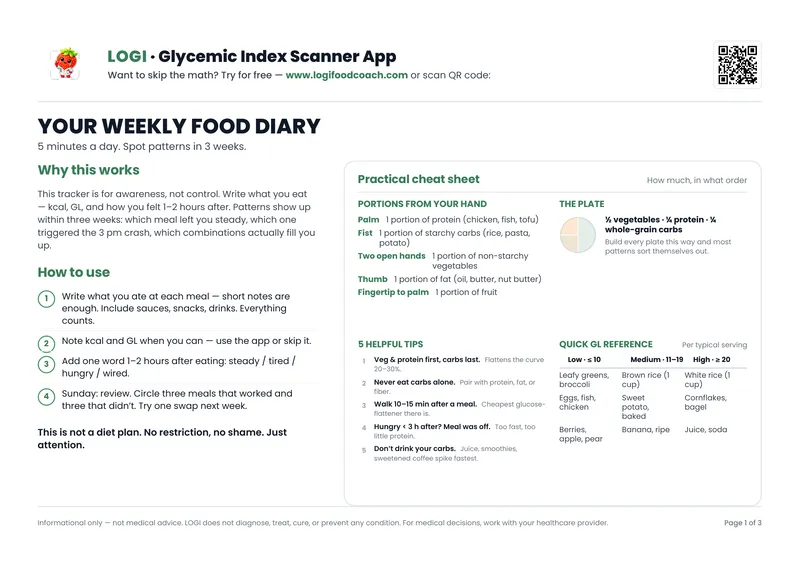
Free PDF — 3 pages
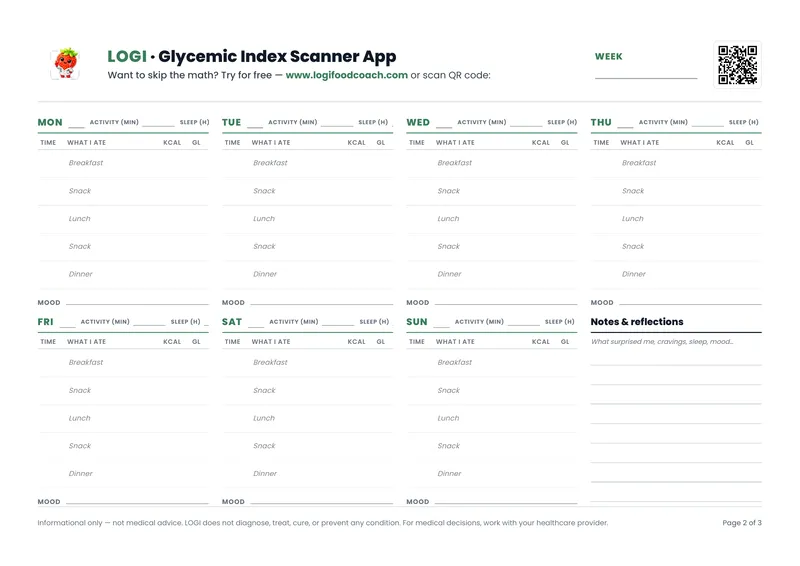
Your Weekly Food Journal
Track meals, glycemic load & mood. Spot patterns in 3 weeks.
No spam. Unsubscribe anytime.