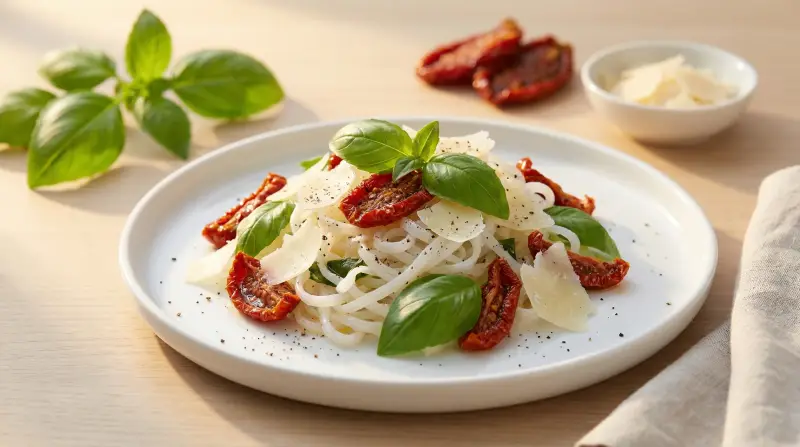
Low-GI Shirataki Noodles with Sun-Dried Tomatoes and Fresh Herbs
A blood sugar-friendly twist on Asian-Italian fusion using zero-glycemic shirataki noodles, tangy sun-dried tomatoes, and aromatic basil for guilt-free indulgence.
This innovative low-glycemic recipe transforms a traditional noodle dish into a diabetes-friendly masterpiece by swapping high-GI rice noodles for shirataki noodles, which have virtually no impact on blood sugar levels. Shirataki noodles, made from konjac yam fiber, contain zero net carbs and are an excellent choice for anyone managing their glucose response.
The sun-dried tomatoes provide concentrated umami flavor and lycopene without the blood sugar spike of fresh tomato sauces, while their healthy fats from the oil help slow any minimal glucose absorption even further. Fresh garlic adds anti-inflammatory compounds that may improve insulin sensitivity, and the combination of Parmesan cheese and olive oil provides protein and healthy fats that create a balanced, low-glycemic meal. The fresh basil not only adds aromatic complexity but also contains compounds that may help regulate blood sugar.
For optimal glycemic control, start your meal with a small green salad before enjoying this dish. The fiber will further blunt any glucose response. This recipe proves that managing blood sugar doesn't mean sacrificing flavor or satisfaction—it's about making smart ingredient swaps that work with your body's metabolism. Each serving contains approximately 8 grams of total carbohydrates with 6 grams of fiber, resulting in only 2 grams of net carbs per portion.
Blood Sugar Impact
Minimal blood sugar impact expected due to the very low glycemic load of 4.5 and low GI of 32. This meal should provide stable energy for 3-4 hours without significant glucose spikes, as shirataki noodles are primarily fiber with negligible digestible carbohydrates.
Blood Sugar Tips
- ✓ Add a protein source like grilled chicken, shrimp, or white beans to further slow digestion and enhance satiety
- ✓ Eat the meal slowly and chew thoroughly to allow your body time to register fullness and optimize digestion
- ✓ Consider taking a 10-15 minute walk after eating to help muscles absorb any glucose and maintain stable blood sugar levels
🥗 Ingredients
- 400 g shirataki noodles, drained and rinsed
- 85 g sun-dried tomatoes in oil, chopped
- 2 tbsp extra virgin olive oil from sun-dried tomatoes
- 3 pcs garlic cloves, thinly sliced
- 25 g Parmesan cheese, freshly shaved
- 15 g fresh basil leaves, torn
- 14.1 oz shirataki noodles, drained and rinsed
- 3.0 oz sun-dried tomatoes in oil, chopped
- 2 tbsp extra virgin olive oil from sun-dried tomatoes
- 3 pcs garlic cloves, thinly sliced
- 0.9 oz Parmesan cheese, freshly shaved
- 0.5 oz fresh basil leaves, torn
👨🍳 Instructions
- 1
Drain the shirataki noodles thoroughly in a colander and rinse under cold running water for 1-2 minutes to remove any residual odor. Pat dry with paper towels.
- 2
Bring a medium pot of water to a boil. Add the rinsed shirataki noodles and boil for 2-3 minutes to improve their texture. Drain well and set aside.
- 3
While noodles are cooking, roughly chop the sun-dried tomatoes into bite-sized pieces, reserving 2 tablespoons of their oil. Thinly slice the garlic cloves and tear the basil leaves into smaller pieces.
- 4
Heat the reserved sun-dried tomato oil in a large skillet or wok over medium heat. Add the sliced garlic and sauté for 1 minute until fragrant but not browned, stirring constantly to prevent burning.
- 5
Add the chopped sun-dried tomatoes to the pan and cook for 2 minutes, stirring occasionally, allowing the flavors to meld and the tomatoes to soften slightly.
- 6
Add the drained shirataki noodles to the skillet and toss everything together for 2-3 minutes, ensuring the noodles are well-coated with the flavorful oil and evenly distributed with the tomatoes and garlic.
- 7
Remove from heat and add three-quarters of the shaved Parmesan and most of the torn basil leaves. Toss gently to combine, allowing the cheese to melt slightly from the residual heat. Season with freshly ground black pepper to taste.
- 8
Divide among four serving plates and garnish each portion with the remaining Parmesan shavings and fresh basil leaves. Serve immediately while warm for best texture and flavor. For optimal blood sugar control, pair with a protein source or eat after consuming vegetables.
📊 Nutrition Per Serving
| Per Serving | Whole Dish | |
|---|---|---|
| Calories | 155 | 622 |
| Carbs | 16g | 64g |
| Sugars | 8g | 32g |
| Natural Sugars | 8g | 32g |
| Protein | 6g | 23g |
| Fat | 9g | 37g |
| Saturated Fat | 2g | 8g |
| Unsaturated Fat | 7g | 28g |
| Fiber | 5g | 22g |
| Soluble Fiber | 1g | 6g |
| Insoluble Fiber | 1g | 6g |
| Sodium | 134mg | 538mg |
Predicted Glucose Response
What if you...
Estimated model — individual responses vary. Not medical advice.
🔄 Lower GI Swaps
Fresh tomatoes have a lower glycemic load than sun-dried tomatoes, which are concentrated and often contain added sugars. Fresh vegetables provide fiber and water content that further slows glucose absorption.
While parmesan is already low-GI, nutritional yeast has virtually zero glycemic impact and adds a cheesy flavor with B-vitamins. Aged hard cheeses like pecorino have minimal lactose and won't spike blood sugar.
While olive oil is excellent, avocado and macadamia oils contain more monounsaturated fats that improve insulin sensitivity. MCT oil is metabolized differently and doesn't impact blood glucose at all.
Roasted garlic has a slightly lower glycemic response than raw garlic due to the caramelization process breaking down some carbohydrates. Garlic-infused oil provides flavor without the carbohydrate content of whole cloves.
🔬 The Science Behind This Recipe
# The Science Behind This Blood Sugar-Friendly Dish
This shirataki noodle dish is a masterclass in blood sugar management, with a remarkably low glycemic load of just 4.5 per serving. Shirataki noodles are the star here—made from the konjac plant's glucomannan fiber, they contain virtually zero digestible carbohydrates. This soluble fiber actually slows gastric emptying, meaning food moves through your digestive system more gradually, preventing the rapid glucose spikes associated with traditional pasta. Think of glucomannan as a natural speed bump for your digestion, giving your body time to process nutrients steadily rather than flooding your bloodstream with sugar all at once.
The supporting ingredients work synergistically to further stabilize blood sugar. Olive oil provides healthy monounsaturated fats that slow carbohydrate absorption—when fat is present in a meal, it triggers hormones that delay stomach emptying and reduce the glycemic response. The Parmesan cheese adds protein and additional fat, creating what nutritionists call a "macronutrient buffer" around the small amount of carbohydrates from the sun-dried tomatoes. Even those tomatoes, while slightly higher in natural sugars due to the drying process, are consumed in modest amounts and their impact is minimized by the dish's overall composition.
To maximize the blood sugar benefits of this meal, consider eating it after a small salad or some raw vegetables—the "vegetables first" approach has been shown to reduce post-meal glucose spikes by up to 73% in some studies. A 10-15 minute walk after eating can also help your muscles absorb glucose more efficiently, further flattening the blood sugar curve. This dish proves that managing glycemic response isn't about deprivation—it's about smart ingredient choices and understanding how foods work together in your body.
Related recipes
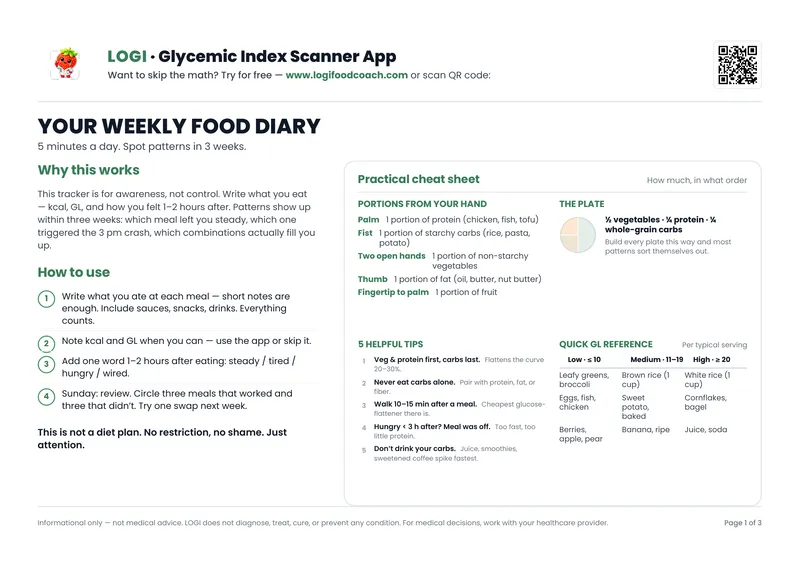
Free PDF — 3 pages
Your Weekly Food Journal
Track meals, glycemic load & mood. Spot patterns in 3 weeks.
No spam. Unsubscribe anytime.