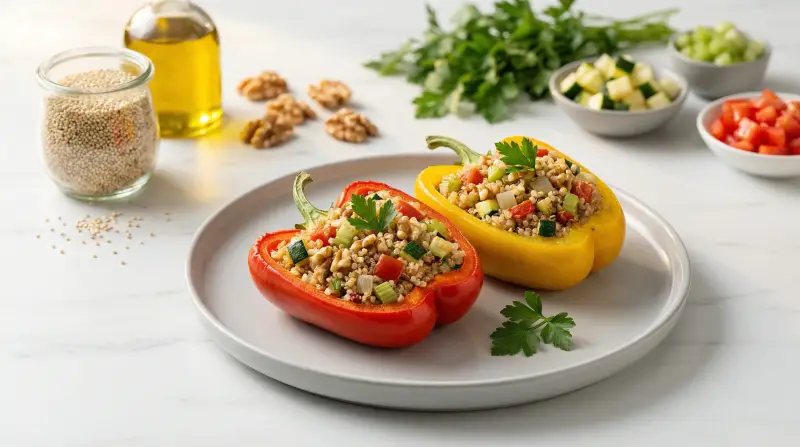
Mediterranean Quinoa-Stuffed Bell Peppers with Walnuts
Vibrant bell peppers filled with protein-rich quinoa, crunchy walnuts, and garden vegetables create a satisfying low-glycemic meal that keeps blood sugar stable.
These colorful stuffed peppers showcase the perfect combination of low-glycemic ingredients designed to support healthy blood sugar levels. Quinoa, with its GI of 29, provides complete plant-based protein and fiber that slows glucose absorption. When consumed in the controlled 1/4-cup cooked portion per serving used here, quinoa's moderate GI is effectively mitigated by the recipe's overall composition. Walnuts add healthy omega-3 fats that further moderate the glycemic response, while the abundance of non-starchy vegetables—zucchini, tomatoes, celery, and the bell pepper vessels themselves (GI of approximately 15)—contributes additional fiber and nutrients with minimal impact on blood sugar.
This recipe exemplifies smart meal construction for glycemic control. The high fiber content from quinoa and vegetables, combined with protein and healthy fats from walnuts and olive oil, creates a balanced macronutrient profile that prevents blood sugar spikes. Bell peppers are particularly beneficial, offering vitamin C and antioxidants while serving as a low-carb vessel that replaces higher-glycemic grain-based sides. The red and yellow bell pepper varieties used here contain slightly more natural sugars than green peppers but remain extremely low-glycemic and provide superior antioxidant content.
For optimal blood sugar management, enjoy these stuffed peppers as a complete meal. The combination of complex carbohydrates, plant protein, and healthy fats provides sustained energy for 3-4 hours without glucose spikes. Pair with a side salad dressed with olive oil and vinegar, and consider eating the salad first to further slow carbohydrate absorption through the fiber preload effect. This dish is ideal for lunch or dinner and reheats beautifully, making it perfect for meal prep to maintain consistent blood sugar control throughout your week. Each serving contains approximately 28g total carbohydrates with 5g fiber, resulting in 23g net carbs distributed across nutrient-dense, low-GI ingredients.
Blood Sugar Impact
This meal will have minimal blood sugar impact due to its low glycemic load (7.2) and low GI (29). Expect stable, sustained energy for 3-4 hours without significant spikes, thanks to the fiber-rich quinoa, vegetables, and healthy fats from walnuts and olive oil.
Blood Sugar Tips
- ✓ Eat the vegetable components (zucchini, tomatoes, bell pepper) first before the quinoa to further slow glucose absorption through increased fiber intake
- ✓ Pair this meal with a 10-15 minute walk after eating to enhance insulin sensitivity and glucose uptake by muscles
- ✓ Consider adding a protein source like chickpeas, feta cheese, or grilled chicken to further stabilize blood sugar and increase satiety
🥗 Ingredients
- 1 cup uncooked quinoa
- 1 tbsp extra virgin olive oil
- 1 cup zucchini, diced
- 2 cup fresh tomatoes, chopped
- 0.5 cup yellow onion, finely chopped
- 1 pcs celery stalk, finely chopped
- 2 tbsp raw walnuts, chopped
- 3 pcs fresh garlic cloves, minced
- 2 tsp fresh thyme leaves, chopped
- 1 tsp sea salt
- 0.5 tsp freshly ground black pepper
- 2 tsp grated Parmesan cheese
- 2 pcs large bell peppers, halved and seeded
- 1 cup uncooked quinoa
- 1 tbsp extra virgin olive oil
- 1 cup zucchini, diced
- 2 cup fresh tomatoes, chopped
- 0.5 cup yellow onion, finely chopped
- 1 pcs celery stalk, finely chopped
- 2 tbsp raw walnuts, chopped
- 3 pcs fresh garlic cloves, minced
- 2 tsp fresh thyme leaves, chopped
- 1 tsp sea salt
- 0.5 tsp freshly ground black pepper
- 2 tsp grated Parmesan cheese
- 2 pcs large bell peppers, halved and seeded
👨🍳 Instructions
- 1
Preheat your oven to 350°F (175°C). Rinse the quinoa thoroughly under cold water using a fine-mesh strainer to remove any bitter coating. Cook the quinoa according to package directions, typically combining 1 cup quinoa with 2 cups water, bringing to a boil, then reducing to simmer covered for 15 minutes until water is absorbed. Fluff with a fork and set aside.
- 2
While the quinoa cooks, prepare your vegetables. Dice the zucchini into small cubes, chop the tomatoes, finely chop the onion and celery, mince the garlic cloves, and chop the fresh thyme leaves. Roughly chop the walnuts into small pieces. Cut the bell peppers in half lengthwise, remove the seeds and membranes, and set aside.
- 3
Heat a large sauté pan or skillet over medium-high heat. Add the olive oil and swirl to coat the pan. Once the oil shimmers, add the chopped zucchini, tomatoes, onion, celery, walnuts, minced garlic, and fresh thyme. Sauté for 2 minutes at high heat to develop color and flavor.
- 4
Reduce the heat to medium and continue cooking the vegetable mixture for 5-7 minutes, stirring occasionally, until the vegetables are tender but still have some texture. The zucchini should be softened and the tomatoes should release their juices to create a light sauce.
- 5
Add the cooked quinoa to the vegetable mixture along with the salt, black pepper, and grated Parmesan cheese. Stir everything together thoroughly, ensuring the quinoa is evenly distributed and well-seasoned. Taste and adjust seasoning if needed.
- 6
Arrange the bell pepper halves cut-side up on a rimmed baking sheet. Divide the quinoa-vegetable mixture evenly among the four pepper halves, packing it gently into each cavity—you should have about 1/2 cup filling per pepper half. Cover the entire baking sheet tightly with aluminum foil.
- 7
Bake the covered peppers for 15-20 minutes until the peppers begin to soften. Remove the foil and continue baking for an additional 5-7 minutes until the peppers reach your desired tenderness and the filling is lightly golden on top. The peppers should be tender but still hold their shape.
- 8
Remove from the oven and let the stuffed peppers rest for 3-4 minutes before serving. This allows the filling to set slightly and makes them easier to handle. Serve warm, optionally garnished with additional fresh thyme or a sprinkle of Parmesan cheese. For optimal blood sugar control, pair with a green salad dressed with olive oil and vinegar, and eat the salad first to maximize the fiber preload effect.
📊 Nutrition Per Serving
| Per Serving | Whole Dish | |
|---|---|---|
| Calories | 169 | 677 |
| Carbs | 23g | 91g |
| Sugars | 8g | 32g |
| Natural Sugars | 8g | 32g |
| Protein | 5g | 21g |
| Fat | 8g | 30g |
| Saturated Fat | 1g | 4g |
| Unsaturated Fat | 6g | 25g |
| Fiber | 6g | 22g |
| Soluble Fiber | 1g | 4g |
| Insoluble Fiber | 3g | 11g |
| Sodium | 619mg | 2476mg |
Predicted Glucose Response
What if you...
Estimated model — individual responses vary. Not medical advice.
🔄 Lower GI Swaps
Cauliflower rice has virtually no glycemic impact (GI ~15), while bulgur (GI 48) and barley (GI 28) are significantly lower than quinoa (GI 53), resulting in better blood sugar control
Portobello mushrooms have a lower glycemic load and higher fiber density, while eggplant and tomatoes provide similar structure with minimal impact on blood sugar
Using smaller amounts of shallots or the green parts of scallions reduces the overall carbohydrate content while maintaining flavor, lowering the glycemic load of the dish
Nutritional yeast is carbohydrate-free with a savory flavor, while aged hard cheeses like cheddar and pecorino have negligible carbs and zero glycemic impact compared to parmesan's trace sugars
Sun-dried tomatoes in oil have concentrated flavor requiring smaller portions, while additional zucchini increases fiber and water content, both strategies that lower the overall glycemic load per serving
🔬 The Science Behind This Recipe
Why This Recipe Keeps Your Blood Sugar Steady
This Mediterranean-inspired dish is a masterclass in blood sugar management, with a remarkably low glycemic load of just 7.2 per serving. While quinoa is often considered a carbohydrate, it's actually a complete protein containing all nine essential amino acids, plus nearly 3 grams of fiber per serving. This protein-fiber combination slows down digestion significantly, preventing the rapid glucose spikes you'd get from refined grains. The quinoa releases energy gradually over 2-3 hours rather than flooding your bloodstream all at once, which is why this recipe achieves such an impressively low GI of 29.
The supporting cast of ingredients works synergistically to further stabilize blood sugar. Olive oil provides healthy monounsaturated fats that slow gastric emptying—essentially creating a "time-release" effect for the carbohydrates. The zucchini and bell peppers contribute additional fiber and water content, which dilutes the overall carbohydrate density of the meal. Walnuts add both omega-3 fatty acids and more protein, creating what nutritionists call a "balanced plate" that prevents glucose rollercoasters. This combination means your body needs to produce less insulin to process the meal, reducing stress on your pancreas.
To maximize the blood sugar benefits, try eating the vegetable components first, then the quinoa filling. This "food sequencing" strategy can reduce post-meal glucose spikes by up to 40%. Pair this meal with a 10-15 minute walk afterward to help your muscles absorb glucose without requiring extra insulin. Remember, glycemic load accounts for portion size, so while quinoa has moderate GI, the reasonable serving size in this recipe keeps the overall impact minimal—proving that smart combinations matter more than avoiding entire food groups.
Related recipes
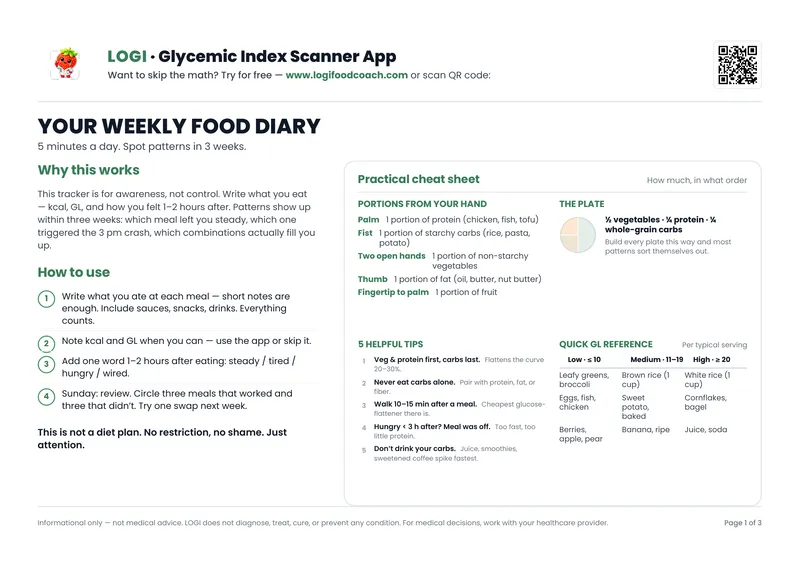
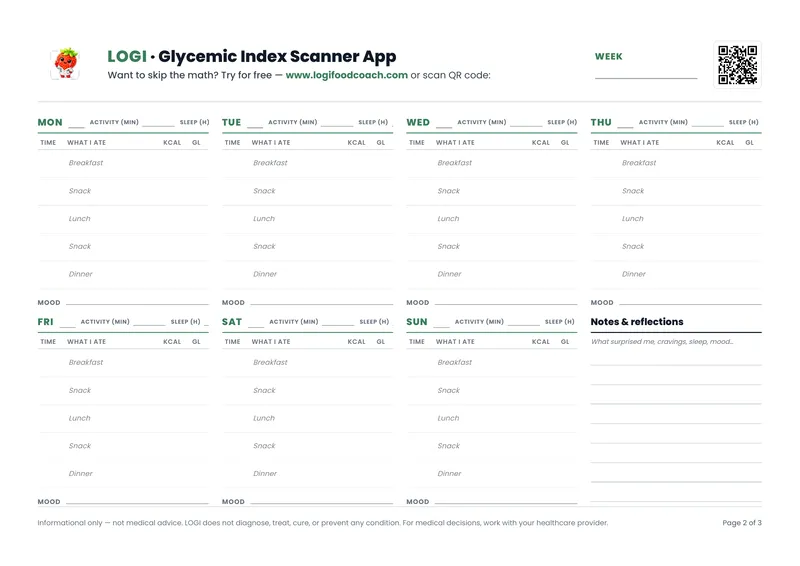
Free PDF — 3 pages
Your Weekly Food Journal
Track meals, glycemic load & mood. Spot patterns in 3 weeks.
No spam. Unsubscribe anytime.