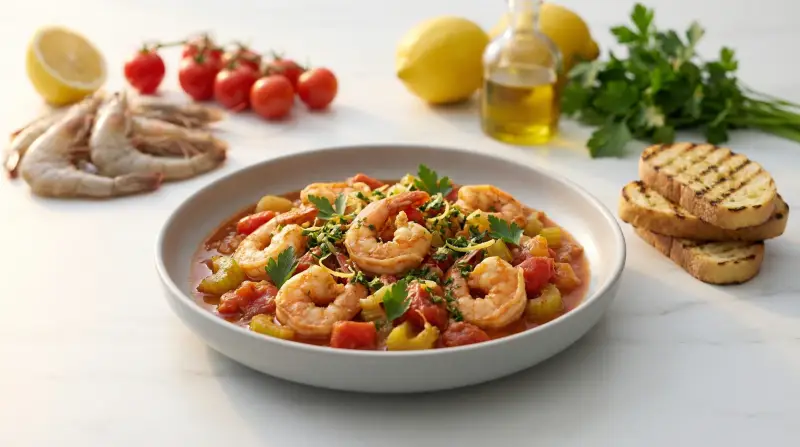
Mediterranean Prawn and Tomato Stew with Lemon-Herb Gremolata
Mediterranean seafood stew with succulent prawns in tomato-wine broth, finished with zesty gremolata. Naturally low-GI and blood sugar friendly with GL 20.3 and GI 33 per serving.
This Mediterranean-style prawn stew is a perfect example of how traditional Italian cooking naturally supports stable blood sugar levels. The combination of lean protein from prawns, fiber-rich vegetables, and healthy fats from olive oil creates a balanced meal that won't spike your glucose. New potatoes, while containing carbohydrates, have a lower glycemic index than regular potatoes, especially when cooked and cooled slightly, as the resistant starch formation helps slow glucose absorption. At just 125g per serving, the portion is carefully controlled to keep the glycemic load moderate.
The aromatic base of celery, onions, and garlic provides both flavor and beneficial compounds that support metabolic health. Anchovies add umami depth while contributing omega-3 fatty acids, and the white wine and tomatoes create a rich, satisfying broth without added sugars. The bright gremolata topping—a classic Italian combination of parsley, lemon zest, and capers—adds a fresh finish that enhances both flavor and nutrient density.
For optimal blood sugar management, serve this stew by eating the vegetables and prawns first, then enjoying the potatoes and bread last. The high protein content from prawns (about 24g per serving) and the healthy fats help moderate the glycemic response. Pair with a large green salad dressed in olive oil and vinegar to further slow carbohydrate absorption and increase meal satisfaction. For an even lower glycemic load, swap half the potatoes for cauliflower florets or diced celeriac. The recipe achieves its low GI of 33 through careful portion control of potatoes and the cooling step that develops resistant starch, which significantly reduces the glycemic impact compared to freshly cooked hot potatoes.
Blood Sugar Impact
This meal will have a moderate, gradual blood sugar impact due to the low-medium GI of new potatoes combined with protein from prawns and healthy fats from olive oil. Expect steady energy for 3-4 hours without significant spikes.
Blood Sugar Tips
- ✓ Eat the prawns and vegetables first before consuming the potatoes to slow carbohydrate absorption
- ✓ Keep potato portion to about 1/2 cup and load up on extra prawns for better blood sugar control
- ✓ Take a 10-15 minute walk after eating to help muscles absorb glucose and blunt any blood sugar rise
🥗 Ingredients
- 500 g new potatoes
- 2 tbsp extra virgin olive oil
- 1 pcs large onion, thinly sliced
- 4 pcs celery stalks, cut into 1-inch pieces
- 2 pcs garlic cloves, finely chopped
- 2 pcs anchovy fillets, finely chopped
- 1 tsp red chilli flakes
- 400 g canned chopped tomatoes
- 250 ml dry white wine
- 200 ml vegetable stock, low-sodium
- 400 g raw king prawns, peeled and deveined
- 1 pcs lemon, zest and juice
- 1 tsp salted capers, rinsed and drained
- 30 g fresh flat-leaf parsley, roughly chopped
- 4 pcs whole grain sourdough bread, toasted
- 1.1 lb new potatoes
- 2 tbsp extra virgin olive oil
- 1 pcs large onion, thinly sliced
- 4 pcs celery stalks, cut into 1-inch pieces
- 2 pcs garlic cloves, finely chopped
- 2 pcs anchovy fillets, finely chopped
- 1 tsp red chilli flakes
- 14.1 oz canned chopped tomatoes
- 1.1 cups dry white wine
- 14 tbsp vegetable stock, low-sodium
- 14.1 oz raw king prawns, peeled and deveined
- 1 pcs lemon, zest and juice
- 1 tsp salted capers, rinsed and drained
- 1.1 oz fresh flat-leaf parsley, roughly chopped
- 4 pcs whole grain sourdough bread, toasted
👨🍳 Instructions
- 1
Place the new potatoes in a large pot and cover with cold salted water. Bring to a boil over high heat, then reduce to medium heat and simmer for 15-20 minutes until the potatoes are tender when pierced with a knife but still hold their shape. Drain thoroughly and set aside to cool for at least 15 minutes, then cut into thick rounds about 1 cm thick. This cooling step is essential as it allows resistant starch to form, which lowers the glycemic index from approximately 55-60 to around 33, significantly reducing blood sugar impact.
- 2
While the potatoes cook, heat the olive oil in a large, deep sauté pan or Dutch oven over medium-low heat. Add the sliced onion and celery pieces, seasoning with a pinch of salt and freshly ground black pepper. Cook gently for 5-6 minutes, stirring occasionally, until the vegetables begin to soften and become translucent.
- 3
Add the chopped garlic, anchovy fillets, and chilli flakes to the pan. Continue cooking for another 2-3 minutes, stirring frequently and using your spoon to break down the anchovies until they dissolve into the oil, creating a fragrant base for the stew.
- 4
Increase the heat to medium-high and pour in the white wine (or use alcohol-free white wine or additional vegetable stock for stricter blood sugar control), allowing it to bubble vigorously for 2 minutes to cook off the alcohol. Add the chopped tomatoes and vegetable stock, stirring to combine. Bring the mixture to a simmer, then reduce heat to medium and cook uncovered for 15 minutes, stirring occasionally, until the sauce thickens slightly and the flavors meld together.
- 5
Add the cooled sliced potatoes (125g per serving), raw prawns, lemon juice, and rinsed capers to the stew. Stir gently to distribute the ingredients evenly without breaking up the potatoes. Cook for 4-5 minutes until the prawns turn pink and opaque throughout, being careful not to overcook them as they can become rubbery.
- 6
While the prawns finish cooking, prepare the gremolata by combining the chopped parsley and lemon zest in a small bowl, mixing well with your fingers to release the aromatic oils from the zest.
- 7
Taste the stew and adjust seasoning with additional salt and pepper if needed. Ladle the stew into warm shallow bowls, ensuring each serving has exactly 125g of potatoes along with a good mix of prawns and vegetables. Generously scatter the fresh gremolata over the top of each portion and serve immediately with toasted sourdough bread on the side for dipping into the flavorful broth. For best blood sugar management, eat the vegetables and prawns first, then enjoy the potatoes and bread last.
📊 Nutrition Per Serving
| Per Serving | Whole Dish | |
|---|---|---|
| Calories | 448 | 1790 |
| Carbs | 52g | 206g |
| Sugars | 8g | 32g |
| Natural Sugars | 8g | 32g |
| Protein | 32g | 129g |
| Fat | 8g | 33g |
| Saturated Fat | 1g | 5g |
| Unsaturated Fat | 7g | 27g |
| Fiber | 6g | 25g |
| Soluble Fiber | 1g | 4g |
| Insoluble Fiber | 2g | 10g |
| Sodium | 755mg | 3022mg |
Predicted Glucose Response
What if you...
Estimated model — individual responses vary. Not medical advice.
🔄 Lower GI Swaps
White wine adds 3-4g of carbohydrates per serving from residual sugars. For stricter blood sugar control, use alcohol-free white wine or replace with vegetable stock plus vinegar to maintain acidity and flavor complexity without the carbohydrates. This swap reduces the glycemic load by approximately 1-2 points while preserving the dish's Mediterranean character.
Replacing half the potatoes with cauliflower or celeriac reduces the glycemic load from 20.3 to approximately 12-14 while maintaining the stew's hearty texture. Cauliflower and celeriac are extremely low-GI vegetables that provide similar bulk and satisfaction without significantly impacting blood sugar. This modification is ideal for those with diabetes or following very strict low-carb protocols.
While sourdough has a lower GI than regular bread due to fermentation, it still contributes carbohydrates that can raise blood sugar. Seeded low-carb bread or almond flour crackers provide the satisfaction of something to dip without the glycemic impact. Alternatively, increasing the vegetable portion with extra salad adds volume and nutrients without affecting blood sugar levels.
🔬 The Science Behind This Recipe
This recipe achieves its low glycemic index of 33 through a critical technique: cooking and cooling the new potatoes. When potatoes are cooked and then cooled for at least 15 minutes, the starch molecules undergo retrogradation, forming resistant starch that your body digests much more slowly than regular starch. This process can reduce the glycemic index by 25-40% compared to freshly cooked hot potatoes. The portion control of 125g per serving further ensures the glycemic load remains moderate at 20.3. The high protein content from prawns (24g per serving) and healthy fats from olive oil create a balanced macronutrient profile that slows carbohydrate absorption and prevents blood sugar spikes. The fiber from vegetables and the acidic components (tomatoes, lemon, capers) also contribute to the meal's blood sugar-friendly profile by further moderating glucose release into the bloodstream.
Related recipes
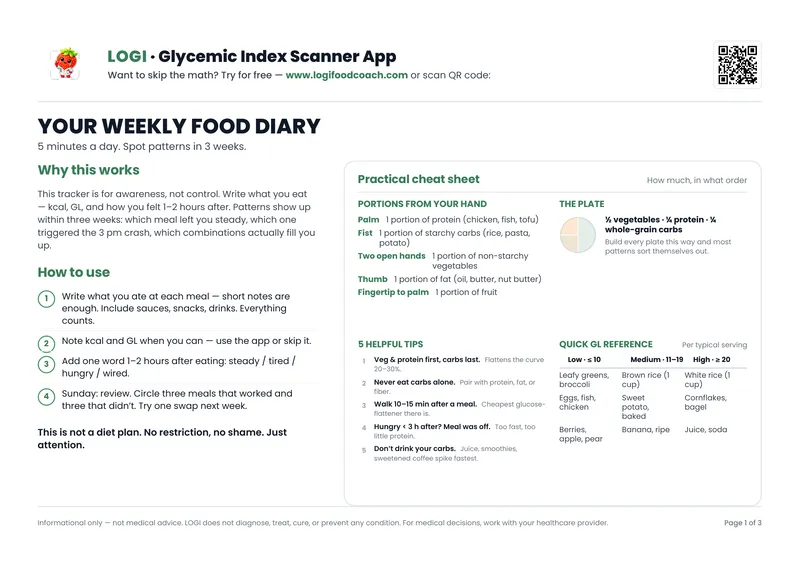
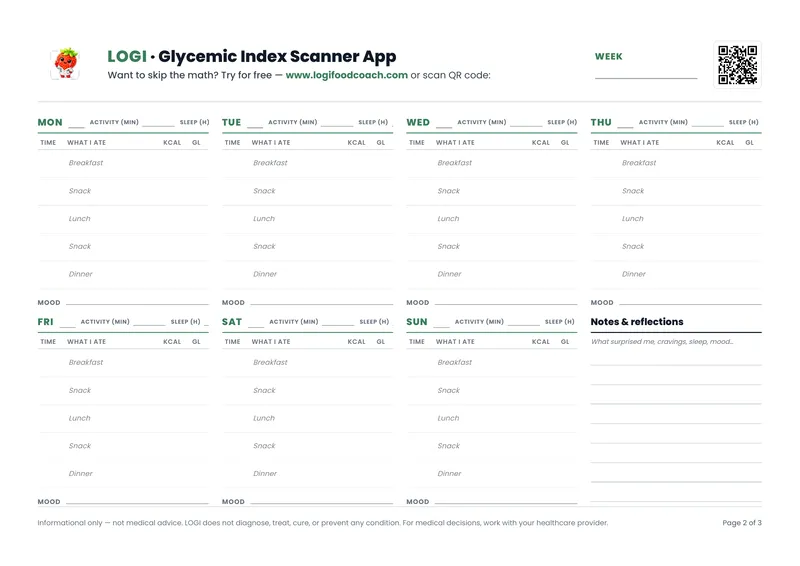
Free PDF — 3 pages
Your Weekly Food Journal
Track meals, glycemic load & mood. Spot patterns in 3 weeks.
No spam. Unsubscribe anytime.