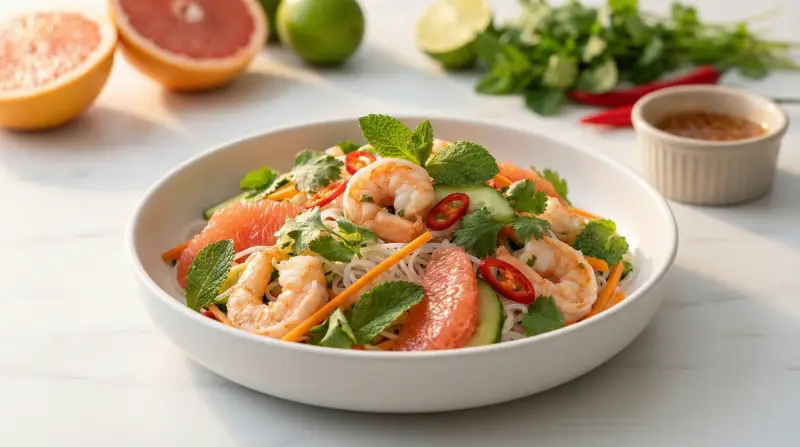
Vietnamese Prawn and Pink Grapefruit Noodle Salad
A vibrant low-GI Vietnamese salad featuring tender prawns, citrus grapefruit, and portion-controlled rice noodles in a balanced sweet-sour dressing that won't spike blood sugar.
This refreshing Vietnamese-inspired noodle salad is a masterclass in blood sugar management through smart ingredient pairing and portion control. Rice vermicelli noodles have a moderate glycemic index of 53, but this recipe employs three key strategies to minimize blood sugar impact: strict portion control (33g dry noodles per serving), cold preparation that creates resistant starch, and pairing with high-fiber vegetables and lean protein from prawns, which significantly slows glucose absorption. The pink grapefruit adds a burst of vitamin C and beneficial compounds that may improve insulin sensitivity.
The magic of this dish lies in its balanced approach: the noodles provide satisfying carbohydrates, but they're offset by cucumber, carrots, and fresh herbs that add volume, fiber, and phytonutrients without raising blood sugar. The prawns deliver high-quality protein that further moderates the glycemic response. The dressing uses minimal sugar—just 2 teaspoons for six servings, which equals only one-third teaspoon per portion—balanced with lime juice and fish sauce for complex flavor without excess sweetness. For even better blood sugar control, swap the brown sugar for an equal amount of erythritol or monk fruit sweetener, which have zero glycemic impact.
For optimal blood sugar control, eat the vegetables and prawns first, then the noodles. This food sequencing technique can reduce post-meal glucose spikes by up to 40 percent. The fresh mint and coriander aren't just garnishes—they contain compounds that may enhance insulin function. The cold noodles develop resistant starch during cooling, which acts more like fiber than regular starch, feeding beneficial gut bacteria and producing less glucose. Serve this as a light lunch paired with green tea, or as dinner alongside a small portion of edamame for extra protein and fiber to further stabilize blood sugar levels.
Blood Sugar Impact
This meal will cause a moderate, gradual blood sugar rise due to the rice vermicelli, but the fiber from vegetables, protein from prawns, and acidity from grapefruit and lime will help slow glucose absorption. Expect steady energy for 2-3 hours with a gentler peak than refined carbs alone.
Blood Sugar Tips
- ✓ Eat the prawns and vegetables first before the noodles to slow carbohydrate absorption and reduce the glucose spike
- ✓ Keep the portion of rice vermicelli to about 1 cup cooked and increase the vegetable and prawn portions for better blood sugar control
- ✓ Take a 10-15 minute walk after eating to help muscles absorb glucose and blunt the post-meal blood sugar rise
🥗 Ingredients
- 200 g thin rice vermicelli noodles
- 12 pcs cherry tomatoes, halved
- 1 tbsp fish sauce
- 1 pcs fresh lime juice
- 2 tsp palm sugar or soft brown sugar
- 1 pcs large red chilli, divided
- 2 pcs pink grapefruits, segmented
- 0.5 pcs cucumber, peeled, deseeded and thinly sliced
- 2 pcs carrots, cut into matchsticks
- 3 pcs spring onions, thinly sliced
- 400 g cooked large prawns
- 30 g fresh mint leaves
- 30 g fresh coriander leaves
- 7.1 oz thin rice vermicelli noodles
- 12 pcs cherry tomatoes, halved
- 1 tbsp fish sauce
- 1 pcs fresh lime juice
- 2 tsp palm sugar or soft brown sugar
- 1 pcs large red chilli, divided
- 2 pcs pink grapefruits, segmented
- 0.5 pcs cucumber, peeled, deseeded and thinly sliced
- 2 pcs carrots, cut into matchsticks
- 3 pcs spring onions, thinly sliced
- 14.1 oz cooked large prawns
- 1.1 oz fresh mint leaves
- 1.1 oz fresh coriander leaves
👨🍳 Instructions
- 1
Place the rice vermicelli noodles in a large heatproof bowl and break them into shorter lengths with your hands. Pour boiling water over the noodles until completely submerged and let stand for 10 minutes until the noodles are tender and pliable. Use exactly 200g dry noodles to ensure proper portion control for blood sugar management.
- 2
While the noodles soak, prepare your vegetables. Halve the cherry tomatoes, peel and deseed the cucumber before slicing thinly, cut the carrots into thin matchsticks, slice the spring onions, and segment the pink grapefruits by cutting away all pith and membrane to release clean citrus segments. Pat the cooked prawns dry with paper towels if needed.
- 3
Drain the softened noodles thoroughly in a colander and rinse under cold running water to stop the cooking process and remove excess starch. This cooling step is crucial for lowering the glycemic impact by creating resistant starch, which acts more like fiber than regular carbohydrate. Let the noodles drain completely for 2 to 3 minutes, then refrigerate for at least 15 minutes if time permits for maximum resistant starch formation.
- 4
In the same large bowl, add the halved cherry tomatoes and gently crush them using the back of a spoon or a muddler to release their juices. Dice half of the red chilli and add it to the bowl along with the fish sauce, fresh lime juice, and sugar. Stir vigorously until the sugar dissolves completely. Remember, this minimal amount of sugar equals only one-third teaspoon per serving, keeping the glycemic load low.
- 5
Taste the dressing and adjust the balance of flavors as needed—it should be harmoniously sweet, sour, salty, and spicy. Add more lime juice for tartness, fish sauce for saltiness, or a tiny pinch more sugar if too sharp. For zero glycemic impact, substitute the brown sugar with erythritol or monk fruit sweetener in equal amounts. Remember that minimal sugar keeps this dish blood sugar friendly.
- 6
Add the cooled noodles to the dressing bowl and toss thoroughly to coat every strand. Then add the grapefruit segments, sliced cucumber, carrot matchsticks, spring onions, and cooked prawns. Tear the mint and coriander leaves and add them to the bowl, reserving a few whole leaves for garnish. The herbs contain compounds that may enhance insulin sensitivity.
- 7
Season the salad with a pinch of salt if needed and toss everything together gently but thoroughly, ensuring the dressing coats all ingredients evenly. Divide the noodle salad among six serving bowls or plates, ensuring each portion contains approximately 1 cup of noodles mixed with vegetables and prawns. Garnish with the remaining sliced chilli and reserved herbs, and serve immediately at room temperature for optimal flavor and glycemic benefit. For best blood sugar control, eat the prawns and vegetables first, then finish with the noodles.
📊 Nutrition Per Serving
| Per Serving | Whole Dish | |
|---|---|---|
| Calories | 241 | 1444 |
| Carbs | 39g | 236g |
| Sugars | 9g | 52g |
| Added Sugars | 1g | 8g |
| Natural Sugars | 7g | 44g |
| Protein | 19g | 112g |
| Fat | 1g | 4g |
| Saturated Fat | 0g | 1g |
| Unsaturated Fat | 1g | 3g |
| Fiber | 3g | 17g |
| Soluble Fiber | 1g | 4g |
| Insoluble Fiber | 2g | 10g |
| Sodium | 297mg | 1784mg |
Predicted Glucose Response
What if you...
Estimated model — individual responses vary. Not medical advice.
🔄 Lower GI Swaps
Rice vermicelli has a high glycemic index of 58-70. Shirataki and kelp noodles are virtually zero-carb with negligible glycemic impact, while zucchini noodles contain only 3g carbs per cup versus 42g in rice noodles, dramatically reducing the overall glycemic load of the dish.
Brown sugar has a GI of 64 and causes rapid blood sugar spikes. Monk fruit, allulose, and stevia provide sweetness with zero glycemic impact, maintaining the sweet-savory balance of Vietnamese cuisine without affecting blood glucose levels.
Carrots have a moderate GI of 35-92 depending on preparation and add unnecessary sugar content. Daikon radish, jicama, and bell peppers provide similar crunch and color with significantly lower carbohydrate content (2-5g per cup versus 12g) and minimal impact on blood sugar.
While grapefruit has a relatively low GI of 25, it still contains 13g sugar per half. Lime and lemon segments provide citrus brightness with 75% less sugar and lower glycemic load, while pomelo offers similar texture with slightly better blood sugar impact when portion-controlled.
🔬 The Science Behind This Recipe
The Science Behind This Blood Sugar-Friendly Bowl
This Vietnamese-inspired salad is a masterclass in balancing carbohydrates with blood sugar-stabilizing nutrients. While rice vermicelli noodles contain fast-digesting carbs, the prawns provide lean protein that significantly slows glucose absorption. Protein triggers the release of hormones that moderate insulin response, preventing the sharp blood sugar spike you'd get from eating noodles alone. The healthy fats in this dish—whether from the prawns themselves or any added nuts or avocado—further delay stomach emptying, creating a gradual, sustained release of glucose into your bloodstream rather than a sudden flood.
The pink grapefruit and cherry tomatoes bring more than just vibrant flavor—they're fiber powerhouses that act like a brake pedal on your blood sugar. The soluble fiber in grapefruit forms a gel-like substance in your digestive tract, physically slowing down carbohydrate absorption. Grapefruit also contains naringenin, a compound that may improve insulin sensitivity. The tomatoes add extra fiber plus vitamin C and lycopene, antioxidants that support metabolic health. The lime juice and fish sauce contribute minimal carbs while enhancing flavor, proving you don't need sugar-heavy dressings to create delicious meals.
For optimal blood sugar control, try eating your salad components in strategic order: start with the prawns and vegetables, then finish with the noodles. This "food sequencing" approach can reduce post-meal glucose spikes by up to 40%. A 10-minute walk after eating activates your muscles to absorb glucose without requiring extra insulin, making this light meal even more blood sugar-friendly. With a glycemic load of just 19.5, this dish proves that mindful ingredient combinations let you enjoy noodles without compromising metabolic health.
Related recipes

Free PDF — 3 pages
Your Weekly Food Journal
Track meals, glycemic load & mood. Spot patterns in 3 weeks.
No spam. Unsubscribe anytime.
