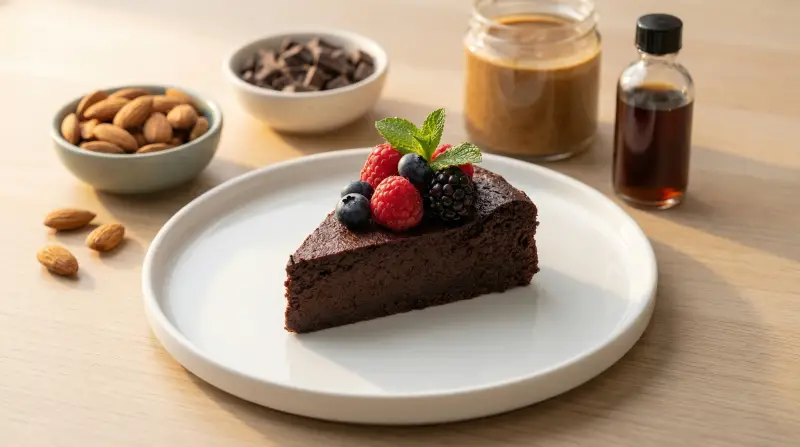
Dark Chocolate Almond Flourless Cake
A rich, naturally low-glycemic dessert featuring dark chocolate and almond butter with no refined flour or sugar—perfect for stable blood sugar levels.
This luxurious flourless chocolate cake harnesses the power of low-glycemic ingredients to create a dessert that won't spike your blood sugar. By using 70% dark chocolate, pure almond butter, and eggs as the base, we've eliminated refined flour and kept added sugars minimal with just a touch of maple syrup.
The high cocoa content in dark chocolate provides beneficial flavonoids while maintaining a lower glycemic impact compared to milk chocolate. Almond butter contributes healthy fats and protein that slow glucose absorption, while eggs provide structure and additional protein. The small amount of maple syrup (less than a teaspoon per serving) adds subtle sweetness without overwhelming your system. Almond meal replaces traditional flour, keeping the glycemic load low while adding fiber and nutrients.
For optimal blood sugar management, enjoy this cake after a protein-rich meal, and pair each slice with the fresh berries on top—their fiber content further moderates glucose response. The combination of fat, protein, and minimal natural sweeteners makes this an ideal dessert choice for those monitoring their glycemic health. Each 60g slice contains approximately 12g net carbohydrates with a glycemic load of just 2.7.
Blood Sugar Impact
Low to moderate impact with a gradual rise due to the low GI of 38 and minimal glycemic load of 2.7. The combination of healthy fats from almond butter and dark chocolate, plus protein from eggs, should provide stable energy for 2-3 hours without significant spikes.
Blood Sugar Tips
- ✓ Eat this dessert after a protein-rich meal rather than on an empty stomach to further blunt any blood sugar response
- ✓ Pair with a handful of nuts or a small portion of Greek yogurt to add extra protein and fat for even better blood sugar stability
- ✓ Take a 10-15 minute walk after eating to help muscles absorb glucose and minimize any post-dessert blood sugar elevation
🥗 Ingredients
- 200 g 70% dark chocolate, chopped
- 175 g unsweetened almond or hazelnut butter
- 6 pcs large eggs, at room temperature
- 4 tbsp almond meal or hazelnut meal
- 2 tbsp pure maple syrup
- 2 tsp natural vanilla extract
- 1 tsp sea salt
- 150 g fresh mixed berries for topping
- 10 g fresh mint leaves for garnish
- 7.1 oz 70% dark chocolate, chopped
- 6.2 oz unsweetened almond or hazelnut butter
- 6 pcs large eggs, at room temperature
- 4 tbsp almond meal or hazelnut meal
- 2 tbsp pure maple syrup
- 2 tsp natural vanilla extract
- 1 tsp sea salt
- 5.3 oz fresh mixed berries for topping
- 0.4 oz fresh mint leaves for garnish
👨🍳 Instructions
- 1
Position your oven rack in the center and preheat to 160°C (320°F). Prepare a 20cm springform pan by greasing the sides with butter or oil, then line the bottom with parchment paper cut to fit precisely.
- 2
Create a double boiler by placing a heat-safe bowl over a saucepan filled with 5cm of simmering water. Add the chopped dark chocolate to the bowl and stir occasionally until completely melted and smooth. Remove from heat, add the almond butter, and whisk together until the mixture is glossy and uniform. Set aside to cool for 5 minutes.
- 3
In a large mixing bowl, crack the room-temperature eggs and beat them using an electric mixer on medium-high speed for 8-10 minutes. The eggs should transform into a pale, thick, and voluminous foam that nearly triples in volume—this aeration is crucial for the cake's light texture.
- 4
Add the maple syrup, vanilla extract, and salt to the whipped eggs. Continue beating for another minute until these ingredients are fully incorporated and the mixture remains fluffy and light.
- 5
Using a spatula, gently fold 2-3 tablespoons of the chocolate-almond butter mixture into the egg foam using broad, sweeping motions from the bottom of the bowl upward. Continue adding the chocolate mixture gradually, a few tablespoons at a time, folding gently to preserve the airiness. Once nearly combined, sprinkle the almond meal over the top and fold just until no streaks remain.
- 6
Pour the batter into your prepared springform pan, using the spatula to spread it evenly to the edges. Bake for 28-32 minutes, until the top appears set and springs back lightly when touched in the center. A toothpick inserted should come out with just a few moist crumbs—avoid overbaking to maintain the fudgy texture.
- 7
Remove the cake from the oven and allow it to cool completely in the pan on a wire rack for at least 1 hour. The cake will settle and may crack slightly on top, which is normal for flourless cakes. Once cooled, carefully release the springform sides.
- 8
Just before serving, arrange fresh berries artfully across the top of the cake and tuck mint leaves between them for a beautiful presentation. Slice into 16 portions using a sharp knife wiped clean between cuts, with each slice weighing approximately 60g. For best blood sugar management, serve after a balanced meal containing protein and vegetables.
📊 Nutrition Per Serving
| Per Serving | Whole Dish | |
|---|---|---|
| Calories | 186 | 2976 |
| Carbs | 11g | 176g |
| Sugars | 6g | 96g |
| Added Sugars | 3g | 40g |
| Natural Sugars | 4g | 56g |
| Protein | 6g | 98g |
| Fat | 14g | 226g |
| Saturated Fat | 4g | 66g |
| Unsaturated Fat | 10g | 152g |
| Fiber | 3g | 53g |
| Soluble Fiber | 0g | 2g |
| Insoluble Fiber | 0g | 3g |
| Sodium | 151mg | 2416mg |
Predicted Glucose Response
What if you...
Estimated model — individual responses vary. Not medical advice.
🔄 Lower GI Swaps
These zero-calorie sweeteners have no impact on blood glucose levels (GI of 0) compared to maple syrup which has a GI of 54 and contains 13g carbs per tablespoon, eliminating virtually all glycemic load from the sweetener
Coconut flour has a lower glycemic index (45 vs 60) and requires less volume due to higher fiber density, while lupin flour contains only 1g net carbs per serving compared to almond flour's 3g, further reducing glycemic load
Specifying lower-GI berries like raspberries (GI 25) and blackberries (GI 25) instead of mixed berries avoids higher-GI options like blueberries (GI 53), keeping the glycemic impact minimal while maintaining antioxidant benefits
Higher cacao percentage chocolate contains significantly less sugar - 90% has only 3g sugar per ounce versus 6-8g in 70% dark chocolate, reducing glycemic load while maintaining rich chocolate flavor and beneficial polyphenols
🔬 The Science Behind This Recipe
Why This Cake Won't Spike Your Blood Sugar
This flourless chocolate cake achieves its remarkably low glycemic impact through a strategic combination of fat, protein, and minimal natural sugars. The dark chocolate and almond butter provide healthy fats that significantly slow glucose absorption, while eggs contribute high-quality protein that further moderates the blood sugar response. Unlike traditional cakes made with refined wheat flour and white sugar, this recipe relies on almond flour—a low-carbohydrate, high-fiber alternative that contains only 3 grams of net carbs per quarter cup compared to 23 grams in regular flour. The small amount of maple syrup provides just enough sweetness without overwhelming the metabolic benefits of the other ingredients.
The glycemic load of 2.7 per serving is exceptionally low, meaning this dessert will have minimal impact on your blood glucose levels. Glycemic load considers both the quality (GI of 38) and quantity of carbohydrates in an actual serving, giving you a more realistic picture than GI alone. For context, a glycemic load under 10 is considered low, and this cake comes in well below that threshold. The magic happens when fat and protein create a "metabolic buffer"—they physically slow down digestion and trigger hormones that prevent rapid glucose spikes.
To maximize the benefits, enjoy this cake after a balanced meal rather than on an empty stomach. The existing food in your digestive system will further slow sugar absorption. You might also consider pairing it with a handful of nuts or a small serving of Greek yogurt for additional protein. A short 10-minute walk after dessert can help your muscles absorb glucose more efficiently, keeping blood sugar even more stable.
Related recipes

Free PDF — 3 pages
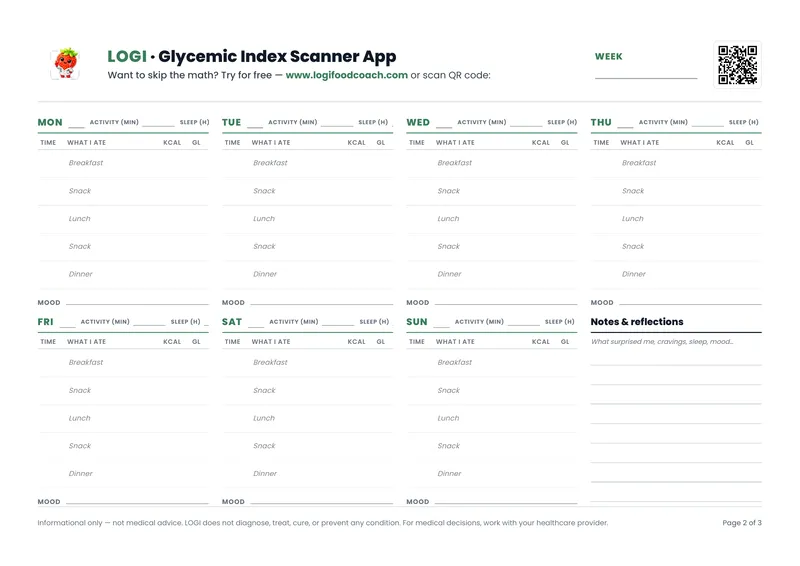
Your Weekly Food Journal
Track meals, glycemic load & mood. Spot patterns in 3 weeks.
No spam. Unsubscribe anytime.