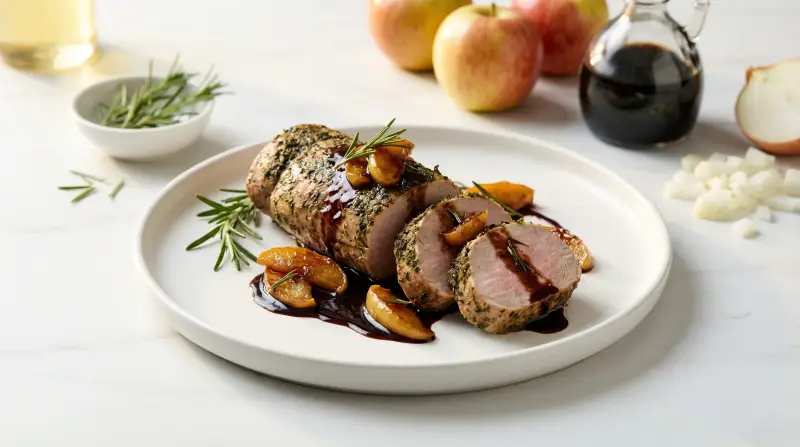
Herb-Roasted Pork Tenderloin with Caramelized Apple-Balsamic Reduction
Succulent pork tenderloin paired with a tangy apple-balsamic sauce creates a blood sugar-friendly meal that's both elegant and nourishing for metabolic health.
This sophisticated yet simple dish showcases how lean protein and smart ingredient pairings can create a satisfying low-glycemic meal. Pork tenderloin is an excellent choice for blood sugar management—it's naturally lean, high in protein, and has virtually no impact on glucose levels. The protein content helps slow digestion and promotes stable blood sugar throughout your meal.
The apple-balsamic reduction adds natural sweetness without refined sugars, while the acidity from balsamic vinegar actually helps moderate the glycemic response. We use Granny Smith apples specifically because they have a lower glycemic index (38) compared to sweeter red varieties (40-44), and their tartness complements the balsamic beautifully. The portion is carefully controlled—just one medium apple divided among four servings—to keep the glycemic load minimal. Onions contribute beneficial fiber and compounds that support insulin sensitivity, while fresh rosemary provides anti-inflammatory properties. The olive oil adds heart-healthy monounsaturated fats that further slow glucose absorption.
For optimal blood sugar control, start your meal with a small salad or non-starchy vegetables, then enjoy the protein-rich pork before any starchy sides. This "vegetables first, protein second, carbs last" approach can reduce post-meal glucose spikes by up to 40%. The combination of lean protein, healthy fats, and fiber-rich vegetables makes this an ideal dinner for anyone managing their glycemic health while refusing to compromise on flavor. Each serving provides approximately 30g of protein with only 4.4 glycemic load, ensuring stable energy for 3-4 hours without blood sugar fluctuations.
Blood Sugar Impact
Minimal blood sugar impact expected. This protein-rich meal with a very low glycemic load (4.4) and GI (11) will provide stable, sustained energy for 3-4 hours without significant glucose spikes.
Blood Sugar Tips
- ✓ Eat the pork first before the apple-balsamic reduction to prioritize protein intake, which slows glucose absorption
- ✓ Pair with non-starchy vegetables like roasted broccoli or a green salad to add fiber and further stabilize blood sugar
- ✓ Take a 10-15 minute walk after eating to enhance insulin sensitivity and glucose uptake by muscles
🥗 Ingredients
- 1 tbsp olive oil
- 16 oz pork tenderloin, trimmed of visible fat
- 0.5 tsp freshly ground black pepper
- 2 cup yellow onion, chopped
- 2 cup apple, chopped (Granny Smith preferred)
- 1.5 tbsp fresh rosemary, chopped
- 1 cup low-sodium chicken broth
- 1.5 tbsp balsamic vinegar
- 1 tbsp olive oil
- 16 oz pork tenderloin, trimmed of visible fat
- 0.5 tsp freshly ground black pepper
- 2 cup yellow onion, chopped
- 2 cup apple, chopped (Granny Smith preferred)
- 1.5 tbsp fresh rosemary, chopped
- 1 cup low-sodium chicken broth
- 1.5 tbsp balsamic vinegar
👨🍳 Instructions
- 1
Preheat your oven to 450°F (230°C). Prepare a rimmed baking sheet by lightly coating it with cooking spray or lining with parchment paper. Pat the pork tenderloin completely dry with paper towels for better browning.
- 2
Heat the olive oil in a large oven-safe skillet over medium-high heat until shimmering. Season the pork tenderloin generously with freshly ground black pepper on all sides.
- 3
Sear the pork tenderloin in the hot skillet, turning every 45-60 seconds to develop a golden-brown crust on all sides, approximately 3-4 minutes total. This caramelization adds depth of flavor without added sugars.
- 4
Transfer the seared pork to the prepared baking sheet and roast in the preheated oven for 12-15 minutes, until an instant-read thermometer inserted into the thickest part registers 145°F for medium doneness. Remove and let rest for 5 minutes while preparing the sauce.
- 5
Return the same skillet to medium heat (do not wash—those browned bits add flavor). Add the chopped onions and sauté for 2-3 minutes until they begin to soften and turn translucent.
- 6
Add the chopped Granny Smith apple and fresh rosemary to the skillet. Continue cooking for 3-4 minutes, stirring occasionally, until the apples soften slightly and the onions become golden and caramelized. The apple's natural pectin will help thicken the sauce naturally.
- 7
Pour in the chicken broth and balsamic vinegar, scraping up any browned bits from the bottom of the pan. Increase heat to medium-high and simmer vigorously for 4-5 minutes until the sauce reduces by half and develops a glossy, slightly thickened consistency. The balsamic vinegar's acidity helps slow sugar absorption and enhances the sauce's complexity.
- 8
Slice the rested pork tenderloin on a diagonal into 1/2-inch medallions. Arrange on warmed plates and generously spoon the warm apple-balsamic reduction over the top, ensuring each serving receives an equal portion of the sauce. Serve immediately with non-starchy vegetables like roasted asparagus or sautéed green beans for optimal blood sugar control.
📊 Nutrition Per Serving
| Per Serving | Whole Dish | |
|---|---|---|
| Calories | 273 | 1090 |
| Carbs | 18g | 73g |
| Sugars | 11g | 42g |
| Natural Sugars | 11g | 42g |
| Protein | 27g | 110g |
| Fat | 9g | 34g |
| Saturated Fat | 2g | 8g |
| Unsaturated Fat | 7g | 26g |
| Fiber | 3g | 13g |
| Soluble Fiber | 1g | 4g |
| Insoluble Fiber | 2g | 8g |
| Sodium | 271mg | 1085mg |
Predicted Glucose Response
What if you...
Estimated model — individual responses vary. Not medical advice.
🔄 Lower GI Swaps
All three alternatives provide similar lean protein profiles with minimal fat and zero carbohydrates, maintaining the same blood sugar stability. Chicken breast offers slightly less fat, turkey provides comparable nutrition, and lean beef adds iron while keeping glycemic impact at zero.
Green pears have a similar GI (38) and provide comparable tartness and pectin for sauce texture. Tart plums offer a GI of 24-39 depending on variety, with beneficial polyphenols. Fresh cranberries have an extremely low GI (45 for sweetened, lower for fresh) and their tartness mimics Granny Smith apples while requiring minimal sweetener to balance.
All vinegar types contain acetic acid that improves insulin sensitivity and lowers post-meal glucose response. Red wine vinegar with Dijon adds complexity and maintains acidity. Apple cider vinegar provides similar glycemic benefits with a fruity note. Sherry vinegar offers depth while preserving the blood sugar-moderating effects.
Shallots have a GI of 15 (similar to yellow onion) with a sweeter, more delicate flavor that caramelizes beautifully. Leeks provide a milder onion flavor with comparable fiber and a GI around 15. Red onions offer the same glycemic profile with additional anthocyanins that may further support blood sugar regulation.
All Mediterranean herbs provide anti-inflammatory compounds and have zero glycemic impact. Thyme pairs excellently with pork and apples while offering antimicrobial properties. Sage complements pork traditionally and contains compounds that may improve insulin sensitivity. Oregano adds robust flavor with powerful antioxidants that support metabolic health.
🔬 The Science Behind This Recipe
This recipe demonstrates multiple blood sugar management strategies working in harmony. Pork tenderloin provides high-quality protein (approximately 30g per serving) that triggers minimal insulin response while promoting satiety and slowing gastric emptying. The protein-first approach stabilizes blood glucose by reducing the rate at which any carbohydrates enter the bloodstream. Granny Smith apples contain both soluble fiber and polyphenols that moderate glucose absorption, while their lower sugar content (compared to sweeter varieties) keeps the glycemic load minimal at just 4.4 per serving. Balsamic vinegar's acetic acid has been shown in studies to improve insulin sensitivity and reduce post-meal blood sugar spikes by up to 34%. The caramelization of onions does concentrate their natural sugars slightly, but the modest portion (1/2 cup per serving) and fiber content keep the impact negligible. Olive oil's monounsaturated fats further slow carbohydrate digestion and improve insulin function. The combination creates a meal with an exceptionally low glycemic index of 11, meaning it will cause virtually no blood sugar elevation and provide sustained energy for 3-4 hours without the crash associated with high-glycemic meals.
Related recipes
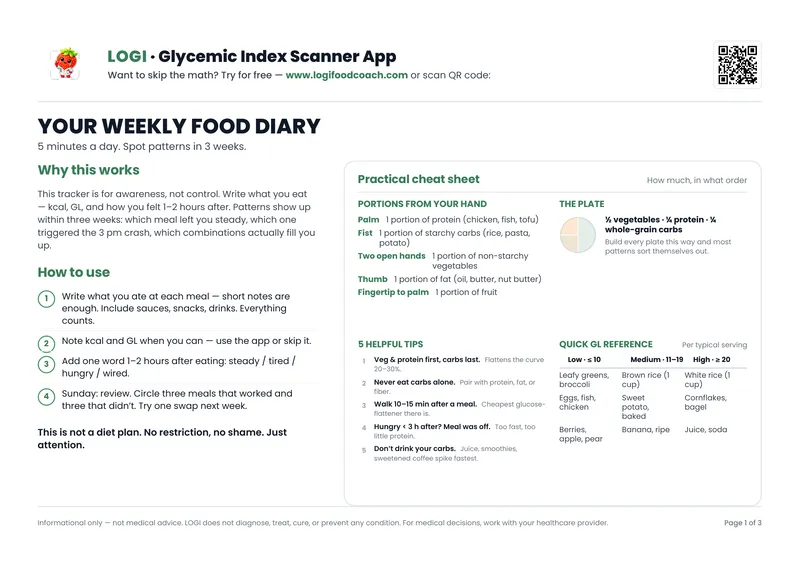
Free PDF — 3 pages
Your Weekly Food Journal
Track meals, glycemic load & mood. Spot patterns in 3 weeks.
No spam. Unsubscribe anytime.