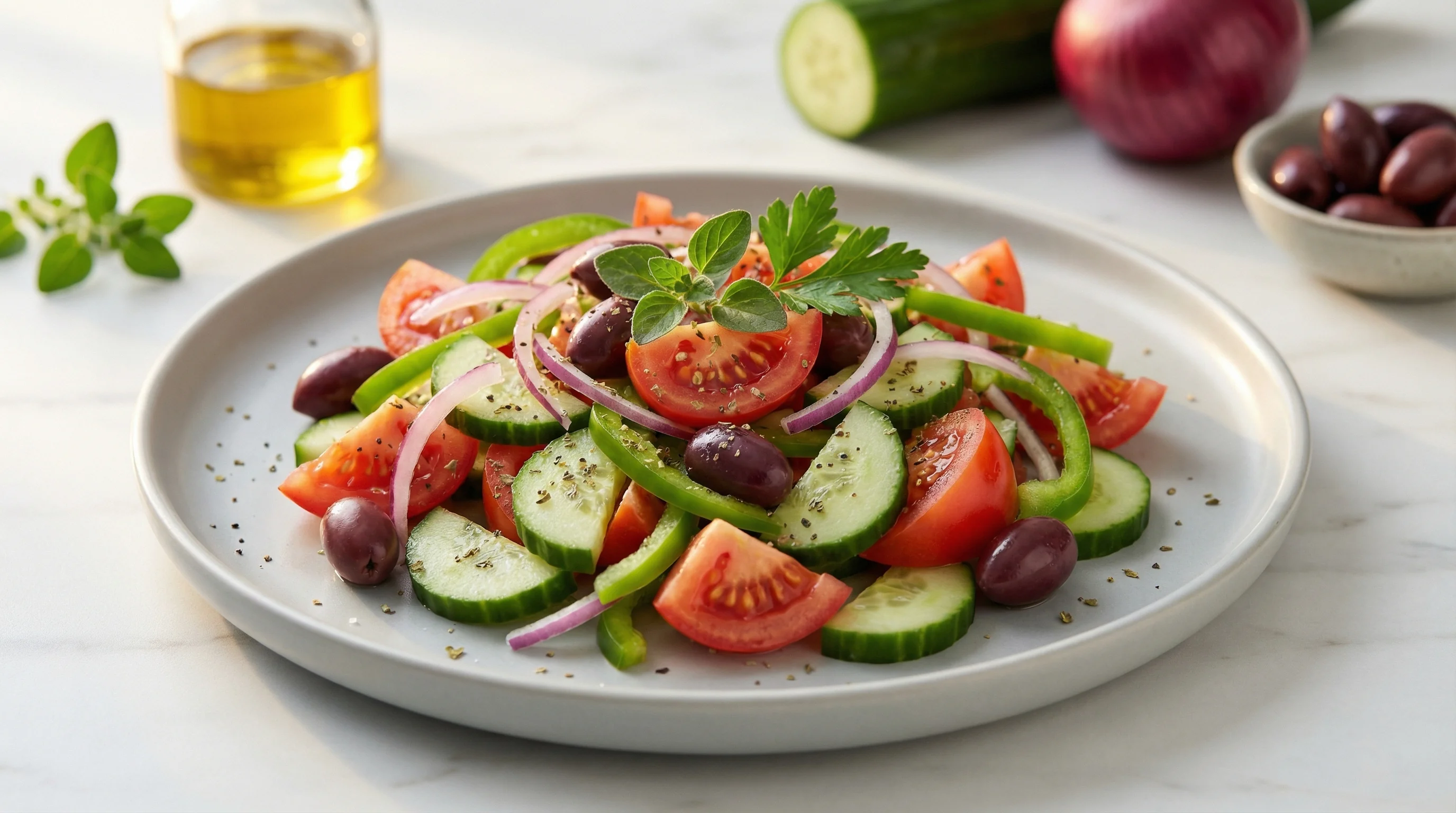
Mediterranean Low-Glycemic Greek Salad
A vibrant, blood sugar-friendly Greek salad featuring crisp vegetables, briny olives, and creamy feta—perfect for stable energy and Mediterranean wellness.
This Mediterranean-inspired Greek salad is a nutritional powerhouse designed with glycemic health in mind. Every ingredient has been carefully selected to support stable blood sugar levels while delivering authentic Greek flavors. The combination of fiber-rich vegetables, healthy fats from olive oil and olives, and protein-packed feta cheese creates a perfectly balanced meal that won't spike your glucose.
The beauty of this salad lies in its simplicity and its remarkable glycemic profile. Tomatoes, cucumbers, and bell peppers are all low-glycemic vegetables that provide essential nutrients without raising blood sugar. The red onion adds a sharp bite while contributing quercetin, a flavonoid that may help improve insulin sensitivity. Kalamata olives and extra virgin olive oil provide monounsaturated fats that slow digestion and promote steady glucose absorption. The feta cheese adds satisfying protein and fat, further moderating the glycemic response.
This salad is ideal for anyone managing their blood sugar, whether you're pre-diabetic, diabetic, or simply seeking sustained energy throughout the day. Enjoy it as a light lunch, a substantial side dish, or even as a dinner paired with grilled fish or chicken. For optimal glycemic control, eat the vegetables first before any accompanying starches, and consider this salad as your foundation for a balanced, Mediterranean-style eating pattern that supports long-term metabolic health.
Blood Sugar Impact
This salad will have minimal impact on blood sugar levels due to its very low glycemic load of 1.4 and GI of 15. The high fiber content from fresh vegetables and healthy fats from olive oil will promote stable blood sugar and sustained energy for 3-4 hours.
Blood Sugar Tips
- ✓ Add a protein source like grilled chicken, chickpeas, or feta cheese to further slow digestion and enhance satiety while maintaining stable blood sugar
- ✓ Eat this salad as a starter before higher-carb foods in your meal to leverage the fiber and fat content for better overall glycemic control
- ✓ Pair with a 10-15 minute walk after eating to help muscles absorb any glucose and maintain optimal blood sugar levels
🥗 Ingredients
- 8 oz ripe tomatoes, cut into bite-sized pieces
- 6 oz English cucumber, sliced into half moons
- 2 oz small red onion, thinly sliced
- 1 pcs medium green bell pepper, sliced
- 4 oz Kalamata olives
- 0.75 tsp dried oregano
- 0.25 tsp fine sea salt
- 0.5 tsp fresh ground black pepper
- 2 tbsp red wine vinegar
- 3 tbsp extra virgin olive oil
- 4 oz feta cheese, cut into generous slices
- 8 oz ripe tomatoes, cut into bite-sized pieces
- 6 oz English cucumber, sliced into half moons
- 2 oz small red onion, thinly sliced
- 1 pcs medium green bell pepper, sliced
- 4 oz Kalamata olives
- 0.75 tsp dried oregano
- 0.25 tsp fine sea salt
- 0.5 tsp fresh ground black pepper
- 2 tbsp red wine vinegar
- 3 tbsp extra virgin olive oil
- 4 oz feta cheese, cut into generous slices
👨🍳 Instructions
- 1
Place the thinly sliced red onion in a bowl of cold water and let soak for 10 minutes. This step mellows the sharp, pungent flavor while maintaining the onion's crisp texture and helps reduce the glycemic impact by removing some of the natural sugars. Drain thoroughly and pat dry with paper towels.
- 2
In a large serving bowl, combine the bite-sized tomato pieces, cucumber half-moons, drained red onion slices, and green bell pepper strips. Toss gently to distribute the vegetables evenly throughout the bowl.
- 3
Add the Kalamata olives to the vegetable mixture. Sprinkle the dried oregano, sea salt, and a generous grinding of fresh black pepper over the salad. Toss everything together thoroughly and allow the salad to rest for 5 minutes so the vegetables release their natural juices.
- 4
Give the salad another gentle toss to redistribute the seasonings. Drizzle the red wine vinegar evenly over the vegetables, followed by the extra virgin olive oil. Toss once more to ensure every ingredient is lightly coated with the dressing. The vinegar's acidity helps lower the overall glycemic response of the meal.
- 5
Arrange the feta cheese slices on top of the salad, nestling them into the vegetables rather than mixing them in. This traditional presentation allows diners to get feta in every bite while maintaining its creamy texture. The protein and fat in feta further stabilize blood sugar levels.
- 6
Finish with an additional pinch of dried oregano sprinkled over the feta and vegetables. Taste and adjust seasoning with more salt, pepper, vinegar, or olive oil if desired.
- 7
Serve immediately at room temperature for optimal flavor and glycemic benefit. For best blood sugar management, eat the vegetables first before any bread or starches, allowing the fiber and healthy fats to slow glucose absorption. This salad provides sustained energy for 3-4 hours without blood sugar spikes.
📊 Nutrition Per Serving
| Per Serving | Whole Dish | |
|---|---|---|
| Calories | 467 | 1866 |
| Carbs | 30g | 119g |
| Sugars | 5g | 18g |
| Natural Sugars | 5g | 18g |
| Protein | 8g | 33g |
| Fat | 38g | 153g |
| Saturated Fat | 13g | 54g |
| Unsaturated Fat | 25g | 100g |
| Fiber | 12g | 48g |
| Soluble Fiber | 4g | 14g |
| Insoluble Fiber | 8g | 34g |
| Sodium | 10536mg | 42144mg |
Predicted Glucose Response
What if you...
Estimated model — individual responses vary. Not medical advice.
🔄 Lower GI Swaps
Cherry tomatoes have a slightly lower glycemic impact than regular tomatoes due to their higher skin-to-flesh ratio and concentrated nutrients. Sun-dried tomatoes in small amounts provide intense flavor with minimal carbohydrate load, and roasted red peppers offer sweetness without significantly raising blood sugar.
Scallions and chives have a lower carbohydrate content per serving compared to red onion, resulting in less impact on blood glucose. Shallots, used sparingly, provide similar flavor with a slightly lower glycemic load due to their concentrated taste requiring smaller quantities.
Aged feta has slightly higher protein and fat content with lower moisture, which can help slow glucose absorption. Grilled halloumi adds protein and its firm texture increases satiety, while goat cheese typically has more protein per serving, all helping to minimize blood sugar spikes.
Apple cider vinegar has been shown in studies to improve insulin sensitivity and reduce post-meal blood sugar spikes more effectively than other vinegars. The acetic acid content helps slow gastric emptying and carbohydrate absorption, making it superior for blood sugar management.
🔬 The Science Behind This Recipe
Why This Salad is a Blood Sugar Champion
This Mediterranean Greek salad is a masterclass in blood sugar management, with an exceptionally low glycemic load of just 1.4 per serving. The secret lies in its foundation of non-starchy vegetables—tomatoes, cucumbers, bell peppers, and red onions—which are packed with fiber and water but contain minimal carbohydrates. These vegetables digest slowly, releasing glucose into your bloodstream at a gentle, steady pace rather than causing the sharp spikes associated with refined carbs. The fiber content is particularly important: it forms a gel-like substance in your digestive tract that slows down carbohydrate absorption, essentially acting as a natural buffer against blood sugar surges.
The kalamata olives add another layer of metabolic protection through their healthy monounsaturated fats. When you eat fat alongside carbohydrates, it slows gastric emptying—meaning food moves more gradually from your stomach to your intestines. This delayed digestion translates to a more gradual release of glucose into your bloodstream. Think of it as the difference between opening a floodgate versus turning on a gentle faucet. The combination of fiber from the vegetables and fat from the olives creates a synergistic effect that keeps your blood sugar remarkably stable.
To maximize the benefits of this already low-glycemic meal, consider eating it before any higher-carb foods in your meal. Starting with vegetables primes your digestive system and can reduce the overall glycemic impact of your entire meal by up to 30%. If you're adding feta cheese or grilled chicken, you're further improving the protein-to-carb ratio, which helps maintain steady energy levels for hours after eating.